What Documents Do You Need for German Citizenship?
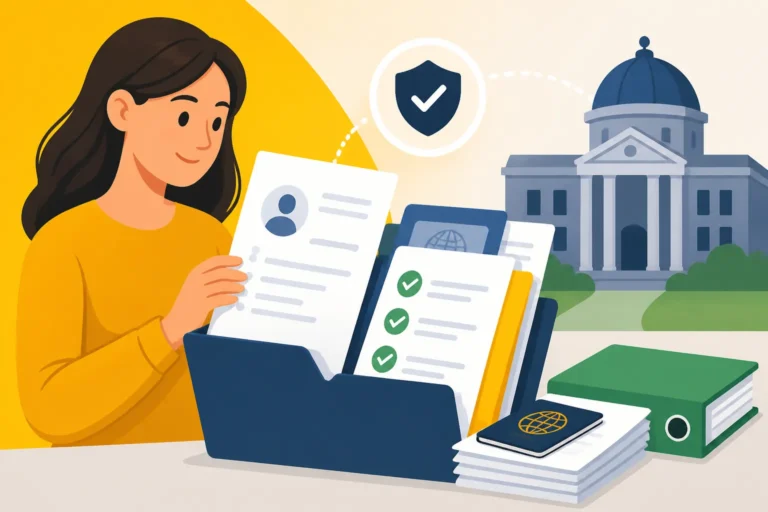
Staring at a massive stack of German application forms is enough to make even the most seasoned expat want to pack their bags and head for the airport. I remember sitting at my kitchen table in Berlin, surrounded by three different dictionaries and a cold coffee, wondering if I’d ever actually see a German passport with my name on it. This guide breaks down the specific "Papierkrieg" you need to win to secure your German citizenship.
Disclosure: This post may contain affiliate links. We may earn a commission at no extra cost to you if you make a purchase through these links. Read full disclosure.
The Foundation of Identity and Civil Status
The first hurdle in your journey toward German Citizenship (Einbürgerung): Requirements Overview is proving exactly who you are and where you come from. It sounds simple, but in a country that lives and breathes "Ordnung," a simple photocopy won't cut it. You need your current, valid national passport. This document must be valid not just when you submit the application, but ideally for the duration of the processing time, which can take anywhere from six months to two years depending on your local Einbürgerungsbehörde.
Beyond your passport, you will need your original birth certificate. If you were born outside the European Union, this is where things get tricky. Most German authorities require a certified translation of your birth certificate performed by a sworn translator registered in Germany. I personally used Lingoking for this because the authorities are incredibly picky about the specific stamps and legal terminology used in the translation. If your birth certificate is from a country that doesn't have a multi-language agreement with Germany, you might also need an Apostille or legalisation to prove the document's authenticity.
If you are married or divorced, the paper trail grows. You will need your marriage certificate or final divorce decree. Again, these must be translated into German. Using a professional service like Lingoking ensures that your marriage certificate from home meets the strict standards of the German Standesamt. If you have children who are also applying with you, you'll need their birth certificates and potentially proof of sole custody if you are a single parent. Every piece of civil status documentation acts as a vital link in the chain of your legal identity in Germany.
Proving Your Integration and Linguistic Ability
Germany recently updated its laws to make the path to citizenship more accessible, but the requirement for "Integration" remains a non-negotiable pillar. The most famous of these requirements is the B1 language certificate. Unless you have a German school leaving certificate or a degree from a German university, you must provide official proof that you can handle daily life in the German language. You can find more details on how to navigate this in our guide on How to Prove German Language Skills for Citizenship (B1).
In addition to the language certificate, you must pass the "Einbürgerungstest" (Citizenship Test). This is a 33-question multiple-choice exam covering German history, politics, and society. You need to get at least 17 questions right. While it sounds daunting, most of us who have lived here for five years find the questions about the Bundestag and the federal states fairly straightforward after a bit of cramming. You will need the original certificate issued by the Federal Office for Migration and Refugees (BAMF) to include in your application folder. For more tips on the exam, check out The German Citizenship Test (Einbürgerungstest).
Under the new 2024 regulations, most people can apply after five years of residence, or even three years if they can demonstrate "special integration achievements." This could include reaching a C1 level of German or doing significant voluntary work. If you are aiming for this "fast track," you will need letters of recommendation from the organisations where you volunteer, or high-level language certificates. For everyone else, the goal is proving you have lived here legally and continuously, which is why your old "Anmeldung" certificates and previous residency permits are so important. You should review the details on Dual Citizenship in Germany: What's Now Allowed to see how these new timelines might apply to your specific situation.
Economic Stability and Financial Records
The German government wants to be absolutely certain that you can support yourself and your dependents without relying on "Bürgergeld" (social welfare). This is often the section where people get most frustrated because the list of required financial documents feels endless. If you are an employee, you will typically need to provide your employment contract and your last three to six months of payslips. If your contract has a "Probezeit" (probationary period), you generally have to wait until that period is over before your application will be approved.
For those of us who are self-employed or freelancers, the burden of proof is even higher. You’ll likely need a "Prüfungsbericht" (audit report) prepared by a tax advisor that confirms your net income for the last year and forecasts your earnings for the current year. You should also be prepared to show your latest tax assessment (Steuerbescheid) from the Finanzamt. This is part of the broader Social Security Contributions in Germany: What Comes Off Your Salary framework that ensures you are a contributing member of the system.
Beyond your salary, you must prove you have adequate health insurance. This means a confirmation letter from your Krankenkasse stating that you are a member and that your premiums are paid up. If you are looking for help navigating the complexities of German insurance as a foreigner, platforms like Expatrio offer excellent resources and simplified processes for ensuring your coverage meets all legal requirements. They specialize in helping expats align their documentation with German standards. You can read more about the differences between systems in Health Insurance in Germany: Understanding Public vs Private Coverage.
| Document Category | Specific Document Needed | Typical Source |
|---|---|---|
| Identity | National Passport & Residence Permit | Home Country / Ausländerbehörde |
| Civil Status | Birth/Marriage Certificate (Translated) | Home Country / Lingoking |
| Integration | B1 Language Certificate | Language School (e.g., VHS, Goethe) |
| Knowledge | Einbürgerungstest Certificate | BAMF / Testing Center |
| Financial | Last 3-6 Payslips & Employment Contract | Employer |
| Security | Pension Insurance History (Rentenverlauf) | Deutsche Rentenversicherung |
| Health | Proof of Health Insurance Membership | Insurance Provider / Expatrio |
| Residency | Current Anmeldung & Rental Contract | Bürgeramt / Landlord |
The Security and Loyalty Declarations
Finally, there is the "legal" side of the application. You cannot have a significant criminal record to become a German citizen. While you don't usually need to provide a "Führungszeugnis" (police clearance certificate) yourself—the citizenship office will pull this data directly—you do need to disclose any ongoing investigations or past convictions truthfully. Even minor fines can sometimes complicate things, so it is always better to be honest on the form than to have them find out later.
You will also be required to sign a "Bekenntnis zur freiheitlichen demokratischen Grundordnung" (Declaration of Loyalty to the Free Democratic Basic Order). This is a formal statement where you swear to respect the German Basic Law and reject any form of extremism. In some federal states, you might also be asked to sign specific declarations regarding the security of the State of Israel or other modern policy requirements. These are usually handled during the "initial consultation" or via a form included in the application pack.
Proving your pension contributions is another key step. Most authorities want to see that you have paid into the German pension system for a certain number of months (often 60 months, though this varies). You can request a "Versicherungsverlauf" from the Deutsche Rentenversicherung. This document shows every cent you’ve contributed since you started working in Germany. If you are a freelancer, you might need to show private pension plans or significant assets instead. Navigating this can be complex, and using a service like Expatrio can help you understand the long-term financial requirements of living in Germany. Understanding your Public Health Insurance (gesetzliche Krankenkasse): What It Covers and Costs is just one part of the wider social safety net you are proving you belong to.
Once you have gathered this mountain of paper, including your How to Get a Certified Translation for German Immigration documents from Lingoking, you are ready to submit. The process is long, and the bureaucracy can feel cold, but the moment you hand over those documents is the moment you officially start the final chapter of your journey to becoming German.
Disclaimer
The information provided in this article is for general informational purposes only and does not constitute legal advice. Immigration laws and document requirements in Germany are subject to change and may vary significantly between different federal states (Bundesländer) and local authorities. Always consult with an official representative at your local Einbürgerungsbehörde or a qualified legal professional before submitting a citizenship application.