Renting a Car and Driving on the Autobahn
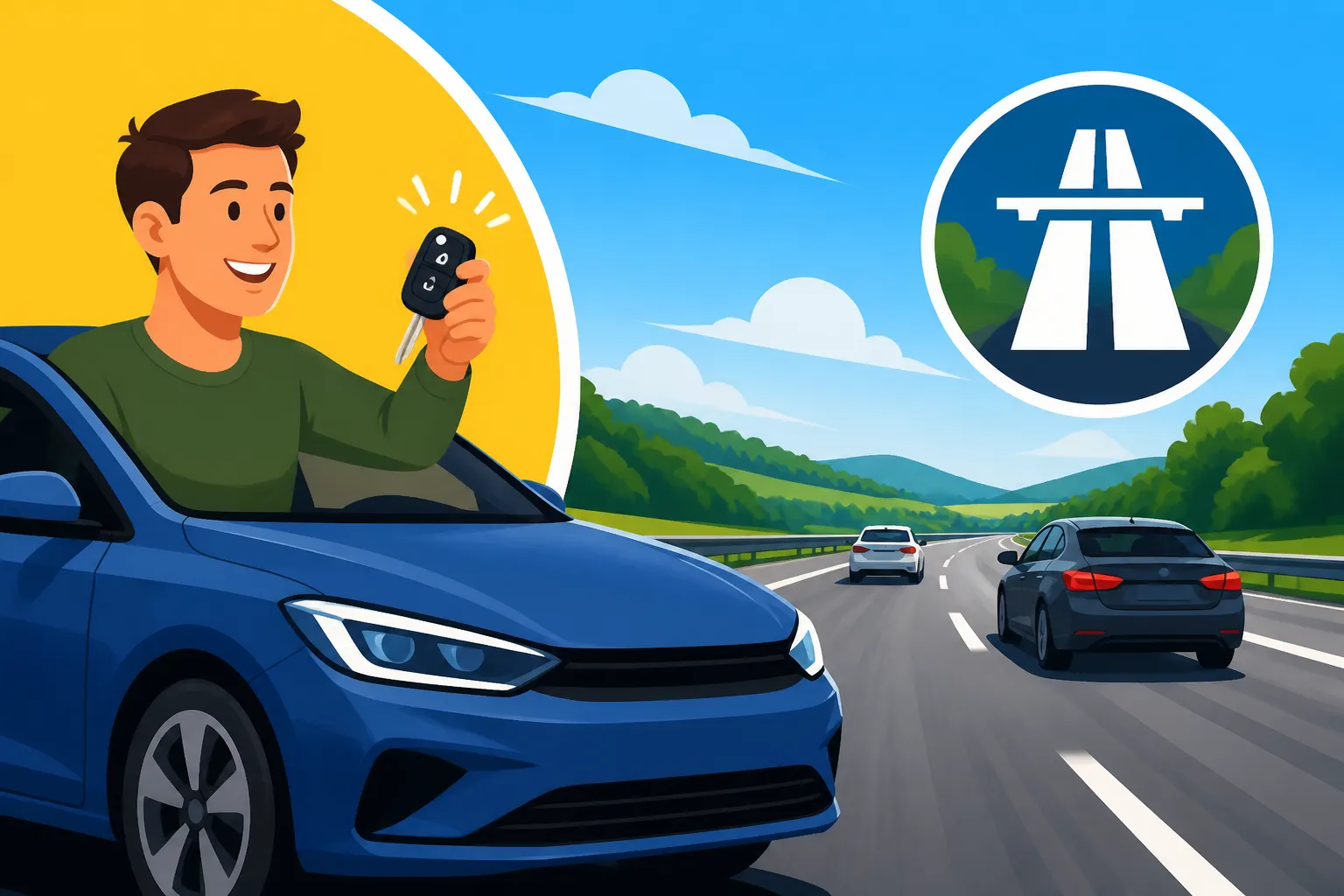
The thought of hitting the open road in Germany, especially the legendary Autobahn, can be both exhilarating and a little bit daunting, right? I still remember my very first time behind the wheel here, feeling like I was about to navigate a high-speed chess game while trying to figure out what all the signs meant. It's a unique experience, full of subtle rules and expectations that aren't always immediately obvious. This comprehensive guide is here to unravel all the mysteries of renting a car and confidently cruising Germany's world-famous highways.
Disclosure: This post may contain affiliate links. We may earn a commission at no extra cost to you if you make a purchase through these links. Read full disclosure.
Getting Started: Renting a Car in Germany
Renting a car in Germany isn't quite the same as renting one in, say, North America or even other parts of Europe. There are specific nuances you absolutely need to grasp to ensure a smooth, stress-free experience from the moment you pick up the keys to when you finally return the vehicle. Getting this part right sets the foundation for your entire German road adventure.
Who Can Rent a Car in Germany?
This is often where the first unexpected hurdle appears for many visitors, and believe me, I've seen plenty of surprised faces at the rental counter. Generally, the minimum age to rent a car in Germany is 18 years old. However, and this is a big "however," many rental companies, particularly the larger ones like Sixt, Europcar, or Hertz, often impose higher age restrictions, especially for more powerful vehicles or certain car categories. You might find that for anyone under 21 or even 25, there's a "young driver surcharge" added to your bill, which can really add up. Always double-check this when you're making your booking to avoid any last-minute shocks.
Beyond age, your driving license is crucial. If you hold a valid driving license from an EU country, you're generally good to go. For those coming from outside the European Union, your national driving license is often accepted for up to six months, but it must be accompanied by an International Driving Permit (IDP). While some rental agencies might let it slide, especially for short trips, many will insist on the IDP, and more importantly, the police certainly will if you ever get pulled over. It’s essentially a translation of your license into multiple languages and acts as an official endorsement. Get one from your home country's automobile association before you travel – it’s a small investment for massive peace of mind. Without it, you could face difficulties with rental companies or, worse, with law enforcement.
Finally, you’ll almost certainly need a major credit card in the primary driver's name. This isn't just for payment, but predominantly for the security deposit, which can be quite substantial. Debit cards are rarely accepted for the deposit, even if they have a Visa or Mastercard logo, so make sure you have a proper credit card ready. This policy is standard across most rental agencies to cover potential damages, fines, or other unforeseen costs.
Choosing the Right Rental Company and Vehicle
When it comes to picking a rental company, you’ve got a mix of global giants and strong local players. Major international brands like Sixt, Europcar, Avis, Hertz, Enterprise, and Budget have a significant presence across Germany, often at airports and major train stations. They tend to offer a wide range of vehicles and sometimes have more English-speaking staff, which can be a real blessing if your German isn't quite up to scratch yet. While you might typically turn to platforms like Omio for booking your train or bus tickets, when it comes to cars, comparing options across various providers is key. Websites like Booking.com, which also offers car rental comparisons, can be a great starting point to scout prices and vehicle types from different companies.
Choosing the right vehicle for your adventure is more than just picking something within your budget; it’s about matching it to your travel plans and comfort needs. If you’re mostly sticking to city driving and shorter excursions, a small city car might be perfect. However, if the Autobahn beckons for longer distances, you'll appreciate something a bit more substantial – a comfortable sedan, a station wagon (known as a Kombi here, and very popular for families), or even an SUV can make those higher speeds feel much smoother and safer. These larger vehicles also offer better luggage space, which is a huge plus if you're planning an extended road trip.
One critical point for many North American drivers is the transmission type. Manual transmission cars are far more common and generally cheaper to rent in Germany. If you're not comfortable driving a stick shift, make sure you explicitly book an automatic vehicle, and be prepared to pay a bit more for it. Additionally, consider seasonal needs: if you're visiting in winter (roughly October to Easter), your rental car must be equipped with winter tires (or all-season tires marked with an Alpine symbol or M+S). Most reputable rental companies will include these by default during the winter months, but it never hurts to confirm.
Understanding Rental Costs and Insurance
Ah, the small print! The base rental fee is just the starting point, and it’s important to understand what else might get tacked on. Beyond the young driver surcharge we discussed, watch out for fees for additional drivers if you plan to share driving duties. GPS navigation systems, child seats, and even roof racks can also come with extra daily charges. Always compare fuel policies; "full-to-full" is generally the most straightforward and cost-effective option, meaning you pick it up full and return it full. Avoid "pre-purchase with no refund" policies unless you know you'll use every drop.
Insurance is another area that can make expats and tourists alike scratch their heads. By law, third-party liability insurance (Haftpflichtversicherung) is always included in your rental fee, covering damages to other vehicles, property, or injuries to third parties. However, this doesn't cover damage to your rental car. For that, you'll typically be offered Collision Damage Waiver (CDW) or Loss Damage Waiver (LDW) – these reduce your financial liability for damage to the rental car, usually to an "excess" amount (Selbstbeteiligung). This deductible can still be substantial, often several hundred or even a thousand Euros.
You can often opt for "super CDW" or "full protection" packages that eliminate or significantly reduce this excess, but they come at a higher daily cost. Before you sign up for everything offered at the counter, check if your personal car insurance, credit card benefits, or travel insurance (like the kind you might purchase for overall travel, which you can look for on sites like Booking.com to cover your trip arrangements) already provide rental car coverage. Sometimes, these external policies can save you a fair bit of money, but make sure you understand their terms, including any exclusions or claim processes, before relying on them. It’s always a good idea to clarify these points before you leave home to ensure you're adequately covered without overpaying.
Navigating German Road Rules and Regulations
Driving in Germany is, for the most part, a very orderly and efficient experience, which is exactly what you’d expect. But "orderly" doesn't always mean "intuitive" for those not used to the local customs and laws. Understanding the specific rules, especially regarding the Autobahn, is paramount not just for legality, but for your safety and the safety of others.
The Autobahn: Demystifying the Speed Limit (or Lack Thereof)
The German Autobahn is legendary, often conjuring images of cars zooming along at unrestricted speeds. While it's true that sections of the Autobahn do not have a posted speed limit, this isn't a blanket rule, and it certainly doesn't mean "drive as fast as you possibly can." Many stretches, particularly near urban areas, construction zones, or hazardous sections, will have clearly marked speed limits, often indicated by circular signs with a red border and a black number. You absolutely must adhere to these. Even on unrestricted sections, there's a recommended speed limit of 130 km/h (about 80 mph). While you won't be fined for exceeding this recommendation, if you get into an accident above this speed, you might be found partially liable even if you weren't at fault, as you exceeded the recommended safe speed.
The most critical rule on the Autobahn, and indeed on any multi-lane road in Germany, is Rechtsfahrgebot – the obligation to keep to the right. This means you should always drive in the rightmost lane that is clear. The left lane is strictly for overtaking, and once you've passed a slower vehicle, you are expected to move back to the right. Lingering in the left lane, even if you're driving fast, is considered a serious traffic offense and can lead to fines. This continuous flow is what allows the Autobahn to operate so efficiently and at high speeds.
Overtaking is strictly prohibited on the right. You must always overtake on the left. This rule is rigorously enforced and ignoring it is dangerous and illegal. The emergency lane (Standstreifen) is, as the name suggests, for emergencies only. Do not use it to bypass traffic, even if you see others doing it – that’s a quick way to get a hefty fine. Finally, maintaining a safe distance is crucial, especially at higher speeds. The rule of thumb is "halber Tacho" (half your speedometer reading in meters). So, if you're driving 100 km/h, you should maintain at least 50 meters distance from the car in front. This distance gives you precious reaction time.
Essential Road Signs and Traffic Laws
Beyond the Autobahn, German road signs are generally intuitive, often using international symbols, but a few local specifics are vital to understand. Circular signs with a red border usually indicate prohibitions (like speed limits or no entry), while triangular signs with a red border warn of hazards (like sharp curves or deer crossings). Blue rectangular signs provide information or directions. One sign that often confuses foreigners is the "priority road" sign (a yellow diamond shape) and its cancellation (the same sign with a black diagonal line through it). If you're on a priority road, you have the right of way; otherwise, the Rechts vor Links rule often applies in intersections without traffic lights or other signs, meaning traffic coming from the right has priority.
Pedestrian crossings (Zebrastreifen) grant pedestrians absolute right of way, and you must stop if someone is waiting to cross. Traffic lights (Ampeln) are straightforward. Germany has very strict alcohol limits for drivers (0.05% BAC, effectively one small beer for most people, but zero tolerance for new drivers or those under 21). It's best not to drink at all if you're driving. Seatbelts are mandatory for all occupants, front and back, and children up to 12 years old or 1.50 meters tall must use an appropriate child seat. These laws are strictly enforced, so don't take any chances.
Parking, Fueling, and Fines
Parking in German towns and cities can be a bit of an art form. Blue zones (indicated by blue lines or signs with a clock symbol) require a parking disc (Parkscheibe), which you set to your arrival time, allowing you to park for a limited duration. You can often find these discs at petrol stations or supermarkets. Parking meters (Parkscheinautomaten) are common, requiring coins (or sometimes card payment via app) for a ticket to display on your dashboard. Underground parking garages (Parkhäuser) are plentiful in city centers but can be expensive. Always look for signs that indicate whether parking is allowed, restricted, or forbidden. A zigzag line marked on the road means no stopping there.
When it comes to fueling, you'll primarily find "Benzin" (petrol) and "Diesel." Benzin often comes in "Super E5" or "Super E10," with E10 being cheaper but containing more ethanol. Check your rental car's fuel cap or the rental agreement to see which type is recommended – most modern cars can handle E10, but if in doubt, opt for Super E5. You simply fill up your tank and then go inside the station (Tankstelle) to pay at the counter, stating your pump number. This system might feel different from self-serve payment at the pump common in other countries.
Finally, fines (Bußgelder) for traffic violations can be steep. Speeding, improper parking, or running a red light will almost certainly result in a fine. If you commit an offense in a rental car, the fine will typically be sent to the rental company, who will then forward it to you, often adding an administrative fee. It’s best to avoid them altogether by adhering strictly to the rules. Remember that sites like GetYourGuide are for booking experiences, not for dealing with traffic tickets, so prevention is key!
Mastering the Autobahn Experience
Driving on the Autobahn isn't just about knowing the legal speed limits (or lack thereof) and road signs. It's about understanding the flow, the unspoken etiquette, and developing a certain level of anticipatory driving that keeps you, and everyone around you, safe. This is where your skills as a driver really get a workout.
The Unwritten Rules of High-Speed Driving
My biggest piece of advice for the Autobahn is this: constantly scan. Look far ahead, check your mirrors every few seconds, and be aware of everything happening around you – not just directly in front. At high speeds, situations develop incredibly quickly. You need to be thinking several steps ahead. See brake lights in the distance? Start easing off the accelerator. Notice a car indicating to move into your lane? Be prepared to adjust your speed or position if safe to do so.
Lane discipline is paramount, as we've discussed with Rechtsfahrgebot. Never, ever dawdle in the left lane. It’s expected that if you’re not actively overtaking, you move to the right. When you do decide to overtake, signal clearly and early, then execute the maneuver decisively. Hesitation at high speeds can be dangerous. As you approach a slower vehicle, ensure there's enough space in the left lane and that no faster vehicles are rapidly approaching from behind.
Dealing with significantly faster vehicles is also part of the dance. If you’re in the left lane and see a blur approaching in your rearview mirror, don't panic. Simply check your right mirror, and if it's safe and clear, move over to the right lane to let them pass. Germans value efficiency and clear communication on the road, so making way promptly is a sign of good driving manners. Conversely, when it's time to exit the Autobahn, look for the exit signs well in advance (they typically appear several kilometers before the actual exit) and move into the rightmost lane. Begin to slow down only after you have entered the deceleration lane, not on the main Autobahn itself.
Overtaking and Being Overtaken
Overtaking on the Autobahn requires a specific mindset. It's not a race, but it does demand confidence and precision. Before moving left, always perform a thorough mirror check and shoulder check for rapidly approaching vehicles. You'd be surprised how quickly a car doing 200 km/h can close the distance. Signal, accelerate smoothly and decisively past the vehicle you are overtaking, and then signal again and move back to the right lane as soon as it is safe to do so. Never "undertake" (pass on the right) – it's illegal, highly dangerous, and will invite the ire of other drivers.
Being overtaken, especially by a car that seems to appear out of nowhere, can be startling. The key here is not to react abruptly. Maintain your speed and line. Sometimes, you might experience the "flash to pass" phenomenon, where a faster driver behind you flashes their headlights to signal their intent to overtake. While technically illegal, it's a common (though controversial) practice. The expectation is that you will move right when safe. Getting upset or engaging in road rage is completely counterproductive and dangerous; just focus on maintaining a safe path and letting them pass. Remember, the goal is always smooth, predictable driving.
Breakdowns, Accidents, and Emergency Procedures
Even with the most careful driving, things can go wrong. If your vehicle breaks down on the Autobahn, try to get it to the emergency lane (Standstreifen) immediately. If that's not possible, keep your hazard lights on, put on your reflective safety vest (Warnweste – which is mandatory to have in the car and wear in such situations), and place your warning triangle (Warndreieck) at least 100 meters behind your car to alert oncoming traffic. Move to a safe location, ideally behind the guardrail, and call for help.
For emergencies like accidents or immediate dangers, the universal European emergency number is 112. This connects you to police, fire, and ambulance services. For non-life-threatening breakdowns or mechanical issues, you can often find emergency call boxes (orange boxes with a telephone symbol) located every few kilometers along the Autobahn, or you can call the ADAC (Germany's largest automobile club) for roadside assistance. Their number can typically be found on your rental agreement.
In the event of an accident, your priority is safety. Secure the scene with hazard lights, warning triangle, and safety vest. Check for injuries and call 112 if necessary. If no one is injured and it's a minor fender-bender, move the vehicles to the side of the road if possible to avoid further hazards. Exchange insurance details with the other party (rental car documents will have this), and always call the police to report the accident, even if it seems minor. This creates an official record that will be invaluable for insurance claims later. Don't admit fault, just stick to the facts. Knowing these basic steps can dramatically reduce stress in an already difficult situation.
| German Road Sign | Appearance | Meaning |
|---|---|---|
| Maximum Speed | Red circle with number | Maximum speed allowed (e.g., 100 km/h) |
| No Entry | Red circle with white bar | No entry for vehicles in this direction |
| Stop Sign | Red octagon with "STOP" | Stop, give way to all traffic |
| Give Way | White triangle with red border, point down | Give way to traffic on the intersecting road |
| Priority Road | Yellow diamond with white border | You have the right of way on this road |
| End of Speed Limit | White circle with black diagonal lines | End of all previous speed restrictions (unrestricted sections) |
| No Parking | Red circle with blue background, red diagonal line | No parking allowed (stopping briefly is often permitted) |
| No Stopping | Red circle with blue background, red cross | No stopping or parking allowed whatsoever |
| Danger Ahead | Red triangle with black symbol | General warning of danger (symbol specifies type of danger) |
| Motorway (Autobahn) | Blue square with white car symbol | Indicates the start of an Autobahn |
Planning Your German Road Trip
Germany is a fantastic country for a road trip, offering everything from historic castles to bustling cities and stunning natural landscapes. With your car rental secured and road rules understood, the next step is to plan an itinerary that maximizes your time and experience.
Scenic Routes vs. Fastest Routes
When planning your journey, modern GPS navigation systems like Google Maps, Waze, or the built-in navigation in your rental car are indispensable. They can quickly calculate the fastest route, which often means sticking to the Autobahn. However, sometimes the fastest isn't the most enjoyable. Germany boasts numerous scenic routes that are perfect for those who want to experience the country at a more leisurely pace. These often involve driving on smaller regional roads (Bundesstraßen or Landstraßen) that wind through picturesque villages, vineyards, and forests.
Consider famous scenic drives like the Romantic Road (Romantische Straße), which stretches from Würzburg to Füssen, past fairytale castles and medieval towns, or the German Wine Route (Deutsche Weinstraße) through the Pfalz region. While these routes take longer, they offer a completely different, more intimate view of Germany. When you're comparing your options, remember that platforms like Omio are great for understanding public transport alternatives for point-to-point travel, which might influence whether you want to drive every segment. For planning activities and ensuring you have great things to do at your destination, sites like GetYourGuide can be incredibly helpful to pre-book tours or attractions along your chosen route. You can even use them to find things that complement a car journey, such as a guided tour of Neuschwanstein Castle after you've driven the scenic route to get there.
Tolls, Environmental Zones, and City Driving
Good news for private car renters: there are generally no tolls for passenger cars on German Autobahns. Tolls are primarily for heavy goods vehicles. However, there's one significant consideration you absolutely cannot ignore: environmental zones (Umweltzonen). Many German cities, particularly larger ones like Berlin, Munich, and Cologne, have designated low-emission zones in their city centers. To drive into these zones, your vehicle must display a special green sticker (Umweltplakette) on the windshield, indicating its emission class.
Most reputable rental cars will already have the correct green sticker, but it is your responsibility to check, especially if you plan to drive into a city center. Driving into an environmental zone without a valid sticker, or with the wrong one, will result in a hefty fine. You can purchase these stickers online or at TÜV service centers, but it's much easier to confirm with your rental company beforehand. For city driving, I highly recommend using Park & Ride facilities on the outskirts and taking public transport into the city center; it's often less stressful and more efficient than navigating unfamiliar one-way streets and expensive parking. You can find more detailed information about this when planning your travel logistics in our guide to Transportation in Germany: Using Trains, Buses, and Trams Like a Local.
International Driving Permits and Document Checklist
Let's circle back to the International Driving Permit, because it’s genuinely that important. As mentioned, for non-EU citizens, it's highly recommended and often required. You need to obtain this in your home country before you travel to Germany, as you cannot get one once you're here. It’s typically issued by your national automobile association (e.g., AAA in the USA, CAA in Canada, RAC or AA in the UK, although UK licenses are usually fine in the EU). It’s valid for one year from the date of issue.
Beyond your IDP, ensure you have all other necessary documents readily accessible while driving. This includes your valid national driver's license, your passport or other form of identification, the full rental agreement, and any insurance documents provided by the rental company. It’s also a good idea to have a copy of the vehicle’s registration document (Fahrzeugschein or Zulassungsbescheinigung Teil I), which should be in the glove compartment. While you won't need to show these every day, having them ready in case of a police stop or an accident will make everything much smoother. Keeping these essential documents organized and readily available will save you a lot of hassle. For budgeting all your travel expenses, including car rental and fuel, our guide on the Cost of Living in Germany: Breakdown of Expenses (Rent, Food, Transport) might also be quite helpful.
Disclaimer
The information provided in this guide is for general informational purposes only and does not constitute legal or professional advice. While we strive to keep the information up-to-date and accurate, laws, regulations, and rental company policies can change. Always verify the latest requirements with your chosen rental company, relevant authorities, or a legal professional before making travel plans or driving in Germany.