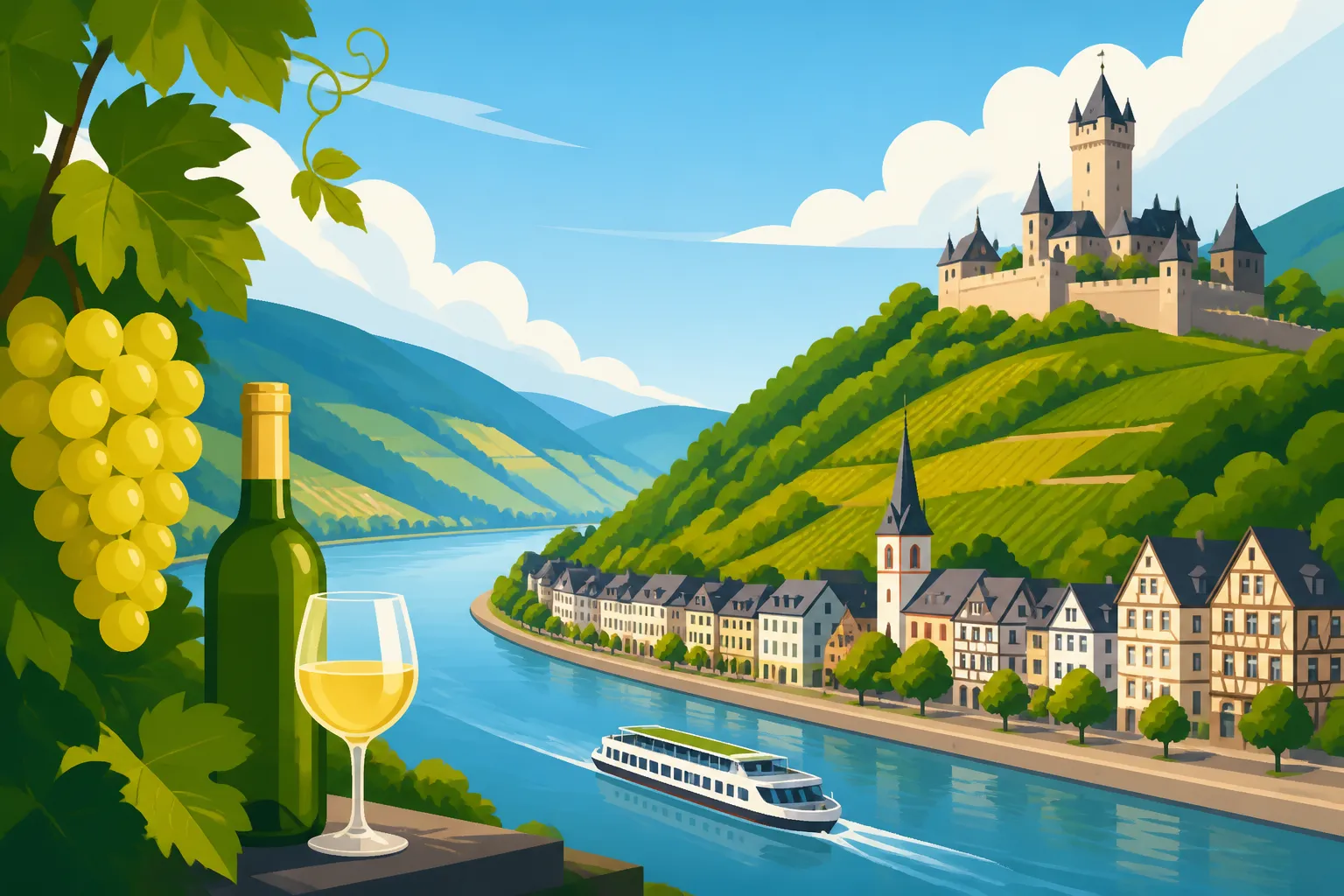
The Rhine Valley: Castles, Wine, and River Towns
Oh, the Rhine Valley! It's one of those quintessential German experiences that can feel a bit daunting to plan, isn't it? I remember feeling completely lost trying to figure out where to go beyond the big cities when I first moved here, wanting to see those fairytale castles and taste the local wine. You see pictures, read snippets, and then you're left wondering how to connect the dots without missing out on the magic. Well, take a deep breath, because this guide is here to walk you through the very best of the Rhine Valley, showing you how to truly explore its iconic castles, exquisite wines, and charming river towns, just like a seasoned expat.
Disclosure: This post may contain affiliate links. We may earn a commission at no extra cost to you if you make a purchase through these links. Read full disclosure.
Why the Rhine Valley? A Timeless German Escape
Stepping into the Rhine Valley is like stepping into a living storybook. It’s not just a scenic stretch of river; it's an entire region brimming with centuries of history, captivating legends, and a lifestyle deeply intertwined with the ebb and flow of the mighty Rhine. This isn't just a day trip; it's an immersion into a Germany that feels both ancient and vibrant, a place where the past isn't tucked away in museums but proudly displayed on every hillside and in every half-timbered town.
The Allure of Legend and Landscape
The very air in the Rhine Valley feels charged with legends. Think of the Loreley, that mythical siren whose song reputedly lured sailors to their doom on the treacherous rocks near St. Goarshausen. While modern navigation has tamed the river, the stories persist, whispering from ancient castle walls and through the rustling leaves of vineyard-clad slopes. This sense of romanticism, fueled by poets and painters for centuries, is palpable. It’s why you’ll often hear this region referred to as the "Romantic Rhine" – and for good reason. There’s a certain dramatic beauty here that evokes a bygone era, prompting you to slow down and truly soak it all in.
Beyond the myths, the sheer dramatic beauty of the landscape is enough to take your breath away. The Rhine here carves a deep, winding path through rolling hills, creating a natural amphitheater where vineyards cling precariously to steep slopes, and ancient castles stand guard from dizzying heights. Everywhere you look, there's a panorama begging to be photographed, a view that feels both wild and cultivated. The interplay of water, rock, and vine, punctuated by the stoic presence of fortresses, creates a unique tapestry that changes with every bend in the river. It's truly a place where nature and human history have sculpted something extraordinary together.
Choosing Your Rhine Adventure: Upper vs. Middle vs. Lower
The Rhine is a long river, and when people talk about "the Rhine Valley" for tourism, they're usually referring to specific sections. It's crucial to understand these distinctions to plan your trip effectively, as each offers a slightly different flavor. Broadly, you have the Upper Rhine, the Middle Rhine, and the Lower Rhine.
The Upper Rhine, stretching south from Mainz towards Strasbourg, is known for its broader river, less dramatic hills, and towns like Speyer and Worms with significant historical cathedrals. It's beautiful, but not what most people envision when they think of "Rhine castles and wine." The Lower Rhine, north of Cologne, flattens out into a more industrial and urban landscape, though it still has its charm. But the real star, the undisputed highlight that captures the imagination of travelers, is the Middle Rhine Valley.
This section, officially known as the Upper Middle Rhine Valley UNESCO World Heritage site, runs roughly 65 kilometers (about 40 miles) between Koblenz in the north and Bingen/Rüdesheim in the south. This is where you'll find the highest concentration of castles, the steepest vineyards, and those picturesque, postcard-perfect river towns. It's a narrower, more dramatic gorge, and it's this segment that forms the focus of most Rhine tours and river cruises. If your dream involves fairytale castles emerging from the mist, ancient towns nestled by the water's edge, and vineyards stretching as far as the eye can see, then the Middle Rhine is precisely where you want to be.
Castles Galore: A Journey Through Time
There’s something about a castle, isn't there? It’s not just a building; it’s a tangible link to a world of knights, princesses, battles, and intrigue. The Rhine Valley is practically overflowing with them, more so than almost anywhere else in Europe. You can’t throw a stone without hitting a former stronghold, and each one tells a story of the region’s strategic importance and its tumultuous past. From grand, imposing fortresses to romantic ruins, these stone behemoths are the true heart of the Rhine experience.
Iconic Castles You Can't Miss
When you're traversing the Rhine, a few castles consistently stand out, either for their incredible preservation, stunning locations, or captivating history. These are the ones you absolutely want to factor into your itinerary, especially if it's your first time in the region.
One absolute standout is Marksburg Castle, near Braubach. What makes Marksburg so special is that it's the only medieval castle on the Middle Rhine that has never been destroyed. It's been continuously inhabited for over 700 years, and a guided tour here feels like stepping directly into the Middle Ages. You'll see the original kitchens, knight's hall, armory, and even the torture chamber. Unlike many reconstructed castles, Marksburg offers an authentic glimpse into medieval life, from the defensive strategies to the daily routines. It's a steep climb to get there, but the panoramic views of the river and surrounding valley are a worthy reward, and the experience itself is truly unique.
Further south, near Assmannshausen, you'll find Rheinstein Castle. This incredibly romantic castle, perched dramatically on a cliff, was largely rebuilt in the 19th century in the Romantic style, becoming a popular destination for poets and artists. Today, it hosts a beautiful museum showcasing period furniture, arms, and armor, and often offers medieval dinners and events. What's more, Rheinstein boasts its own winery, allowing visitors to combine history with a delightful wine tasting experience right on the castle grounds. Imagine sipping a crisp Riesling while looking out over the very river that sustained the castle for centuries – pure magic! Another must-see is Pfalzgrafenstein Castle, often simply called "The Pfalz." This isn't your typical hilltop fortress; it's a toll castle situated on a tiny island in the middle of the Rhine near Kaub, looking like a stone ship forever anchored in the river. Its unique location was designed to extract tolls from passing boats, giving it an unparalleled strategic advantage. You reach it by a small ferry, and exploring its surprisingly cramped but fascinating interiors is an unforgettable experience, offering incredible views of the passing river traffic and the surrounding valley from a truly unique perspective.
Exploring Castle Ruins and Hidden Gems
While the grand, fully restored castles certainly draw the crowds, don't underestimate the haunting beauty and historical significance of the Rhine's many castle ruins. These decaying fortresses often offer an even more profound sense of history, their weathered stones speaking volumes of battles fought and empires risen and fallen. They’re also often less crowded, allowing for a more reflective and personal experience.
One fantastic option, albeit technically a fortress rather than a castle, is the Ehrenbreitstein Fortress in Koblenz. Sitting high above the confluence of the Rhine and Moselle rivers (the famous Deutsches Eck), this Prussian fortress offers arguably the best panoramic views in the entire region. You can reach it easily via a scenic cable car ride that glides right over the Rhine, providing spectacular vistas. Inside, you'll find museums, exhibitions, and lovely grounds perfect for a stroll or a picnic. It's a great spot to spend half a day, soaking in the history and the incredible scenery.
For those looking for something a bit quieter, consider places like Sooneck Castle, perched high above Niederheimbach. While also reconstructed in the 19th century, it retains a more intimate, less touristy feel than some of its larger counterparts. Its smaller scale allows for a more focused exploration of its rooms and battlements, and its elevated position offers fantastic photographic opportunities without the crowds. Many of these smaller ruins, like Burg Gutenfels near Kaub or Burg Katz (though privately owned and not open to the public) still loom impressively over the river, forming integral parts of the iconic Rhine landscape. A wonderful way to experience these is by taking a scenic river cruise. Many services, such as those offered by KD Line, allow you to sit back and watch the parade of history unfold along the riverbanks. You can even use services like GetYourGuide to book these cruises in advance, ensuring you have your spot for the best views.
When planning your castle visits, remember that many are either privately owned or managed by different entities, so check their individual opening hours and tour schedules. Some, like Marksburg, are solely accessible via guided tours, while others, like Ehrenbreitstein, allow for self-exploration. Don't feel pressured to see every single one; instead, pick a few that genuinely capture your interest and allow ample time to explore them properly.
Sip and Savor: The Rhine's Wine Culture
Beyond the majestic castles, the Rhine Valley is equally famous for its venerable winemaking tradition. The steep, sun-drenched slopes flanking the river have been cultivated for viticulture for millennia, producing some of Germany's most celebrated wines. This isn't just about drinking; it's about understanding a deep-rooted cultural heritage that shapes the landscape, the economy, and the very identity of the region.
Understanding Rhine Wines: Riesling is King
When it comes to Rhine wines, there's one varietal that reigns supreme, a true monarch of the vine: Riesling. This noble grape thrives in the slate-rich soils and microclimates of the Rhine Valley, especially in the Mittelrhein and Rheingau regions. German Riesling is renowned for its incredible versatility, ranging from bone-dry (Trocken) to lusciously sweet (Edelsüß), with vibrant acidity and distinctive mineral notes that reflect its terroir. It often boasts aromatic profiles of green apple, citrus, peach, and sometimes even a hint of petrol as it ages.
While Riesling dominates, you'll also find other delightful white varietals, though in smaller quantities. Müller-Thurgau, Silvaner, and Grauburgunder (Pinot Gris) are also cultivated, offering different flavour profiles that complement the local cuisine. Red wine lovers shouldn't despair completely; Spätburgunder (Pinot Noir) is grown in some areas, particularly in the Rheingau, producing elegant, lighter-bodied reds. The key to appreciating Rhine wine is to embrace the diversity, but always give a special nod to the Riesling – it's truly a world-class wine that perfectly embodies the spirit of the region.
Wine Tasting and Vineyard Experiences
One of the most enjoyable aspects of visiting the Rhine Valley is the opportunity to engage directly with its wine culture. This isn’t just about buying a bottle; it’s about experiencing the passion of the winemakers, walking through the vineyards, and learning about the journey from grape to glass.
Many Weingüter (wineries) throughout the region welcome visitors for tastings (Weinprobe). Often, you can simply drop in during opening hours, or it's a good idea to call ahead, especially for larger groups or if you're visiting off-season. These tastings range from casual sips in a rustic cellar to more formal, guided experiences with detailed explanations of the wines and the winemaking process. Don't be shy; German winemakers are usually very proud of their products and happy to share their knowledge, often in English, particularly in more tourist-heavy areas.
For a truly authentic experience, keep an eye out for Straußwirtschaften or Buschenschänken. These are traditional, seasonal taverns run by the winemakers themselves, often only open for a few weeks a year when they hang a "Strauß" (wreath or bush) outside to signal they are open. Here, you can enjoy simple, hearty local food – think platters of regional cheeses, cold cuts, and homemade bread – paired directly with the winemaker's own current vintages. It's a wonderfully informal and convivial atmosphere, offering a direct taste of local life.
And let's not forget the Weinfeste (wine festivals)! The Rhine Valley is practically synonymous with these vibrant celebrations, especially from late spring through autumn. Every town, it seems, has its own wine festival, ranging from small, local affairs to larger, multi-day events with parades, live music, and endless flowing wine. Rüdesheim am Rhein, for instance, is famous for its lively Drosselgasse and numerous wineries, making it a prime spot for wine lovers. Bacharach, too, with its charming medieval streets, hosts wonderful wine events. Attending a Weinfest is an absolute highlight, providing a fantastic opportunity to sample a wide array of local wines, enjoy traditional food, and soak up the festive atmosphere. You can often find schedules for these local festivals through tourist information centers or regional event listings. It's a fantastic example of the lively Festivals, Holidays, and Traditions in Germany you can experience.
Charming River Towns and Their Unique Flavors
While the castles and vineyards provide the dramatic backdrop, it's the charming towns nestled along the Rhine that offer a place to anchor, to explore on foot, and to truly feel the pulse of local life. Each town, though sharing the river's influence, possesses its own distinct personality, history, and array of attractions. They are the perfect stops for a leisurely lunch, a wander through cobblestone streets, or an overnight stay that truly makes you feel part of the Rhine narrative.
Must-Visit Towns Along the Rhine
When you embark on your Rhine Valley adventure, you'll quickly discover a string of picturesque towns, each vying for your attention. Deciding where to stop can be tough, but a few stand out as essential visits for any traveler.
Koblenz acts as the northern gateway to the Middle Rhine Valley, and it's a city you shouldn't just pass through. Its most iconic landmark is the Deutsches Eck (German Corner), where the Moselle River majestically joins the Rhine, marked by a colossal equestrian statue of Emperor Wilhelm I. From here, you get incredible views of both rivers and the Ehrenbreitstein Fortress across the Rhine. The Altstadt (Old Town) of Koblenz is a delightful maze of narrow streets, historic buildings, and inviting squares perfect for a leisurely stroll. You can easily spend a full day exploring the city, taking the cable car up to the fortress, and enjoying a riverside meal.
Further south, the globally recognized Rüdesheim am Rhein is often considered the heart of the Rheingau wine region. It's famous for the lively Drosselgasse, a narrow alley packed with wine taverns, live music, and souvenir shops. While it can be touristy, it's undeniably charming and a great place to experience German cheer. From Rüdesheim, you can take a cable car up to the Niederwald Monument, offering breathtaking panoramic views over the Rhine Valley and the vineyards. It's also a primary departure point for many Rhine River cruises.
Nestled in a wide bend of the river, Boppard is another gem. Known for its beautiful river promenade, Boppard is one of the few places in the region with a chairlift (Sesselbahn) that takes you up to the Vierseenblick (Four Lakes Viewpoint). From this vantage point, the Rhine appears to split into four distinct lakes, an optical illusion created by the winding hills, offering another fantastic photo opportunity. The town itself has a relaxed atmosphere, Roman history, and plenty of places to enjoy a meal or a local wine.
Perhaps the most legendary spot along the Rhine is the area around St. Goar and St. Goarshausen. These two towns sit on opposite banks of the river, staring directly at the famous Loreley Rock. St. Goar is dominated by the ruins of Rheinfels Castle, one of the largest and most impressive fortresses on the Rhine, offering extensive exploration opportunities. St. Goarshausen, on the other side, is the closest to the Loreley and features a monument to the mythical maiden. The views of the Loreley, the castles, and the narrowest part of the river are stunning from either side, especially from a boat.
Finally, the picturesque town of Bacharach is a real fairytale come to life. With its perfectly preserved medieval walls, half-timbered houses adorned with flowers, and steep vineyards, it often wins awards for its beauty. It's a smaller, quieter town compared to Rüdesheim but utterly enchanting. The ruins of Stahleck Castle, now a youth hostel, overlook the town, and a walk through Bacharach's narrow lanes feels like stepping back centuries. It's a prime spot to enjoy local wine in a tranquil setting, embodying the romantic essence of the Rhine.
Local Gastronomy Beyond Wine
While the wine might be the star beverage of the Rhine Valley, the region’s culinary scene offers much more than just a liquid diet. This is Germany, after all, and you can expect hearty, comforting dishes that pair perfectly with the local wines or a crisp German beer. Exploring the local gastronomy is an essential part of the cultural experience. For a deeper dive, check out our guide on German Food Culture: Eating and Drinking as a Visitor.
You'll find many restaurants (Gasthäuser or Weinstuben) serving traditional German fare. Think dishes like Sauerbraten (marinated pot roast, often beef or venison, served with dumplings and red cabbage), Schnitzel in various forms (Wiener, Jägerschnitzel with mushroom sauce, or Rahmschnitzel with a cream sauce), and a plethora of local sausages (Wurst). Given the river, fresh fish, particularly trout (Forelle), is also a popular menu item in many establishments, often served simply pan-fried with potatoes and butter.
Don't miss the opportunity to try local specialties. In areas known for their wine, you might find dishes where wine is an ingredient, or simply local produce prepared with a regional twist. Look out for Zwiebelkuchen (onion cake), particularly during autumn wine harvest festivals, which is a savory tart similar to a quiche, often enjoyed with Federweißer (new wine). Hearty bread, local cheeses, and delicious regional desserts also abound. Tipping etiquette here is similar to the rest of Germany; a good rule of thumb is to round up the bill or add 5-10% for good service, as discussed in our guide on Tipping in Germany: When, Where, and How Much. Many of these small-town eateries offer excellent value and a chance to mingle with locals, making for a truly authentic dining experience.
Navigating the Rhine: Getting Around and Seeing It All
Exploring the Rhine Valley effectively means understanding the best ways to get around. It's a region perfectly suited for a multi-modal approach, combining different forms of transport to maximize your sightseeing opportunities. Whether you prefer the leisurely pace of a boat, the convenience of a train, or the freedom of a car, the Rhine offers options for every type of traveler.
Scenic River Cruises: The Classic Way to See the Rhine
There is arguably no more iconic way to experience the Rhine Valley than from the deck of a river cruise boat. Gliding past castles, vineyards, and charming towns offers a perspective that simply cannot be matched from land. The boats weave through the heart of the landscape, allowing for unparalleled views and a relaxed journey.
The most prominent operator is Köln-Düsseldorfer Deutsche Rheinschifffahrt AG, mercifully shortened to KD Line (or just "KD"). They operate a comprehensive schedule of cruises throughout the Middle Rhine, with many routes specifically designed for sightseeing between popular towns like Rüdesheim, St. Goar, Boppard, and Koblenz. You can take short one-hour trips or longer journeys covering a significant portion of the UNESCO World Heritage stretch. The boats typically have open-air decks for prime viewing and often offer commentary in multiple languages, pointing out landmarks and sharing historical tidbits.
When planning a cruise, consider booking tickets in advance, especially during peak season, which you can easily do through platforms like GetYourGuide. Decide which segment of the river interests you most. The stretch between Rüdesheim/Bingen and St. Goar/Boppard is particularly dense with castles and dramatic scenery, making it a very popular choice. Many travelers choose to combine a cruise with a train journey, sailing one way and taking the train back, allowing them to stop off in specific towns for exploration. This way, you get the best of both worlds: the relaxed perspective of the river and the chance to wander through the historical centers.
Combining Boat, Train, and Car Travel
The beauty of the Rhine Valley lies in its excellent infrastructure, making it easy to combine various modes of transport. This flexibility allows you to tailor your itinerary perfectly to your interests and pace.
Trains are incredibly efficient and run frequently along both banks of the Rhine. The regional trains (RE, RB) offer fantastic scenic views right from your window, often hugging the riverbank closely. If you're planning extensive train travel within Germany, especially for day trips and regional exploration, consider looking into the Deutschland-Ticket, which offers unlimited travel on regional public transport for a monthly fee. This can be a very cost-effective option for exploring multiple towns along the Rhine, allowing you to hop on and off as you please. For longer journeys or to get to the region, remember that you can usually find the best deals on tickets and plan your routes efficiently using services like Omio. They can help you navigate the various rail connections and potentially save money on your travel.
If you prefer the freedom of the open road, driving through the Rhine Valley is also a magnificent experience. There are scenic routes on both sides of the river (B9 on the left bank, B42 on the right), offering incredible views at every turn. Driving allows you the flexibility to stop at viewpoints, pull into smaller villages, or visit a particular winery off the beaten path. However, be aware that parking can sometimes be a challenge in the smaller, more popular towns, and navigating narrow, winding roads requires attention. For those considering this, our guide on Renting a Car and Driving on the Autobahn provides essential information about German road rules and car hire.
A popular strategy is to combine these: take a train to a starting point, enjoy a river cruise to a different town, and then catch another train or bus back. This multi-modal approach truly allows you to maximize your experience, seeing the castles from both river and land.
Where to Stay: Cozy Hotels and Quaint Guesthouses
Finding the right place to rest your head in the Rhine Valley is part of the charm. This isn't a region dominated by huge chain hotels (though you'll find some in larger cities like Koblenz); instead, it’s a haven for cozy, family-run establishments, historical guesthouses (Pensionen), and boutique hotels that often offer incredible views of the river or castles.
For a central base, consider staying in one of the larger towns like Koblenz or Rüdesheim. These towns offer a wider array of accommodation options, more restaurants, and easier access to public transport and river cruises. Koblenz, with its diverse offerings and position at the confluence of two rivers, is an excellent hub for exploring both the Rhine and the Moselle valleys. Rüdesheim offers a lively atmosphere, especially if you're keen on evening entertainment and wine taverns.
If you prefer a quieter, more romantic experience, look for accommodation in the smaller, picturesque villages like Bacharach, Boppard, or St. Goar. Here, you might find yourself staying in a renovated half-timbered house, a guesthouse with a view of a castle ruin, or even a small hotel attached to a winery. These places often provide a more intimate and authentic taste of local life. I highly recommend using platforms like Booking.com to search for accommodation. You can filter by town, price, and amenities, and read reviews from other travelers. Often, you'll find charming, independent hotels that perfectly complement the romantic atmosphere of the region.
When choosing your base, think about your priorities. Do you want to be in the thick of the action, or prefer tranquil evenings? Do you plan to use public transport extensively, or will you have a car? Many of these towns offer fantastic pedestrian zones and promenades, perfect for an evening stroll, so consider proximity to these if you enjoy walking. No matter where you choose, the Rhine Valley promises a memorable stay steeped in history and natural beauty, an ideal destination for Day Trips and Weekend Getaways Across Germany.
| Town | Key Attractions | Wine Scene | Best For | Access (Train/Boat) |
|---|---|---|---|---|
| Koblenz | Deutsches Eck, Ehrenbreitstein Fortress, Old Town | Limited, more general | City amenities, starting point, history | Excellent (main train station, major port) |
| Rüdesheim | Drosselgasse, Niederwald Monument, Siegfried's Musikkabinett | Very strong (Rheingau) | Lively atmosphere, wine festivals, cruises | Good (train station, major port) |
| Boppard | Chairlift (Sesselbahn), River Promenade, Roman history | Good (Mittelrhein) | Scenic views, relaxed pace, hiking | Good (train station, major port) |
| St. Goar | Rheinfels Castle, Loreley Views | Good (Mittelrhein) | Castles, legends, central Middle Rhine | Good (train station, major port) |
| Bacharach | Half-timbered houses, medieval walls, Stahleck Castle | Strong (Mittelrhein) | Fairytale charm, quiet, picturesque, wine | Good (train station, major port) |
Disclaimer
Please note that while this guide aims to provide accurate and up-to-date information for expats and tourists in Germany, regulations, opening hours, and service availability can change. Always check the latest information from official sources or specific service providers before making plans. Travel safely and enjoy your German adventure!