Money for Travel in Germany: Cash, Cards, and ATMs
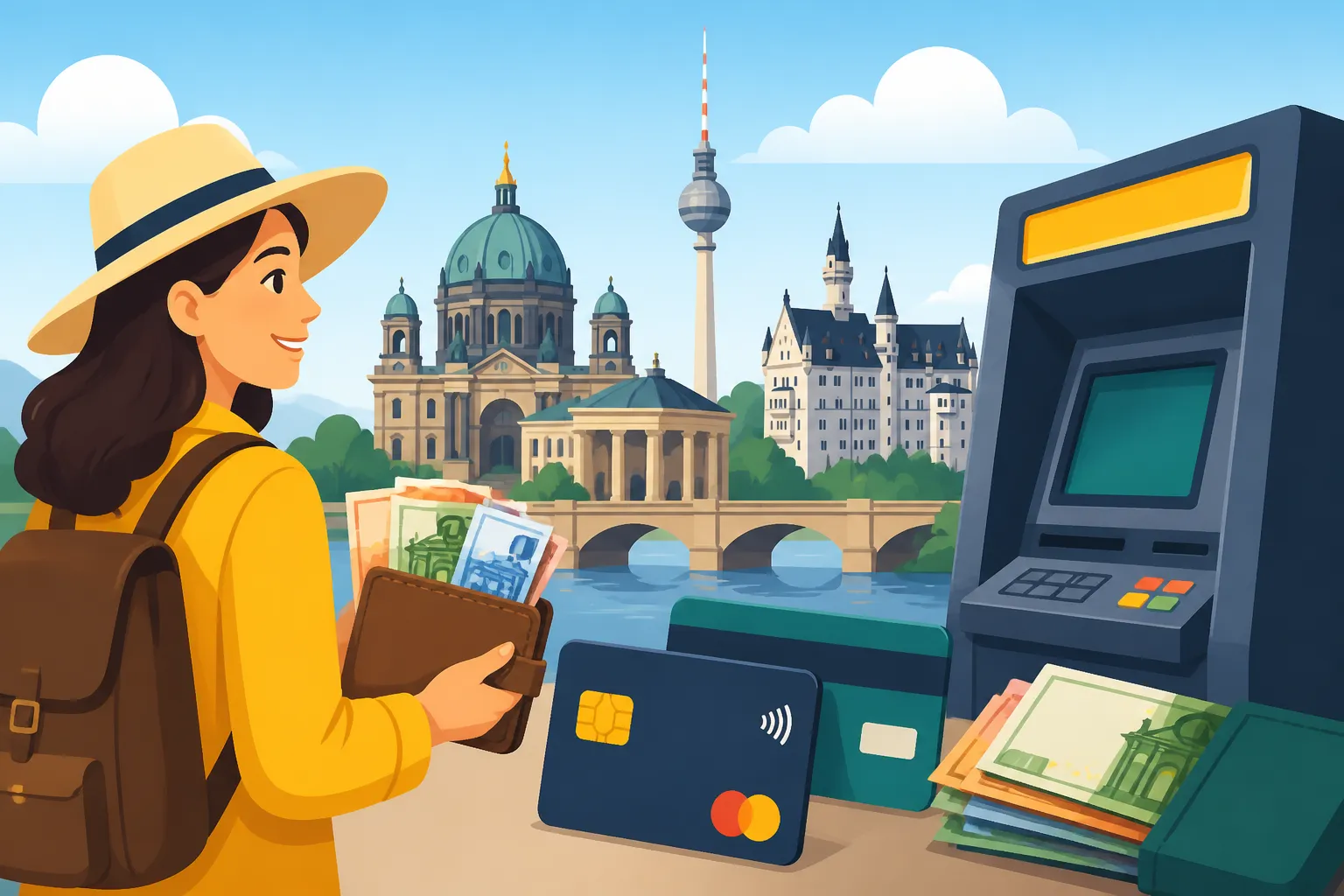
One of the most common headaches for visitors and new expats alike in Germany is figuring out the local money situation. Unlike many countries that have embraced fully cashless systems, Germany often feels like a step back in time, where cash still holds significant sway. This guide will walk you through the ins and outs of managing your travel money in Germany, from understanding cash prevalence to navigating card acceptance and ATM withdrawals, helping you avoid unexpected fees and frustrating moments.
Disclosure: This post may contain affiliate links. We may earn a commission at no extra cost to you if you make a purchase through these links. Read full disclosure.
The German Payment Landscape: Still a Land of Cash?
It's a question every traveler to Germany asks: do I need cash? The short answer is yes, absolutely. While card payments are becoming more common, especially in larger cities and chain stores, Germany still has a strong affinity for physical currency. This can be a bit of a culture shock for those coming from countries where tapping a card or phone is the norm for almost every transaction.
Cash is King (or at least a very strong contender)
You'll quickly discover that many establishments, particularly smaller businesses, independent shops, local bakeries, and even some restaurants, prefer or exclusively accept cash. Imagine heading to a cozy neighborhood café for your morning Brötchen and Kaffee only to find out your international credit card is politely refused. It's a common scenario. Public transport ticket machines, especially older ones, might also be cash-only, or only accept local EC-cards. Even some popular attractions, especially during local festivals (Volksfeste) or smaller Christmas markets, will require cash payments. This preference for cash often stems from a deeply ingrained cultural belief in privacy and a reluctance towards digital tracking of transactions. It's not uncommon to see Germans paying for large grocery hauls entirely with cash, counting out precise change.
Always having some euros in your wallet isn't just a convenience; it's often a necessity to ensure smooth transactions and avoid awkward situations. Many smaller businesses simply don't want to pay the transaction fees associated with international credit cards or might not have the terminal technology readily available. So, when you're exploring the charming streets of a German town, popping into a local Bäckerei for a pretzel, or grabbing a quick Bratwurst from a street vendor, cash will be your best friend.
Card Acceptance: Growing, but Not Universal
While cash remains important, credit and debit card acceptance is definitely on the rise. You can almost always use your international Visa or Mastercard at large supermarket chains like Edeka, Rewe, Lidl, or Aldi. Department stores, major retail chains (think H&M, Zara, MediaMarkt), hotels, and most larger restaurants in tourist hotspots will also readily accept card payments. For booking your accommodation in advance, platforms like Booking.com usually facilitate card payments seamlessly, letting you secure your stay without hassle. Similarly, if you're planning activities or tours, websites like GetYourGuide allow you to pre-pay with your card, which is incredibly convenient.
However, don't let this newfound convenience lull you into a false sense of security. As mentioned, many smaller eateries, independent boutiques, hairdressers, and even some taxis might still be cash-only or accept only specific German debit cards. Always keep an eye out for signs near the cash register indicating accepted payment methods (Visa, Mastercard, Maestro, V Pay, EC-Karte). If in doubt, it’s perfectly acceptable to ask, "Kann ich mit Karte zahlen?" (Can I pay with card?) before committing to a purchase. It's truly a mixed bag, and being prepared for either scenario is key to a stress-free experience.
The "EC-Karte" Phenomenon
If you live in Germany for any length of time, you'll hear about the "EC-Karte," or more formally, the "Girocard." This is the standard debit card issued by German banks to their customers and is the most common form of card payment among locals. Think of it as the German equivalent of a local debit card, widely accepted in almost every shop, restaurant, or service provider that takes any card payment. The crucial distinction for you, as an international traveler, is that your international debit or credit card (Visa, Mastercard, etc.) is not an EC-Karte.
Many smaller German businesses have payment terminals that are configured primarily for Girocards and might not process international credit or debit cards due to different network affiliations or higher processing fees. This means that even if a sign says "Karte Zahlung möglich" (card payment possible), it often implicitly refers to a Girocard. It can be incredibly frustrating to see a local effortlessly pay with their EC-Karte while your Visa or Mastercard is declined. This is a prime example of why carrying some cash is non-negotiable. If you plan to stay in Germany long-term, you'll eventually open a German bank account, and you'll get your own Girocard, which will make daily transactions much smoother. For now, just be aware that "card accepted" doesn't always mean your card is accepted.
Navigating ATMs (Geldautomaten) in Germany
Since cash is such a crucial part of daily life and travel in Germany, you'll inevitably need to withdraw money from an ATM, or Geldautomat. While generally safe and reliable, there are a few things you should know to avoid unnecessary fees and headaches.
Finding ATMs and Associated Networks
You'll find ATMs everywhere in Germany – on main streets, inside bank branches, in shopping centers, and often at larger train stations. The major German banks include Sparkasse, Deutsche Bank, Commerzbank, and the cooperative Volksbanken Raiffeisenbanken. These banks generally operate extensive ATM networks. When using an ATM, look for the logos of your card's network (Visa, Mastercard, Maestro, Plus, Cirrus) to ensure compatibility.
If you have a card from a specific bank group, like those affiliated with the Global ATM Alliance (e.g., Bank of America, Deutsche Bank), you might be able to use partner bank ATMs with reduced or no fees. However, this isn't always a guarantee for international cards. Stick to ATMs directly attached to established banks rather than freestanding, independent ATMs you might see in convenience stores or random kiosks. These independent machines often charge higher, less transparent fees. For instance, while traveling between cities using Omio for train tickets, you'll often find reliable bank ATMs at major hubs like Berlin Hauptbahnhof or München Hauptbahnhof, making it easy to grab cash upon arrival.
Fees, Fees, and More Fees: What to Watch Out For
This is where travelers often get stung. There are typically two main types of fees you need to be aware of when using a foreign card at a German ATM:
- Your Bank's Foreign Transaction Fees: Most banks outside Germany will charge a fee (often 1-3% of the transaction) for currency conversion or for international ATM withdrawals. Check with your home bank before you travel to understand their specific fee structure.
- ATM Operator Fees: While less common at major bank ATMs in Germany than in some other countries, some German ATMs may charge a direct fee for withdrawals from foreign cards. This fee should be displayed on the screen before you confirm the transaction.
The biggest culprit for unexpected costs, however, is Dynamic Currency Conversion (DCC). This is a practice where the ATM or point-of-sale terminal offers to charge you in your home currency (e.g., USD, GBP) instead of the local currency (EUR). While it might sound convenient, always decline this option. When you choose to be charged in your home currency, the ATM operator applies their own exchange rate, which is almost always significantly worse than the rate your own bank would give you. Always choose to be charged in Euros (EUR). Your own bank will then perform the currency conversion at a much more favorable interbank rate, saving you money. I've personally fallen for this trick once or twice in my early expat days, and the difference in exchange rate can add up quickly.
To minimize fees, try to make fewer, larger withdrawals rather than many small ones, as some fees are per transaction. Also, always opt to be charged in EUR.
Daily Withdrawal Limits and Safety Tips
Most German ATMs have daily withdrawal limits, which can vary by bank and ATM location. For many machines, a common limit might be around €500-€1000 per day. However, your home bank might also impose its own daily withdrawal limits, which could be lower than the German ATM's limit. It's wise to check both before you travel so you know your maximum accessible cash. If you plan to make a large purchase that requires cash, be aware of these limits and plan accordingly over a few days if necessary.
Regarding safety, German ATMs are generally very secure. However, it's always smart to follow basic precautions:
- Be aware of your surroundings: Especially at night or in less busy areas.
- Cover the keypad: Always shield your PIN entry with your free hand to prevent "shoulder surfing."
- Inspect the machine: Before inserting your card, quickly check for any suspicious attachments or tampering around the card slot or keypad (skimming devices). If something looks out of place, find another ATM.
- Keep your card and cash secure: Put your money away immediately and keep your card safe before leaving the ATM area.
- For more general advice on staying safe while traveling, you might want to read our guide on Staying Safe in Germany: Common-Sense Tips for Travelers.
Using Credit and Debit Cards: International vs. Local
Understanding the nuances of card acceptance is paramount for a smooth trip. It’s not just about having a card; it's about having the right kind of card for the situation.
Visa and Mastercard Acceptance
For international travelers, Visa and Mastercard are your best bet. They are by far the most widely accepted credit and debit card networks globally, and Germany is no exception among major international payment processors. You'll find them accepted at most larger establishments: supermarkets, department stores, hotels (which you can often book with these cards via platforms like Booking.com), train ticket counters (especially for long-distance trains through Deutsche Bahn or Omio), car rental agencies, and many mid-to-high range restaurants, particularly in tourist-heavy areas.
Many online services and platforms catering to tourists, such as those for booking tours through GetYourGuide or securing train tickets across Europe via Omio, will seamlessly process Visa and Mastercard payments. However, as we discussed, don't assume universal acceptance. Always carry some cash, particularly for smaller purchases, independent shops, and local eateries. It's a pragmatic approach that will save you from potential embarrassment and the scramble to find an ATM.
American Express and Discover: More Limited Reach
While Visa and Mastercard enjoy broad acceptance, cards from American Express (Amex) and Discover have a significantly more limited presence in Germany. American Express, while a premium brand, is often not accepted outside of major international hotel chains, upscale restaurants, and large department stores. The processing fees for Amex tend to be higher for merchants, which makes many smaller German businesses reluctant to accept it.
Discover cards are even less common. You'll be hard-pressed to find a merchant that accepts Discover in Germany. If these are your primary cards, you absolutely must have a Visa or Mastercard as a backup, along with a good supply of Euros. Relying solely on Amex or Discover for your travel money in Germany is a recipe for constant frustration. I’ve seen many American friends struggle with this, only to resort to cash withdrawals because their preferred Amex card was useless in a small village Gaststätte.
Debit Card vs. Credit Card: What's the Difference for Travelers?
For daily transactions and ATM withdrawals, both international debit and credit cards (assuming they are Visa or Mastercard) can be used. However, there are some important distinctions to keep in mind:
- Debit Cards: When you use a debit card, the funds are immediately deducted from your bank account. This is generally good for budgeting as you're spending your own money. However, debit cards typically offer less fraud protection than credit cards. If your debit card details are compromised, your actual bank account could be drained, although most banks have good fraud detection systems in place now. When withdrawing cash from an ATM, your international debit card will usually be the go-to.
- Credit Cards: Credit cards offer a line of credit, meaning you're borrowing money. This usually comes with stronger fraud protection; if unauthorized charges occur, you're typically not liable for them, and your bank account isn't directly affected. Credit cards are often preferred for booking hotels and rental cars, as they allow for "holds" (pre-authorization of funds) without actually deducting money from your account. This is much less convenient with a debit card, where the hold might tie up your actual funds. Make sure your credit card has no foreign transaction fees, or very low ones, to maximize savings. Understanding your card's benefits and limitations is a key aspect of Money Matters in Germany: Complete Financial Guide for Expats.
For a general guide on managing personal finances, expats might find our article on Banking and Insurance in Germany: Guide to Financial Services for Foreigners helpful.
Smart Money Strategies for Your German Trip
Traveling in Germany, like anywhere, requires a bit of financial savvy to ensure you're not overspending on fees or caught without the right payment method. It's all about finding a balance.
The Cash-Card Balance: Finding Your Sweet Spot
The ideal strategy for most travelers in Germany is a balanced approach: carry a reasonable amount of cash for daily expenses and smaller purchases, and rely on your international Visa or Mastercard for larger transactions, hotel bills, or emergencies.
So, how much cash should you carry? This really depends on your spending habits and planned activities. For a day of casual sightseeing, meals at local spots, and perhaps some souvenir shopping, having €50-€100 in your wallet is a good baseline. If you're heading to a smaller town, a rural area, or a local market, consider carrying more. I usually make sure I have at least €50 on me at all times.
You'll quickly learn which types of places are reliably card-friendly and which are cash-only. Places like the aforementioned Bäckerei, Imbiss (snack stands), smaller cafes, and many independent shops will likely prefer cash. For instance, when grabbing a quick bite at a Currywurst stand in Berlin or buying a few pastries, cash is almost always expected. Always have a mix of smaller denominations (€5, €10, €20 notes) to avoid issues with vendors who might not have change for a €50 or €100 note on a small purchase. For transportation, while major long-distance tickets can be bought online via Omio, local bus or tram tickets often require exact change or can be purchased with an EC-Karte at machines. Our guide on Getting Around Germany: Trains, Buses, Flights, and Car Hire offers more details on transport payment.
Travel-Friendly Bank Accounts and Cards
Before you even step foot in Germany, do your homework on your bank accounts and cards. Look for:
- No Foreign Transaction Fees: Many credit cards and some debit cards specifically cater to travelers by waiving these 1-3% fees on international purchases. This can save you a significant amount over the course of your trip.
- Good Exchange Rates: While difficult to predict perfectly, choosing cards that process transactions at or close to the interbank rate is crucial. As discussed, always choose to be charged in EUR at ATMs and point-of-sale terminals to get the best rate from your bank.
- ATM Fee Reimbursements: Some challenger banks or premium accounts offer to reimburse ATM fees charged by foreign banks. This can be a huge saver if you plan on making frequent cash withdrawals.
- Travel Notifications: Inform your bank of your travel dates and destinations to prevent them from flagging your transactions as suspicious and blocking your card.
Many expats and savvy travelers leverage modern fintech solutions. While this guide is informational and not a sales pitch, some digital banks like Revolut or Wise offer multi-currency accounts and debit cards that are excellent for international travel, often providing competitive exchange rates and low or no foreign transaction fees. They can be incredibly useful tools for managing your money in different currencies. For an in-depth discussion, consider checking out our article on Best Banks in Germany for Expats: Low Fees and English Support.
Budgeting and Tracking Your Expenses
Keeping track of your spending while traveling can feel like a chore, but it's essential for staying within budget. Germany, while not exorbitant, can be pricey, especially in major cities.
- Set a Daily Budget: Decide how much you want to spend on food, activities, and transport each day.
- Categorize Spending: Mentally (or physically) divide your expenses. How much for sightseeing? How much for food?
- Use a Simple App or Spreadsheet: There are many free budgeting apps designed for travel that can help you log your expenses quickly. Even a simple notes app on your phone can work. Just make a quick entry every time you spend money.
- Keep Receipts: While not always necessary for everything, holding onto receipts for larger purchases can help you reconcile your spending.
- Review Regularly: Take 10-15 minutes every few days to review your spending and adjust your budget if needed. This also helps you identify any unauthorized transactions quickly.
A realistic budget for typical travel expenses (mid-range accommodation, meals, transport, some activities) could range from €80-€150 per person per day, depending heavily on the city and your style of travel. For instance, Munich tends to be pricier than Leipzig. Check out our guide on the Cost of Living in Germany: Budgeting Guide for Expats for more detailed insights.
Payment Trends and What to Expect Next
Germany's payment landscape is definitely evolving, albeit at a slower pace than some other nations. What you experience today might be slightly different in a few years, but the core principles remain.
The Slow Shift Towards Digital Payments
The push for more digital payments, especially contactless options like Apple Pay and Google Pay, is gaining traction in Germany. More and more large retailers and supermarket chains are upgrading their terminals to accept these methods. It's often quicker and more convenient. You'll also find some public transport networks increasingly accepting contactless card payments directly on buses or at tram stops.
However, the cultural preference for cash and data privacy concerns still provide a significant counter-force. While digital options are growing, they haven't entirely replaced cash for many Germans. So, don't arrive expecting a fully cashless experience like you might find in Scandinavia or the UK. The shift is gradual, and there will likely be a hybrid system for the foreseeable future. Even in major cities, you'll encounter a mix. For example, a sleek modern cafe might accept Apple Pay, but the traditional Kneipe (pub) next door might still be cash-only.
Online Bookings and Pre-Paid Options
Where digital payments truly shine in Germany is with online bookings and pre-paid services. This is a massive convenience for travelers.
- Accommodation: Websites like Booking.com allow you to secure your hotel, hostel, or vacation rental in advance using your credit or debit card. Many offers also include free cancellation, giving you flexibility.
- Transport: For long-distance travel, booking train tickets through Deutsche Bahn's website or app, or using platforms like Omio for international bus and train tickets, is almost exclusively done with card payments. This saves you the hassle of dealing with cash at ticket machines, which can sometimes be complex for foreigners. Omio, for example, makes it simple to compare and book various transport options across Europe using your card. Our guide on Deutsche Bahn Guide: Using Trains for City and Long-Distance Travel delves into this further.
- Tours and Activities: Websites like GetYourGuide are invaluable for pre-booking excursions, museum entry, and guided tours. Paying online with your card ensures your spot, often offers better rates, and lets you skip lines, all while managing your money digitally. This is especially useful for popular attractions in cities like Berlin or Munich.
These online services streamline your travel planning and often reduce the need for cash in those specific areas of your budget. Always remember that while these larger, international platforms are card-friendly, the small, local independent tour guide you stumble upon might still prefer cash.
Here's a quick reference table to help you decide when to use cash or card:
| Scenario | Best Payment Method | Notes |
|---|---|---|
| Small Shops / Boutiques | Cash, sometimes card | Often cash-only or EC-Karte only. Always ask if unsure. |
| Bakeries / Cafes | Cash | Very common for cash-only, especially for small purchases. |
| Restaurants | Card (Visa/MC), Cash | Larger restaurants and chains usually accept cards. Many smaller ones may be cash-only or EC-Karte only. Tipping often done in cash. |
| Supermarkets (Aldi, Lidl, Rewe) | Card (Visa/MC) | Widely accept international Visa/Mastercard. |
| Public Transport (local) | Cash, sometimes card | Ticket machines can be cash-only or EC-Karte. Some new machines accept international cards. Mobile apps can use card. |
| Long-Distance Trains (DB) | Card (online) | Best to book online or via app with card (e.g., Omio). Ticket machines often take international cards. |
| Taxis | Cash, sometimes card | Many still prefer cash, some accept cards. Ask before starting the journey. |
| Hotels | Card | Almost universally accept international credit cards, especially when booked via platforms like Booking.com. |
| Attractions / Museums | Card, Cash | Larger ones usually accept cards. Smaller galleries or local sights might be cash-only. Pre-book online where possible (GetYourGuide). |
| Street Food Vendors / Markets | Cash | Almost always cash-only for speed and simplicity. |
| Independent ATMs | Avoid | Stick to bank-affiliated ATMs to avoid high fees. |
Navigating the financial currents of Germany doesn't have to be daunting. With a bit of foresight, a good mix of payment methods, and an understanding of local customs, you'll be well-prepared to enjoy everything this wonderful country has to offer without any money-related hiccups. Happy travels!
Disclaimer
Please note that while every effort has been made to provide accurate and up-to-date information, rules and regulations regarding banking, payment methods, and fees in Germany can change. It is always advisable to verify specific details with your financial institution and local service providers before making any decisions or undertaking transactions. This guide is for informational purposes only and does not constitute financial advice.