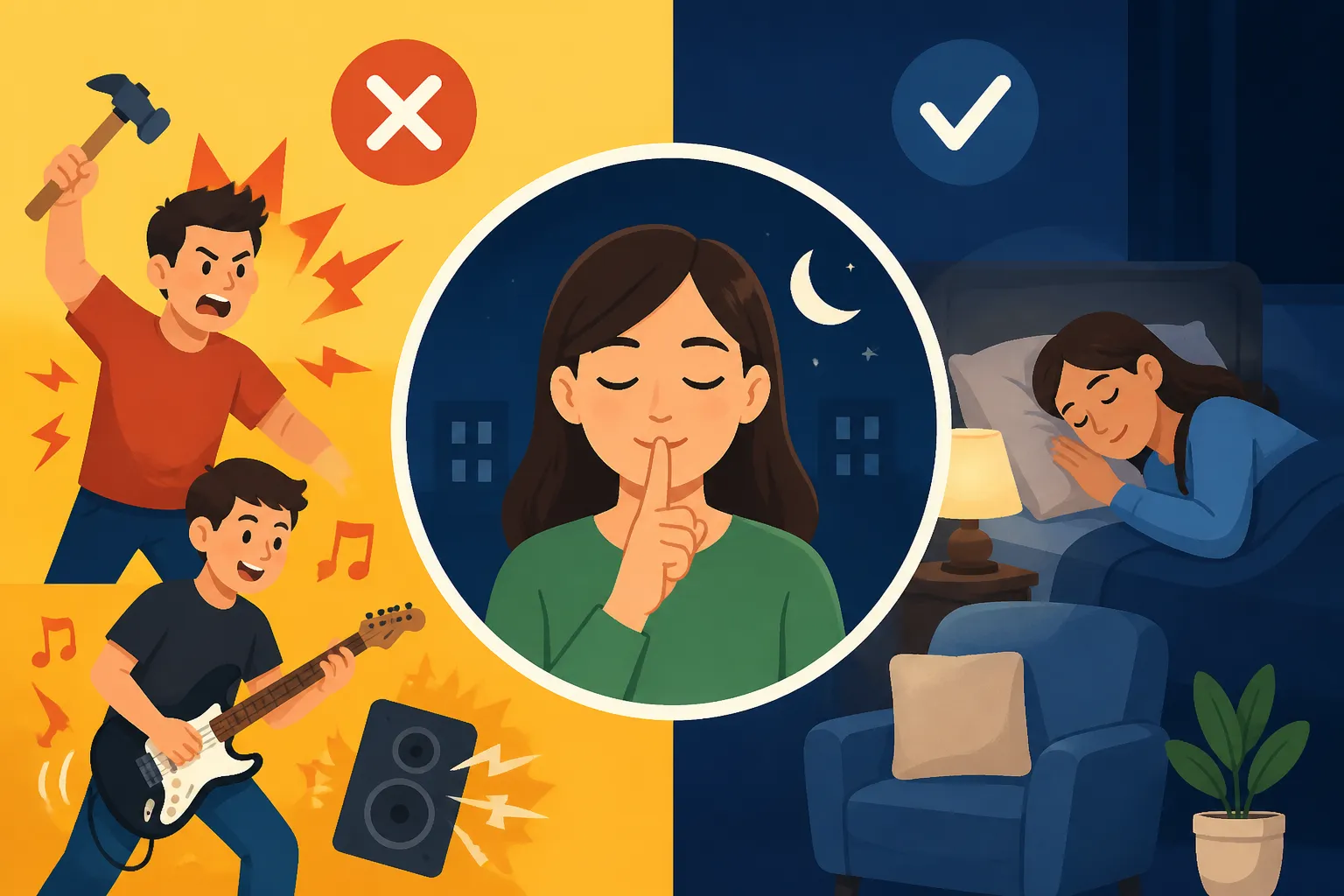
What Are Quiet Hours (Ruhezeit) and Why Do They Matter?
You have just moved into your dream apartment in Berlin or Munich, and you finally have a free Sunday to assemble that bookshelf and hang your gallery wall. You pick up the drill, make the first hole, and within thirty seconds, there is a frantic, rhythmic pounding on your door. Welcome to the world of Ruhezeit, a German cultural pillar that can feel like a trap for the uninitiated. This guide explains the legal and social rules of quiet hours so you can avoid fines and maintain peace with your neighbors.
Disclosure: This post may contain affiliate links. We may earn a commission at no extra cost to you if you make a purchase through these links. Read full disclosure.
Understanding the Concept of Ruhezeit: More Than Just Silence
When you first arrive in Germany, the silence of a residential neighborhood on a Sunday afternoon can feel eerie, almost like the beginning of a post-apocalyptic movie. However, this is not a sign of abandonment; it is the manifestation of Ruhezeit (quiet hours). In Germany, silence is considered a protected legal right. It is not merely a polite suggestion or a guideline for the considerate; it is a structured part of the legal framework governing communal living. Whether you are staying in a vacation rental found through Booking.com or moving into a long-term flat, understanding these rules is vital for your social survival.
The philosophy behind Ruhezeit is rooted in the belief that every individual needs designated periods of recovery and rest to remain productive and healthy. This is a significant part of the broader German Culture & Etiquette: A Guide to Social Life and Customs. While newcomers often view it as an infringement on their personal freedom—after all, why shouldn't you be allowed to mow your lawn on your only day off?—Germans view it as a collective agreement that ensures everyone’s right to peace.
One of the first things you will experience when Coping with Culture Shock: Adjusting to Life in Germany is the realization that your neighbors are often the self-appointed guardians of these rules. It is not uncommon for a neighbor to time your piano practice or knock on your ceiling the moment your washing machine hits the spin cycle after 10:00 PM. This directness isn't necessarily personal; it is simply the German way of maintaining order. Validating this frustration is important: yes, it feels restrictive. Yes, it makes chores difficult to schedule. But once you adapt, you might find that the forced slowdown of a German Sunday becomes the mental break you never knew you needed.
When Exactly are the Quiet Hours? A Breakdown of the Schedule
The timing of Ruhezeit can vary slightly depending on the specific state (Bundesland) or even the specific municipality, but there are general standards that apply almost everywhere across the country. Generally, quiet hours are divided into three main categories: nighttime, midday, and the absolute silence of Sundays and holidays.
Nighttime Quiet Hours (Nachtruhe)
The most universal rule is Nachtruhe, which typically runs from 10:00 PM (22:00) to 6:00 AM or 7:00 AM (06:00/07:00). During this time, any noise that can be heard outside your four walls is generally prohibited. This means no loud music, no shouting on the balcony, and definitely no power tools. Even if you are just arriving at your accommodation after a long trip booked via Omio, you must be mindful of how loudly you roll your suitcases across the hardwood floors or cobblestones.
The Midday Rest (Mittagsruhe)
While not as strictly enforced by law in every single city as it used to be, Mittagsruhe (midday rest) remains a staple in many apartment building house rules (Hausordnung). This period usually falls between 1:00 PM (13:00) and 3:00 PM (15:00). It originated as a time for elderly citizens and young children to nap. In many rural areas or strictly managed buildings, if you start hammering a nail at 1:30 PM, you will likely hear about it. If you find yourself unable to do noisy chores during this time, it is the perfect window to use GetYourGuide to book a walking tour or a quiet museum visit.
Sundays and Public Holidays (Sonn- und Feiertage)
Sundays and public holidays are the "holy grail" of quiet in Germany. On these days, the Ruhezeit lasts for the entire 24-hour period. This is the day when the country effectively shuts down. There is no Sunday Shopping in Germany: What’s Open and How to Plan, and there are certainly no construction projects allowed. The silence is all-encompassing. If you are caught using a leaf blower or a circular saw on a Sunday, your neighbors may not even talk to you first—they might go straight to the landlord or, in extreme cases, the local Ordnungsamt (public order office).
| Period | Typical Times | Strictness Level | Allowed Activities |
|---|---|---|---|
| Nachtruhe | 10:00 PM – 6:00 AM | High | Sleeping, reading, quiet talking |
| Mittagsruhe | 1:00 PM – 3:00 PM | Medium/High | Cooking, watching TV at low volume |
| Sundays | All Day | Very High | Walking, reading, board games |
| Saturdays | Same as Weekdays | Low | Shopping, housework, renovations |
What is Forbidden and What is Allowed during Ruhezeit?
The golden rule for Ruhezeit is "Zimmerlautstärke," which translates to "room volume." This means that any noise you make should not be audible to your neighbors. Of course, soundproofing varies, but the legal standard assumes an average building's insulation. Understanding the specifics of Living in Germany: Essential Guide to Daily Life for New Expats requires knowing exactly which buttons you can and cannot push during these hours.
Household Activities and Modern Appliances
A common point of contention is the washing machine or dishwasher. Technically, modern, quiet appliances are often allowed to run during quiet hours because they do not exceed the decibel limits of Zimmerlautstärke. However, if you live in an old Altbau building with thin wooden floors, the vibration of a spin cycle can sound like a jackhammer to the person living below you. To be safe, try to finish your laundry by 10:00 PM. Vacuuming is a definitive "no" during nighttime and Sunday hours. The high-pitched whine of a vacuum cleaner is one of the most frequently cited violations in apartment disputes.
Garden Work and Power Tools
If you have a garden, you must be extremely careful. Most German municipalities have specific ordinances against motorized lawnmowers and hedge trimmers during Mittagsruhe and on Sundays. This also applies to indoor renovations. Drilling, hammering, and sawing are strictly weekday and Saturday activities. If you have just moved in and are desperate to finish your setup, communicate with your neighbors beforehand. Often, a small gift like a chocolate bar and a polite "I’ll be drilling for just 20 minutes" can buy you some leniency, but don't count on it as a permanent pass.
Music and Musical Instruments
Musicians face a unique challenge in Germany. By law, you are generally allowed to practice an instrument for 1.5 to 2 hours a day, even in a rented apartment. However, this practice must still happen outside of the official Ruhezeit. If you are a professional musician, you might need to look for a dedicated practice space or ensure your room is professionally soundproofed. For the casual listener, keep your speakers at a level where you can hear the lyrics, but your neighbor can't. If you are hosting a small gathering, keep the windows closed after 10:00 PM to prevent noise leakage.
Consequences and Conflict Resolution: Dealing with the Hausordnung
What happens if you accidentally—or intentionally—break the rules? In many countries, a neighbor might just ignore it or mention it weeks later. In Germany, the reaction is often swifter. It is essential to understand What Is Hausordnung? Navigating Apartment Rules and Regulations because this document is legally binding and usually attached to your rental contract.
The Role of the Landlord and the Police
If you repeatedly violate quiet hours, your neighbors will likely keep a "Lärmprotokoll" (noise log). This is a detailed record of every time you made noise, including the date, time, and type of sound. They can submit this to the landlord, who can then issue an "Abmahnung" (formal warning). Under German Tenant Rights and Laws: What Expats Need to Know, receiving three warnings for the same issue can be grounds for eviction. In extreme cases, such as a massive party at 3:00 AM, neighbors may call the police. While you won't be hauled off to jail, the police can shut down the party and issue a fine that can range from a few hundred to several thousand euros for repeat offenders.
Tips for Communicating with Neighbors
The best way to handle Ruhezeit is through proactive communication. If you know you are having a housewarming party, hang a sign in the hallway a few days in advance. State clearly when the music will start and, more importantly, when it will be turned down to Zimmerlautstärke. Invite your neighbors! It is much harder for someone to complain about the noise if they are part of the celebration.
If you are the one suffering from a noisy neighbor, the cultural expectation is that you speak to them directly before involving authorities. A polite knock and a "Could you please turn the music down? It's past 10:00 PM" is the standard first step. Only if the behavior continues should you escalate the matter. For more detailed strategies, see our guide on How to Deal With Noisy Neighbors in a German Building.
Ultimately, Respecting Quiet Hours: How to Keep Good Relations with Neighbors is about more than just avoiding fines. It is about integrating into a society that values collective peace. It takes time to adjust your internal clock to the German schedule, but eventually, you will find yourself standing in your kitchen on a Sunday morning, enjoying the total silence, and realizing that you finally feel at home.
Disclaimer
The information provided in this guide is for informational purposes only and does not constitute legal advice. Laws regarding noise and quiet hours can vary by federal state and municipality in Germany. For specific legal issues or disputes with landlords or neighbors, please consult a qualified legal professional or a local tenants' association (Mieterverein).