How to Spend a Weekend in Hamburg
Hamburg is often overshadowed by Berlin’s grit or Munich’s polish, leaving travelers unsure how to tackle this massive port city without falling into tourist traps or getting lost in the windy harbor. This guide solves that by mapping out a realistic, veteran-approved weekend that balances iconic maritime history with the hidden neighborhood spots that make Hamburg truly special.
Disclosure: This post may contain affiliate links. We may earn a commission at no extra cost to you if you make a purchase through these links. Read full disclosure.
Friday Evening: Arrival and Maritime Immersion
Arriving in Hamburg usually begins at the Hauptbahnhof, a sprawling, chaotic hub that can be intimidating if you are not used to the pace of German transit. Most visitors find themselves immediately struck by the damp, salty air—a constant reminder that the North Sea is just down the Elbe. Your first priority should be dropping your bags. If you have used Booking.com to secure a spot in a neighborhood like Altona or the trendy Sternschanze, you will avoid the sterile feel of the station area and dive straight into local life.
Once you have settled in, head straight for the Landungsbrücken. While this area is undeniably touristy, seeing the harbor lights at twilight is a non-negotiable Hamburg experience. Instead of a standard tour, many locals recommend hopping on the Line 62 ferry. It is part of the public transport system, meaning you can use your standard day ticket or the Deutschland-Ticket to ride. For a more curated experience, you might check GetYourGuide for an evening "Lichterfahrt" (light tour) which takes you deeper into the illuminated canals of the container port.
For dinner, wander into the Portugiesenviertel (Portuguese Quarter) located just behind the harbor. This area is a testament to Hamburg’s history as a global trade hub, filled with dozens of small, family-run restaurants serving incredible seafood and "Bica" (Portuguese espresso). It is an excellent place to practice the basics of Portuguese so you can order your Vinho Verde with confidence. Just remember that in Hamburg, a simple "Moin" works at any time of day or night.
Saturday Morning: Harbor History and Red Bricks
Saturday morning in Hamburg should be dedicated to the Speicherstadt, the world’s largest warehouse district. Built on thousands of oak piles, these red-brick gothic buildings are now a UNESCO World Heritage site. Walking through these narrow canals feels like stepping back into the 19th century. If you are a photography enthusiast, the Wasserschloss is the iconic "castle" shot you see on postcards, located at the intersection of two canals.
While in the Speicherstadt, you might be tempted by the Miniatur Wunderland, which is fantastic but requires booking weeks in advance. If you haven't planned that far ahead, spend your time exploring the Kontorhausviertel instead. This district features the Chilehaus, an architectural marvel built to look like the bow of a ship. It is a prime example of Brick Expressionism and offers a much quieter, more contemplative look at the city’s merchant history.
Navigating between these sites is a great time to familiarize yourself with Getting Around German Cities: U-Bahn, S-Bahn, Trams, and Buses because the city is larger than it looks on a map. While the U-Bahn is efficient, the Speicherstadt is best explored on foot to truly appreciate the intricate brickwork and the smell of roasting coffee that still lingers from the old warehouses. If you are coming from another city, using Omio to check the latest S-Bahn and regional train connections can save you a lot of standing around in the wind.
Saturday Afternoon: The Elbphilharmonie and St. Pauli
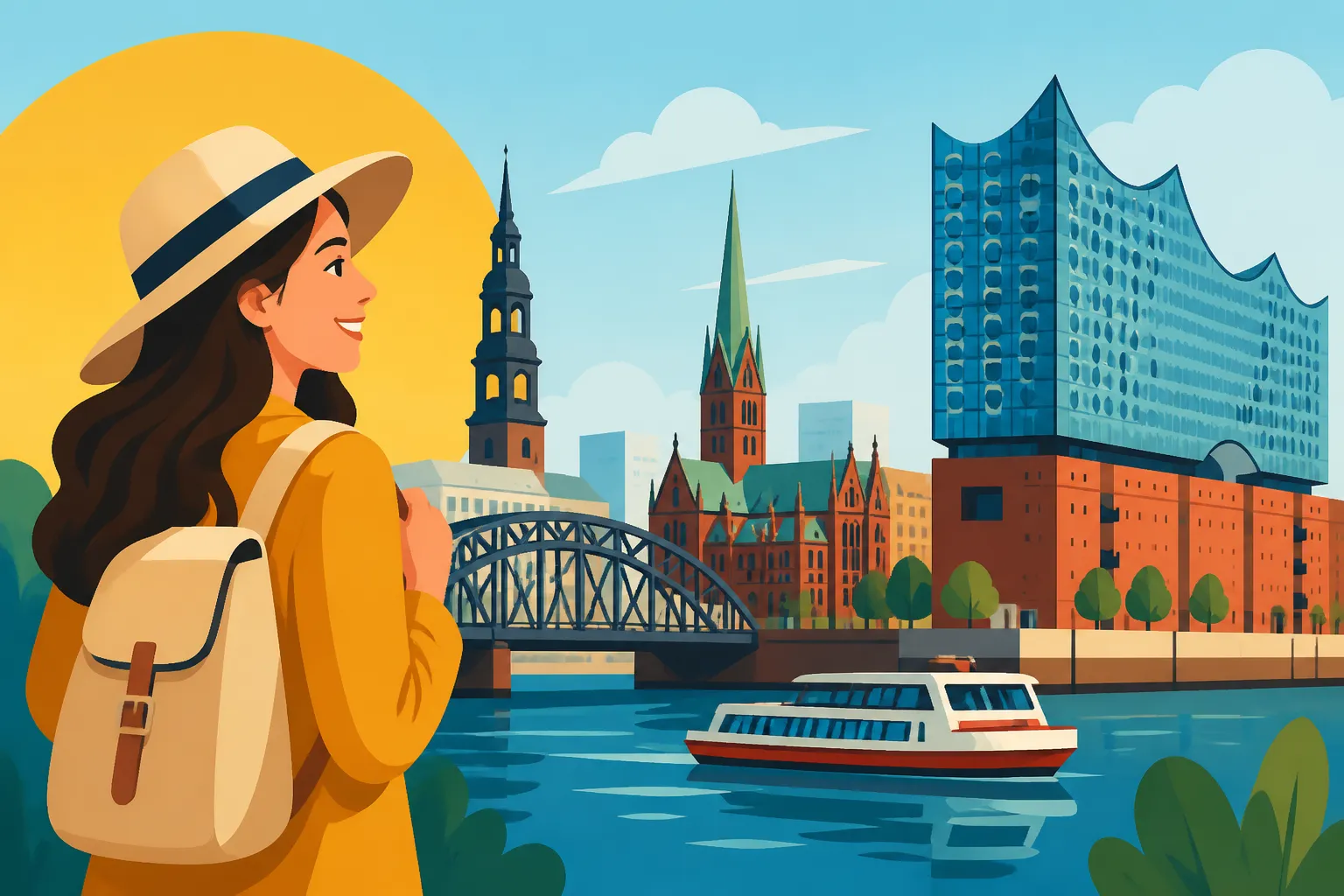
After a morning of history, walk toward the Elbphilharmonie, Hamburg’s modern architectural crown jewel. Even if you don’t have tickets for a concert, you can access the "Plaza"—the observation deck—for free if you get a timed ticket at the entrance. The view from the top gives you a 360-degree perspective of the working harbor, the city spires, and the endless stretch of the Elbe. It is the perfect spot to realize why Hamburg is called the "Gateway to the World."
By late afternoon, it is time to transition from the maritime to the rebellious. Head toward St. Pauli, specifically the Reeperbahn. During the day, it looks a bit weathered, but this is the heart of Hamburg’s counter-culture. Walk up the Wohlwillstraße or the Marktstraße in the Karoviertel to find independent boutiques and record stores. This is also where you will find the best "Fischbrötchen" (fish rolls). Understanding How to Order Currywurst and German Street Food is key here—don't expect fancy plating; expect fresh herring, onions, and a crusty roll.
As evening approaches, the Reeperbahn transforms. It is famous for its red-light district, but it is also one of Europe’s densest neighborhoods for live music and bars. If you want to avoid the neon-lit chaos of the main strip, duck into the side streets of the Hamburger Berg. Here, the bars are dark, the music is loud, and the atmosphere is authentic. It is a great environment to learn about Beer, Wine, and German Drinking Culture, as Hamburg has a deep-seated love for its local Astra beer and a very specific way of socializing that is direct yet welcoming.
Sunday Morning: The 5 AM Fish Market Ritual
If you really want to claim you have spent a weekend in Hamburg, you have to face the Altona Fischmarkt. This market has been running since 1703 and starts at 5:00 AM (or 7:00 AM in winter). It is a surreal intersection of "early birds" looking for fresh salmon and "night owls" who haven't gone home from the Reeperbahn yet. The main attraction is the "Marktschreier" (market criers) who yell at the top of their lungs to sell baskets of fruit, chocolate, or massive fish.
The auction hall (Fischauktionshalle) usually features a live band playing jazz or rock at sunrise. It is a chaotic, loud, and quintessentially Hamburg experience. Grab a coffee and a pickled herring roll and watch the sunrise over the cranes of the container port. It is worth the sleep deprivation, but be prepared—this is a cash-heavy environment. Make sure you have read up on How Much Cash Should You Carry When Traveling in Germany? so you aren't stuck at the one working ATM with twenty other tourists.
After the market, walk along the Elbe toward Övelgönne. This is a picturesque area of old captain's houses and a small sandy beach. It is where locals go to escape the city noise. You can watch the massive container ships glide by, which look like floating apartment blocks against the skyline. It is a humbling sight and a reminder of the sheer scale of global trade that keeps this city breathing.
Sunday Afternoon: The Alster and Farewell
To round out your weekend, move away from the industrial Elbe and toward the elegant Alster lakes. The Binnenalster (Inner Alster) and Außenalster (Outer Alster) are the city's living rooms. While the Elbe is for work, the Alster is for play. You can rent a rowing boat or a paddleboard, or simply walk the 7-kilometer path around the outer lake. The villas lining the water are some of the most expensive real estate in Germany, offering a glimpse into the wealth of the Hanseatic merchant families.
The atmosphere here is much more reserved and "chic" than in St. Pauli. It is a good place to observe German Etiquette and Social Life for Visitors—you will notice a shift in dress code and volume. If you have time before your train, find a cafe with a view of the water for "Kaffee und Kuchen" (coffee and cake). It is a sacred Sunday tradition in Germany. If you are worried about the language barrier when ordering, checking a guide on Ordering Food and Drinks in German: A Practical Phrasebook can help you navigate the nuances of German service, which is often more efficient than it is chatty.
As your weekend closes, head back to the Hauptbahnhof. Using Omio one last time to ensure your ICE train is on platform can help reduce the stress of departure. Hamburg is a city that requires a bit of grit to appreciate—it is often rainy, the wind is sharp, and the people can seem cool at first. But once you have seen the sunrise at the fish market and felt the bass of a St. Pauli basement bar, you will understand why people move here and never want to leave.
Weekend Planning Summary Table
| Activity Category | Recommended Location | Best Time to Visit | Veteran Tip |
|---|---|---|---|
| Maritime View | Elbphilharmonie Plaza | Sunset | Get the free timed ticket online to skip the queue. |
| Local Food | Portugiesenviertel | Friday Dinner | Try the "Salgados" at a small Portuguese bakery for a snack. |
| Architecture | Speicherstadt / Chilehaus | Saturday Morning | The best light for photos is the "Blue Hour" just after sunset. |
| Nightlife | Hamburger Berg (St. Pauli) | Saturday Night | Avoid the "Great Freedom" (Große Freiheit) if you want local vibes. |
| Tradition | Altona Fischmarkt | Sunday 05:00 – 09:00 | Go at the very end to get massive discounts on fruit baskets. |
| Relaxation | Außenalster | Sunday Afternoon | Rent a "Tretboot" (pedal boat) to see the mansions from the water. |
Logistics and Practicalities
Getting to Hamburg is increasingly simple thanks to high-speed rail. If you are coming from Berlin, the journey is less than two hours. From further afield, like Munich or Frankfurt, you will want to check Omio to see if a flight or a long-distance train makes more sense for your budget. Once in the city, the HVV (transit authority) app is your best friend. Hamburg’s transit system is zoned, but for a weekend, a "9-Uhr-Tageskarte" (9 AM day ticket) is usually the most cost-effective way to get around.
One thing the guidebooks don't always emphasize is the "Schietwetter" (miserable weather). Hamburgers take pride in their rain. A flimsy umbrella will be destroyed by the wind in minutes; invest in a proper yellow raincoat (Friesennerz) if you want to look like a local. Also, be aware of Cash vs Card in Germany: What Visitors Should Know because, despite its international status, many of the best harbor pubs and small cafes still do not accept credit cards.
If you are planning to visit several museums or take multiple boat tours, you might look into a Hamburg Card via GetYourGuide. It combines transit with discounts. However, if you prefer a slow-travel approach, simply walking the different neighborhoods—from the posh Eppendorf to the alternative Ottensen—provides a better sense of the city's soul than any museum could.
Before you leave, make sure you know How to Tip in Germany: Customs for Restaurants, Taxis, and More so you can leave a few euros for the hard-working staff at the fish market or your hotel. Small gestures go a long way in this city. Hamburg doesn't ask for your affection; it earns it through its resilient spirit and its refusal to be anything other than a hardworking, seafaring powerhouse.
Disclaimer
The information provided in this guide is for informational purposes only. Travel regulations, opening hours, and local laws in Germany can change frequently. While we strive to provide the most up-to-date advice based on personal expat experience and current data, always verify specific details like train schedules on Omio or booking conditions on Booking.com before your trip. This guide does not constitute legal or professional travel advice.