What Souvenirs to Buy at German Christmas Markets
Stepping into a German Christmas market for the first time is like entering a winter wonderland, a sensory overload of cinnamon, pine, roasted almonds, and shimmering lights. It's truly magical, but let's be honest, it can also be a little overwhelming when you're trying to figure out what to bring back that isn't just another mass-produced trinket. This guide is here to cut through the confusion, helping you identify those truly special, authentic German souvenirs that will keep the spirit of your Weihnachtsmarkt experience alive long after the last Glühwein has been sipped.
Disclosure: This post may contain affiliate links. We may earn a commission at no extra cost to you if you make a purchase through these links. Read full disclosure.
The Heart of German Christmas Market Culture: Beyond the Glühwein
Ah, the Weihnachtsmarkt! For many of us expats, it’s one of the quintessential German experiences, right up there with learning to sort trash and navigating the Anmeldung process. But beyond the sheer joy of sipping spiced wine and munching on Reibekuchen, these markets are a treasure trove of culture, history, and craft. It’s easy to get caught up in the festive atmosphere and just grab whatever catches your eye, but understanding the deeper meaning behind some of these items can make your souvenir hunt so much more rewarding.
Why Souvenirs Matter at German Christmas Markets
When I first arrived in Germany, I scoffed a bit at the idea of buying souvenirs. Why would I need a tiny wooden angel when I could just take pictures? But as years went by, and I visited market after market – from the grand, bustling ones in Berlin to the quaint, tucked-away gems in smaller towns – I started to get it. A good souvenir isn't just something to collect dust; it's a tangible memory, a piece of a truly unique experience.
Think about it: that specific scent of beeswax from a candle, the intricate detail on a hand-carved ornament, or even the slight unevenness of a ceramic mug. These aren't just objects; they carry the story of a cold winter's evening, the warmth of a thousand twinkling lights, the laughter of friends, and the taste of something delicious. They represent a moment in time, a connection to German tradition, and often, the livelihood of a local artisan. When you support these stalls, you're not just buying a thing; you're investing in a craft that has been passed down through generations, ensuring that these traditions continue. For a deeper dive into these festive events, check out our guide on Christmas Markets and Festive Germany.
Decoding the Christmas Market Vibe
Every German Christmas market has its own personality. Some are enormous, like the one in Nuremberg or Dresden's Striezelmarkt, while others are tiny, intimate affairs in medieval town squares. But what they all share is a particular ambiance that is uniquely German. This isn't just about the Glühwein (though, let's be real, that helps!). It's about the focus on craftsmanship, the pride in regional specialties, and a certain earnestness that can be really endearing once you get used to it.
As you wander, take a moment to really look at the stalls. You'll notice certain themes repeat: intricate wooden toys, delicate glass ornaments, a dizzying array of candles, and of course, all sorts of edible treats. Some stalls might offer cheaper, more generic items, but many are run by families who have been crafting these goods for decades. You can often spot the difference by the sheer quality, the authenticity of the materials, and sometimes, the artisan themselves will be right there, working on their craft. Don't be shy to ask (politely, of course, and maybe in German if you can manage a few phrases) about where an item comes from or how it's made. That interaction itself becomes part of the souvenir's story.
Classic German Christmas Market Souvenirs: Timeless Treasures
When it comes to traditional German Christmas market souvenirs, there's a whole world of craftsmanship waiting to be discovered. These aren't just pretty objects; they often carry centuries of history and meaning, especially if you get them from regions known for specific crafts.
Hand-Carved Wooden Wonders
If there's one category of souvenir that truly screams "German Christmas Market," it's the hand-carved wooden items, particularly those from the Erzgebirge region (Ore Mountains) in Saxony. This area has a rich tradition of woodcraft that dates back to the days when mining was the primary industry. When mining declined, the resourceful locals turned their woodworking skills to creating these enchanting festive decorations.
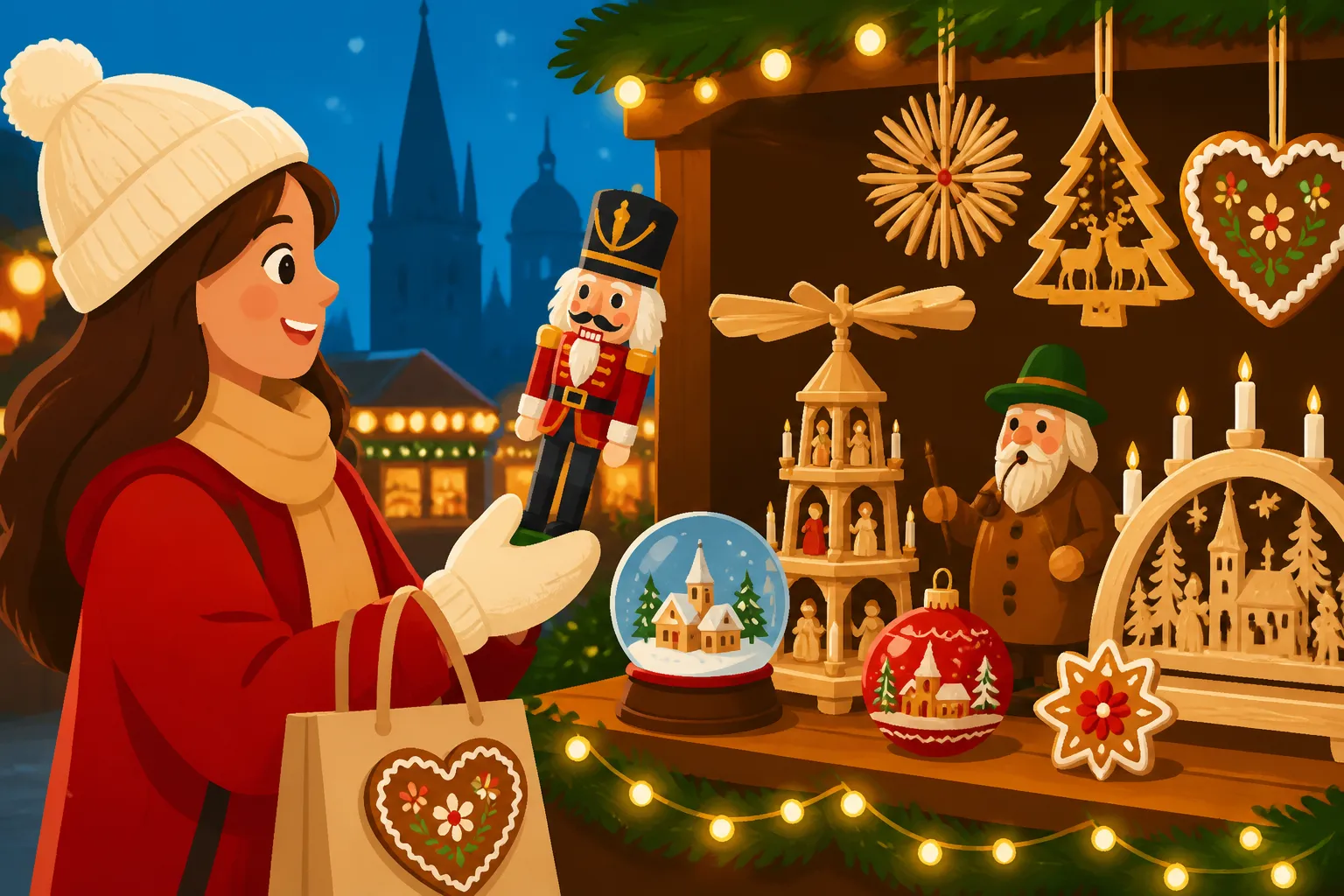
- Nutcrackers (Nussknacker): These iconic figures are more than just practical tools; they're symbolic protectors. Traditionally, they represent good luck and were thought to ward off evil spirits. You'll find them in countless variations, from kings and soldiers to foresters and miners. A genuine Erzgebirge nutcracker is a work of art, often with meticulous hand-painted details. They're an investment, but a true heirloom.
- Smoking Men (Räuchermännchen): These charming little wooden figures are designed to hold incense cones. Once lit, the smoke wafts out of their mouths, creating a delightful, cozy aroma. They come in all sorts of professions – bakers, chimney sweeps, hikers – each with its own character. They're a fantastic way to bring the warm, festive scent of the market into your home.
- Christmas Pyramids (Weihnachtspyramiden): These multi-tiered wooden carousels are powered by the rising heat from candles, which makes the figures on different levels spin. They often depict nativity scenes, angels, or forest animals. The larger ones can be quite grand, but even smaller tabletop versions create a magical, serene focal point for your Christmas decorations.
- Candle Arches (Schwibbögen): Originating from the mining traditions, these candle arches once symbolized the longing of miners for sunlight during the dark winter months. Today, they typically feature scenes from daily life, mining, or Christmas motifs, illuminated by candles. They cast a beautiful, warm glow and are a wonderful addition to a windowsill.
When you're looking at these wooden pieces, particularly the more expensive ones, try to find a stall that specifies "Echt Erzgebirgische Handarbeit" (genuine Erzgebirge craftsmanship) to ensure you're getting an authentic, high-quality item. You can often find stunning examples, even if you just admire them.
Festive Ornaments and Decorations
Beyond the wooden figures, German Christmas markets are brimming with a dazzling array of ornaments and decorations, each with its own charm and story.
- Blown Glass Ornaments (Christbaumschmuck): The town of Lauscha in Thuringia is famous for inventing glass Christmas ornaments in the mid-19th century. Their craftsmanship is legendary. You'll find incredibly delicate, hand-blown and hand-painted glass balls, birds, icicles, and intricate shapes in every color imaginable. These are fragile, yes, but breathtakingly beautiful and truly special. Look for those with a slight imperfection or unique brushstroke – a sign of their handmade nature.
- Straw Stars (Strohsterne): Simple yet elegant, these ornaments are made by hand from straw, often in intricate geometric patterns. They're a lovely, natural contrast to the glittering glass and tinsel, and their rustic charm fits perfectly with traditional German Christmas decor.
- Beeswax Candles (Bienenwachskerzen): There's something inherently comforting about the soft glow and gentle honey scent of a pure beeswax candle. Many stalls sell beautifully crafted candles, often shaped into festive designs like angels, stars, or even little beehives. These make for a lovely, consumable souvenir that adds warmth to your home.
When choosing ornaments, consider the theme and style of your own Christmas decorations. A single, exquisite glass ornament can be a more impactful souvenir than a handful of generic ones.
Culinary Delights to Take Home
Now, what's a German Christmas market without the food? While you'll definitely want to indulge in all the delicious treats on the spot (don't miss our guide on What to Eat and Drink at a German Christmas Market), there are plenty of non-perishable or long-lasting goodies you can bring home to extend the festive cheer.
- Lebkuchen: These gingerbread cookies are a German Christmas staple, especially famous from Nuremberg. You'll find them in various forms: soft, chewy, often glazed or chocolate-covered, and sometimes even in large, heart-shaped versions with festive messages. They keep well and make fantastic gifts.
- Stollen: This rich fruit bread, traditionally from Dresden, is packed with dried fruit, nuts, and spices, and dusted generously with powdered sugar. It's meant to symbolize the Christ child wrapped in swaddling clothes. While it's best fresh, many bakeries sell smaller, individually wrapped stollen that travel surprisingly well and can last for weeks.
- Spekulatius: These thin, crispy spiced biscuits often depict scenes or figures from the legend of Saint Nicholas. They're addictive and perfect for dipping into tea or coffee. You can find them in decorative tins that make them ideal for gifting.
- Marzipan: Lübeck is particularly famous for its marzipan, but you'll find high-quality versions at many markets. From simple loaves to intricately shaped fruits and figures, marzipan is a sweet treat that appeals to many. It travels well and has a long shelf life.
- Local Honey and Jams: Many markets feature stalls from local beekeepers or small producers selling homemade jams and preserves. These are often unique flavors, made with regional fruits, and make for a delicious and practical souvenir that reminds you of Germany every time you have breakfast.
- Dried Fruit and Nuts: Candied nuts, especially gebrannte Mandeln (roasted almonds), are a market classic. While fresh ones are divine, you can often buy small bags of candied nuts to take home. Dried fruit wreaths or strings of dried apples are also charming and edible decorations.
Just remember to check any customs regulations if you're traveling internationally, especially concerning food items. Most packaged, shelf-stable goods are fine, but it's always good to be aware.
Unique and Practical Souvenirs for the Modern Expat
Beyond the traditional, there are also plenty of souvenirs that blend traditional craftsmanship with a more modern, practical sensibility, perfect for someone living here or looking for something less overtly "Christmassy" but still distinctly German.
Cozy Comforts and Textiles
German winters are no joke, and the markets are a fantastic place to find items that offer both warmth and style.
- Wool Socks, Scarves, and Handcrafted Gloves: You'll find stalls selling wonderfully warm, often hand-knitted, wool socks. These are not only practical but also a fantastic reminder of the cozy market atmosphere. Hand-knitted scarves and gloves, sometimes made from local wool or alpaca, are also common. They're perfect for embracing the German winter and often feature beautiful, intricate patterns.
- Local Pottery Mugs and Ceramics: While the official Glühwein mugs (Pfandbecher) are often returned for the deposit, many markets have artisans selling beautiful, handcrafted pottery. These might be mugs perfect for your morning coffee, small bowls, or decorative plates. They often feature local motifs or traditional German designs and are far more unique than mass-produced ceramics. Imagine sipping your morning coffee from a mug that reminds you of a frosty morning at the Nuremberg Christmas market – priceless! These also make a great alternative to the disposable ones you might find yourself eyeing. If you're planning a trip to other markets, don't forget to look into how to get around efficiently; booking trains via Omio can be a real time-saver.
Local Crafts and Artisan Goods
Germany has a strong tradition of regional craftsmanship, and Christmas markets are an excellent showcase for these talents.
- Handcrafted Jewelry: Many smaller stalls feature independent jewelers selling unique pieces, from delicate silverwork to items incorporating amber (especially if you're near the Baltic Sea). These are often one-of-a-kind and offer a more personal souvenir.
- Specialty Soaps and Bath Products: Look for stalls selling handmade soaps, lotions, and bath bombs, often made with natural ingredients and traditional German herbs or scents. These are practical, delightful, and make for lovely gifts.
- Regional Specialties (e.g., Ampelmännchen): Depending on the city, you might find specific local curiosities. In Berlin, for instance, you'll see Ampelmännchen (the iconic East German traffic light figures) on everything from keychains to mugs. In Bavaria, you might find items with traditional motifs, perhaps even some Lederhosen-shaped bottle openers. These quirky items are fun, bring a smile, and are truly specific to a place.
Experiences and Memories Beyond Tangible Items
Sometimes, the best souvenir isn't something you can put on a shelf, but rather an experience, a memory, or even a tradition you adopt.
- The Glühwein Mug (Pfandbecher): Okay, so technically you do get a tangible item, but the real souvenir here is the shared ritual of drinking Glühwein from these charming mugs. Many markets have unique designs each year, and while you're supposed to return them for the deposit (Pfand), keeping one or two (and forfeiting the deposit, typically €2-4) is a common and accepted practice. It's a fun, cheap, and very authentic souvenir that sparks conversation.
- Local Spices and Baking Mixes: If you're a foodie, look for stalls selling unique spice blends for Glühwein, Lebkuchen, or other traditional German baked goods. Many markets also have pre-packaged baking mixes for things like Stollen or Plätzchen (Christmas cookies), allowing you to recreate German flavors in your own kitchen.
- Capturing the Atmosphere (Photos, Videos): In an age of digital overload, sometimes the best souvenir is a thoughtfully captured memory. Take time to really absorb the sights, sounds, and smells, and capture them with your camera. A beautifully composed photo of the twinkling lights or a short video of a carousel spinning can transport you back to that moment more effectively than any trinket. If you're visiting different markets across Germany, consider planning your route efficiently. Platforms like GetYourGuide offer curated experiences, and for accommodation, Booking.com is always a solid choice. Also, if you're traveling from further afield, make sure you've got your Travel Health Insurance: What Expats Need for Schengen Visa & Short Trips sorted out.
Tips for Smart Souvenir Shopping
Navigating the bustling Christmas markets with an eye for quality and value requires a bit of strategy. Don't just rush in and grab the first thing you see – take your time, compare, and be a discerning shopper.
Authenticity and Quality Check
This is probably the most crucial tip, especially with the rise of mass-produced items that can sometimes sneak into even the most traditional markets.
- Look for "Handmade in Germany" or Regional Labels: Genuine, high-quality German craftsmanship will often be explicitly labeled. For wooden items, look for "Echt Erzgebirgische Handarbeit" or similar regional designations. For glass, look for "Lauscha Glas." These labels indicate a commitment to traditional methods and quality materials.
- Examine the Craftsmanship: Take a close look at the item. Are the details crisp? Is the paint job even? Are there signs of genuine handwork rather than machine perfection? For wooden items, check for smooth finishes and secure joins. For glass, look at the delicacy and consistency of the blowing. You'll often find artisans showcasing their skills directly at their stalls, which is always a good sign.
- Ask Questions (If You Can): Many vendors, especially at popular markets, will speak some English. Don't be afraid to ask about the origin of the materials, how an item is made, or the history behind it. Their answers can tell you a lot about their pride in their product and its authenticity.
Budgeting and Haggling (or Not)
Germany, unlike some other countries, doesn't really have a culture of haggling, especially not at Christmas markets. The prices you see are generally the prices you pay.
- Focus on Value, Not Just Cost: While some items might seem expensive, consider the craftsmanship, the story behind it, and its longevity. A high-quality, hand-carved piece that will last for generations is a better value than a cheap plastic imitation that will break next year.
- Plan Your Budget: Before you go, decide how much you're willing to spend on souvenirs. This will help you make more conscious choices and prevent impulse buys. It also helps to allocate funds for food, drinks, and potentially even tickets if you’re using services like Omio to visit various markets across the country.
- Look for Smaller, Affordable Gems: You don't have to break the bank to get a meaningful souvenir. A beautiful beeswax candle, a small straw star, a unique Glühwein mug, or a packet of regional Lebkuchen can be just as cherished as a large, expensive item.
Transporting Your Treasures Home
Once you've found your perfect German treasures, you need to get them home safely!
- Packing Fragile Items: For delicate glass ornaments or pottery, ensure you have plenty of padding. Many vendors will wrap items carefully for you, but bringing some extra bubble wrap or soft scarves in your bag isn't a bad idea. Pack them in your carry-on luggage if possible, especially if they are particularly precious.
- Customs Considerations for Food Items: Most pre-packaged, non-perishable food items like Lebkuchen, Stollen, and marzipan are generally fine for international travel. However, always double-check the customs regulations of your home country, especially for fresh produce, meats, or dairy, to avoid any issues.
- Consider Shipping for Larger Items: If you fall in love with a large Weihnachtspyramide or a substantial piece of pottery, inquire with the vendor about shipping options. Many will offer international shipping, or they can direct you to a local post office (Deutsche Post/DHL). While it adds to the cost, it ensures your delicate purchase arrives safely.
- Making a Return Trip to the Markets: If you can't get enough of the Christmas magic, remember that many markets run throughout Advent. Consider planning a return trip or hitting several cities. Services like Omio can help you find the best train or bus connections to hop between different cities to experience their unique markets. And if you need a place to stay, Booking.com has endless options. A full itinerary of Christmas Market Day Trips and Itineraries in Germany can help you plan your travel efficiently.
Happy shopping, and may your souvenirs bring you joy for years to come!
Disclaimer
The information provided in this guide is for general informational purposes only and does not constitute professional advice. While we strive to provide accurate and up-to-date information for expats and tourists in Germany, regulations, prices, and availability of products and services can change. We recommend verifying any critical information with official sources or relevant service providers. Always exercise caution and common sense when making purchases or travel arrangements.