Sequencing Anmeldung and Customs Clearance Before Your Container Lands
Oh, the joy of moving to Germany! I remember the days, the endless paperwork, the polite but firm insistence on procedure. And few things bring more cold sweats to an expat than the thought of their precious belongings, packed meticulously, sitting in a German port or warehouse, racking up fees while you frantically try to get your ducks in a row. It’s a common nightmare scenario: your shipping container is arriving, but you haven't completed your official address registration, the Anmeldung. This guide is here to untangle that knot, walking you through the critical sequence of Anmeldung and customs clearance so your container lands smoothly, saving you stress, time, and a significant amount of money. And trust me, having a solid plan and the right support, like that offered by a service such as Sirelo, can be an absolute lifesaver.
Disclosure: This post may contain affiliate links. We may earn a commission at no extra cost to you if you make a purchase through these links. Read full disclosure.
The German Bureaucracy Gauntlet: Why Timing Is Everything
Germany’s administrative processes are, shall we say, thorough. They are built on precision, order, and a love for official documentation. This isn't necessarily a bad thing – once you understand the system, it's incredibly efficient. The challenge for new expats, however, is figuring out which piece of paper needs to come first to unlock the next. When it comes to your household goods, understanding the interplay between getting your official address registered and clearing customs is paramount. Mess it up, and you’ll find yourself in a costly holding pattern.
The Anmeldung: Your Official Welcome (and Requirement)
The Anmeldung is more than just registering your address; it’s your official entry into German society. It's the moment you tell the government, "Hey, I live here now!" Without it, you’re essentially a ghost in the system, and that's not a status the German authorities are particularly fond of. You absolutely cannot skip this step. In fact, by law, you’re required to register your address within two weeks of moving into your new permanent home.
This simple act, the Anmeldung, generates your Meldebescheinigung – your proof of residence. This document is your golden ticket for almost everything else: opening a German bank account, getting your tax ID (Steuer-ID), applying for certain visas, and yes, even getting health insurance. It tells everyone you’re a legitimate resident, not just a tourist passing through. For more detailed insights, check out our guide on Registering Your Address (Anmeldung): Step-by-Step Guide.
Customs Clearance: Duty-Free Household Goods vs. Hefty Taxes
Now, let's talk about your belongings. When you move your entire household to Germany from a non-EU country, you typically want to import your personal effects duty-free. This is a huge financial advantage, as otherwise, you'd be looking at significant import duties and VAT (Value Added Tax) on the declared value of your goods.
To qualify for duty-free import of household goods, you need to prove a few things to German customs (Zoll):
- You are relocating: This means you are moving your primary residence to Germany.
- The goods are for your personal use: They must be household effects, not commercial goods for sale.
- You have resided outside the EU for at least 12 consecutive months before moving.
- You intend to use the goods in Germany for at least 12 months after import.
- The goods must have been owned and used by you for at least 6 months prior to your move.
The most crucial piece of evidence for condition #1 – that you are actually relocating and not just sending goods to a friend – is your Meldebescheinigung. Without it, customs has no official confirmation you're moving here, and they might treat your shipment as commercial goods or demand duties and taxes. This is where the sequencing becomes critical. If your container arrives before you have this document, it can be held up indefinitely, incurring demurrage (container rental) and storage fees that can quickly skyrocket. To understand the broader implications of moving your items, consult our guide on Moving Your Belongings to Germany: Customs Duties and Tax-Free Imports for New Residents.
The Ideal Sequence: Anmeldung First, Then Customs (Almost Always)
The absolute smoothest process involves having your Anmeldung complete and your Meldebescheinigung in hand before your container even reaches German soil. I know, I know, it sounds like a logistical nightmare, especially if you’re living in temporary accommodation when you first arrive. But aiming for this sequence is vital to avoid unnecessary stress and costs.
Securing Your Address and Appointment
Your first priority upon arrival, even before fully unpacking your toothbrush, is to secure a permanent address. This isn't always easy in Germany's competitive rental market, but it's non-negotiable for customs. Once you have a signed rental contract (your Mietvertrag), you’ll also need a Wohnungsgeberbestätigung from your landlord. This document confirms you've moved in and is mandatory for your Anmeldung.
As soon as you have these, book your Anmeldung appointment at the local Bürgeramt (citizen's office). In large cities like Berlin or Munich, these appointments can be booked out weeks or even months in advance. Many offices allow you to book online. Don't procrastinate! Even if your appointment is a few weeks away, having the confirmation of your appointment, along with your rental contract and Wohnungsgeberbestätigung, can sometimes serve as proof of intent to reside for preliminary customs discussions. For more on decoding your rental contract, see Understanding German Rental Contracts: Key Terms and Conditions.
What Customs Needs From You
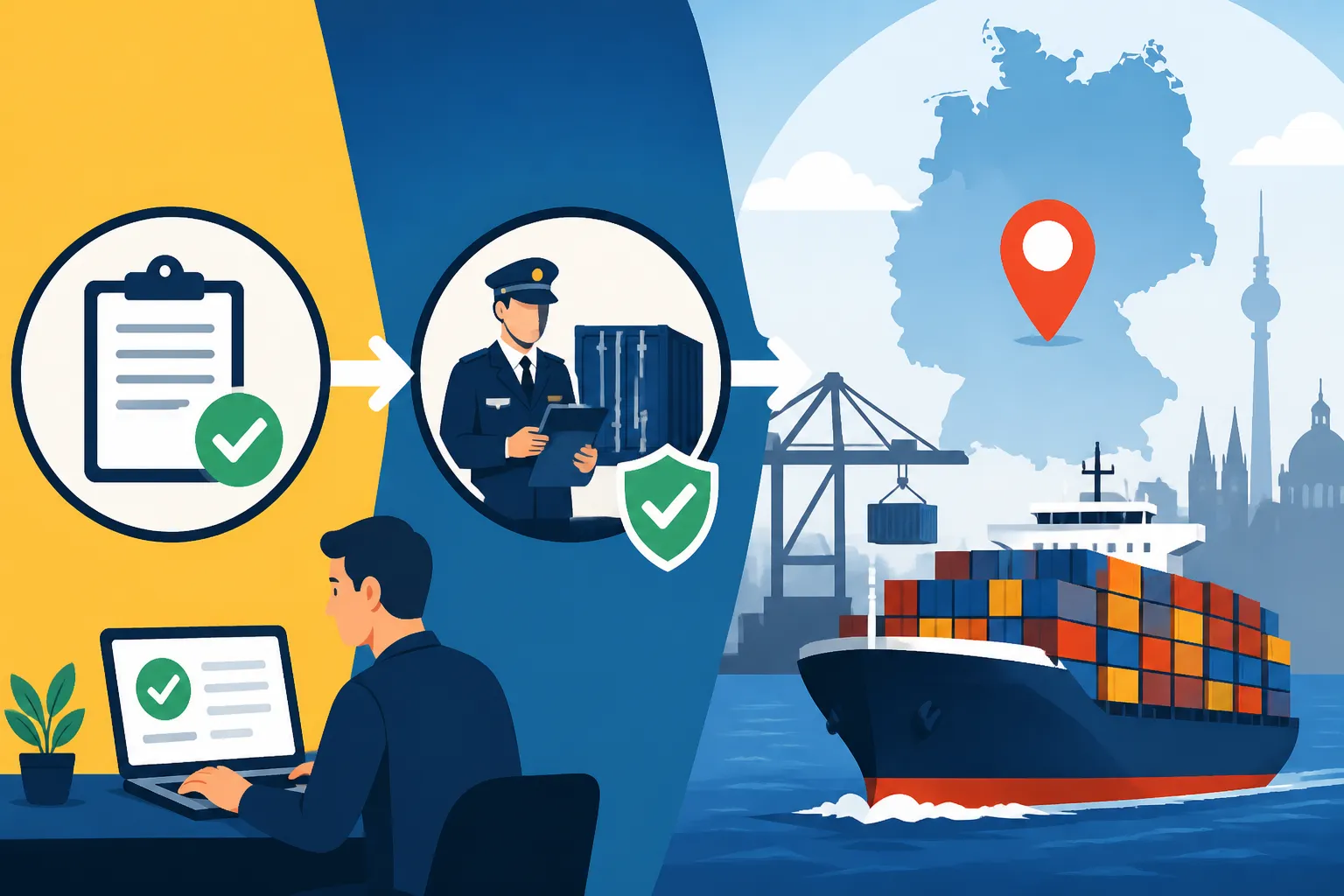
Once your Anmeldung is done, and you have your precious Meldebescheinigung, you (or your moving company's customs broker) can formally submit the customs declaration. Here’s a typical list of documents German customs will request:
| Document Type | Purpose | Where to Get It |
|---|---|---|
| Meldebescheinigung | Proof of official residence in Germany. Essential for duty-free import. | Bürgeramt (after Anmeldung) |
| Valid Passport/ID | Proof of identity. | Your home country's issuing authority |
| German Residence Permit (Visa) | Proof of your legal right to reside in Germany (if applicable for non-EU citizens). | Ausländerbehörde (Foreigners' Office) |
| Rental Contract (Mietvertrag) | Proof of a permanent address in Germany. | Your landlord |
| Wohnungsgeberbestätigung | Confirmation from your landlord that you've moved in. | Your landlord |
| Packing List / Inventory (detailed) | Itemized list of everything in your shipment, clearly stating contents and approximate value. Crucial for customs assessment. | Prepared by you or your moving company |
| Proof of Residence Abroad (last 12 months) | Utility bills, bank statements, rental contracts, or employment contracts from your previous country. Proves you lived outside the EU. | Your previous service providers, banks, landlords, or employers |
| Proof of Ownership/Use of Goods | Receipts for major items, photos, or simply a declaration that goods have been owned/used for >6 months. | Your records |
| Application for Duty-Free Import (Form 0352) | Official German customs form. | German Customs website or provided by your moving agent |
| Power of Attorney (if using agent) | Authorizes your moving company or customs broker to handle the clearance on your behalf. | Provided by your moving company/broker, signed by you |
As you can see, the Meldebescheinigung is front and center. Without it, you’re missing a key puzzle piece that can hold up your entire shipment.
Avoiding Demurrage and Storage Fees
When your container arrives at the port (like Hamburg or Bremerhaven) or an inland depot, it has a limited window of "free time" – usually a few days – before demurrage charges begin. These are daily fees for keeping the container at the terminal. If it needs to be moved to a customs warehouse while awaiting clearance, storage fees will also kick in. These fees are not trivial; they can add hundreds, if not thousands, of euros to your moving costs if clearance is delayed by weeks.
This is where planning and choosing the right moving partner are absolutely crucial. Partnering with experienced international movers, especially those found through platforms like Sirelo, can truly mitigate these risks. They understand these deadlines and can advise you on the necessary steps to take before your container even departs your home country.
Navigating the Inevitable Overlap and Delays
Let's be realistic: moving to a new country rarely goes exactly according to plan. There might be delays with your Anmeldung appointment, a lost document, or an unexpected customs query. It's important to understand how to manage these overlaps and potential delays.
Temporary Solutions and Proof of Intent
If your container is due to arrive very soon and your Anmeldung appointment is still a week or two out, don't panic immediately. Your moving company or customs broker can often start the preliminary customs process with what's known as "proof of intent to reside." This typically includes:
- Your signed rental contract for your permanent German address.
- The Wohnungsgeberbestätigung.
- Confirmation of your Anmeldung appointment (a screenshot of the booking, an email confirmation).
- Your German visa/residence permit (if applicable).
- A formal declaration from you stating your intention to reside in Germany permanently and that the goods are for your personal use.
While this might get the ball rolling, customs will almost certainly require the official Meldebescheinigung for final clearance. The goal here is to reduce the time your container sits idle waiting for that one crucial document. Your broker might be able to arrange for the container to be unloaded into a customs-bonded warehouse, which still incurs storage fees but often less than demurrage for the container itself.
When Things Go Wrong: Dealing with Delays
If, despite your best efforts, your container is delayed at customs due to missing documentation, here’s what you should do:
- Communicate Immediately: Stay in constant contact with your moving company and their customs broker. They are your primary point of contact and can provide updates and guidance.
- Expedite Your Anmeldung: If your Anmeldung is the bottleneck, call your local Bürgeramt. Explain the situation (container delayed at customs, accruing fees) and politely ask if there are any earlier appointments available due to cancellations. Sometimes, showing up early with all documents can lead to being squeezed in, especially in smaller towns.
- Understand the Fees: Ask your moving company for a clear breakdown of daily demurrage and storage fees. This helps you understand the financial impact and prioritize getting the Meldebescheinigung as quickly as possible.
- Consider a Customs Agent: If your moving company doesn't offer comprehensive customs brokerage, you might need to hire an independent customs agent. They specialize in navigating these exact situations and can often speed up the process.
The Role of a Professional Moving Service
This is precisely where reputable moving comparison platforms like Sirelo come into their own. They don't just find you movers; they connect you with international relocation specialists who understand the intricacies of German bureaucracy. A good international mover will:
- Educate You: Inform you about the specific German customs requirements and the Anmeldung timeline well in advance.
- Coordinate Shipping: Plan your container's arrival date to align as closely as possible with your expected Anmeldung completion.
- Provide Customs Brokerage: Many offer in-house customs brokerage or partner with local experts who can guide you through the paperwork, act as your liaison with Zoll, and ensure all documents are correctly submitted.
- Mitigate Risks: Advise on how to prepare for potential delays and minimize associated costs.
Sirelo simplifies this by connecting you with movers who are intimately familiar with German customs requirements. They offer competitive quotes, not just for the physical move, but often for integrated services that include crucial customs brokerage, ensuring a smoother process. It takes a massive weight off your shoulders knowing that the professionals are handling these complex steps.
Key Documents and Information You'll Need
Moving to Germany means a lot of paperwork. Having everything organized and ready will drastically reduce your stress levels.
The Essential Paperwork Checklist
Beyond the specific customs documents listed above, ensure you have these fundamental items ready for your move and early administrative tasks:
- Passport and Visa/Residence Permit: Keep originals and several copies.
- Rental Contract (Mietvertrag) and Wohnungsgeberbestätigung: Essential for Anmeldung.
- Proof of Financial Means: Bank statements, employment contract, blocked account details – necessary for visa purposes and often for opening bank accounts. For insights into managing your finances, check out our guide on Opening a Bank Account in Germany: Step-by-Step for Newcomers.
- Health Insurance Proof: You must have valid German health insurance from day one. This often requires your Anmeldung. Refer to The German Health Insurance Card (Gesundheitskarte): Uses and How to Get One for more details.
- Marriage Certificate/Birth Certificates: If moving with family, these are crucial for family reunification visas and adding dependents to health insurance.
- Driver's License: If you plan to drive, be aware of the rules for converting your foreign license.
Make multiple copies of everything, both physical and digital. German authorities love physical copies and rarely accept documents on your phone!
Understanding German Customs Regulations
The primary legal basis for duty-free import of household goods in Germany (and the EU) is Regulation (EC) No 1186/2009. Specifically, Articles 3-11 cover the exemption from import duties for personal property. The key is proving you’re a genuine private mover relocating your normal place of residence. Customs officers are trained to spot discrepancies or incomplete documentation, which will lead to inquiries and delays.
A few important points regarding your inventory/packing list:
- Be Detailed: "Box 1: Kitchen Stuff" is not enough. "Box 1: Pots, pans, cutlery, dishes (approx. value €200)" is better.
- Declare High-Value Items Separately: Any new items, or items clearly intended for sale, will not qualify for duty-free import.
- Vehicles: Importing a car has separate, more complex rules and generally requires duty and VAT payments unless very specific conditions are met. This is a whole different beast than household goods.
When planning your international relocation, especially to a bureaucratic wonderland like Germany, securing a reliable moving service is non-negotiable. Head over to Sirelo today to compare quotes from trusted movers who can navigate these complex requirements, ensuring your container lands and clears customs without a hitch.
Remember, you don't have to face this alone. Services like Sirelo exist to demystify the process and connect you with the right support, making your German welcome as stress-free as possible.
Disclaimer
Please note that this guide provides general information based on common expat experiences and publicly available regulations. German immigration and customs laws can change, and individual situations may vary. It is always advisable to consult directly with the German customs authorities (Zoll) or a professional moving company/customs broker for advice specific to your circumstances. This information does not constitute legal advice.