Sending Money From Germany to India: Rupee Corridor Costs and Speed
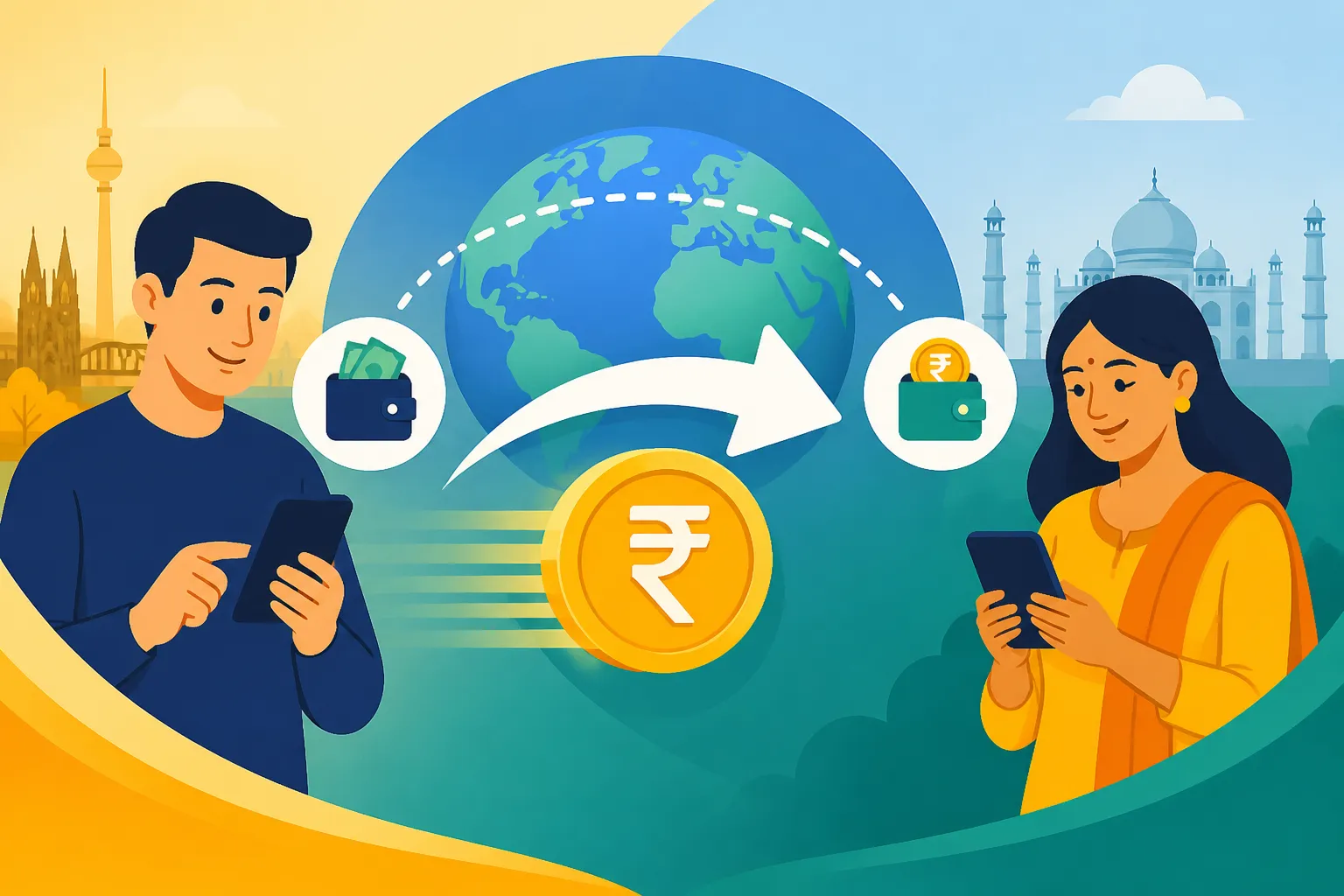
Alright, let's talk about something that hits close to home for so many of us here in Germany: sending money back home, especially when "home" is as far away and as important as India. It's not just a transaction; it's a lifeline, a gesture of care, and sometimes, honestly, a massive headache trying to navigate the German banking system with one eye on the exchange rate and the other on hidden fees. You work hard for your Euros, and the last thing you want is for them to shrink into a significantly smaller amount of rupees before they even reach your family's account. This guide is going to walk you through the ins and outs of the 'Rupee Corridor' from Germany, dissecting the costs and speeds involved, and showing you why a service like Wise has become such a game-changer for expats like us.
Disclosure: This post may contain affiliate links. We may earn a commission at no extra cost to you if you make a purchase through these links. Read full disclosure.
The Emotional & Practical Need: Why Expats Send Money to India
Living abroad in Germany offers incredible opportunities, but it often comes with a strong, unwavering connection to the family and community back home. For many, sending money to India isn't just an option; it's a vital commitment. This financial flow, often called remittances, plays a huge role in supporting families, covering everything from daily expenses to significant life events.
Supporting Family Back Home
The primary driver for most expats sending money to India is the direct financial support of their loved ones. This isn't just about covering basic needs, though that's certainly a large part of it. It extends to educational expenses for siblings or children, medical bills for elderly parents, and even contributing to family events like weddings or festivals. Imagine the stress of an unexpected medical emergency back home while you're thousands of kilometers away in Düsseldorf. You need to send funds, and you need them to arrive fast and in full. The traditional banking channels, with their sometimes exorbitant fees and opaque exchange rates, can feel like they're actively working against your efforts to help your family. This is where the frustration really sets in; you want to be a reliable pillar of support, not a victim of convoluted financial systems.
Investing and Saving in India
Beyond immediate support, many Indian expats in Germany also send money home for investment or savings purposes. This could range from contributing to a property purchase, investing in a fixed deposit, or simply building a savings pot for future plans, perhaps even retirement back in India. Navigating these larger transfers requires even greater scrutiny on exchange rates and fees, as small percentages can amount to significant losses on substantial sums. You might be carefully budgeting your earnings here in Germany, always considering the Cost of Living in Germany, and every single Euro that gets chipped away by transfer costs feels like a direct hit to your long-term financial goals. Therefore, finding a service that offers transparent, low-cost transfers is not just a convenience; it's a financial imperative for ensuring your money works as hard for you and your family in India as you do for it in Germany.
Navigating the Rupee Corridor: Understanding India's Remittance Landscape
The "Rupee Corridor" refers to the specific channels and regulations governing money transfers to India. It's a vast and complex ecosystem, with billions of dollars flowing into the country annually. For us expats, understanding how this corridor works, especially from a regulated financial hub like Germany, is crucial to making informed decisions about our transfers.
India's Regulatory Framework for Inward Remittances
India has a fairly robust and well-defined regulatory framework for inward remittances, primarily overseen by the Reserve Bank of India (RBI). The RBI's guidelines aim to ensure transparency, prevent money laundering, and maintain financial stability. For instance, specific rules govern the maximum amount that can be received in a single transaction, the purpose of the remittance, and the necessary KYC (Know Your Customer) documentation required by the receiving banks or financial institutions. While these regulations are in place for good reason, they can sometimes add layers of complexity for senders who are unfamiliar with them. A common concern is wondering if your transfer will be held up due to missing information, or if your family member back home will face unexpected hurdles to access the funds. This is where services that are well-versed in both German and Indian financial regulations really shine, smoothing out the process and taking the guesswork out of compliance.
The Role of Correspondent Banking
Historically, international money transfers, especially from traditional banks in Germany to India, relied heavily on what's called "correspondent banking." This essentially means your bank in Germany doesn't have a direct relationship with your family's bank in India. Instead, the money travels through a network of intermediary banks, each taking a cut for their service. Think of it like a long relay race where each runner charges you a small fee. This chain can lead to higher overall costs and longer transfer times because the money has to hop from one financial institution to another, often converting currencies multiple times along the way. While some Best Banks in Germany for Expats might offer international transfer services, they often still operate on this model, which can be less efficient and more expensive than modern alternatives. Understanding the German Banking System is one thing, but understanding how it interfaces with the Indian banking system through these traditional channels is another layer of complexity many expats would rather avoid.
The Hidden Costs and Factors of International Money Transfer
When you're looking at sending money, it's never as simple as just "sending money." There are numerous factors at play, some obvious, some frustratingly opaque, that significantly impact how much your loved ones actually receive. These costs and variables can quickly erode the value of your hard-earned euros.
Exchange Rates: The Silent Killer of Value
The exchange rate is arguably the biggest factor in how much money arrives in India. Many traditional banks and older transfer services will advertise "zero fees" or "low commissions," but they'll often hide their profit margin within a less-favorable exchange rate. This isn't the mid-market rate you see on Google; it's a marked-up rate that benefits them, not you. Imagine if you're sending a few thousand Euros, and the rate is just 2% worse than the real market rate. That's a significant chunk of money disappearing into thin air before your eyes. This hidden markup is a common complaint among expats who meticulously track the market rate, only to find their bank offering something significantly different. It's infuriating because it feels like you're being misled, and it makes budgeting and financial planning incredibly difficult. This is precisely why transparency around exchange rates is so critical for services like Wise, which commit to using the real mid-market rate.
Fees: Transparent vs. Opaque
Then there are the fees. Some fees are upfront: a flat charge for the transfer, or a percentage of the amount sent. While these can be annoying, at least they're visible. The real issue arises with opaque fees, often layered by intermediary banks, as discussed with correspondent banking. You might initiate a transfer from your German bank, pay their fee, and assume that's it. Only for a few days later, you (or your recipient) realize that additional charges have been deducted by other banks along the way. This lack of transparency means the amount your family receives is uncertain until the money actually lands. For someone who is carefully planning their finances, perhaps even using a service to help with their Filing a Tax Return in Germany, unexpected deductions are more than just an inconvenience; they're a disruption to their financial stability and trust. Knowing exactly what you're paying and that no hidden surprises will pop up is a huge relief.
Speed and Convenience Factors
Beyond cost, the speed at which your money arrives and the overall convenience of the service are huge considerations. When you need to send money for an urgent expense, waiting several business days for a traditional bank transfer can be agonizing. Similarly, the process of initiating the transfer itself can be cumbersome with traditional methods – filling out complex forms, visiting a bank branch during specific hours, and dealing with potentially unhelpful customer service when dealing with cross-border issues. Expats lead busy lives, and the ability to send money quickly, easily, and reliably from your phone or computer, often without needing to provide extensive documentation for every single transfer after initial setup, adds immense value. It's about reducing the mental load and administrative burden, allowing you to focus on why you're sending the money in the first place, rather than battling the system.
Traditional Bank Transfers vs. Digital Solutions: A Head-to-Head
When it comes to moving your money across borders, especially to a country like India, you generally have two main avenues: the tried-and-true (but often slow and expensive) traditional banks, or the increasingly popular (and usually faster and cheaper) digital money transfer services. As an expat who’s been through the mill with German bureaucracy and banking, I can tell you there's a world of difference.
The Old Guard: Banks and Their Limitations
Let's be frank, dealing with German banks for international transfers can sometimes feel like stepping back in time. While perfectly reliable for your day-to-day needs, like managing your German Bank Statements or setting up direct debits to Pay Rent and Bills in Germany, their international transfer systems often haven't kept pace with modern demands.
Firstly, the costs. Banks typically charge higher flat fees for international wire transfers. On top of that, as we discussed, they often apply an unfavorable exchange rate, meaning you lose money twice. It's a double whammy for your wallet. Secondly, speed. A transfer to India through a traditional German bank can take anywhere from 3 to 7 business days, or sometimes even longer if there are intermediary banks involved or if the transfer hits a weekend or public holiday. When your family needs money urgently, this waiting period can be incredibly stressful. Lastly, the convenience factor often lags. You might need to visit a branch, or navigate complex online banking portals that aren't always user-friendly for international transfers. And if you need customer support, be prepared for potentially long wait times and limited English options. While they are secure, the trade-off in cost, speed, and ease of use is often significant, making them less ideal for regular remittances.
The New Wave: Digital Money Transfer Services
This is where digital solutions have truly revolutionized the game for expats. Companies like Wise (formerly TransferWise) emerged specifically to tackle the pain points of traditional international money transfers. Their business model is fundamentally different: instead of moving your money across borders using the SWIFT network (which is what banks typically do), they use a local-to-local transfer system.
Here's how it often works: when you send money from Germany to India with Wise, your Euros go into Wise's German account. Then, Wise pays out the equivalent in Rupees from their Indian account to your recipient. This bypasses the costly international wire transfer system, significantly reducing fees and dramatically increasing speed. It’s like magic, but it’s actually smart financial engineering.
Key Advantages of Digital Services:
- Real Exchange Rates: Services like Wise are famous for using the real mid-market exchange rate – the one you see on Reuters or Google. They add a small, transparent fee on top, but there are no hidden markups in the exchange rate itself. This transparency is a breath of fresh air.
- Lower Fees: Their fees are generally much lower than banks, often a fraction of a percentage of the transfer amount, plus a small fixed fee.
- Faster Transfers: Many transfers, especially to popular corridors like India, can arrive within minutes or hours, certainly within one business day. This speed is invaluable for urgent needs.
- User-Friendly Platforms: These services are designed for the digital age, with intuitive apps and websites that make initiating and tracking transfers incredibly easy. You can send money from your couch at 3 AM if you need to.
- Excellent Customer Support: Often available in multiple languages, their support teams are geared towards international customers and complex cross-border issues.
While traditional banks offer familiarity, digital transfer services, especially Wise, provide a far more efficient, cost-effective, and transparent way to send money from Germany to India. For us expats, this difference isn't just about saving a few Euros; it's about reliability, peace of mind, and ensuring our financial support reaches our families in the best possible way. This is why when people ask about Transferring Money Internationally: Cheapest Ways to Send Money Abroad, Wise consistently comes up as a top recommendation.
Choosing the Best Service for Your India Transfer: Why Wise Stands Out
Navigating the multitude of money transfer services can be overwhelming. Everyone promises the best rates and lowest fees. But for transfers from Germany to India, especially considering the "Rupee Corridor" and the critical factors we’ve discussed, a clear winner often emerges due to its consistent performance and user-centric approach.
The Unparalleled Advantages of Wise for India Transfers
Wise truly shines in the Germany-to-India corridor, and it's not just marketing hype; it's built on a foundation of transparency and efficiency that directly addresses expat pain points.
1. The Real Exchange Rate: This is arguably Wise's most significant differentiator. Unlike many banks and other providers who bake their profit into a less-favorable exchange rate, Wise uses the actual mid-market rate. This is the rate banks use to trade with each other. What you see when you check a reliable currency converter is what you get. For us, this means more of our Euros convert into Rupees, maximizing the value of every single transfer. When you’re budgeting carefully, perhaps balancing the desire to send money home with your own savings goals like Investing and Saving in Germany, knowing you’re getting the best possible conversion is incredibly reassuring.
2. Transparent, Low Fees: Wise's fee structure is simple and upfront. Before you even commit to a transfer, you see the exact fee you'll pay, the precise exchange rate, and the exact amount your recipient will receive. There are no hidden charges, no surprises from intermediary banks, and no 'service fees' that pop up later. This transparency builds trust, a precious commodity in the financial world, especially when dealing with cross-border transactions.
3. Speed and Reliability: Most Wise transfers to India are completed within hours, often even minutes. This speed is a huge relief when funds are needed urgently for a medical expense, an unexpected bill, or simply to ensure your family isn't left waiting. This reliability stems from their local-to-local transfer model, which sidesteps the slower, more complex SWIFT network.
4. Ease of Use: The Wise platform, whether on their website or mobile app, is incredibly intuitive. Setting up an account is straightforward, and once you're verified, sending money is a matter of a few clicks. You can easily save recipient details, track your transfers in real-time, and get notifications at every stage. This convenience is invaluable for busy expats who might be simultaneously trying to manage their finances, career, and social life in a new country. It’s a testament to the power of Fintech Solutions for Expats.
Comparing Wise with Other Options
To truly understand why Wise is often the go-to for India transfers, let's look at how it stacks up against other common choices:
| Feature | Wise | Traditional Banks (e.g., Deutsche Bank, Commerzbank) | Other Digital Services (e.g., Western Union, Remitly) |
|---|---|---|---|
| Exchange Rate | Mid-market rate (real rate) | Marked-up rate (less favorable) | Often marked-up, but better than banks |
| Fees | Low, transparent (small percentage + fixed fee) | Higher flat fees + potential hidden intermediary fees | Variable, often competitive, but can have hidden markups |
| Speed | Often same-day, sometimes within minutes | 3-7 business days, sometimes longer | Varies; some quick, some similar to banks |
| Transparency | High (all costs shown upfront) | Low (hidden exchange rate markups, potential intermediary fees) | Moderate to High (check T&Cs carefully) |
| Convenience | High (user-friendly app/web, 24/7 access) | Moderate (branch visits, complex online portals) | High (app/web, often mobile-first) |
| Recipient Options | Bank deposit, some mobile wallets | Bank deposit | Bank deposit, cash pick-up, mobile wallets |
| Customer Support | Good, often multi-language | Varies, sometimes slow or German-only | Good, often multi-language |
As you can see, while other digital services also offer competitive rates and speeds, Wise consistently excels in combining the best exchange rate with unparalleled transparency and ease of use. This combination is what makes it such a hero for the Germany-to-India remittance corridor. It takes away the worry and the guesswork, letting you focus on what truly matters: getting your money home efficiently.
Step-by-Step: Sending Money to India with a Digital Transfer Service
Sending money internationally, especially with a modern service like Wise, is far less daunting than it might seem at first. Once you get over the initial hurdle of setting up your account, the process becomes incredibly smooth, allowing you to send your Euros to India with confidence.
Setting Up Your Account
The very first step is to create an account with your chosen digital transfer service. For Wise, this is a straightforward process that typically involves:
- Registration: Head to their website or download the Wise mobile app. You'll sign up using your email address, Google, or Facebook account.
- Personal Details: You'll need to provide your full name, date of birth, and address in Germany. This is standard procedure for any financial service.
- Verification (KYC): This is a crucial step for regulatory compliance. You'll typically be asked to upload a copy of a government-issued ID (like your German residence permit or passport) and sometimes a proof of address (like a utility bill or bank statement). This "Know Your Customer" (KYC) process is mandated by financial regulations in both Germany and India to prevent fraud and money laundering. While it might feel like a bit of paperwork upfront, it's a one-time thing, and once you're verified, subsequent transfers are much quicker. Make sure the documents you provide are clear and meet their specifications. This is similar to the kind of verification you'd go through when Opening a Bank Account in Germany.
Initiating Your First Transfer
Once your account is set up and verified, you’re ready to send money!
- Choose Currencies and Amount: On the Wise platform, you’ll select "EUR" as the currency you’re sending from and "INR" as the currency your recipient will receive. Enter the amount you wish to send in Euros, or the amount you want your recipient to receive in Rupees. Wise will instantly show you the exact exchange rate, the transparent fee, and the final amount your recipient will get. This upfront clarity is a huge relief compared to the guesswork involved with some traditional banks.
- Add Recipient Details: You'll need to provide your recipient's bank details in India. This typically includes:
- Full name as it appears on their bank account.
- Their bank's name.
- Their account number.
- The IFSC (Indian Financial System Code) of their bank branch. The IFSC is a unique 11-character code used for electronic funds transfers in India. You can usually find this on your recipient's bank statement or passbook. Double-check these details carefully, as incorrect information can delay or even bounce your transfer.
- Fund Your Transfer: You have several options to pay for your transfer from your German bank account:
- Bank Transfer (Überweisung): This is often the cheapest option. You'll transfer the funds from your German bank account to Wise's German account. It might take 1-2 business days for Wise to receive the funds, after which they'll process the transfer to India.
- Debit Card: A convenient option, often leading to faster processing. There might be a slightly higher fee compared to a direct bank transfer, but it's usually still very competitive.
- Credit Card: Also fast, but typically carries the highest fees due to credit card processing charges.
- SOFORT / Giropay: These are popular direct online banking payment methods in Germany that allow for quick transfers from your bank account.
Once Wise receives your funds, they'll convert them at the guaranteed rate and send the Rupees to your recipient's Indian bank account. You'll receive email or app notifications at each stage – when the funds are received, when they're sent, and when they're delivered. This kind of real-time tracking gives you immense peace of mind.
Ensuring Smooth Transfers and Avoiding Common Pitfalls
Even with the most efficient services, international money transfers can sometimes hit a snag. As an expat who's learned a few lessons the hard way, I want to share some vital tips to ensure your money always reaches its destination in India without unnecessary delays or stress.
Double-Checking Recipient Details
This might sound obvious, but it's the most common reason for transfer delays or failures. Always, always double-check your recipient's bank account number and IFSC code. A single digit or letter misplaced can send your money to the wrong account or cause it to bounce back, leading to frustrating delays while the issue is resolved. Before initiating a significant transfer, especially your first one to a new recipient, consider sending a small test amount (e.g., €10-20). Once that goes through successfully, you can be confident in sending larger sums. Think of it as a small investment in peace of mind. It’s far better than dealing with the headache of tracing lost funds, a process that can take weeks with banks.
Understanding Payment Methods and Timing
Your choice of payment method directly impacts how quickly your transfer is processed. If speed is your absolute priority, consider using a debit card or an instant bank transfer service like SOFORT/Giropay, though these might come with slightly higher fees. If you're not in a rush, a standard bank transfer (Überweisung) from your German account is usually the most cost-effective.
Remember that bank holidays in Germany and India can affect transfer times. If you initiate a transfer late on a Friday, it might not be processed until the following Monday. Also, the time difference between Germany and India (usually 3.5 or 4.5 hours, depending on daylight saving) means that a transfer initiated late in the German workday might only reach India during their night or the next morning. Being mindful of these timings can help you set realistic expectations for your recipient. For instance, if you're trying to meet a payment deadline, aim to initiate your transfer a day or two in advance. Understanding the nuances of Transferring Money Internationally is key to avoiding these small but frustrating issues.
Keeping an Eye on Exchange Rates and Limits
While services like Wise offer the real mid-market rate, exchange rates constantly fluctuate. If you're sending a large sum, even small shifts in the rate can make a difference. Some services allow you to set exchange rate alerts, notifying you when the rate hits your desired target. This can be a smart way to maximize your transfer value.
Also, be aware of any daily or monthly transfer limits imposed by the service provider or by Indian regulations for inward remittances. Most personal transfers for family support fall well within these limits, but if you're sending a very large amount for, say, a property purchase, you might need to split it into multiple transfers or ensure you meet specific documentation requirements. Always check the service's FAQs or customer support if you're planning a particularly large transfer. Furthermore, protect yourself by being aware of Financial Scams to Watch Out for in Germany, especially any unsolicited requests for money or suspicious offers related to transfers. No legitimate service will ask for your password or confidential bank details via email or unexpected calls.
By taking these proactive steps and leveraging transparent services like Wise, you can transform the often-stressful task of sending money to India into a smooth, reliable, and cost-effective process. It means less worrying about the journey of your money and more focus on the positive impact it has back home.
Disclaimer
Please remember that I'm an expat blogger, not a financial advisor. While I strive to provide accurate and up-to-date information based on my personal experiences and research, financial regulations and service offerings can change. Always verify the latest terms, fees, and exchange rates directly with any financial service provider before making a transaction. This guide is for informational purposes only and does not constitute financial advice.