German Red Cross (DRK) and First Aid Courses: How to Get Certified in First Aid
Whether you are applying for a driving license, fulfilling workplace safety requirements, or simply want to be prepared for an emergency, getting certified in first aid is a vital step for any expat in Germany. This guide explains how the German Red Cross (Deutsches Rotes Kreuz or DRK) operates, the types of courses available, and the exact steps to get your certification.
Disclosure: This post may contain affiliate links. We may earn a commission at no extra cost to you if you make a purchase through these links. Read full disclosure.
The Importance of First Aid Training in Germany
Why Certification is Often Mandatory
In Germany, first aid knowledge is not just considered a good skill to have; in many cases, it is a legal requirement. The most common reason expats seek a first aid course (Erste-Hilfe-Kurs) is to obtain a German driving license. Without a certificate from a recognized provider like the DRK, your application for a license will not be processed. This applies to everyone, from teenagers getting their first car to seasoned drivers converting a foreign license.
Beyond the road, German labor laws mandate that a certain percentage of employees in every company must be trained as “First Aiders at Work” (Betrieblicher Ersthelfer). This ensures that immediate help is available in the office or on the factory floor before emergency services arrive. If you are interested in how these workplace safety standards integrate with your broader medical benefits, you can learn more in our guide to Healthcare in Germany: A Comprehensive Guide for Expats.
The Role of the German Red Cross (DRK)
The German Red Cross is the largest and most well-known provider of first aid training in the country. As a member of the International Red Cross and Red Crescent Movement, the DRK follows standardized medical protocols while adapting to local German regulations. They operate through a decentralized network of local chapters (Kreisverbände), meaning you can find a DRK training center in almost every major city and many smaller towns.
While there are other providers like Johanniter, Malteser, or private companies, the DRK remains the gold standard for official recognition. Their certificates are universally accepted by driving license authorities (Führerscheinstelle) and the Employer’s Liability Insurance Associations (Berufsgenossenschaften).
First Aid as a Social Duty
Culturally, Germany places a high value on the concept of Zivilcourage (civic courage). Under German law, failing to provide help in an emergency (Unterlassene Hilfeleistung) can actually be a punishable offense if providing help was reasonable and didn’t put you in danger. Being certified through a DRK course gives you the confidence and legal backing to act appropriately in a crisis, which is essential when navigating a new country.
Types of First Aid Courses Offered by the DRK
Basic First Aid (Erste Hilfe Ausbildung)
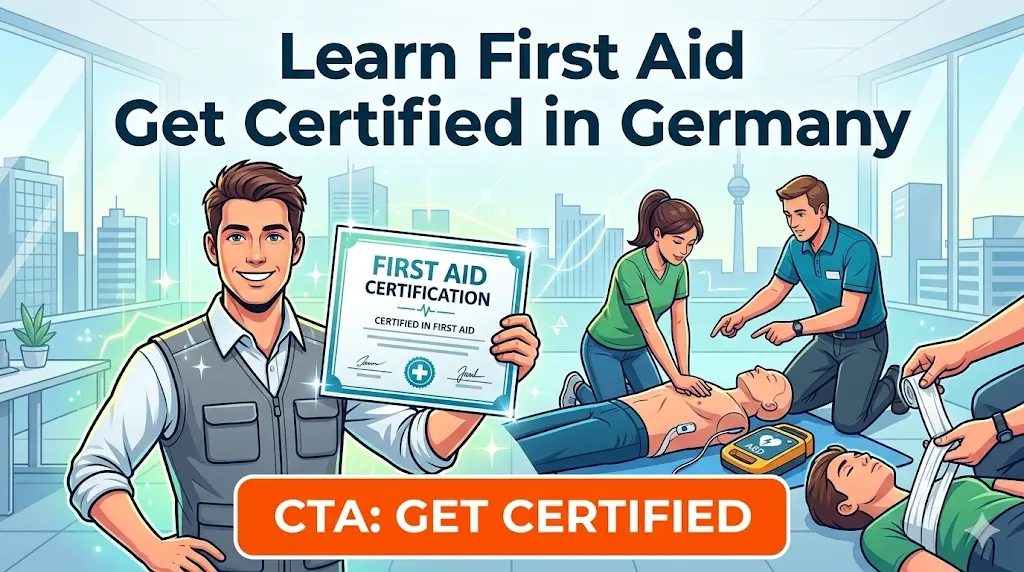
This is the standard 9-unit course (each unit is 45 minutes, totaling roughly 7.5 to 8 hours) required for all driving license classes (A, B, C, etc.). The curriculum is strictly regulated and covers everything from making an emergency call to performing CPR and using an Automated External Defibrillator (AED).
For expats, the DRK often organizes these courses on weekends to accommodate working professionals. The course is highly practical, involving hands-on practice with mannequins and bandages. If you have children, you might also be interested in how specialized care differs, which we cover in Children’s Healthcare in Germany: Pediatricians and Check-Ups.
First Aid for Children (Erste Hilfe am Kind)
Parenting in a foreign country brings its own set of anxieties. The DRK offers specialized courses tailored specifically for emergencies involving infants and children. These sessions focus on child-specific issues like febrile seizures, choking on small objects, and poisoning.
Many expat parents find this course invaluable for peace of mind. It is often a great way to meet other parents in your local area. While the course itself focuses on immediate action, knowing where to get long-term pediatric care is just as important—check out our article on Pregnancy and Childbirth in Germany: A Guide for Expats for more family-related health info. After a minor scrape or fever, many parents also look for trusted products; iHerb offers a wide range of pediatric wellness items that can be shipped directly to your German address.
Specialized Courses: Work, Sports, and Seniors
Depending on your lifestyle or profession, you might require a more niche certification.
- Workplace First Aid: These are usually funded by your employer through the Berufsgenossenschaft.
- Sports First Aid: Focused on injuries common in athletic environments, such as sprains, fractures, and concussions.
- Senior First Aid: Tailored for those caring for elderly family members, focusing on strokes, heart attacks, and fall prevention.
| Course Type | Duration | Target Audience | Key Use Case |
| Basic First Aid | ~8 Hours | All residents | Driving License, General Knowledge |
| First Aid for Children | ~4-8 Hours | Parents, Educators | Pediatric Emergencies |
| Workplace First Aid | ~9 Units | Employees | Statutory Workplace Safety |
| Refresher Course | ~9 Units | Previous Certificate Holders | Renewing validity (every 2 years) |
How to Register and Find English Courses
Using the DRK Online Booking System
Registering for a course is done locally. You should visit the main DRK website and use their “Course Search” (Kurssuche) tool by entering your postal code (PLZ). This will redirect you to the website of your local Kreisverband. Most of these portals allow for direct online booking, where you can see available dates and remaining seats.
The cost typically ranges from €50 to €80, depending on the region and the specific course. Some chapters require pre-payment via bank transfer or PayPal, while others allow you to pay in cash on the day. If you need to manage your payments or transfer funds between accounts, Wise provides an excellent service for low-fee currency exchange and local Euro transfers. If you are looking for a bank with a better English interface for daily use, N26 is a popular choice among the expat community.
Finding Courses Taught in English
One of the biggest hurdles for expats is the language barrier. While the basic maneuvers are visual, understanding the legal nuances and medical explanations in German can be difficult. Fortunately, DRK chapters in major cities like Berlin, Munich, Frankfurt, and Hamburg frequently offer “First Aid in English” courses.
If your local DRK doesn’t list an English course, it is worth checking neighboring districts or contacting them directly via email. Often, instructors are happy to provide English materials or brief explanations if they know an international participant is attending. For those who prefer private coverage and may need English-speaking assistance for health-related queries, Feather Insurance and Ottonova both offer high-quality services tailored to the international community.
Mandatory Documentation for the Day
When you attend the course, you must bring a valid form of identification (Passport or Personalausweis). The instructor needs to verify your identity to issue a certificate that will stand up to government scrutiny. If you are attending as a “First Aider at Work,” you must bring a specific form from your employer to ensure the costs are billed correctly to the insurance association.
The Role of the German Red Cross in First Aid Training
First aid knowledge is considered an essential life skill in Germany, and structured training programs are widely available to help residents respond effectively during emergencies. One of the leading organizations providing these courses is the German Red Cross (Deutsches Rotes Kreuz, or DRK). As part of the global Red Cross and Red Crescent Movement, the German Red Cross offers a variety of certified first aid programs designed for drivers, employees, teachers, parents, and members of the general public.
The German Red Cross plays a major role in emergency preparedness and public health education. In addition to providing disaster relief and humanitarian assistance, the organization trains thousands of people each year in basic lifesaving techniques. First aid courses are offered in cities and towns across Germany through local DRK branches, making them easily accessible to residents and expatriates alike. These courses focus on practical skills that allow participants to respond quickly in emergency situations. Training typically includes how to recognize life threatening conditions, perform cardiopulmonary resuscitation (CPR), control bleeding, treat burns, and assist individuals experiencing choking or shock. Participants also learn how to safely position an unconscious person and how to communicate effectively with emergency services.
The courses are designed to be interactive and practical rather than purely theoretical. Instructors guide participants through simulated emergency scenarios so they can practice their responses in a controlled environment. This hands-on approach helps ensure that participants gain confidence in applying their skills during real emergencies. Many institutions in Germany require proof of first aid training. For example, individuals applying for a driving license must complete an approved first aid course before receiving their license. Some workplaces, schools, and volunteer organizations also require employees or members to maintain valid first aid certification.
Steps to Obtain First Aid Certification in Germany
Obtaining first aid certification in Germany is a straightforward process. The first step is to register for an approved course offered by the German Red Cross or another recognized training provider. Course schedules are usually available online, and participants can choose sessions held during weekdays or weekends. Many training centers offer courses in major cities, and some locations provide instruction in English to accommodate international participants.
A standard first aid course typically lasts one full day and covers essential emergency response techniques. Participants receive instruction from certified trainers who demonstrate proper procedures and supervise practical exercises. Topics covered in the course usually include emergency assessment, CPR and automated external defibrillator (AED) use, wound treatment, and assisting individuals experiencing medical crises such as heart attacks or strokes.
During the training, participants practice these skills using training mannequins, bandaging materials, and other simulation equipment. This practical component is important because it helps participants develop muscle memory and confidence in responding to emergencies. At the end of the course, participants receive an official certificate confirming completion of the training. This certificate is widely recognized across Germany and may be required for various purposes, including driving license applications, workplace safety requirements, and volunteer activities.
Although the certificate does not technically expire, refresher courses are strongly recommended every few years. Regular updates help participants stay familiar with the latest guidelines in first aid and emergency response. First aid training also encourages a broader culture of public responsibility. By learning how to respond effectively in emergencies, individuals become more prepared to assist others in everyday situations. This collective readiness is an important component of Germany’s emergency response system.
Overall, obtaining first aid certification through the German Red Cross is a valuable step for anyone living in Germany. The training provides practical skills, increases confidence in handling emergencies, and contributes to a safer community where more people are prepared to offer assistance when it matters most.
What to Expect During the Course
Practical Exercises vs. Theory
Do not expect a boring lecture. DRK courses are designed to be interactive. You will spend a significant amount of time on the floor practicing the “Recovery Position” (Stabile Seitenlage) with a partner and performing chest compressions on a mannequin.
Instructors focus on building “muscle memory” so that you can react instinctively under stress. They will also guide you through the use of an AED, which are increasingly common in German train stations and supermarkets. If you find yourself needing to restock your own home first aid kit after the course, iHerb is a reliable source for high-quality bandages, antiseptics, and wellness supplements.
The Emergency Call (112)
A core part of the training is learning how to communicate with German emergency dispatchers. You will be taught the “5 W’s” of an emergency call:
- Wo (Where) is the emergency?
- Was (What) happened?
- Wie viele (How many) people are injured?
- Welche (Which) types of injuries?
- Warten (Wait) for further questions!
Knowing these can save precious seconds.
Wound Care and Symptom Recognition
The course covers a broad spectrum of medical scenarios, including how to stop severe bleeding with a pressure bandage, recognizing the signs of a stroke using the FAST method, and managing someone in shock. You will also learn about the legal protections for first aiders in Germany, ensuring you know that you are generally protected from liability as long as you act in good faith. If you need a doctor’s note for work following an incident, you can find out how the process works in Sick Leave and Doctor’s Notes: How the System Works.
Certification, Validity, and Renewal
How Long is the Certificate Valid?
For a driving license, a first aid certificate in Germany currently has no legal expiration date. However, authorities generally prefer that the certificate is not more than a few years old. For workplace first aiders, the rules are much stricter: the certification is only valid for two years.
The Refresher Course (Erste-Hilfe-Fortbildung)
If you are a designated first aider at your company, you must attend a refresher course (Fortbildung) every 24 months to maintain your status. These are usually 9 units long as well, but they focus more on updating your skills with the latest medical guidelines and reviewing practical maneuvers.
What if You Lose Your Certificate?
If you lose your paper certificate, you can usually contact the local DRK chapter where you took the course. They keep records for several years and can issue a replacement (Ersatzbescheinigung) for a small administrative fee. If you’ve moved house or need to pay for this replacement from abroad, Wise is again a handy tool to handle the transaction without excessive bank fees.
Conclusion
Getting certified in first aid through the German Red Cross is a straightforward process that provides immense value beyond just ticking a box for your driving license. By understanding the different course types, finding English-language options, and mastering the practical skills required, you become a safer and more confident member of the German community.
Don’t forget to protect your overall health by choosing the right insurance partner, whether it’s through Feather Insurance or Ottonova, and keeping your home prepared with wellness essentials from iHerb. With your DRK certificate in hand, you are ready to handle the unexpected and help those in need across Germany.
References
Primary sources (official)
- German Red Cross (DRK) Official Course Search: The central portal for finding first aid courses across all German regions. https://www.drk.de/en/services/first-aid/first-aid-course/
- Federal Ministry of Transport (BMDV): Information on driving license requirements including first aid certification. https://bmdv.bund.de/SharedDocs/EN/Articles/StV/Roadtraffic/driving-licence-provisions-faq.html
- DGUV (German Social Accident Insurance): Official regulations for first aid in the workplace (DGUV Regulation 1). https://www.dguv.de/en/index.jsp
Other helpful sources
- Make it in Germany: The official government portal for international professionals, which includes sections on healthcare and safety. https://www.make-it-in-germany.com/en/
- St. John Ambulance (Johanniter): An alternative recognized provider of first aid courses in Germany. https://www.johanniter.de/en/services/first-aid-courses/
Disclaimer
The information provided in this article is for general informational purposes only and does not constitute professional medical, legal, or financial advice. Course requirements and regulations in Germany may change. Always verify the latest information with the German Red Cross (DRK) or the relevant local authorities before booking your course or applying for a license.