Munich to Vienna and Salzburg: Rail and Bus Compared
Oh, the joy of planning a little escape from Munich! You've settled into expat life, maybe you've mastered the Anmeldung and figured out your Krankenkasse, but now the wanderlust hits. Europe is literally on your doorstep, and those iconic cities like Vienna and Salzburg are calling. But then reality sets in: how do you even get there? Train? Bus? Which one is better? And how do you navigate the maze of different companies and booking sites in a language that might not be your strongest suit yet?
Disclosure: This post may contain affiliate links. We may earn a commission at no extra cost to you if you make a purchase through these links. Read full disclosure.
Don't worry, my friend, I’ve been there. The confusion is real. This guide is going to walk you through the nitty-gritty of traveling from Munich to both Vienna and Salzburg by rail and bus. We'll compare the options, talk about what to expect, and highlight how a fantastic platform like Omio can truly simplify your life, turning that travel headache into an exciting adventure.
The Allure of Vienna and Salzburg from Munich
Living in Germany is incredible, but the beauty of central Europe is that so many other stunning countries are just a hop, skip, and a jump away. Munich acts as a perfect gateway, sitting right on the cusp of Austria, making both Vienna and Salzburg incredibly accessible.
Why These Destinations Are Expat Favorites
Vienna, the grand dame of the Danube, is a city steeped in imperial history, classical music, and unparalleled elegance. Think Schönbrunn Palace, the Hofburg, world-class museums, and the unmistakable aroma of Wiener Schnitzel and Sachertorte wafting from charming cafés. For expats, it’s a cultural immersion like no other, offering a taste of old-world European charm without being too far from your German base. You’ll find yourself easily lost in its opulent streets, imagining empresses and composers strolling along the same paths. It's truly a regal escape, and many expats find themselves drawn back time and again.
Then there's Salzburg, a city that feels plucked straight from a storybook. Nestled against the backdrop of the Eastern Alps, it's famous for being the birthplace of Mozart and the enchanting setting for "The Sound of Music." Its Baroque architecture, the impressive Hohensalzburg Fortress dominating the skyline, and the serene Salzach River all contribute to an atmosphere that is both vibrant and calming. For those needing a break from city hustle, Salzburg offers picturesque strolls, cozy cafes, and breathtaking views, perfect for a romantic weekend or a family outing. It’s a city that effortlessly blends history with stunning natural beauty.
Common Travel Dilemmas for Expats
As an expat, planning travel isn't always as straightforward as it might be in your home country. You're not just looking at a map; you're often grappling with new booking systems, understanding different national rail companies, and trying to decipher terms like Sparpreis or Flexpreis. Your main dilemmas usually boil down to a few key questions:
First, time versus cost. Do you splurge on a faster, more comfortable train to maximize your sightseeing time, or do you save a few euros by taking a longer bus journey? This often depends on your budget and how many precious vacation days you have. Sometimes, the difference in price isn't worth the extra hours spent in transit, especially if you're only going for a weekend.
Second, there's the question of comfort versus budget. After a long week of expat life and maybe some German bureaucracy, the idea of stretching out on a high-speed train with Wi-Fi and a dining car sounds heavenly. But then you see the price tag, and suddenly a budget-friendly bus with less legroom seems a lot more appealing. It's a constant negotiation between what your wallet says and what your tired legs crave.
Lastly, direct routes versus transfers. Nobody wants to spend their precious travel time navigating complicated transfers, especially when language barriers can add an extra layer of stress. You want clear, simple options. Finding a direct route, whether by bus or train, often trumps a slightly cheaper multi-leg journey. This is where a good travel planning tool really shines, showing you all the options at a glance and allowing you to filter by direct routes. It validates the frustration you might feel when faced with countless tabs open, trying to compare apples and oranges from different providers.
Mastering the Rails: Munich to Vienna & Salzburg by Train
Ah, the German and Austrian train systems! Generally efficient, mostly on time (though don't expect miracles during peak holiday season or a Streik), and a wonderfully relaxing way to travel. For many expats, the train is the quintessential European travel experience.
Deutsche Bahn DB and ÖBB: Your Rail Operators
When you're traveling from Munich, you'll primarily be dealing with Germany's national rail operator, Deutsche Bahn (DB). Once you cross into Austria, their national rail operator, ÖBB (Österreichische Bundesbahnen), takes over. The good news is that these two operators work seamlessly together, and you can book tickets covering both legs of your journey directly through either of their websites or, more conveniently, through a multi-modal platform.
Deutsche Bahn trains are famous for their speed and comfort. You'll likely encounter the ICE (Intercity-Express), their flagship high-speed train, which is sleek, modern, and offers excellent amenities. These trains typically have quiet zones, on-board catering (the Bordbistro or Bordrestaurant can be a pleasant experience, though pricey), and often reliable Wi-Fi. The ICE connects major cities across Germany and sometimes into neighboring countries.
ÖBB's Railjet (RJ) is Austria's answer to the high-speed train, operating routes that often link Munich directly to Salzburg and Vienna. Railjet trains are equally comfortable, if not more so in some aspects, and also offer dining cars, Wi-Fi, and various seating classes. You’ll find they provide a very similar, if not identical, experience to the ICE, ensuring a smooth transition across the border. For shorter distances, like to Salzburg, you might also find regional trains (e.g., Bayerische Regiobahn – BRB) which are slower but can sometimes be more frequent or slightly cheaper if booked last minute, though often without the same comfort levels as the high-speed options.
Routes, Travel Times, and Fares for Rail
Let's break down the typical rail journeys:
Munich to Vienna:
This is a popular route, and you'll find frequent direct connections, primarily via ÖBB's Railjet service.
- Journey Duration: Expect the fastest direct trains to take around 4 hours to 4.5 hours. There might be some routes with one change, usually in Salzburg, which could add a bit to the total time.
- Frequency: During peak hours, you can find departures almost hourly, making it quite convenient for planning your day.
- The Experience: A direct Railjet from München Hauptbahnhof (Munich's main station) to Wien Hauptbahnhof (Vienna's main station) is a fantastic journey. You get to relax, enjoy the changing landscape, grab a coffee or a meal, and arrive right in the heart of Vienna, ready to explore.
Munich to Salzburg:
This journey is significantly shorter and even more frequent, given Salzburg's proximity to the German border.
- Journey Duration: High-speed connections (Railjet or some ICE trains) can get you there in as little as 1 hour 25 minutes. Regional trains might take closer to 2 to 2.5 hours, but they are often more affordable and still quite comfortable for the shorter trip.
- Frequency: Extremely frequent! During the day, you can often find multiple departures per hour, especially with a mix of high-speed and regional options.
- The Experience: It’s a very manageable day trip or a short hop for a weekend. The scenic route through Bavaria is a treat, and you'll disembark right in Salzburg's city center, a short walk from most major attractions.
Fare Structures:
This is where it gets a little tricky, but understanding the basics can save you a lot.
- Flexpreis (Flexible Fare): This is the most expensive ticket but offers maximum flexibility. You can use any train on the booked route on the selected day and even cancel or change your ticket without significant fees, up to a certain point. Great if your plans are uncertain, but generally not budget-friendly.
- Sparpreis (Saver Fare) & Super Sparpreis (Super Saver Fare): These are your best friends for budget travel. These tickets are significantly cheaper but come with restrictions: they're typically non-refundable (or only partially so with a fee) and are only valid for the specific train, date, and time you booked. They also sell out, so booking well in advance (sometimes up to six months!) is crucial to snag the best deals. The price can vary wildly depending on demand and how early you book. You might see a Munich to Vienna ticket for €19.90 if you're lucky and book months ahead, but €100+ if you buy last minute.
- First Class: Both DB and ÖBB offer first-class options which include more spacious seating, sometimes complimentary newspapers/drinks, and dedicated service. It's a nice splurge if you can find a good Sparpreis deal, but generally significantly more expensive.
To compare all these options easily, checking a platform like Omio is invaluable. Instead of jumping between DB and ÖBB sites, you can see all available train tickets – including Sparpreis offers – from both operators, compare prices and times, and book directly. It takes the guesswork out of which site has the best deal.
Advantages and Disadvantages of Train Travel
Advantages:
- Speed and Efficiency: High-speed trains like ICE and Railjet are generally the fastest way to cover these distances, especially Munich to Vienna.
- Comfort: More spacious seating, often dedicated quiet zones, dining cars, and proper restrooms make for a more relaxing journey. You can also get up and walk around.
- City-Centre Arrival: Trains typically arrive at the main train station (Hauptbahnhof) in the city center, meaning you step off the train and are usually just a short walk or quick public transport ride from your accommodation and attractions. This saves on additional transfer time and costs.
- Scenic Routes: The journey, particularly to Salzburg and parts of the route to Vienna, offers beautiful views of the Bavarian and Austrian countryside.
- Environmental Friendliness: For the eco-conscious traveler, train travel is generally more environmentally friendly than bus or car travel.
- No Traffic Worries: You don't have to stress about road congestion or unexpected delays due to accidents.
Disadvantages:
- Cost: While Sparpreis tickets can be cheap, standard and last-minute train tickets are often significantly more expensive than bus tickets.
- Less Flexible with Luggage (sometimes): While there's no strict weight limit, you're expected to manage your own luggage. Space can be tight in overhead racks during peak times, and larger suitcases might need to be stored at the ends of carriages.
- Potential for Delays/Strikes: While generally reliable, DB and ÖBB can experience delays due to technical issues, weather, or, occasionally, strikes, which can throw a wrench in plans, as anyone living in Germany can attest. It’s always good to check the DB Navigator app for real-time updates.
- Fixed Departures: Once you've booked a Sparpreis ticket, you're locked into a specific train and time. Missing it means buying a new (expensive) ticket.
Navigating the nuances of rail travel, especially across borders, can feel like a lot. That’s why using a tool that aggregates all these options and prices in one place, like Omio, really makes a difference. It helps you quickly identify the quickest or cheapest train, often making it the hero of your trip planning.
Hitting the Road: Munich to Vienna & Salzburg by Bus
If speed isn't your absolute top priority and budget is a major consideration, then the bus becomes a very attractive option for trips from Munich. It's a different kind of travel, but one that has its own distinct advantages for the savvy expat.
Key Bus Operators and Their Services
When it comes to long-distance bus travel in Germany and to neighboring countries, there's one dominant player you absolutely need to know: FlixBus. They have a near-monopoly on intercity bus travel across Germany and much of Europe, and they offer extensive routes from Munich to both Vienna and Salzburg.
FlixBus has revolutionized budget travel in Europe. Their buses are typically green, easily recognizable, and offer a no-frills but generally reliable service. You can expect:
- Basic Amenities: Most FlixBus services come with free Wi-Fi (though signal strength can vary), power outlets at seats (often USB or standard two-pin sockets), and a restroom on board.
- Seating: Seating is usually standard coach seating, with some legroom, but certainly not as spacious as a train. Seats are assigned on some routes but often it's first-come, first-served.
- Onboard Sales: Some buses offer snacks and drinks for purchase, but it's always wise to bring your own.
- Luggage: FlixBus typically includes one piece of hand luggage and one piece of checked luggage (e.g., a standard suitcase up to 20kg) in the base fare. You can usually add extra luggage for a fee during the booking process. This generous allowance can be a huge plus if you’re traveling with more than a small backpack.
While other smaller bus companies might pop up for specific routes, FlixBus is by far the most common and easiest to book from Germany. Its extensive network and frequent departures make it a go-to for many budget-conscious travelers and expats.
Routes, Travel Times, and Fares for Bus
Bus travel will generally take longer than the fastest train options, but the cost savings can be substantial.
Munich to Vienna:
- Journey Duration: This is a longer haul by bus. You're looking at anywhere from 5.5 hours to 7 hours, sometimes even more, depending on the route, number of stops, and traffic conditions.
- Frequency: FlixBus offers numerous daily departures, often several times an hour during peak times, giving you plenty of options throughout the day and night.
- Departure/Arrival Points: In Munich, buses typically depart from the ZOB (Zentraler Omnibusbahnhof – Central Bus Station), which is located near Hackerbrücke, easily accessible by S-Bahn. In Vienna, they generally arrive at the Hauptbahnhof (Erdbergstrasse or Busterminal Vienna International Busterminal – VIB) or sometimes a different FlixBus station depending on the specific route. Always double-check your ticket for the exact departure/arrival points, as these can vary slightly.
Munich to Salzburg:
- Journey Duration: While shorter than Vienna, it still takes longer than the train. Expect around 2 to 2.5 hours, potentially slightly more. Again, traffic can play a role.
- Frequency: Like the Vienna route, there are many daily departures, often every hour or so.
- Departure/Arrival Points: From Munich ZOB, arriving at Salzburg Hauptbahnhof, making it quite convenient for city center access.
Fares:
This is where the bus truly shines.
- Affordability: Bus tickets are almost always cheaper than train tickets, especially if you book even a few days in advance. You can often find tickets for Munich to Salzburg for as low as €5-10, and Munich to Vienna for €15-25 if you snag a good deal.
- Last-Minute Savings: Unlike train Sparpreis tickets that vanish, bus tickets tend to remain relatively affordable even closer to the departure date, though prices will naturally increase as the bus fills up. If you're spontaneous, the bus is often your best bet for a cheap getaway.
Just like with trains, finding the best bus deals and comparing them across different times and potential minor operators (though FlixBus dominates) is made incredibly simple by platforms like Omio. It lists all the available FlixBus routes, prices, and times alongside train options, allowing you to see the full spectrum of choices for your trip to Salzburg or Vienna. It’s an easy way to verify if the cheapest option is indeed a bus and how much time it would cost you.
Advantages and Disadvantages of Bus Travel
Advantages:
- Price: This is the undisputed champion of bus travel. It's often significantly cheaper than train tickets, making it ideal for budget travelers, students, or spontaneous weekend trips.
- Generous Luggage Allowance: Most FlixBus tickets include a reasonable amount of checked luggage, which can be a huge plus if you're traveling with larger bags or staying for longer.
- Wider Network (sometimes): While major cities are well-served by trains, buses can sometimes reach smaller towns or more specific locations that trains don't, although this is less relevant for the major routes of Munich-Vienna-Salzburg.
- Easy Booking: Booking through the FlixBus app or through an aggregated platform like Omio is generally straightforward, even in English.
Disadvantages:
- Longer Travel Times: This is the most significant drawback. Journeys will almost always be longer than by train, sometimes substantially so, especially for Vienna.
- Traffic Delays: Unlike trains, buses are subject to road traffic and can get caught in jams, leading to unpredictable delays. This can be frustrating if you have a tight schedule or onward connections.
- Less Comfort: While modern buses are decent, they can't compare to the spaciousness and ability to move around on a train. Legroom can be limited, and the ride can be bumpier.
- Bus Station Locations: While often at or near the main train station, some bus departure/arrival points can be a bit further out from the absolute city center compared to train stations, requiring a short public transport ride.
- Restroom Facilities: While there's usually a restroom, it's typically very small and best for emergencies.
Ultimately, choosing the bus comes down to prioritizing cost over speed and a certain level of comfort. It’s a perfectly viable and often very enjoyable way to travel, especially when you use a platform like Omio to effortlessly compare all your options.
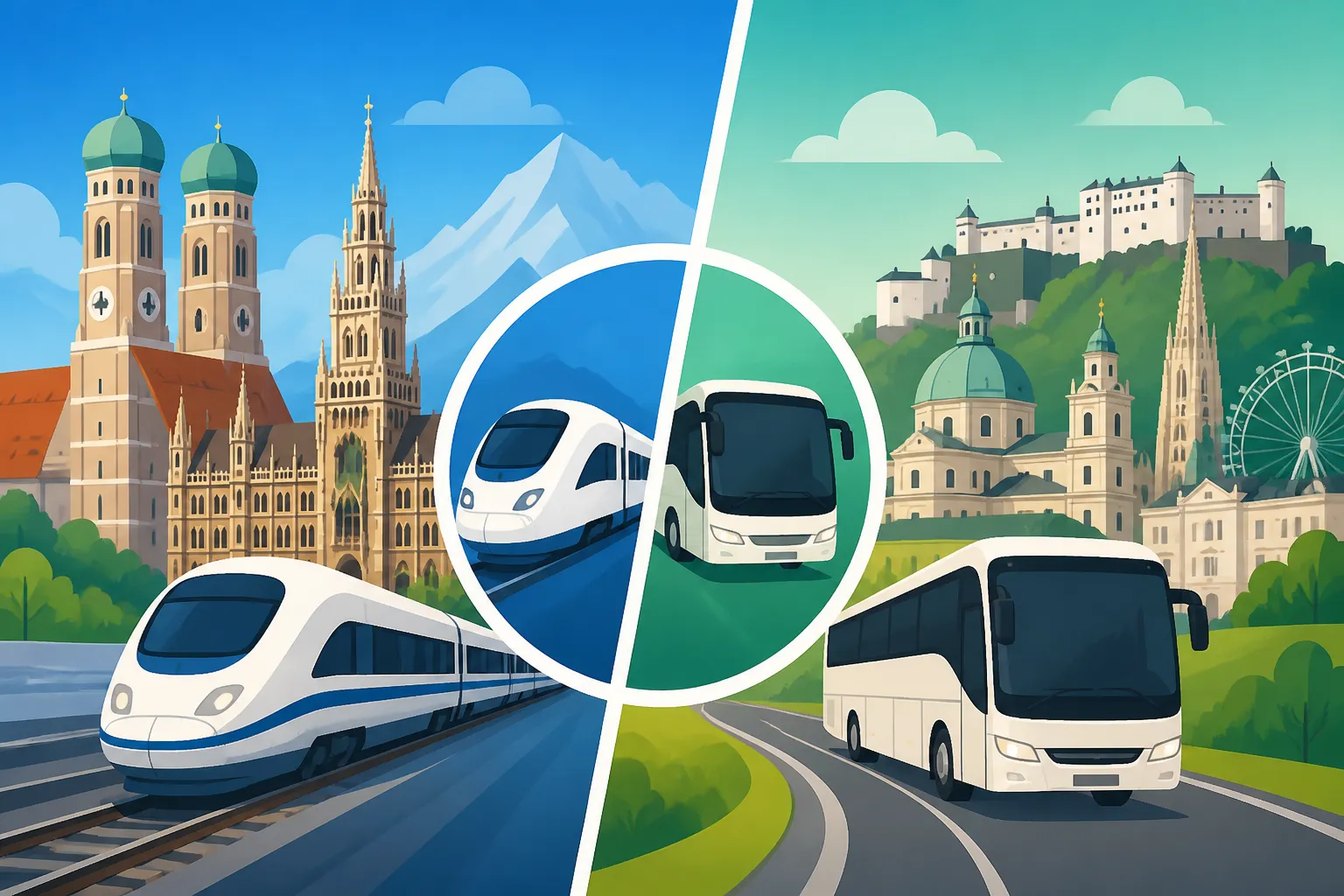
Comparing Your Options: Train vs. Bus
So, you're standing at the crossroads, eyeing that grand railway station and then the bus terminal. How do you decide? Let's break down the key factors to help you make the most informed choice for your next adventure to Vienna or Salzburg.
Cost vs. Time: Which Wins for Your Trip?
This is often the ultimate deciding factor for many expats.
- When Cost Wins: If you're on a tight budget or are feeling spontaneous and need a last-minute trip, the bus will almost always be the cheaper option. You can snag incredible deals, sometimes as low as €5-10 for Salzburg or €15-25 for Vienna, especially if you book a few days in advance. The price difference compared to trains can be substantial, often saving you half or even two-thirds of the fare. This is perfect for students, backpackers, or just anyone who prioritizes saving money. Imagine that extra cash going towards a delicious Sachertorte or a guided tour!
- When Time Wins: If you value every minute of your trip, especially for a short weekend getaway, the train is generally the superior choice. The journey to Vienna by Railjet is about 4-4.5 hours, while a bus can take 5.5-7 hours. That's a minimum of 2-3 hours saved on a round trip, which can make a huge difference in how much you see and do. For Salzburg, the difference is less stark but still noticeable: 1.5 hours by train vs. 2-2.5 hours by bus. If you've managed to get a good Sparpreis deal by booking months in advance, the train might even be surprisingly competitive on price, effectively giving you the best of both worlds.
Consider your personal trade-off. Is an extra hour or two of travel worth saving €20-€40? For some, absolutely. For others, time is money, especially when you have limited vacation days and want to maximize your experience in a new city.
Comfort, Convenience, and Experience
Beyond just numbers, the overall travel experience plays a huge role in your enjoyment.
- Comfort:
- Train: Generally offers significantly more comfort. Wider seats, more legroom, the ability to get up and stretch your legs, a dining car, and proper restrooms. This can make a long journey feel much more manageable. Imagine being able to grab a coffee, read a book comfortably, or even get some work done.
- Bus: Can be a bit of a squeeze. While modern buses are decent, seats are narrower, legroom is less, and you're essentially confined to your seat for the duration, save for a quick bathroom break. The ride can also be bumpier and noisier.
- Convenience:
- Train: Almost always wins here for city-to-city travel. Train stations (Hauptbahnhof) are typically located right in the city center, seamlessly integrated with local public transport. This means less faffing about with taxis or extra tram rides to get to your final destination.
- Bus: Bus stations (like Munich ZOB or Vienna VIB) are usually well-connected but can sometimes be a little further from the absolute heart of the city than the main train station. This isn't a deal-breaker, but it's an extra consideration for your arrival logistics.
- Overall Experience:
- Train: Often feels more like a relaxed, classic European travel experience. Watching the landscape whiz by, having space to move, and arriving directly in a bustling city center.
- Bus: Can feel more like a functional, no-frills journey. It’s about getting from A to B efficiently and affordably. For some, the social aspect of bus travel or the sense of adventure is appealing; for others, it's simply a means to an end.
The Role of Omio in Your Travel Planning
Now, how do you even begin to compare all these variables without feeling like you need a degree in European transportation logistics? This is precisely where Omio becomes your absolute hero. Seriously, for expats navigating the complexities of European travel, it’s a game-changer.
Omio is a multi-modal travel platform that aggregates information for trains, buses, and flights (though we're sticking to ground travel today) across Europe. Imagine this: instead of opening Deutsche Bahn's website, then ÖBB's, then FlixBus's, and trying to cross-reference schedules and prices, you just type in "Munich to Vienna" or "Munich to Salzburg" into Omio.
Here's why Omio is your go-to:
- Comprehensive Comparison: It pulls up all relevant options – trains from both DB and ÖBB, and buses from FlixBus – showing you departure times, arrival times, journey durations, and, crucially, prices. You can immediately see if a faster train is just a few euros more than a longer bus, or if a super-saver bus ticket is available for your chosen date.
- Price Transparency: Omio clearly displays different fare types (e.g., Sparpreis vs. flexible train tickets) and makes it easy to compare the real cost. It cuts through the jargon and shows you the bottom line.
- Ease of Use: The interface is incredibly user-friendly and available in multiple languages, including English. No more wrestling with Google Translate on a German rail site! This is a massive relief when you're already juggling other expat challenges.
- Simplified Booking: Once you've made your choice, you can book and pay directly through Omio. They handle the ticket issuance, and often you receive a mobile ticket that you can simply show on your phone, avoiding the need to print anything or pick up tickets at a station.
- Direct Links and Information: Omio provides all the necessary details for your journey, including exact departure and arrival points, operator names, and sometimes even a little map.
When you're overwhelmed by choices, Omio simplifies everything. It empowers you to make an informed decision based on your priorities – whether that's speed, comfort, or budget. It's truly a lifesaver for expats trying to navigate travel options and ensure they get the best deal, whether they prioritize speed or budget. So, before you open a dozen browser tabs, head to Omio first. It will almost certainly be your best first step in planning any cross-border trip from Germany.
Practical Tips for Your Journey
Even with the right booking tools, a few practical tips can make your journey from Munich to Vienna or Salzburg even smoother. As an expat, you’re already a pro at adapting, but a little foresight goes a long way.
Booking Your Tickets Wisely
Booking your tickets smartly can save you money and stress. For trains, the golden rule is: book early! Sparpreis tickets are released months in advance, and the cheapest ones disappear quickly. If you know your travel dates, try to secure those tickets at least 4-6 weeks out, if not more. A flexible Flexpreis ticket is available for last-minute decisions, but be prepared for a significantly higher price. Remember to compare first and second class; sometimes a Sparpreis first-class ticket isn't much more than a Flexpreis second-class.
For buses, while early booking is still beneficial for the absolute cheapest fares, they tend to remain more affordable closer to departure than trains. If you're planning a spontaneous trip next weekend, the bus will likely offer the better last-minute deal. Always check the refund and change policies for both train and bus tickets, as budget fares are typically non-refundable.
This is where Omio comes into play again, consolidating all these options. You can easily toggle between dates and times to see how prices fluctuate, helping you pinpoint the sweet spot between cost and convenience. It's especially useful for comparing those train Sparpreis options against the consistently low bus fares. And don't forget about potential discounts! If you have a BahnCard for Deutsche Bahn, make sure you apply it during the booking process on Omio or the DB site to see if it reduces your fare further. For students, some FlixBus tickets might offer minor discounts too.
Packing, Etiquette, and Onboard Essentials
Your travel experience is also shaped by how you prepare for the journey itself.
- Packing Smart: For train travel, bring a comfortable carry-on that fits either above your seat or between the seats. For buses, utilize the generous checked luggage allowance, but keep essentials in a small bag with you. Always pack snacks and drinks, especially for longer bus journeys where onboard options are limited or pricier. A reusable water bottle is a must.
- Onboard Comfort: Dress in layers, as temperatures can vary. Bring a good book, download movies or podcasts, or pack a deck of cards. Noise-canceling headphones are a lifesaver on both trains and buses, especially if you want to avoid listening to someone else's music or a loud phone conversation.
- Etiquette: On both trains and buses, try to keep your voice down, especially if you're talking on the phone. In train quiet zones (Ruhebereich), silence is golden. Be mindful of others' space. When storing luggage, be efficient and don't hog too much space. If you're traveling with children, try to keep them entertained quietly.
- Essentials: Don’t forget your passport or ID (even though it's Schengen, you might be asked for it), your ticket (digital is usually fine, especially if booked through Omio), a power bank for your devices, and some cash for small purchases or emergencies. Travel insurance is always a good idea, even for short trips within Europe. You never know when you might need it, whether it's for lost luggage or unexpected medical issues. Considering a dedicated travel insurance for trips is smart, as your German health insurance only covers emergencies.
Navigating Stations and Potential Delays
Knowing what to expect at the stations can significantly reduce pre-travel anxiety.
- Train Stations (Hauptbahnhof): Munich Hauptbahnhof is a large, busy station, but it's well-organized. Give yourself ample time to find your platform, especially if you have a tight connection. Platform numbers are clearly displayed on electronic boards. Most major train stations have plenty of shops, cafes, and restrooms. Use the Deutsche Bahn app (DB Navigator) to check real-time platform changes or delays. Remember that platforms can sometimes change even minutes before departure!
- Bus Stations: The Munich ZOB is generally efficient, but it's not as grand or amenity-rich as the Hauptbahnhof. Make sure you know which "Steig" (platform) your bus departs from. Bus stations might also have fewer shops or restaurants, so have your snacks and drinks ready beforehand. In Vienna and Salzburg, the bus stops are usually near the main train stations, so connections to city transport are good.
- Dealing with Delays: Delays happen. If traveling by train, the DB Navigator app is your best friend. It shows real-time updates and even suggests alternative connections if your train is significantly delayed. If you have a Sparpreis ticket and your train is delayed by more than 20 minutes at your departure station, you often gain flexibility to take a different train on the same route. For bus delays, check the FlixBus app for updates. If a major delay or cancellation occurs, bus companies typically offer rebooking or refunds, but it can be less structured than rail. Patience is key!
To minimize potential stress, always build a buffer into your travel plans, especially if you have onward connections or appointments. A little extra time means you won't be rushing, and you can truly enjoy the start of your journey. Using Omio to plan your route, and then leveraging operator apps for real-time updates, gives you the best of both worlds for a smooth journey.
Here's a quick comparison table to help you visualize your options:
| Feature | Train (Munich to Salzburg) | Train (Munich to Vienna) | Bus (Munich to Salzburg) | Bus (Munich to Vienna) |
|---|---|---|---|---|
| Operator(s) | DB, ÖBB (Railjet, Regional) | DB, ÖBB (Railjet) | FlixBus | FlixBus |
| Avg. Travel Time | 1h 25m – 2h 30m | 4h – 4h 30m | 2h – 2h 30m | 5h 30m – 7h |
| Avg. Price Range | €15-€60 (Sparpreis to Flexpreis) | €20-€100+ (Sparpreis to Flexpreis) | €5-€20 | €15-€40 |
| Comfort Level | High (spacious, amenities, move around) | High (spacious, amenities, move around) | Basic (standard seating, confined) | Basic (standard seating, confined) |
| Luggage | Manage own, overhead/racks | Manage own, overhead/racks | 1 checked bag + 1 hand luggage included | 1 checked bag + 1 hand luggage included |
| Arrival Point | City center (Hauptbahnhof) | City center (Hauptbahnhof) | City center (Hauptbahnhof) | Near city center (VIB / Hauptbahnhof) |
| Key Advantage | Speed, comfort, central arrival | Speed, comfort, central arrival | Very affordable, good luggage allowance | Very affordable, good luggage allowance |
| Key Disadvantage | Can be expensive, less flexible last-minute | Can be expensive, less flexible last-minute | Longer travel time, less comfort | Significantly longer travel time, traffic risk, less comfort |
Whether you prioritize speed and comfort or budget and baggage, both rail and bus offer valid ways to reach these beautiful Austrian cities from Munich. Using platforms like Omio really bridges the gap, allowing you to see all these choices laid out clearly, empowering you to make the best decision for your travel style. So go ahead, plan that adventure to Vienna or Salzburg – you've earned it!
Disclaimer
Please remember that all information provided in this guide is for general informational purposes only and is subject to change. While we strive to keep details as accurate and up-to-date as possible, travel regulations, prices, schedules, and services can fluctuate. Always double-check the latest information with official sources and service providers like Deutsche Bahn, ÖBB, FlixBus, or Omio before making any travel arrangements. We cannot be held responsible for any inaccuracies or changes.