Paying for German Transport With a Foreign Card: Declines and Fixes
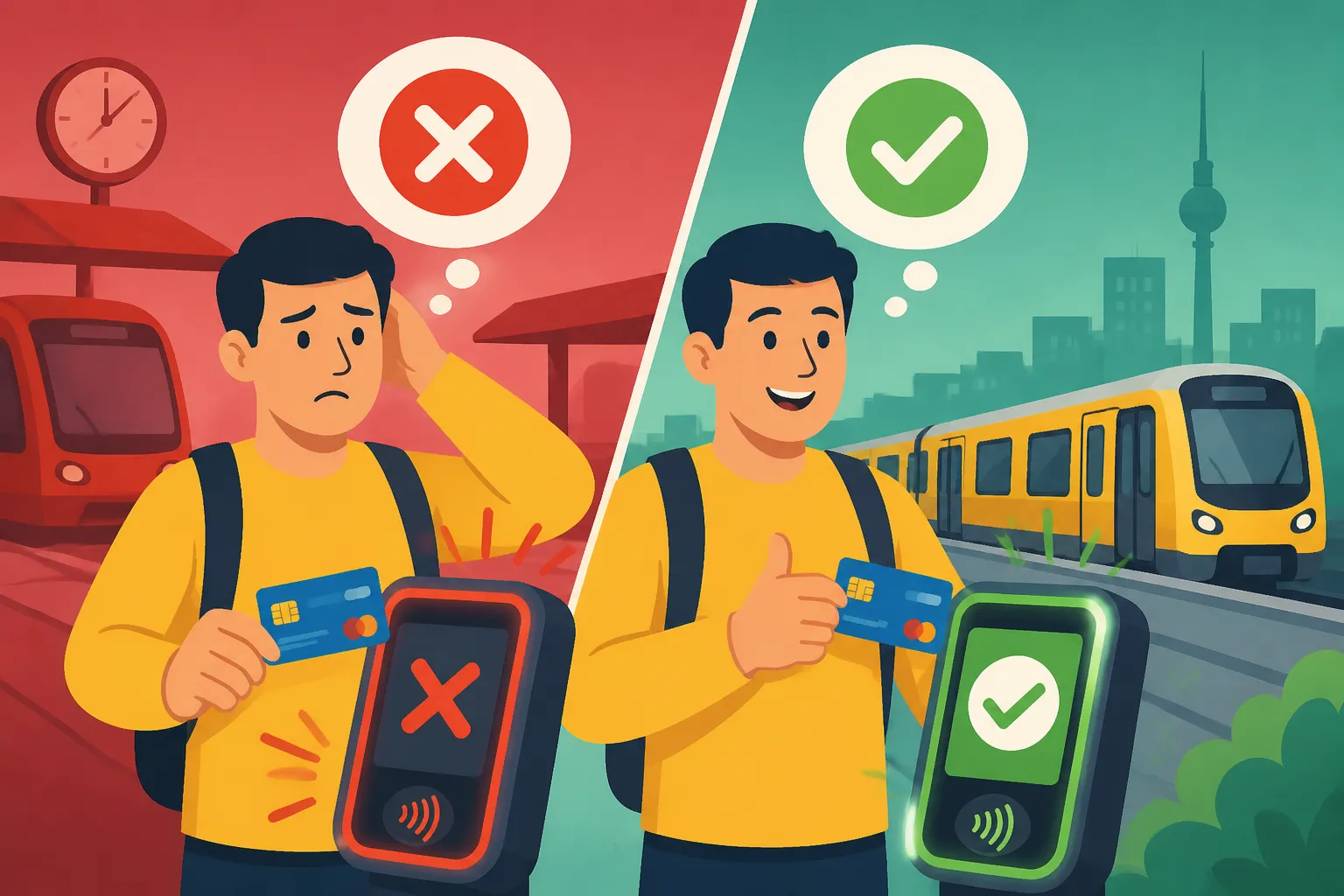
Ah, the familiar dread of standing at a German ticket machine, only to have your perfectly valid foreign credit or debit card rejected yet again. You're not alone, my friend. This isn't a problem with your bank; it's a rite of passage for every expat and tourist trying to navigate Germany’s otherwise efficient public transport while simultaneously battling its antiquated payment preferences. This guide is here to shed light on why this happens and, more importantly, to introduce you to a real game-changer that makes paying for German transport seamless: Omio.
Disclosure: This post may contain affiliate links. We may earn a commission at no extra cost to you if you make a purchase through these links. Read full disclosure.
The Frustration of Foreign Cards in Germany's Transport System
Let's be honest, Germany is fantastic in so many ways – the punctuality, the delicious bread, the beautiful landscapes. But when it comes to electronic payments, especially for public transport, it can feel like stepping into a time warp. Many expats (myself included, more times than I care to admit) have been left flustered, holding up a queue, or even missing a train because a card that works perfectly fine everywhere else just decides to play hard to get here. It’s a uniquely German hurdle, and it’s totally valid to feel frustrated by it.
Why German Systems Are Different (and Annoying)
The heart of the matter lies in Germany's historical preference for the "EC-Karte," now officially known as the "Girocard." For decades, this was the dominant debit card, and many businesses and public services simply built their payment infrastructure around it. Credit card acceptance, particularly Visa and Mastercard, was (and in many smaller establishments, still is) a secondary thought, often incurring higher transaction fees for the vendor, which they are not always keen to absorb. American Express? Even rarer, historically.
Beyond the card type, you also encounter issues with security protocols. Many German payment terminals, especially older ones, are not fully equipped to handle international 3D Secure verification processes or simply struggle with the intricacies of foreign bank authorizations. You might swipe, insert, enter your PIN, and everything looks like it's going through, only for a cryptic error message like "Zahlung fehlgeschlagen" (payment failed) or "Karte nicht akzeptiert" (card not accepted) to pop up. It’s not you, it’s the system’s often rigid design that wasn’t built with global travelers in mind. This often leaves you scrambling for cash or desperately searching for a functional ATM, adding unnecessary stress to your journey, whether you’re just trying to hop on the U-Bahn or catch a high-speed ICE train.
Common Scenarios Where Your Card Might Fail
You'll quickly learn that certain situations are notorious for foreign card rejection. Picture this: you've just arrived at a bustling train station, excited to explore. You head to a Deutsche Bahn (DB) ticket machine to grab your ticket. You try your trusty Visa or Mastercard, and boom, it's rejected. You try again, maybe a different card, same result. This is incredibly common. DB ticket machines are infamous for their picky nature with foreign cards. While some newer machines and the DB Navigator app have improved, consistency is still a distant dream.
The same can often happen with local transport. In smaller cities or for bus drivers on board, you might find only cash or Girocard is accepted. Imagine rushing to catch a bus, only to be told your card won't work, and you have no coins. It's not just an inconvenience; it can truly disrupt your plans. Even online, when booking directly through transport provider websites like those for local public transport (ÖPNV), you might encounter issues, especially if their payment gateway isn't robust enough for international transactions or requires specific German banking details. It's a patchwork of systems, each with its own quirks, making it incredibly difficult for foreigners to predict what will and won't work.
The Hero Solution: Omio to the Rescue!
This is where Omio steps in as a true lifesaver for anyone navigating Germany's transport with a foreign card. I discovered Omio years ago out of sheer desperation after one too many rejected payments, and it has genuinely revolutionized how I book travel here. It acts as an incredibly reliable bridge between your international payment methods and the sometimes finicky German transport networks.
How Omio Streamlines Your Journey (and Payments)
Omio is more than just a booking platform; it’s a global travel aggregator that truly understands the needs of international travelers. Think of it as your one-stop shop for comparing and booking trains, buses, and even flights across Europe, including, of course, all your travel within Germany. What makes Omio an absolute game-changer for expats and tourists is its robust international payment processing. They accept a wide array of foreign credit and debit cards, including Visa, Mastercard, American Express, and even PayPal, making those frustrating "Zahlung fehlgeschlagen" messages a thing of the past.
When you use Omio, you're not dealing directly with the individual German transport provider's temperamental payment gateway. Instead, Omio handles the transaction on their end, processing your foreign card seamlessly and then issuing you a valid German ticket. This simple intermediary step bypasses all those compatibility issues that plague direct bookings. It means you can plan your journeys across Germany, from a quick hop on a regional train to a longer adventure with high-speed trains in Germany (ICE): Deutsche Bahn Routes and Savings, all from one place, with the confidence that your payment will go through without a hitch. The digital tickets are then conveniently available on your phone, ready to be shown to a conductor.
Step-by-Step: Using Omio with Your Foreign Card
Using Omio is incredibly straightforward, even if you’re new to booking German transport. Here’s how you can make your life a whole lot easier:
- Download the Omio App or Visit Their Website: Omio is available both as a mobile app (highly recommended for on-the-go booking and ticket storage) and a desktop website.
- Enter Your Journey Details: Input your departure and arrival points, desired date, and number of passengers. Omio will then display a comprehensive list of available options, including various train connections (like those operated by Deutsche Bahn), long-distance buses in Germany: FlixBus and Networks, and sometimes even flights. You can compare prices, travel times, and even specific transport providers all in one glance.
- Select Your Preferred Trip: Once you’ve chosen the best option for you, click to proceed to booking.
- Enter Passenger Information: This is usually just your name, matching your ID.
- Choose Your Payment Method: This is the crucial part where Omio shines. You'll find options for major credit cards (Visa, Mastercard, Amex), PayPal, and often other local payment methods. Simply select your foreign credit or debit card. Omio's system is built to handle international transactions smoothly, saving you from the headaches of direct German systems.
- Confirm and Pay: Review your details, hit 'confirm,' and your payment should go through without any drama.
- Receive Your E-Ticket: Within moments, you'll receive a confirmation email with your digital ticket. For train and bus tickets, these are typically mobile tickets that can be accessed directly in the Omio app, often as a QR code or barcode. This means no more fumbling with printouts or wrestling with stubborn ticket machines!
This entire process, especially when planning to travel across multiple regions or even just getting around German cities: U-Bahn, S-Bahn, Trams, and Buses, becomes incredibly efficient and stress-free.
Alternative Fixes and Backup Strategies
While Omio is undoubtedly the champion for hassle-free payments with foreign cards, it’s always smart to have a few backup strategies in your toolkit when navigating Germany. After all, life as an expat or a traveler is all about adapting, right?
Other Digital Solutions (with Caveats)
Many larger German cities and the Deutsche Bahn itself have their own dedicated apps, such as the DB Navigator for trains or specific apps for local transport (e.g., BVG for Berlin, RMV for Frankfurt, MVV for Munich). These apps have gradually improved their international card acceptance, but it's still a mixed bag. You might find that your foreign Visa or Mastercard works perfectly one day and is inexplicably rejected the next. Some apps also integrate Google Pay or Apple Pay, which can sometimes bypass the direct card issues, but again, this relies on the underlying system's compatibility with your specific foreign bank, which isn't always guaranteed.
It’s worth trying these apps, especially if you’re a frequent user of a particular local network, but always approach them with a healthy dose of skepticism and a backup plan. You wouldn't want to be stranded just because the app decided to be finicky that day. For critical journeys, or when you simply can't afford a payment hiccup, Omio remains the more reliable bet.
The Cash Is King Reality
Despite Germany's digital advancements, cash remains king in many daily transactions, and public transport is no exception. For smaller purchases, a local bus fare from the driver, or in situations where all digital options fail, having a few euros in your pocket is a lifesaver. I always advise people to carry at least €20-€50 in small denominations when they're out and about, especially if they're venturing outside major city centers.
ATMs are widely available across Germany, often found at banks, train stations, and shopping centers. However, be mindful of potential foreign transaction fees from your own bank, and some German banks might charge a withdrawal fee for non-customers. Always check the machine for fee disclosures before proceeding. For more details on this, check out our guide on Money for Travel in Germany: Cash, Cards, and ATMs. The reality is, even with the best intentions and the most modern apps, cash is your ultimate fail-safe.
Prepaid Cards and German-Issued Accounts
For those planning a longer stay in Germany, getting a local German bank account or a prepaid debit card can dramatically simplify your transport payments and overall financial life. Banks like N26 and Revolut are popular among expats for their English-speaking services and easy setup processes, offering a German IBAN that works seamlessly with all local payment systems. A German Girocard (EC-Karte) linked to your local bank account will be accepted everywhere, from the smallest bakeries to every single ticket machine.
If a full bank account seems like too much hassle initially, consider a prepaid card. While not perfect, they can sometimes offer better acceptance rates than international credit cards, especially if they operate on a Visa or Mastercard network, but act like a debit card. However, for sheer convenience and immediate problem-solving, Omio is still hard to beat for short to medium-term stays where a full German banking setup isn't practical or necessary.
Navigating Specific Transport Providers
Understanding the payment landscape of Germany's major transport providers is key to avoiding unnecessary stress. Each has its own peculiarities that can trip up even seasoned expats.
Deutsche Bahn (DB) and its Quirks
The Deutsche Bahn (DB) is Germany's national railway company, operating everything from the lightning-fast ICE trains to regional lines. As mentioned, their ticket machines at stations are notorious for rejecting foreign credit and debit cards. It’s almost a running joke amongst us expats! While newer machines are slowly being rolled out with better card readers, you can't rely on it.
Your best bet for booking DB tickets is either through Omio, which takes care of the payment compatibility for you, or through the official DB Navigator app. Even then, using the DB Navigator app with a foreign card can be hit-or-miss. For crucial journeys, especially those involving multiple connections or a tight schedule, using Omio eliminates the payment uncertainty entirely. You can explore the full range of Deutsche Bahn Guide: Using Trains for City and Long-Distance Travel options on Omio and purchase your tickets knowing your foreign card won't be an issue.
If all else fails, and you're at a station with a foreign card that isn't working, seek out a Reisezentrum (travel center) if available. These are manned ticket counters where you might have better luck with your foreign card, as human interaction sometimes smooths out the digital kinks, though be prepared for potential queues and language barriers.
Local Public Transport (ÖPNV)
Local public transport, known as ÖPNV (Öffentlicher Personennahverkehr), encompasses the U-Bahn (subway), S-Bahn (suburban train), trams, and buses that crisscross German cities and regions. The payment situation here is even more fragmented than with DB. Each city or region has its own transport association (e.g., BVG in Berlin, MVV in Munich, VBB for Brandenburg/Berlin), and their payment systems vary widely.
For some, their apps have good foreign card acceptance; for others, it's strictly Girocard or cash. Bus drivers, in particular, are often cash-only or Girocard-only for on-board ticket purchases. This is why always having cash is critical, especially for spontaneous short trips or if you're not planning to rely on Omio for very localized journeys. For an overview of how to navigate these systems, our guide on Getting Around German Cities: U-Bahn, S-Bahn, Trams, and Buses might be helpful, but remember to always have a payment strategy for that specific location.
A table might help clarify things for you:
| Payment Method / Platform | General Foreign Card Acceptance | Notes for Germany |
|---|---|---|
| Omio | Excellent | Highly recommended. Processes international cards seamlessly, then issues German tickets. Your reliable go-to. |
| DB Navigator App | Moderate to Good | Improved, but still inconsistent for some foreign cards. Sometimes works, sometimes doesn't. Google/Apple Pay can help. |
| DB Ticket Machines | Poor to Moderate | Highly unreliable with foreign cards, especially older models. Expect rejections. Always have a backup. |
| Local Transport Apps | Varies by city/region | Some major cities (Berlin, Munich) are better, smaller regions less so. Test it, but don't depend solely on it. |
| On-Board Bus/Tram Purchase | Poor (Cash/Girocard) | Often cash-only or Girocard. Always carry small euro notes/coins for bus drivers. |
| Physical Ticket Counters | Moderate to Good | Human interaction sometimes helps, but be prepared for queues and potential language barriers. |
| Contactless (e.g., Apple Pay, Google Pay) | Varies, relies on underlying terminal | Works if the terminal supports it and the linked foreign card is accepted. Not a universal solution. |
| German Bank Account/Girocard | Excellent | If you live here long-term, this is the gold standard for all German payments, including transport. |
So, the next time you're planning a trip across this beautiful country, whether it's by high-speed train, a regional connection using your Deutschland-Ticket, or a long-distance bus, remember that Omio is your friend. It takes the stress out of payment, letting you focus on the adventure.
Disclaimer
Please note that while this article provides general information and recommendations for expats and tourists in Germany, payment systems and acceptance policies can change. Always verify the latest information with specific transport providers or payment processors if you have critical concerns. This guide reflects personal experiences and commonly observed patterns; individual outcomes may vary.