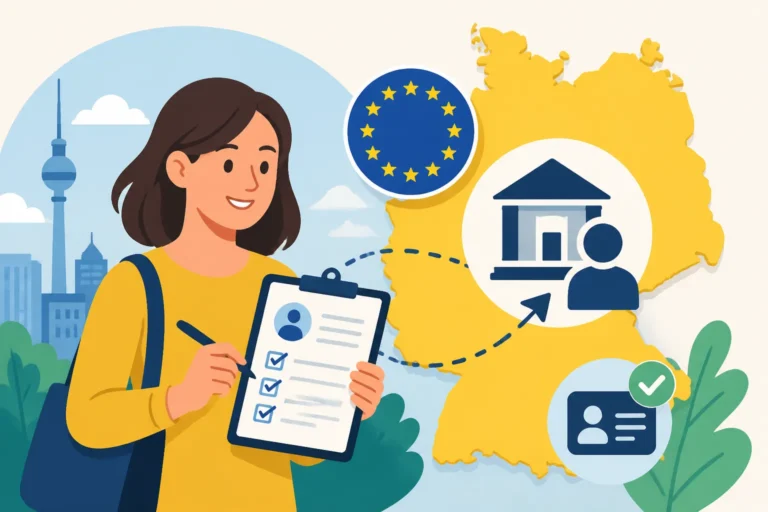
Unmarried Partner Visas: Can You Bring a Boyfriend/Girlfriend to Germany?
Being told your dream job in Berlin means leaving your partner of five years behind is a devastating blow. I spent weeks frantically googling “de facto visa Germany” before realizing the immigration system simply didn’t care how long we had been dating. This guide explains the harsh legal reality for unmarried couples and outlines the actual, actionable pathways to bring your partner with you.
Disclosure: This post may contain affiliate links. We may earn a commission at no extra cost to you if you make a purchase through these links. Read full disclosure.
The Brutal Truth About “De Facto” Visas in Germany
Why Germany Rejects the “Unmarried Partner” Concept
Many expats from countries like Australia, Canada, or the UK arrive in Europe assuming they can easily sponsor their long-term boyfriend or girlfriend. In these countries, “de facto” or common-law partnerships hold immense legal weight, allowing you to sponsor a partner simply by proving you have lived together for a year or two. Germany, however, fundamentally rejects this concept for immigration purposes. Under German national immigration law, the institution of marriage (Ehe) and recognized civil partnerships (Eingetragene Lebenspartnerschaft) are strictly protected.
To the German immigration office (Ausländerbehörde), cohabitation (nichteheliche Lebensgemeinschaft) is viewed merely as a private lifestyle choice. It does not matter if you share a mortgage, have a joint bank account, or have been deeply committed for a decade. If you are not legally married, your partner is treated as a completely independent foreign national. They cannot piggyback on your hard-earned EU Blue Card or skilled worker visa. The German government will not allow you to legally assume financial liability for their stay as an unmarried partner.
During the height of the COVID-19 pandemic, Germany briefly introduced a “sweetheart visa” exception to allow separated, unmarried couples to reunite across closed borders. This gave many couples false hope that the legal landscape was shifting. Unfortunately, this was purely a temporary emergency measure and has been entirely abolished. Today, if your boyfriend or girlfriend tells a German border guard they are moving to the country to live with you without holding their own dedicated visa, they risk being turned away for suspected illegal immigration.
The Exceptions That Prove the Rule
As with everything in German bureaucracy, there is a labyrinth of exceptions, primarily depending on what passport you hold. If you, the sponsoring partner, are a citizen of another European Union country (for example, you are Italian or Spanish) but you live and work in Germany, you are governed by EU freedom of movement laws rather than strict German national laws. Under the EU directive, non-EU unmarried partners can sometimes apply for an EU family member residence card if they can prove a “duly attested” long-term relationship.
However, if you are a non-EU citizen (e.g., American, Indian, South African) living in Germany on a standard work visa or Blue Card, this EU loophole absolutely does not apply to you. You are subject to German national law, which is uncompromising. Furthermore, even if you are a German citizen bringing your non-EU partner to Germany, you are still subjected to the strict national laws that require marriage for family reunification.
It is an incredibly frustrating paradox for many expats. You might find yourself in a situation where your French colleague can legally bring their unmarried Brazilian partner to Berlin, but you, as a Canadian with a German Blue Card, cannot bring your Canadian partner. Knowing which set of laws applies to your specific passport combination is the most important research you will do.
Proving Your Relationship
When desperate couples realize there is no specific visa for them, they often try to overwhelm the Ausländerbehörde with evidence of their love. I have seen expats bring massive binders filled with thousands of WhatsApp chat logs, years of shared flight itineraries, heavily stamped passports, and heartfelt letters from parents attesting to the legitimacy of their relationship.
While this level of documentation is exactly what is required for a UK or Australian partner visa, handing it to a German caseworker will only result in a confused stare. Because the visa category simply does not exist for non-EU expats, the caseworker literally has no legal framework or checklist to assess your WhatsApp messages against. They will hand the binder back to you.
The only documentation the German state recognizes for family reunification is a legalized, officially translated marriage certificate. Attempting to force the system to recognize a de facto relationship is a waste of your emotional energy and time. You must pivot your strategy immediately to the actionable pathways that actually exist within the German legal code.
The Most Direct Solution: Getting Married
Transitioning to the Family Reunification Visa (Spouse Visa)
Faced with the reality that an unmarried partner visa does not exist, thousands of expat couples make a highly pragmatic, albeit unromantic, decision: they push their wedding dates forward. Getting married is the single fastest, most legally secure way to bypass the immigration wall. The moment you possess a valid marriage certificate, your partner transforms in the eyes of the law from a legal stranger into a dependent spouse.
As a spouse, they are legally entitled to apply for the Family Reunification Visa (Familiennachzug). If you hold a highly qualified visa, like an EU Blue Card, your new spouse is granted immense benefits. They are entirely exempt from the dreaded A1 German language requirement, saving them months of studying. Furthermore, upon arrival, their residence permit will grant them unrestricted access to the German labor market, allowing them to work full-time, part-time, or start a freelance business.
If you decide to take this route, the paperwork is immense but entirely predictable. The German embassy will require proof of adequate housing space and financial stability to ensure you can support your new spouse. We break down exactly what you need to prepare, including the specific salary thresholds and A1 language exemptions, in our comprehensive guide on Spouse Visa for Germany: Bringing Your Partner as a Dependent.
The “Denmark Loophole” for Expat Couples
If you decide to get married to solve your visa crisis, you will quickly discover that getting married inside Germany as two foreigners is a bureaucratic nightmare. German registry offices (Standesamt) require months of background checks, newly issued birth certificates from your home country verified by the embassy, and complex “certificates of no impediment” (Ehefähigkeitszeugnis) proving you are legally allowed to marry.
To bypass this agonizingly slow process, a massive industry has sprung up around the “Denmark Loophole.” Denmark has incredibly relaxed and efficient marriage laws for foreigners. You can often submit all your documents online through their digital portal, travel across the border for a long weekend, and return to Germany with an internationally recognized marriage certificate in a matter of days. It is the ultimate administrative hack for international couples facing visa deadlines.
However, simply holding a Danish marriage certificate is not the end of the journey. The German immigration office will require that foreign certificate to be officially authenticated and translated. If you attempt to use an untranslated document for your spouse’s visa appointment, it will be rejected, and your family reunification will be stalled.
Overcoming the Paperwork and Translation Nightmare
Whether you get married in Denmark, the United States, or India, your marriage certificate must meet strict German legal standards to be valid for a visa. For many countries, this requires securing an Apostille stamp to verify the document’s authenticity internationally. Once the document is legalized, you face the translation hurdle.
The Ausländerbehörde operates strictly in German. You cannot translate your marriage certificate yourself, nor can you use a standard notary back home. The German government requires all critical civil documents to be translated by an officially sworn translator (vereidigter Übersetzer) who is recognized by the German court system.
Finding a certified sworn translator from abroad is a deeply frustrating bottleneck. To bypass this, savvy expats use digital translation platforms like Lingoking. You simply upload a high-quality scan of your legalized marriage certificate to Lingoking, and they immediately assign it to a certified German sworn translator. The legally binding, officially stamped translations are mailed directly to you, guaranteeing they will pass the embassy’s strict document check. Ensuring your marriage documents are perfect via Lingoking is the final, crucial hurdle to unlocking the spouse visa.
Independent Visa Routes for Your Boyfriend or Girlfriend
The Education Route: Student or Language Course Visas
If getting married is absolutely off the table, your partner must qualify for a German visa on their own merit. They must become the primary applicant for an independent immigration pathway. One of the most popular and reliable ways to bring an unmarried partner to Germany is for them to enroll in higher education or an intensive language school.
If your partner applies to a German university for a master’s or bachelor’s degree, they can secure a standard student visa. Alternatively, if they want to master the local language to boost their employability, they can enroll in an intensive German course (which legally requires a minimum of 18 hours of direct instruction per week) and apply for a Language Course Visa. This route allows them to stay in Germany for up to 12 months. To understand the strict requirements of this specific pathway, read Language Course Visa for Germany: Learning German on a D-Visa.
The massive hurdle here is financial. To get any educational visa, your partner must prove they can fully support themselves. You cannot simply show your own bank account and promise to support them. To solve this, your partner must legally lock away over 11,000 Euros upfront in a specialized blocked account (Sperrkonto). Relying on a digital provider like Expatrio is essential here. Expatrio allows them to open a legally compliant blocked account in minutes, generating the exact confirmation PDF the embassy demands to approve their visa. For a deep dive into how this vault works, review Student Visa Blocked Account (Sperrkonto): What It Is and How to Set It Up.
The Job Seeker Route: The New Opportunity Card (Chancenkarte)
If your partner has a university degree or a recognized vocational qualification, they do not necessarily need a job offer before moving to Germany. Under the modernized Skilled Immigration Act, they can now apply for the Opportunity Card (Chancenkarte).
This is a relatively new, points-based job seeker visa that allows qualified professionals from non-EU countries to move to Germany for up to one year to actively look for employment. Points are awarded for their age, English or German language skills, and previous professional experience. If they score a minimum of six points, they are eligible to apply.
Crucially, while they are actively looking for a job in their professional field, the Opportunity Card allows them to work part-time (up to 20 hours a week) in any casual job—like retail or food delivery—to help pay the bills. If they secure a qualifying job offer during that year, they can easily transition to a standard skilled worker visa from within Germany.
The Employment Route: Securing a Skilled Worker Visa or Blue Card
The most secure, albeit challenging, independent route is for your partner to secure their own sponsored employment before arriving. If they work in high-demand sectors like IT, engineering, healthcare, or finance, they can apply for jobs from their home country and secure a standard Skilled Worker Visa or an EU Blue Card.
This route grants them immediate, full financial independence and a strong foundation for long-term permanent residency. However, the German corporate hiring process is notoriously slow, and many local employers are hesitant to hire candidates who are not already residing in Germany. Your partner will need to aggressively network, optimize their CV for the German market, and highlight that they are relocating to join their partner, which often reassures employers that they are committed to staying in the country long-term.
It is important to note that if they take this route, their visa is tied directly to their employer for the first few years. If they lose that job or hate the company culture, their visa status immediately becomes precarious. This is the primary difference between holding an independent work visa versus a dependent spouse visa.
| Visa Pathway | Requires a Job Offer? | Max Duration | Can they live with you? |
| Spouse Visa (Marriage) | No | Tied to your visa | Yes |
| Language Course Visa | No | Up to 12 months | Yes (Must register at address) |
| Opportunity Card (Job Seeker) | No | Up to 12 months | Yes |
| Skilled Worker Visa | Yes | Duration of contract | Yes |
Financial and Healthcare Burdens for Unmarried Couples
Managing Separate Financial Proofs and Blocked Accounts
When your partner moves to Germany on an independent visa rather than a spouse visa, your lives might be intertwined emotionally, but they are entirely segregated administratively. The German state views you legally as roommates. You cannot act as a financial guarantor for your boyfriend or girlfriend’s visa using a simple letter of support or a joint bank account statement from back home.
When your partner goes to the embassy for their student, language, or job seeker visa, they must present their own indisputable proof of funds. As mentioned, this usually means setting up their own Expatrio blocked account and locking away thousands of Euros. The provider will then disburse a fixed monthly sum (around 992 Euros) to their personal checking account once they arrive in Germany.
Even after they arrive, your finances remain legally separate. If your partner runs out of money, they cannot legally rely on your income to renew their visa. They must continuously prove their own financial solvency. Using a platform like Expatrio ensures their financial proof is always compliant and easily accessible for visa renewals.
Navigating the Trap of Separate Health Insurance
One of the greatest, yet often overlooked, benefits of being married in Germany is Familienversicherung (family insurance). If you are in the statutory public health insurance system, your married, non-working spouse gets added to your policy entirely for free.
As an unmarried couple, you are legally barred from this incredible financial benefit. Your partner must secure and pay for their own health insurance from day one. Depending on their specific visa type, this can be an absolute administrative nightmare. If they arrive on a Language Course Visa, an Opportunity Card, or as a freelancer, they are legally excluded from the public system and must purchase private health insurance. Navigating the German private insurance market alone, with its strict underwriting and exclusions, is terrifying.
To solve this safely, expats rely on English-first digital brokers like Feather Insurance. Feather Insurance offers specialized, visa-compliant incoming and private health insurance plans designed specifically for job seekers, language students, and expats in transitional phases. Your partner can sign up online, receive the official digital certificate required for their embassy interview immediately, and ensure they are fully covered without relying on your policy.
Cohabitation and the Anmeldung Reality
When your partner successfully secures their independent visa and lands in Germany, they face the final bureaucratic hurdle: the Anmeldung. Within their first two weeks, they must register their physical presence at the local citizens office (Bürgeramt).
If they are moving into an apartment that you have already rented, they must be added to your registration. You will need to secure a new landlord confirmation letter (Wohnungsgeberbestätigung) from your landlord that explicitly includes your unmarried partner’s name. You cannot simply let them move in secretly; living at an unregistered address violates the terms of their visa.
Once they are registered, they will receive their own Tax ID and can open a local bank account. However, because you are not married, you will both be placed in Tax Class 1 (for single individuals), meaning you will face the highest income tax deductions possible. The lucrative tax benefits (like splitting income via Tax Classes 3 and 5) are reserved exclusively for married couples.
Making the Long-Distance Relationship Work (Temporarily)
Utilizing the 90-Day Schengen Tourist Rule
If securing an independent visa immediately is too difficult, many couples resort to the 90/180-day rule to manage the long-distance relationship. If your partner holds a passport from a visa-exempt country (like the US, UK, Australia, or Canada), they can enter Germany as a tourist for up to 90 days within any 180-day period.
This allows them to live with you in your German apartment for three months, fly back home (or to a non-Schengen country like the UK) for three months, and then return. While this is emotionally exhausting and expensive, it provides a legal way to maintain your relationship while they apply for jobs or study for their German language exams from abroad.
It is critical to remember that during these 90-day tourist stints, they are absolutely forbidden from working, even remotely for a company in their home country. The German immigration authorities strictly monitor the 90-day limit. If they overstay by even one day, they can be banned from re-entering the Schengen zone, completely ruining any future plans for a permanent relocation.
Planning the Ultimate Relocation Timeline
Bringing an unmarried partner to Germany requires accepting that the system will not recognize your love story. You must approach the relocation with cold, calculated pragmatism. The most successful expat couples sit down and map out a realistic 12-to-18-month timeline before anyone books a flight.
Whether you decide to bypass the headache entirely by getting married and using Lingoking to translate the certificates perfectly, or you choose the independent route utilizing Expatrio for blocked funds and Feather Insurance for medical coverage, careful planning is the only way to ensure your relationship survives the German border.
References
Primary sources (official)
- Make it in Germany: The federal government’s official portal outlining the strict definitions of family reunification and the requirements for spouses versus unmarried partners.https://www.make-it-in-germany.com/en/visa-residence/family-reunification
- Federal Foreign Office (Auswärtiges Amt): The ultimate legal authority detailing the consular requirements for independent visas, including the Opportunity Card (Chancenkarte) and Student visas.https://www.auswaertiges-amt.de/en/visa-service/buergerservice/faq
Other helpful sources
- Expatrio Knowledge Base: Detailed guidance on how independent applicants, such as job seekers and language students, can fulfill the strict blocked account requirements for their individual visas.https://www.expatrio.com/about-germany/german-visa
- Federal Office for Migration and Refugees (BAMF): Official immigration directives clarifying the rights of skilled workers and the limitations of cohabitation under German residency law.https://www.bamf.de/EN/Themen/MigrationAufenthalt/migrationaufenthalt-node.html
Disclaimer
The information provided in this article is for general informational and educational purposes only and does not constitute professional legal, financial, or immigration advice. German visa policies, the statutory financial requirements for blocked accounts via providers, health insurance transitions managed by brokers and sworn translation rules for services are highly complex and subject to continuous legislative updates. Always consult directly with your local Ausländerbehörde (Foreigners Office) or a certified immigration lawyer (Fachanwalt für Migrationsrecht) regarding your specific visa transition and employment status in Germany.