Private Lessons vs Self-Study for Naturalisation German: Which Is Faster
Preparing for German naturalisation is a massive undertaking, and for many, the language requirement feels like climbing Mount Everest without a proper map. You're not just learning German; you're learning it to a specific standard, often B1 or B2, to prove you can integrate into daily life. This guide is here to help you navigate the two main paths to linguistic success: going it alone with self-study or investing in private lessons.
Disclosure: This post may contain affiliate links. We may earn a commission at no extra cost to you if you make a purchase through these links. Read full disclosure.
The German Language Requirement for Naturalisation: What You're Up Against
Let's face it: getting German citizenship is a big deal, and the language component is usually the biggest hurdle for us expats. It’s not just about ordering a coffee or asking for directions; it’s about proving a fundamental ability to communicate and understand German society. The standard generally required for naturalisation is B1 level, though proving B2 can sometimes expedite the process or be a specific requirement in certain cases. This isn't just about memorising vocabulary; it's about grammar, sentence structure, listening comprehension, speaking fluency, and writing coherent texts. It’s a holistic assessment of your communication skills.
Understanding the Common European Framework of Reference (CEFR)
The CEFR is a widely recognised international standard that describes language ability across six levels: A1 (beginner) to C2 (mastery). For German naturalisation, the B1 level is the key target for most applicants. What does B1 really mean in practical terms? It means you can understand the main points of clear standard input on familiar matters regularly encountered in work, school, leisure, etc. You can deal with most situations likely to arise while travelling in a German-speaking area. You can produce simple connected text on topics that are familiar or of personal interest. You can describe experiences and events, dreams, hopes, and ambitions and briefly give reasons and explanations for opinions and plans. Sounds straightforward, right? In practice, it's a significant leap from basic conversational German. You’ll need to understand official forms, participate in more complex conversations, and generally navigate daily life without constant translation apps. For some, even higher levels might be expected, so always check the latest requirements for German Citizenship by Naturalization: Eligibility and Application Steps.
The Naturalisation Test and Language Proof
Beyond just "speaking German," you'll need formal proof of your language proficiency. This usually comes in the form of an officially recognised language certificate from institutions like the Goethe-Institut, telc, or ÖSD. The Einbürgerungstest (naturalisation test) also includes components that assess your understanding of German society and legal system, which inherently requires a good grasp of the language to comprehend the questions and provide coherent answers. Imagine trying to understand complex civic concepts in a language you're struggling with – it's a double whammy! The stakes are high, so your language preparation needs to be robust and targeted. Many expats also wonder about Is German Language Mandatory for All Visas? Language Requirements by Visa Type before even reaching this stage.
The Path of Self-Study: Pros, Cons, and How to Make it Work
Ah, self-study! The siren song of flexibility and low cost. I’ve met so many expats who swear by it, and just as many who started with gusto only to crash and burn. It’s a legitimate path, don't get me wrong, but it demands a very specific kind of dedication and discipline. If you’re considering going solo, you need to be brutally honest with yourself about your learning style and commitment.
Advantages of Learning German Independently
The biggest draw of self-study is, without a doubt, the cost. You can assemble an arsenal of free or low-cost resources: language learning apps, YouTube channels, free online exercises, library books, and even language exchange partners. Platforms like Duolingo, Memrise, and Anki can be fantastic for vocabulary and basic grammar. You set your own schedule, which is ideal if you have an unpredictable work life, family commitments, or just prefer to learn at 3 AM. You can focus intensely on areas you find difficult, or skip over what you already know, tailoring your curriculum perfectly to your needs. This freedom can be incredibly liberating and empowering, giving you a strong sense of ownership over your progress. You can dive deep into specific grammar topics, read German news, or binge-watch German shows with subtitles.
Challenges and Pitfalls of Self-Study
However, the very flexibility that makes self-study appealing is also its greatest weakness. The lack of external accountability can lead to procrastination, skipped sessions, and ultimately, stagnation. How many times have you started a new language app only for it to gather digital dust after a few weeks? Without a teacher to correct your mistakes, especially in speaking and writing, you can inadvertently cement bad habits. Pronunciation can become a major issue; what sounds right in your head might be completely off to a native speaker. Grammar nuances, which are plentiful in German, can be incredibly difficult to grasp without expert guidance, especially with cases and verb conjugations. Plus, the B1 exam often requires you to produce spontaneous speech and written text under timed conditions, something apps rarely prepare you for. You're also missing out on immediate feedback and the invaluable experience of direct conversation practice with someone who can guide you. Finding resources for your specific exam format can also be tricky.
Strategies for Effective Independent Learning
If you're determined to make self-study work, you need a robust strategy. Firstly, create a strict schedule and treat it like an appointment you cannot miss. Consistency is far more important than intensity. Utilise a variety of resources: textbooks for structured grammar, apps for vocabulary, podcasts for listening, and German news sites for reading. Focus on integrating all four language skills (reading, writing, listening, speaking). Actively seek out language exchange partners, perhaps through local expat meetups or online communities, to get speaking practice. While not a private lesson, even brief interactions can help. Record yourself speaking and listen back critically. Find German TV shows or movies you enjoy and watch them with German subtitles. Consider taking a few paid mock exams or short tutoring sessions purely for feedback on your weak points, especially as you get closer to your B1 exam date. For proving your skills, remember the importance of How to Prove German Language Skills for Citizenship (B1).
The Path of Private Lessons: Why a Tutor Can Accelerate Your Journey
For many, private lessons are the fastest and most efficient route to reaching the required B1 or B2 level for naturalisation. This path is an investment, both of time and money, but the returns in terms of progress and confidence can be exponential. If you're serious about passing that language exam and truly integrating, this is often the game-changer.
Advantages of One-on-One Tutoring
The core benefit of private lessons is personalised instruction. A good tutor, especially one found through platforms like iTalki, will tailor every single lesson to your specific needs, weaknesses, and learning style. Struggling with dative prepositions? They’ll spend an entire session on it with targeted exercises. Pronunciation a nightmare? They'll give you instant, precise feedback you simply cannot get from an app. This individual attention is invaluable. Lessons are interactive and dynamic, pushing you to speak, listen, and think in German constantly. This builds confidence, which is crucial for the speaking portion of the naturalisation exam. Tutors also provide structured learning, keeping you accountable and ensuring steady progress. They can identify gaps in your knowledge, provide supplementary materials, and even prepare you specifically for the B1 or B2 exam format, including mock interviews and writing tasks. The flexibility offered by online platforms like iTalki means you can often find affordable, native-speaking teachers from Germany who understand the nuances of the naturalisation process.
Finding the Right Tutor and Optimising Lessons
Choosing the right tutor is paramount. Platforms like iTalki offer a vast selection of certified teachers and community tutors, often at a range of prices, allowing you to find someone who fits your budget and learning goals. Look for tutors who have experience teaching for specific exams like the Goethe-Zertifikat B1 or telc B1. Read their reviews, watch their introduction videos, and perhaps book a trial lesson with a few different instructors to find the best fit. A good rapport with your teacher can make all the difference. Once you have a tutor, be proactive! Communicate your goals clearly – "I need to pass my B1 exam for naturalisation by X date" – and don't be afraid to ask for specific types of exercises or homework. Many tutors on iTalki are incredibly flexible and will adapt to your requests. They can even provide cultural insights that help with the Einbürgerungstest questions, beyond just language. Remember, this isn't just about language; it's about navigating the whole system, so a tutor who understands the expat journey is a bonus.
The Investment in Private Tutoring
Yes, private lessons come with a cost. But consider it an investment in your future in Germany. Instead of spending potentially years muddling through self-study with uncertain results, a dedicated tutor can shave months off your learning journey. Platforms like iTalki have made private lessons significantly more accessible and affordable than traditional language schools. You pay per lesson, often with packages or discounts for multiple bookings, allowing you to control your spending. Think about it: an hour of focused, personalised instruction can be more effective than five hours of undirected self-study. For many expats, the peace of mind, expedited progress, and higher chance of passing the naturalisation language exam on the first try are well worth the financial commitment. If you're keen on making solid progress without breaking the bank, exploring teachers on iTalki is a fantastic starting point.
Making Your Choice: Which Path to Naturalisation is Right for You?
Deciding between private lessons and self-study isn't a one-size-fits-all answer. Your personal circumstances, learning style, budget, and timeline all play a crucial role. Let's break down the factors to help you make an informed decision and get you closer to that German passport.
Self-Assessment: Know Your Learning Style and Discipline
Before committing, take a serious look in the mirror. Are you genuinely self-disciplined? Can you consistently dedicate time to study without external pressure? Are you comfortable learning from mistakes without immediate correction? Some people thrive on self-guided learning, enjoying the detective work of figuring out grammar rules and finding their own resources. Others, myself included, need that external push and the structure of scheduled lessons. If you know you tend to procrastinate or get easily overwhelmed by too much choice, private lessons might be a safer bet. If you learn best through active participation and direct feedback, a tutor will be invaluable. On the other hand, if you're an auditory learner, podcasts and audiobooks might be your jam for self-study.
Budget and Time Constraints
Let’s talk money. Self-study is generally the cheapest option, requiring minimal financial outlay beyond potentially a few apps or textbooks. However, it often takes longer. Private lessons, while costing more per hour, can be more time-efficient because of the tailored instruction and rapid progress. If you have a strict deadline for your naturalisation application, say six months, and your German is currently at A2, private lessons, especially with a dedicated teacher on iTalki, might be your only realistic option to hit B1 or B2 in time. If you have years before you plan to apply and a very tight budget, a structured self-study plan could work, supplemented by occasional tutoring sessions for specific challenges. Think about the overall cost of living in Germany and how language skills can impact your career, too. Getting certified faster might open up new job opportunities that quickly recoup your investment.
Hybrid Approaches: The Best of Both Worlds
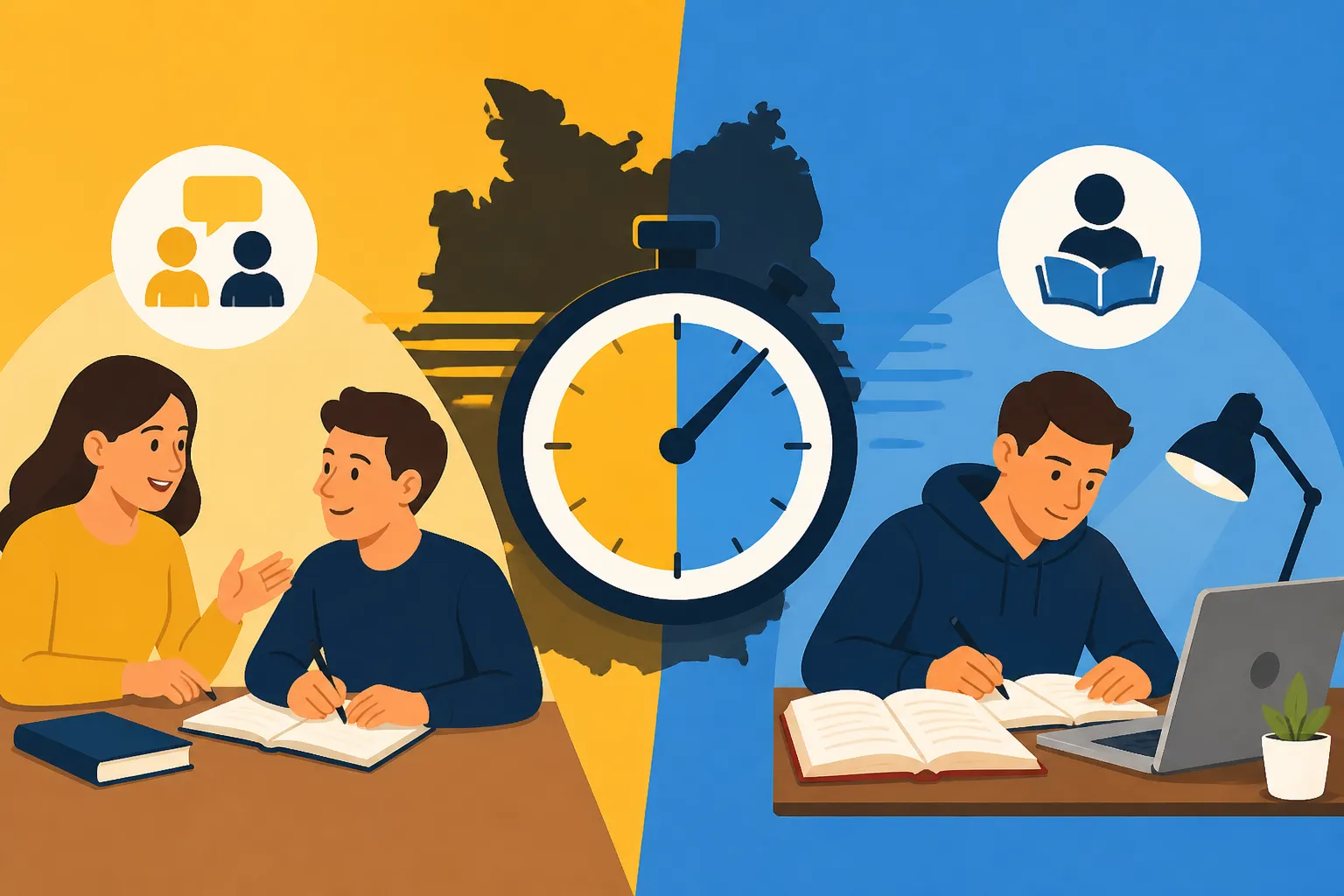
Many expats find that a hybrid approach offers the best of both worlds. You could commit to regular private lessons for core grammar and speaking practice, while supplementing with self-study for vocabulary building, listening comprehension (podcasts, news), and reading practice. This way, you get the accountability and expert feedback of a tutor for your biggest challenges, and the flexibility to explore other learning avenues at your own pace. For instance, you could have two 45-minute sessions a week with a tutor on iTalki, focusing on speaking and grammar, and then spend another 3-5 hours throughout the week using apps like Anki, watching German TV, or listening to radio. This balanced approach can be incredibly effective. Consider using internal links like Learning German: Top Language Schools and Resources for Expats to find more complementary resources.
Here's a quick comparison to help you weigh your options:
| Feature | Self-Study | Private Lessons (e.g., via iTalki) |
|---|---|---|
| Cost | Low to very low (mostly free resources) | Moderate to high (per hour, but flexible pricing) |
| Flexibility | Very high (learn anytime, anywhere) | High (schedule with tutor, often online) |
| Accountability | Low (relies entirely on self-discipline) | High (scheduled lessons, homework, tutor feedback) |
| Personalisation | Low (generic resources, self-guided focus) | Very high (tailored curriculum to your needs) |
| Feedback | None or delayed (self-correction, app feedback) | Immediate and specific (from native speaker/expert) |
| Speed of Progress | Often slower, inconsistent, can lead to plateaus | Generally faster, more consistent, targeted improvement |
| Speaking Practice | Difficult to get natural, corrected practice | Abundant, corrected, and integrated into lessons |
| Exam Preparation | Requires diligent self-sourcing and practice | Tutors can specifically prepare you for B1/B2 exams |
| Motivation | Requires strong internal motivation | External motivation from tutor, scheduled learning |
Ultimately, the goal is naturalisation, and language proficiency is a non-negotiable part of that journey. If you find yourself struggling with self-study or facing a tight deadline, don't hesitate to consider the focused support that private lessons can offer. Platforms like iTalki make it easy to explore highly rated tutors and kickstart your progress. Investing in your German language skills is investing in your future here, and sometimes, a little expert guidance makes all the difference. Why not explore the options on iTalki today and take a significant step towards becoming a German citizen?
Disclaimer
This article is for general informational purposes only and does not constitute professional advice. Laws, prices and regulations vary by location and change over time. Consult a qualified professional for guidance on your specific situation.