Coworking and Startup Culture in Germany
German coworking and startup culture offers expats shared office spaces, networking opportunities, and regional business hubs across major cities.
Build your next chapter.
Insights on schools, language study, job searching, workplace norms, contracts, and career admin.
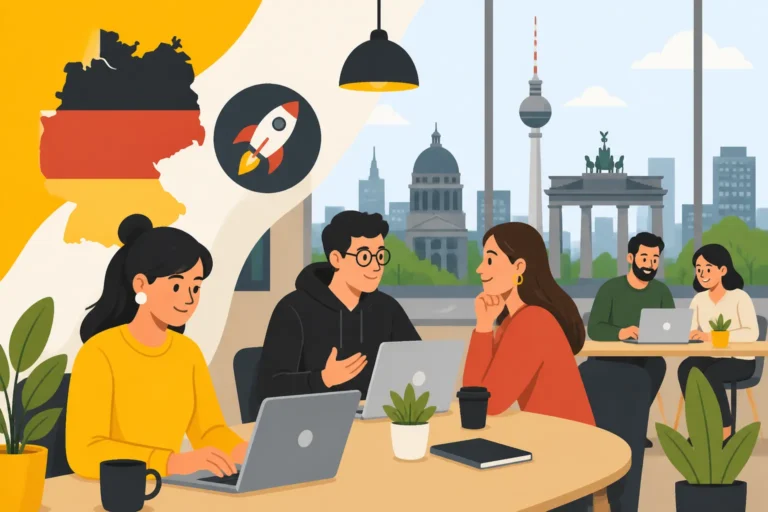
German coworking and startup culture offers expats shared office spaces, networking opportunities, and regional business hubs across major cities.
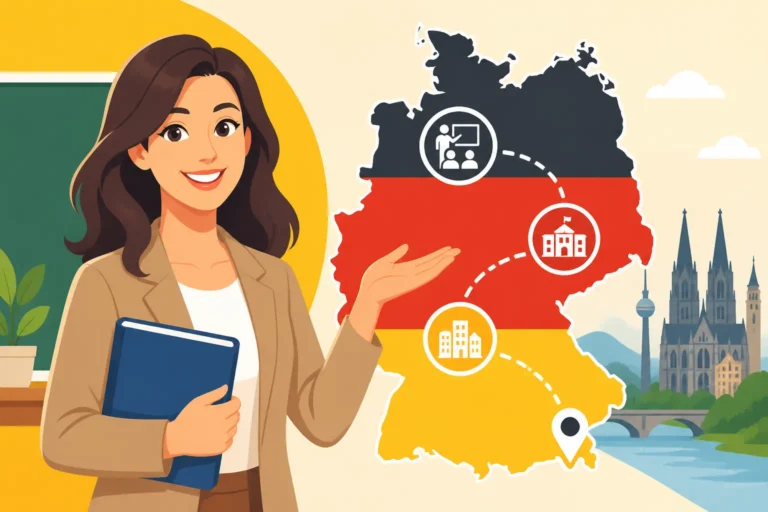
Teaching English in Germany explains private schools, corporate coaching, freelance visa requirements, and necessary certifications like the CELTA.

German tech hubs, automotive software sectors, and high-demand industries provide software engineers with diverse career opportunities across major cities.

German employment contract terms explain permanent roles, fixed limits, probation periods, and statutory notice lengths across the Bundesrepublik.

The Künstlersozialkasse lowers health and pension insurance costs for eligible creative freelancers in Germany by paying fifty percent.

The difference between Freiberufler and Gewerbe explains your tax obligations, accounting rules, and registration process for self-employment.

Minijobs in Germany explain the rules, earnings limits, monthly thresholds, tax privileges, and employee labor rights for foreign workers.

The Werkstudent system in Germany allows full-time university students to work up to twenty hours weekly while gaining professional experience.
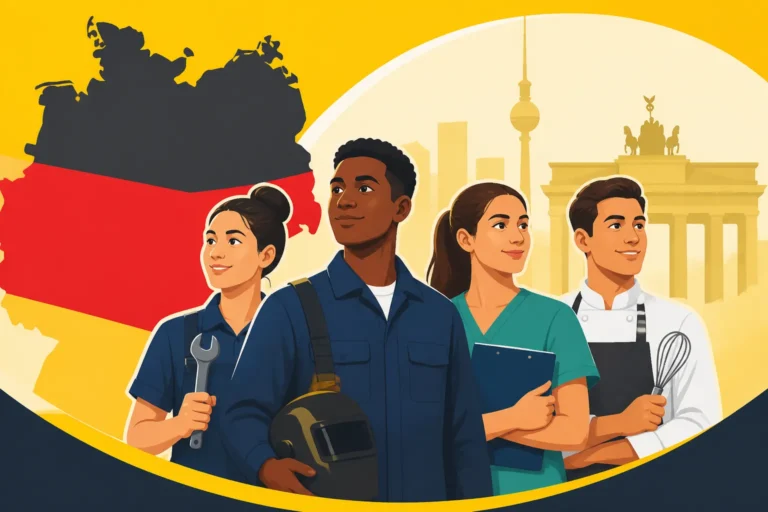
German vocational training combines paid work and school, letting foreigners secure skilled careers without university degrees.

German language certificates like TestDaF, DSH, and Goethe satisfy legal visa requirements and university admissions across Germany.