Coworking and Startup Culture in Germany
Finding your professional footing in Germany can feel like trying to solve a Rubik’s cube while wearing oven mitts. I spent my first six months in a drafty Berlin apartment, convinced that "networking" was something that only happened in clinical, high-stakes office buildings I wasn't invited to. This guide dismantles the myths of the German workspace, providing a deep dive into the coworking and startup culture that will help you find your community and thrive.
Disclosure: This post may contain affiliate links. We may earn a commission at no extra cost to you if you make a purchase through these links. Read full disclosure.
The Evolution of Coworking in Germany: More Than Just Desks
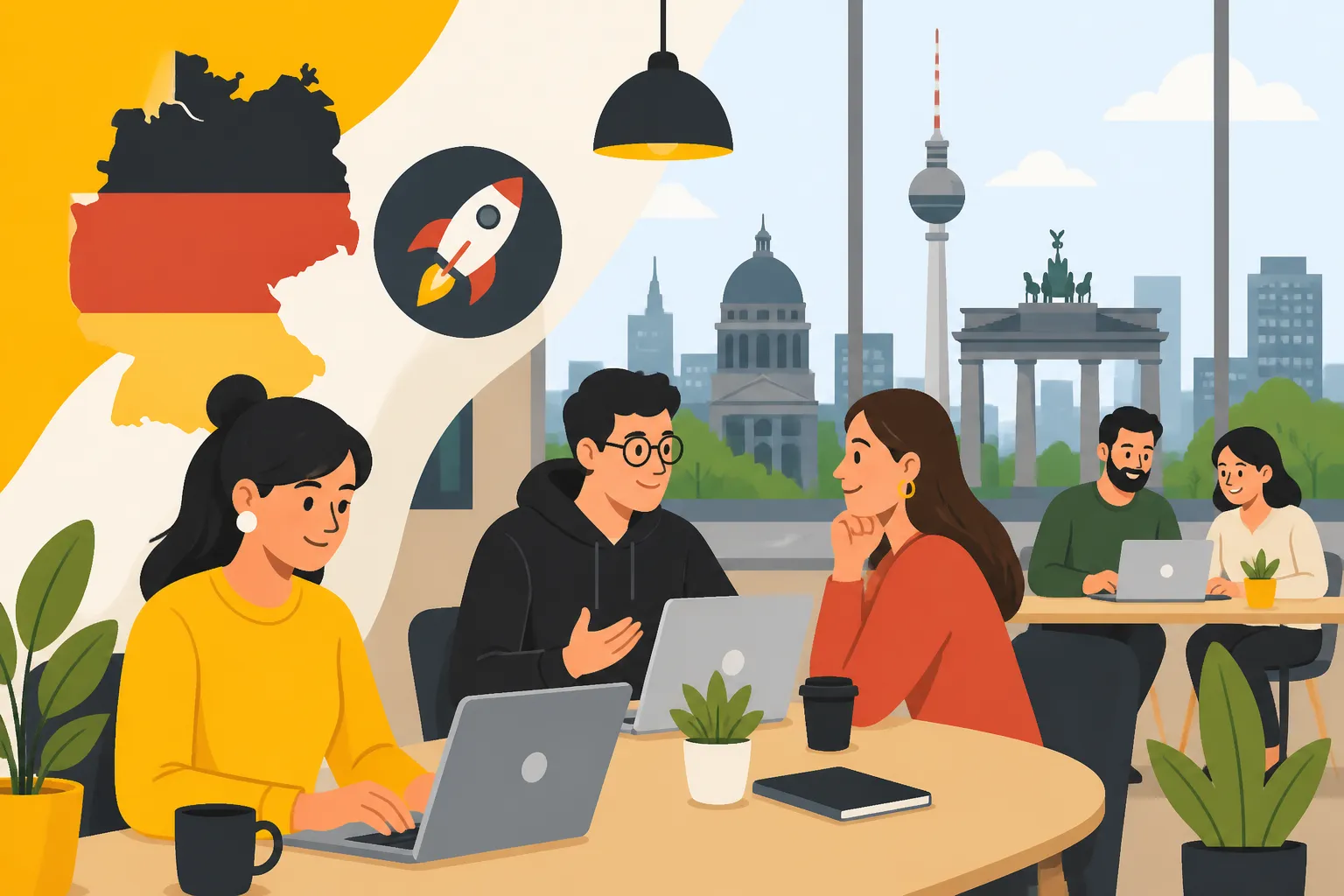
Coworking in Germany has undergone a massive transformation over the last decade. It began as a niche movement in Berlin’s Kreuzberg and Neukölln districts, where artists and early tech pioneers reclaimed old factories. Today, it is a sophisticated industry spanning every major city from the Baltic coast to the Bavarian Alps. For an expat, these spaces are often the first line of defense against the "lonely laptop" syndrome that hits hard in a new country.
From Berlin Coffee Shops to Institutionalized Spaces
In the early days, "coworking" usually meant finding a cafe with reliable Wi-Fi and a tolerant barista. However, as the German economy recognized the value of the "Gig Economy," dedicated spaces began to flourish. You now have a choice between local, community-driven hubs and massive international chains like WeWork or Mindspace. The local spaces often provide a more authentic German experience, where you might find yourself sharing a desk with a "Mittelstand" consultant one day and a visual artist the next.
These environments are crucial because they act as a "soft landing" spot. When you are still figuring out Opening a Business Bank Account in Germany: What You Need to Know, the person sitting next to you has likely already done it and can give you the name of a specific branch manager who isn't afraid of foreign passports. The culture in these spaces is increasingly English-friendly, though the deeper you go into the German hinterland, the more you'll find that the community events shift back into the local tongue.
The Feierabend Culture in a Shared Environment
One of the most distinct aspects of working in Germany is the concept of "Feierabend"—the sacred time when work ends and your private life begins. In many coworking spaces, this is marked by a communal fridge being opened and bottles of sparkling water or local beer being passed around. Unlike the "hustle till you drop" culture of Silicon Valley, German coworking culture places a high value on sustainable productivity.
You will notice that people are intensely focused during the day. Small talk is often kept to the kitchen or lounge areas. However, once the clock hits 6:00 PM, the atmosphere shifts. Participating in these "after-work" sessions is where the real networking happens. It’s where you’ll hear the honest truth about which Best Banks in Germany for Expats: Low Fees and English Support actually have a functioning app, and which ones will drown you in physical mail.
Navigating the German Startup Ecosystem: Major Hubs Compared
Germany isn't a mono-centric country like France or the UK; its power is decentralized. Depending on your industry, the "right" place for you might not be the capital. Each city has a distinct "flavor" of startup culture, influenced by the local industries and history.
Berlin: The Silicon Allee Powerhouse
Berlin remains the undisputed heavyweight for startups. It is the most international, most affordable (though that’s changing fast), and most forgiving city for those who don’t speak fluent German yet. The culture here is "move fast and fix things eventually." It is a magnet for Fintech, Edtech, and e-commerce. If you are a freelancer, The Freelance Visa for Germany: Berlin and Beyond is a specific path that many take to plant their flag here.
The downside of Berlin is the "bubble" effect. It is easy to spend years here without ever really integrating into German society because the startup world is so heavily Anglophone. While you can get by with English, your professional ceiling will eventually be capped. To truly break into the upper echelons of the German tech scene, I found that using platforms like iTalki or Lingoda to sharpen my business German was the only way to be taken seriously in boardrooms outside of Mitte.
Munich: Where Deep Tech Meets High Quality of Life
Munich is the "grown-up" version of the German startup scene. It is significantly more expensive than Berlin, but it is also where the "big money" lives. Because of the presence of giants like BMW, Siemens, and Allianz, the startup culture here revolves around B2B, Deep Tech, and Automotive innovation. The networking events in Munich are often more formal; you’ll see fewer hoodies and more "Business Casual."
In Munich, the connection between universities (like TUM) and the startup world is incredibly tight. It’s a city of "prestige." If your startup is building something that requires heavy engineering or high-level corporate partnerships, Munich is the place. However, be prepared for a tougher housing market. You will definitely need to have your paperwork in order, including knowing How to Get a SCHUFA Certificate for Renting in Germany, before you even think about moving your operations there.
Hamburg and Frankfurt: Port Innovation and Fintech
Hamburg has a "Media and Logistics" soul. As one of the world's major ports, the startup scene focuses on GreenTech, shipping logistics, and publishing. The culture is "Hanseatic"—meaning it’s based on old-school values of reliability and a "handshake" mentality. It is a beautiful city, but the social circles can be harder to break into than in Berlin.
Frankfurt, meanwhile, is the financial heart of Europe. If your startup is in the Fintech or Regtech space, this is your arena. The coworking spaces here are often sleek, high-end, and filled with people who know the intricacies of European banking regulations. It’s less "bohemian" and more "high-octane." It’s also a great place to find specialized services, such as How to Find English-Speaking Doctors: Resources and Tips for Expats, as the city is incredibly accustomed to high-flying international professionals.
| City | Primary Industry | Vibe | Cost of Living |
|---|---|---|---|
| Berlin | E-commerce, Fintech, Creative | International, Gritty, Fast | Moderate (Rising) |
| Munich | Deep Tech, B2B, Automotive | Professional, Wealthy, Traditional | High |
| Hamburg | Logistics, Media, GreenTech | Elegant, Reliable, Maritime | High |
| Frankfurt | Fintech, Banking, Cybersecurity | Corporate, High-Energy, Global | High |
| Leipzig | E-commerce, Logistics | Emerging, Creative, Low-Cost | Low |
Administrative Realities for Founders and Freelancers
Germany loves its titles and its categories. Before you grab a desk at a coworking space, you need to understand where you fit in the eyes of the law. This isn't just "flavor text"; it determines your taxes, your insurance, and your right to stay.
The Red Tape: Gewerbe vs. Freiberufler
One of the biggest hurdles I faced was the distinction between being a "Gewerbe" (Commercial Trader) and a "Freiberufler" (Liberal Profession). If you are a designer, writer, or engineer, you might qualify as a Freiberufler, which exempts you from trade tax and simplifies your accounting. If you sell products or run a cafe, you are a Gewerbe.
The moment you start working from a coworking space, you are technically a business entity. You must know How to Register as a Freelancer With the Finanzamt in Germany to get your tax ID. Without that ID, you cannot legally issue invoices, and most reputable coworking spaces will ask for your tax details for their own accounting. The "paperwork trail" in Germany is unavoidable; embrace it early to avoid a massive headache three years down the line when the tax office (Finanzamt) decides to audit your "digital nomad" lifestyle.
Language Barriers in German Business Law
While the "vibe" in a Berlin coworking space is English, the law is strictly German. Contracts for office leases, insurance policies, and tax filings will all be in high-level legal German. This is a significant pain point. I’ve seen expats sign "membership agreements" that they thought were monthly rolling contracts, only to find out they had committed to a 12-month fixed term with no exit clause.
When you are dealing with these documents, don't guess. For official business, using a service like Lingoking for certified translations of your founding documents or contracts is an absolute necessity. It is much cheaper to pay for a translation now than to pay for a lawyer later. Furthermore, being able to navigate Filing a Tax Return in Germany: A Guide for Employees and Expats is a skill you should start learning the moment you arrive.
Social and Professional Networking in Coworking Spaces
The "German stare" is a real thing, but it’s rarely meant to be rude. In a professional setting, Germans value privacy and concentration. If you walk into a coworking space and start loudly introducing yourself to everyone, you might find people pulling their headphones tighter.
Breaking the German Directness Ice
The secret to networking in Germany is "purposeful interaction." Don't just aim for "general chat." If you see someone working on a project that interests you, wait for a natural break (like in the kitchen) and ask a specific, professional question. Germans generally appreciate directness and competence over bubbly small talk.
Once you’ve established a professional rapport, the social doors open. I found that joining the Slack or Discord channel of my coworking space was the best way to keep an eye on "Lunch Roulettes" or "Pitch Nights." These are the low-pressure environments where you can ask for advice on Liability Insurance (Haftpflicht): The Most Important Insurance in Germany?—an insurance that almost every German will tell you is mandatory for anyone with a pulse.
Identifying the Right Networking Events
Not all events are created equal. In cities like Munich or Hamburg, "Meetup.com" is still quite active for tech niches, but "Eventbrite" and "LinkedIn" are the kings for professional conferences. Look for events tagged with "Stammtisch"—this is a traditional German concept of a "regular's table." A Startup Stammtisch is usually a recurring, informal meetup at a specific bar or coworking lounge.
If you are looking for investors, look for "Demo Days" hosted by local accelerators like Factory Berlin or Hubraum. However, if you are just starting, focus on "Co-founder Speed Dating" events. Even if you don't find a business partner, you will find people who are at the same stage of the journey, which is invaluable for sharing tips on How to Use LinkedIn and Xing to Find Jobs in Germany while you build your own company.
Costs and Practical Considerations for Shared Offices
The cost of a coworking space in Germany can vary wildly. In a "B-City" like Leipzig or Essen, a hot desk might cost you €150 a month. In the center of Munich or Frankfurt, you could be looking at €400 to €600 for the same privilege.
Membership Models and Hidden Fees
When looking at a contract, check for the "Nebenkosten" (additional costs). Some spaces charge extra for meeting room bookings, printing, or even high-speed Wi-Fi access beyond a certain limit. Most importantly, check the "Kündigungsfrist" (notice period). German contracts often require three months' notice to cancel, which can be a trap if your startup needs to pivot or scale down quickly.
Another factor is the "Virtual Office" or "Business Address" service. In Germany, you cannot register a business to a "P.O. Box." It must be a physical address where you can receive official government mail. If you are working from home but want to keep your private address off the public commercial register, many coworking spaces offer a "ladungsfähige Anschrift" (official business address) for an extra fee. This is a small price to pay for privacy and professionalism.
Infrastructure Expectations: Internet, Coffee, and Mail Handling
Don't assume that every coworking space has "lightning-fast" internet. Germany’s digital infrastructure is famously patchy. Always ask for a "Probewoche" (trial week) or at least a day pass to test the connection during peak hours. If you are doing heavy video editing or international calls, this is non-negotiable.
Also, consider the mail handling. As an expat founder, your mailbox will be your biggest source of anxiety. You will receive letters from the Finanzamt, the IHK (Chamber of Commerce), and various insurance providers. A coworking space with a reliable "Post-Service" that can scan your mail or notify you via app is worth its weight in gold. It allows you to stay on top of deadlines and prevents the dreaded "yellow envelope" of a fine because you missed a filing date while you were visiting family back home.
Disclaimer
The information provided in this guide is for informational purposes only and does not constitute legal, financial, or professional advice. German laws regarding business registration, taxation, and residency are subject to change. Always consult with a qualified professional, such as a tax advisor (Steuerberater) or a lawyer, before making significant business or financial decisions in Germany.