Tech Jobs in Germany: Where the Roles Are
Landing a job in the German tech scene often feels like trying to solve a complex algorithm without a README file. I still remember sitting in my first temporary apartment in Berlin, staring at job boards and wondering why my years of experience didn't seem to translate into immediate interviews. This guide breaks down the geographical and sectoral reality of the German tech market so you can stop guessing and start applying where it actually counts.
Disclosure: This post may contain affiliate links. We may earn a commission at no extra cost to you if you make a purchase through these links. Read full disclosure.
The Geographical Giants: Germany’s Top Tech Hubs
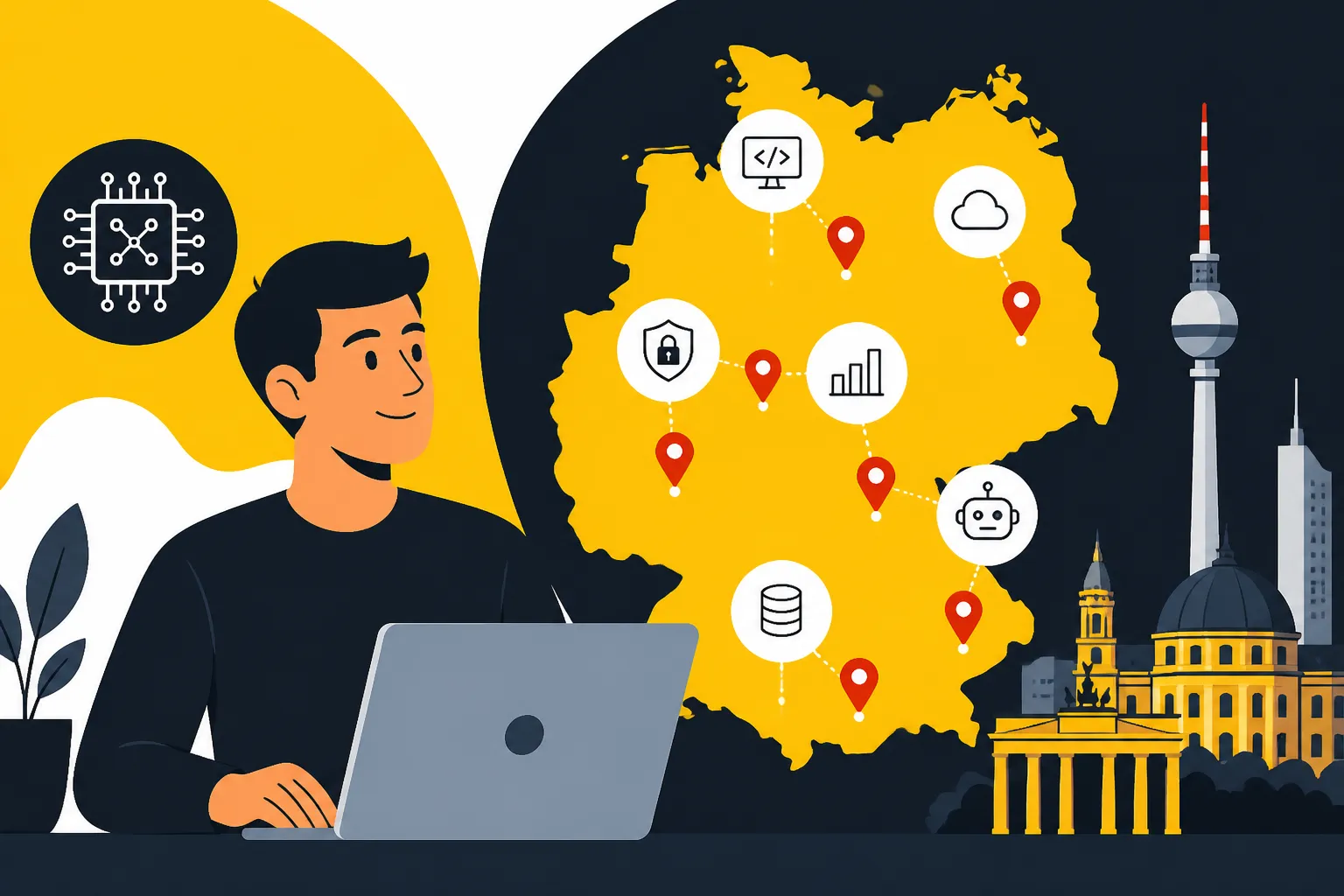
When most people think of tech in Germany, they immediately pivot to Berlin. While it is certainly the heavy hitter, the German market is surprisingly decentralized compared to countries like the UK or France. Depending on whether you are into deep tech, automotive software, or pure-play SaaS, your "perfect" city might not be the capital. Understanding the personality of each city is vital because the local work culture and the types of companies vary wildly between the north, south, and east.
Berlin: The Startup Heartbeat and Creative Nexus
Berlin is often called the "Silicon Allee" for a reason. It is the undeniable capital for startups, venture capital, and international talent. If you are looking for a role where English is the primary office language, Berlin is your best bet. The city is home to giants like Zalando, Delivery Hero, and HelloFresh, but its real strength lies in the hundreds of mid-sized companies and early-stage startups that populate the back-courts of Mitte and Kreuzberg.
For many expats, Berlin is the "soft landing" spot. You can survive here for years with minimal German, though your career will eventually hit a ceiling without it. To bridge that gap, many of my friends have used Lingoda to take structured classes that fit around a developer's erratic schedule. The sheer density of roles here is unmatched, particularly in FinTech, E-commerce, and PropTech. However, be prepared for a hyper-competitive housing market that can make the job hunt look easy by comparison.
Munich: Where High-Tech Meets Industrial Might
Munich is the wealthy, more polished sibling to Berlin’s gritty creative vibe. If Berlin is for startups, Munich is for "Deep Tech" and big-budget R&D. This is the home of Siemens, BMW, and Allianz, but it’s also the European headquarters for Google, Microsoft, and Apple. The roles here tend to be more stable and higher-paying, focusing on AI, IoT, and hardware-software integration.
The downside is the cost of living. Munich is consistently the most expensive city in Germany. You’ll need a solid German Employment Contracts and Notice Periods understanding because salaries here are high, but so is the expectation for professional conduct and punctuality. While the tech scene is international, the "Bavarian" way of doing business is more formal than in Berlin. You’ll find that even in tech, having a B1 or B2 level of German is often a requirement rather than a "nice to have" for long-term career growth.
Hamburg: The Gateway to Logistics and Media Tech
Hamburg is often overlooked by techies, but it shouldn’t be. As one of Europe’s largest ports, it is a massive hub for Logistics Tech (LogTech) and Supply Chain management software. It also has a long-standing history as a media capital, meaning there are plenty of roles in AdTech and gaming. Companies like InnoGames and Goodgame Studios have made Hamburg a fortress for the European gaming industry.
The vibe in Hamburg is "Hanseatic"—reserved, professional, and very focused on international trade. It’s a great city for those who want a high quality of life near the water without the chaotic energy of Berlin. If you are moving here, you'll likely need to navigate The Foreigners' Office (Ausländerbehörde): How to Deal With It early on, as the local authorities are efficient but strict. Hamburg’s tech scene is growing rapidly in the "GreenTech" sector as well, given the city’s focus on hydrogen and renewable energy.
High-Demand Sectors and Specializations
The German economy is undergoing a massive "Digitalisierung" (digitalization) phase. Traditional industries that used to rely on mechanical engineering are now desperately seeking software engineers, data scientists, and DevOps specialists. Knowing which sector aligns with your skills can drastically reduce your time-to-hire.
Automotive and Embedded Systems
Germany is synonymous with cars, but the "Auto" industry is now essentially a software industry. With the shift to electric vehicles (EVs) and autonomous driving, companies like Volkswagen (and its software arm, CARIAD), Bosch, and Continental are hiring thousands of developers. They aren't just looking for C++ experts anymore; they need cloud architects, cybersecurity specialists to protect connected cars, and machine learning engineers for computer vision.
Working in this sector often requires being located in the "Automotive Region," which includes Stuttgart (Mercedes-Benz, Porsche), Wolfsburg (VW), and Ingolstadt (Audi). These roles often come with heavy-duty benefits and union-backed contracts, which provide incredible job security. If you’re transitioning from a fast-paced startup, the slower, more methodical "V-Model" of development used here might be a culture shock, but the pay and stability are hard to beat.
FinTech and the Rise of Digital Banking
Frankfurt might be the financial heart of Europe, but its FinTech scene is a mix of "Old Banking" trying to modernize and "New Tech" trying to disrupt. Berlin still holds the crown for consumer-facing FinTech (think N26 or Raisin), but Frankfurt is where the institutional tech roles live. Blockchain, RegTech (Regulatory Technology), and high-frequency trading infrastructure are the big players here.
The demand for cybersecurity professionals in this sector is astronomical. With the BaFin (Germany’s financial regulator) imposing strict rules on data sovereignty and security, any developer with a background in InfoSec will find themselves in high demand. If you're coming from abroad, ensure you have a Recognition Partnership Visa: Working While Validating Foreign Qualifications if your specific technical degree requires formal validation, though most pure IT roles are less regulated than engineering or medicine.
GreenTech and Renewable Energy Solutions
Germany’s "Energiewende" (Energy Transition) is a national priority. This has birthed a massive sector focused on Smart Grids, solar energy management software, and carbon tracking platforms. Cities like Leipzig and Dresden (part of "Silicon Saxony") are becoming hotspots for this. Dresden, in particular, is a global leader in semiconductor manufacturing, which is the backbone of all GreenTech.
This sector is perfect for those who want their work to have a social impact. Many of these companies are "Mittelstand" (medium-sized) companies that are world leaders in their niche. They may not have the name recognition of a Silicon Valley giant, but they offer fascinating technical challenges in optimizing energy distribution systems. For these roles, being able to communicate with "old-school" engineers is key, so practicing your speaking skills on a platform like iTalki can give you the confidence to navigate those hybrid technical-business meetings.
Salary Expectations and the Reality of Cost of Living
One of the biggest mistakes expats make is looking at a German salary through the lens of a San Francisco or London paycheck. You have to look at the "Netto" (take-home pay) and what that money actually buys you in terms of quality of life.
Junior vs. Senior Level Compensations
In Germany, salaries are quite standardized compared to the US. A junior developer can expect to start between €45,000 and €55,000. A mid-level engineer typically lands in the €60,000 to €75,000 range, while senior roles and specialized architects can command €85,000 to €110,000+. Management roles or very niche AI positions can go higher, but six-figure salaries are generally reserved for those with 8+ years of experience or significant leadership responsibilities.
When negotiating, always talk in "Brutto" (gross) yearly terms. You should use a How to Read a German Payslip (Gehaltsabrechnung) guide to understand how much will be deducted for taxes, health insurance, and pension. It’s a shock to see nearly 35-42% of your check disappear, but remember that this covers your healthcare, unemployment insurance, and even your future pension.
Regional Differences in Pay and Expenses
A €70,000 salary in Berlin goes much further than a €70,000 salary in Munich. While the pay in Munich is generally 10-15% higher to compensate for rent, the "purchasing power" often evens out. Conversely, if you can find a remote role based in a high-paying city while living in a more affordable area like Leipzig or a rural village, you can live quite luxuriously.
| City | Primary Tech Focus | Cost of Living | English Friendliness |
|---|---|---|---|
| Berlin | Startups, FinTech, SaaS | Moderate (Rising) | Very High |
| Munich | Deep Tech, Auto, ICT | Very High | Moderate |
| Hamburg | Logistics, Media, Gaming | High | High |
| Frankfurt | FinTech, Cybersecurity | High | Moderate |
| Stuttgart | Automotive, Industrial IT | High | Low/Moderate |
| Dresden | Semiconductors, GreenTech | Low | Low |
The "Hidden" Benefits of German Contracts
In Germany, the "salary" is only part of the package. Most tech workers receive 25 to 30 days of paid vacation per year—and people actually take them. You also get unlimited (within reason) paid sick leave. If you are sick for three days, you just stay home; if it's longer, you get a "Krankschreibung" from a doctor, and your salary continues.
Before you sign, check if the company offers a "JobTicket" for public transport, an "Umsiedlungspauschale" (relocation allowance), or stock options (ESOPs). While ESOPs are more complex in Germany due to tax laws, they are becoming more common in the Berlin startup scene. Ensure you have a professional translate your offer or any legal documents; I've used Lingoking in the past to ensure I wasn't missing any weird clauses in my rental or work agreements.
Navigating the Cultural and Linguistic Landscape
I’ve seen incredibly talented developers fail their probation periods because they didn't understand German "Directness." In the German tech world, "Efficiency" and "Clarity" are the twin gods everyone worships.
The English-Speaking Myth vs. Professional Reality
You will see many job ads for developers that say "English is our company language." While this is true for the code and the Jira tickets, the "water cooler" talk, the HR documents, and the company-wide meetings might still drift into German. If you are the only non-German speaker in a room, people will try to accommodate you, but you will miss the nuance of office politics.
Learning the language shows "Integration," which is a big word in Germany. Even if you just use iTalki for 30 minutes a week to practice basic office phrases, it changes how your colleagues perceive you. It shows you’re not just a "mercenary" developer here for a few years, but someone who respects the local culture. For those aiming for permanent residency, you'll eventually need to prove your skills, so checking out How to Prove German Language Skills for Citizenship (B1) early in your journey is a smart move.
Bureaucracy, Qualifications, and "The Paperwork"
Germany is a country of certificates. While the tech world is more relaxed than law or medicine, having your degrees and certifications in order is vital. If you’re applying for an EU Blue Card Germany: Eligibility, Benefits, and Application Process, the authorities will check if your university degree is recognized in Germany.
This is where things can get "bureaucratic." You might need certified translations of your diploma. This is another area where a service like Lingoking is a lifesaver, as they provide the specific type of "stamped" translation that German offices demand. Don't leave this until the last minute; the visa office won't accept a "trust me, I'm a good coder" as a substitute for a recognized degree or a high-enough salary contract.
Finding the Roles: Platforms and Networking
The "standard" way of applying is through LinkedIn, but the "German" way involves a few other channels that can give you an edge.
Portals, Recruiters, and the "Hidden" Job Market
While LinkedIn is great, Xing is the "German LinkedIn" and is still widely used by recruiters in traditional industries like Automotive and Finance. If you want a role at a big German corporation, having a polished Xing profile is a must. For startups, Ottos.io and Berlin Startup Jobs are the go-to resources.
Don't underestimate the power of "Meetups." Berlin and Munich have vibrant tech meetup scenes (check Meetup.com). Showing up to a "Rust & Pizza" night or a "DevOps and Drinks" session is often how you find the "hidden" roles that haven't been posted yet. Germans value "recommendations" highly. If an existing employee can vouch for your "Zuverlässigkeit" (reliability), you are 80% of the way to an offer.
Relocation and the Visa Process
If you are a non-EU citizen, the job hunt is inextricably linked to the visa process. Many companies are "visa-ready," meaning they have processes in place to help you with the Germany’s Skilled Worker Visa: Requirements and How to Apply. However, smaller startups might be hesitant if they’ve never done it before.
One new option is the Opportunity Card (Chancenkarte): Germany’s Points-Based Job-Seeker Visa Explained, which allows you to come to Germany for a year to look for a job if you meet certain criteria. This is a game-changer because being "locally available" for an interview and a trial day (Probezeit) makes you a much more attractive candidate to a German HR manager who might be wary of the paperwork involved in hiring from abroad.
Tips for a Successful Tech Application in Germany
- The "Lebenslauf" (CV): Keep it clean, chronological, and very factual. Germans don't like "fluff." Instead of saying "I'm a visionary leader," say "I managed a team of 5 and increased deployment frequency by 20%."
- The Cover Letter: Yes, some German companies still want one. It should explain exactly why you want to work for them and why you want to live in Germany.
- The "Arbeitszeugnis": If you have worked in Germany before, your previous employer is legally required to give you a reference letter. These are written in a specific "code" that future employers will scrutinize. If you’re new, try to get similar letters from previous international bosses.
- Language Prep: Even if the job is in English, use Lingoda to get to at least an A2 level before you arrive. It will make your Registering Your Address (Anmeldung): Step-by-Step Guide at the local city hall much less stressful.
Disclaimer
This guide is intended for informational purposes and reflects the personal experiences and research of the author. Immigration laws, salary trends, and job market conditions in Germany can change rapidly. Always consult official government sources such as "Make it in Germany" or a qualified legal professional before making significant relocation or employment decisions.