How to File a Complaint about a Doctor or Hospital in Germany
Being dismissed by a German doctor who refuses to speak English or minimizes your pain is incredibly alienating. I once spent months battling a clinic that billed me for procedures I never authorized, feeling completely powerless against the bureaucracy. This guide explains exactly how to stand up for your patient rights and file a formal medical complaint in Germany.
Disclosure: This post may contain affiliate links. We may earn a commission at no extra cost to you if you make a purchase through these links. Read full disclosure.
Understanding Your Patient Rights in Germany
When you move to Germany, you quickly learn that the bedside manner here is, to put it mildly, direct. But there is a massive difference between a doctor being culturally blunt and a doctor being negligent. Under the German Patient Rights Act (Patientenrechtegesetz), you have strict legal protections. Doctors are legally required to inform you comprehensively about diagnoses, therapy options, and the exact costs of any treatment before they touch you.
The Right to a Second Opinion
If a doctor insists you need an invasive surgery or an expensive treatment and brushes off your concerns, you do not have to just accept it. You have a legal right to seek a second opinion (Zweitmeinung). Many expats feel intimidated by authoritative doctors and worry that asking for another opinion will offend them, but it is a standard and protected practice here.
If you are a public patient, the statutory health insurance will cover second opinions for specific planned surgeries (like spinal or joint surgeries). If you have private insurance, getting a second opinion is usually even easier. Premium expat-focused insurers like Ottonova frequently offer dedicated concierge services that will not only authorize the second opinion but actively help you book the appointment with a top-tier specialist. Understanding how to navigate these specialist referrals is crucial; you can find more strategies in Finding a Doctor in Germany: How to Choose a Hausarzt.
Accessing Your Medical Records
Another critical right you have is the absolute right to view your patient file (Patientenakte). The doctor does not own your medical data; you do. If you suspect a misdiagnosis or want to take your case to a different clinic, you can request a full copy of your records under GDPR/DSGVO laws.
The clinic is legally obligated to provide these to you promptly. They are allowed to charge a small, reasonable fee for the physical copies or USB drive, but they cannot withhold the data because you are leaving the practice.
Where to File a Medical Complaint
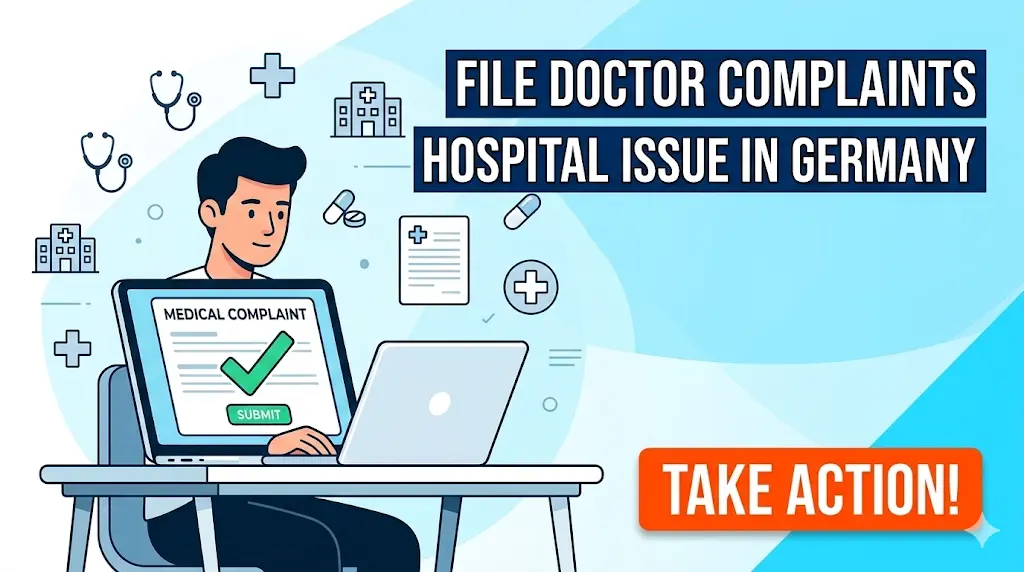
If a doctor crosses the line into professional misconduct, negligence, or medical malpractice (Behandlungsfehler), complaining to the receptionist won’t get you anywhere. You need to escalate the issue to the proper German authorities.
The Medical Association or Aerztekammer
Every doctor in Germany is required to be a member of their regional Medical Association (Landesärztekammer). This is the governing body that issues medical licenses and enforces professional codes of conduct. If a doctor was abusive, refused to treat you in an emergency, or behaved unethically, you should file a formal, written complaint here.
Most regional Ärztekammern also have an arbitration board (Schlichtungsstelle) specifically designed to mediate cases of suspected medical malpractice out of court. This service is generally free of charge for the patient and provides an independent medical assessment of whether the doctor made a definitive treatment error.
Your Health Insurance Provider
If you suspect you have been the victim of a medical error, your very first call should actually be to your health insurance provider (Krankenkasse). Public health insurance funds are legally obligated to support their members in cases of suspected malpractice. They can commission the Medical Service (Medizinischer Dienst) to review your case and provide an expert medical opinion free of charge.
If navigating this dense, German-only bureaucracy sounds terrifying, having a supportive insurance partner is a lifesaver. Expat-centric brokers like Feather Insurance offer robust English-language support and can help you understand exactly who to contact within the public system if a treatment goes wrong. You can review the baseline protections of the public system in Healthcare in Germany: A Comprehensive Guide for Expats.
Independent Patient Advice Centers
If you are completely overwhelmed and don’t know who to trust, the Independent Patient Advice Service of Germany (Unabhängige Patientenberatung Deutschland or UPD) is your best resource. The UPD is a state-funded, entirely neutral organization that offers free legal and medical advice to patients. They can tell you exactly what your rights are, whether your complaint has legal merit, and which form you need to fill out.
| Organization | Best Used For | Cost to Patient | Primary Focus |
| Ärztekammer (Medical Association) | Professional misconduct, ethics violations, arbitration | Free | Enforcing doctor conduct and out-of-court settlements |
| Krankenkasse (Health Insurance) | Suspected treatment errors, misdiagnoses | Free | Providing expert medical assessments via the Medizinischer Dienst |
| UPD (Patient Advice Service) | General guidance, legal questions, understanding your rights | Free | Neutral counseling and bureaucratic navigation |
For a broader understanding of how your insurance dictates your care avenues, review Public vs Private Health Insurance: Which One Should You Choose?.
Dealing with Hospital and Billing Disputes
Hospital Ombudspersons and Patient Advocates
If your nightmare experience happened during a hospital stay, you don’t necessarily have to jump straight to a lawsuit. By law, every hospital (Krankenhaus) in Germany must have a complaint management system and an independent patient advocate (Patientenfürsprecher or Ombudsperson).
These advocates are not hospital employees; they act as neutral mediators between the patient and the hospital administration. If a nurse was negligent, a surgeon dismissed your post-op pain, or the hygiene standards were appalling, write a detailed email to the Patientenfürsprecher. They have the authority to investigate internally, demand answers from the chief physician, and facilitate a formal apology or policy change.
Disputing an Incorrect Medical Bill
Medical billing fraud or “upcoding” is a massive frustration, particularly for expats acting as self-payers or utilizing private insurance. Doctors bill private patients according to a strict, legally binding fee schedule called the Gebührenordnung für Ärzte (GOÄ).
Sometimes, a doctor will add complex diagnostic codes for tests they never performed, or charge a higher “difficulty multiplier” simply because they had to speak English to you. If you receive an invoice (Rechnung) that looks inflated, do not just blindly transfer the money. You have the right to request a detailed, itemized breakdown. If you are insured with Ottonova, their digital claims team automatically reviews your invoices against the GOÄ standards and will flag if a doctor is overcharging you, fighting the billing dispute on your behalf.
Taking Charge of Your Health After a Bad Experience
Switching Doctors
One of the most liberating realizations as an expat in Germany is that you are never stuck with a bad doctor. Unlike in some nationalized healthcare systems where you are assigned a clinic based on your postcode, Germany operates on the principle of freie Arztwahl (free choice of doctor).
If your GP dismisses your concerns or makes you feel uncomfortable, you can simply walk away and register with a new one the next day. You do not owe them an explanation. If you need help finding a new practitioner who aligns with your communication style, the support teams at Feather Insurance can often guide you toward expat-friendly clinics. And if you fall ill during this transition period, don’t panic.
Self Advocacy and Alternative Care
A harsh reality of the German medical system is its extreme conservatism. The classic “drink chamomile tea and open a window” advice for a severe sinus infection can feel insulting when you are in genuine pain. When local doctors refuse to prescribe anything stronger than an herbal lozenge, taking your day-to-day wellness into your own hands becomes necessary.
German pharmacies (Apotheken) are notoriously strict and heavily markup their over-the-counter vitamins and wellness supplements. Instead of fighting with a pharmacist for basic preventative care, I highly recommend using global platforms. By ordering through iHerb, you can source the clinical-grade vitamins, familiar immune-boosting supplements, and holistic health products you are used to from back home, bypassing the local gatekeepers entirely. Keeping your home fully stocked via iHerb ensures you are rarely at the mercy of a dismissive local doctor for minor ailments.
Ultimately, if a doctor’s negligence causes you to miss work, ensuring your administrative paperwork is bulletproof is vital to protecting your salary. You do not have to accept poor medical treatment in Germany. By knowing your rights, utilizing the proper complaint channels, and leaning on supportive insurance partners, you can demand the standard of care you deserve.
References
Primary sources (official)
- Bundesärztekammer (German Medical Association): The central organization representing the medical profession in Germany, where professional misconduct complaints are escalated.https://www.bundesaerztekammer.de/
- Bundesministerium für Gesundheit (BMG): The Federal Ministry of Health’s official portal detailing the legal framework of the Patient Rights Act (Patientenrechtegesetz).https://gesund.bund.de/beschwerde-aerztliche-behandlung
Other helpful sources
- Verbraucherzentrale (Consumer Advice Center): Independent guides on how to check a medical invoice (GOÄ) and what to do if you suspect a billing error.https://www.verbraucherzentrale.de/
Disclaimer
The information provided in this article is for general informational and educational purposes only and does not constitute professional medical, legal, or financial advice. The processes for filing a medical complaint, pursuing malpractice claims via an arbitration board (Schlichtungsstelle), and the specific invoice review services offered by insurance providers are highly complex and subject to continuous legal updates. Always consult directly with a qualified lawyer specializing in medical law (Medizinrecht) or an official patient advocate regarding your specific legal and healthcare situation in Germany.