How to Plan a Stress-Free Family Trip to Germany
Oh, the thought of planning a family trip to Germany! I know, the idea of wrangling kids, suitcases, and unfamiliar bureaucracy in a foreign country can feel less like a vacation and more like a stress marathon. But trust me, as an expat who's been here for years and traveled extensively with my own little ones, Germany is incredibly family-friendly once you get past the initial hurdles. This guide is all about taking that deep breath, sidestepping those potential headaches, and helping you plan a truly stress-free, memorable adventure for your entire family.
Disclosure: This post may contain affiliate links. We may earn a commission at no extra cost to you if you make a purchase through these links. Read full disclosure.
Decoding German Transportation with the Kids in Tow
Getting around Germany is generally efficient, but when you're traveling with kids, "efficient" can sometimes feel like "rigid" or "complicated." Let's break down your best options to keep those smiles (mostly) on.
Trains: The Scenic (and Sometimes Stressful) Route
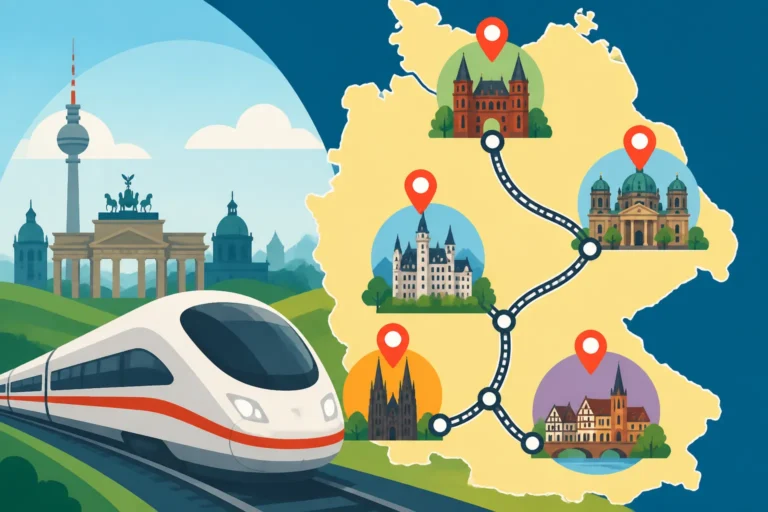
Germany's rail network, primarily run by Deutsche Bahn (DB), is extensive and often the go-to for many travelers. For families, trains offer a unique appeal: space to move around, dining cars, and even dedicated "Kleinkindabteil" (toddler compartments) on some ICE trains, which are a godsend for parents with very young children, offering privacy for feeding or changing.
However, it's not always a smooth ride. Train delays, while not constant, do happen, and trying to manage tired, grumpy kids on a delayed platform is nobody's idea of fun. Also, booking tickets can feel a bit like a puzzle. Generally, booking well in advance (up to six months out) via the Deutsche Bahn website or app will get you the best prices, especially for the high-speed ICE trains. If you're flexible, consider regional trains, which are slower but can be cheaper and connect smaller towns beautifully. Don't forget that kids under 6 often travel for free, and older kids (up to 14) can often travel for free when accompanied by a parent or grandparent if listed on the ticket. For comparing routes and finding the best deals across various modes of transport, even international ones, I've found that platforms like Omio can be incredibly helpful for seeing all your options in one glance.
For navigating local cities, you'll find an excellent network of trams, buses, U-Bahns (subways), and S-Bahns (suburban trains). Most cities offer family day tickets, which are usually a much better value than individual tickets, especially if you plan on exploring a lot. Just remember to validate your ticket immediately before your journey – those plain black stamps can be elusive, and inspectors show no mercy! For more detailed advice on specific city transit, check out our guide on Getting Around German Cities: U-Bahn, S-Bahn, Trams, and Buses.
Renting a Car: Freedom (and Road Rules) for Families
For many families, especially those with younger children or lots of luggage, renting a car offers unparalleled flexibility. You can go at your own pace, stop for impromptu playground breaks, and reach those charming, off-the-beaten-path villages that trains might miss. Driving in Germany is generally a pleasant experience, with well-maintained roads and, yes, sections of the famed Autobahn with no speed limit (though many sections now have limits, and it's always "Richtgeschwindigkeit" – recommended speed – of 130 km/h).
However, you need to be prepared. Car seats are mandatory for children up to 12 years old or under 150 cm tall, so ensure your rental car includes the correct seats for your children. If you're bringing your own car seats, confirm compatibility. Parking in cities can be a nightmare and expensive, often requiring coins for meters or understanding complex garage systems. And remember, unlike some other countries, a right turn on red is generally not allowed unless specifically indicated by a small green arrow. Also, ensure your home country's driving license is sufficient, or if an International Driving Permit is required. Our guide on Renting a Car and Driving on the Autobahn has more on this.
Long-Distance Buses: The Budget-Friendly Alternative
If you're looking to save some money and have a bit more flexibility than a train (though less space), long-distance buses like FlixBus can be a good option. They often connect major cities and can be significantly cheaper than train tickets, especially for last-minute bookings. Most buses are comfortable, offer Wi-Fi, and have restrooms. However, they are susceptible to traffic delays, and getting on and off with multiple kids and luggage can be a bit more cumbersome than with trains. They are a solid choice for families on a tighter budget or those not keen on driving themselves. You can learn more about this option in our guide on Long-Distance Buses in Germany: FlixBus and Networks.
| Transportation Type | Pros for Families | Cons for Families | Best For |
|---|---|---|---|
| Trains (DB) | Space to move, dining car, dedicated kids compartments (some ICE), scenic. | Can be expensive, susceptible to delays, crowded at peak times. | Covering long distances, relaxing travel, city-to-city. |
| Rental Car | Ultimate flexibility, easy access to rural areas, carry more luggage. | Parking difficulties/cost, car seat requirements, navigating unfamiliar roads, Autobahn speeds. | Road trips, rural exploration, families with lots of gear. |
| Long-Distance Buses (e.g., FlixBus) | Budget-friendly, often direct routes, comfortable seats, Wi-Fi. | Less space to move around, susceptible to traffic delays, more cumbersome with luggage. | Budget travel, specific city routes, older children. |
| Local Public Transport | Efficient in cities, affordable day tickets, frequent. | Can be crowded, stroller navigation, ticket validation. | Daily city exploration. |
Unlocking Kid-Friendly Germany: Where to Go and What to Do
Germany is brimming with history, culture, and stunning landscapes, but when you're with kids, you need to balance sightseeing with genuine kid-approved fun.
City Adventures for All Ages
- Berlin: Germany's capital is a fantastic playground for families. Beyond the historical weight of the Brandenburg Gate or the Reichstag, Berlin offers incredible museums tailored for younger audiences. The Deutsches Technikmuseum (German Museum of Technology) with its planes, trains, and interactive exhibits, or the MachMit! Museum for Children are huge hits. And don't forget the countless Spielplätze (playgrounds) found in almost every park, like the massive one in Tiergarten. You could easily spend days here, and GetYourGuide is a great resource for finding family-friendly tours and skip-the-line tickets for popular attractions.
- Munich: The Bavarian capital blends urban charm with alpine proximity. The Deutsches Museum here is one of the oldest and largest science and technology museums in the world, with entire sections designed to engage children through hands-on exhibits. The vast Englischer Garten (English Garden) is perfect for picnics, watching surfers on the Eisbach wave, and letting kids run wild. Plus, it's a gateway to the Bavarian Alps for some breathtaking scenery and gentle hikes suitable for little legs.
- Hamburg: This bustling port city is a maritime wonderland. The Miniatur Wunderland, the world's largest model railway, is absolutely mesmerizing for all ages. Seriously, you could spend hours watching tiny trains, cars, and even planes move through meticulously crafted landscapes. A boat tour of the harbor is also a great way to see the city from a different perspective, and many offer kid-friendly commentary.
Fairytale Castles and Natural Wonders
Beyond the big cities, Germany truly shines for families looking for enchantment and outdoor fun.
- The Black Forest: This region in southwestern Germany feels like stepping into a Grimm's fairytale. Think rolling hills, dense pine forests, charming villages with cuckoo clocks, and plenty of opportunities for light hiking. Triberg, famous for its waterfalls and cuckoo clocks, is a popular stop. There are numerous family-friendly trails, adventure parks, and even farm stays where kids can interact with animals.
- Bavarian Alps: If your family loves mountains, fresh air, and stunning views, head south. Garmisch-Partenkirchen is a great base for exploring. You can take a cable car up the Zugspitze, Germany's highest peak, or enjoy gentler cable car rides and easy hikes at lower altitudes. Lakes like Eibsee offer crystal-clear waters for paddle boating or just skipping stones.
- Fairy Tale Route: Yes, it's a real thing! This scenic route stretches from Hanau (the birthplace of the Brothers Grimm) to Bremen, winding through towns and landscapes that inspired their famous stories. While you might not drive the whole route, picking a section with a specific castle or fairytale town, like Hamelin (of Pied Piper fame) or Alsfeld, can be magical for kids. While Neuschwanstein Castle is iconic, it can be a long trek with little ones. Consider lesser-known but equally charming castles like Burg Eltz (though it requires a bit of a walk) or Marksburg, which are often more accessible and less crowded.
For more ideas on family-friendly destinations, our guide on Family Travel in Germany: Kid-Friendly Cities and Activities can be a lifesaver.
Lodging with the Whole Crew: Finding Your Family's Home Away From Home
Finding the right accommodation can make or break a family trip. In Germany, you have plenty of options, but each comes with its own quirks.
Hotels: Family Rooms and Connecting Doors
Many major hotel chains and even independent hotels in Germany offer "Familienzimmer" (family rooms), which are typically larger and might include a sofa bed or extra cots. Some higher-end hotels might even offer connecting rooms, giving parents a bit of separation and privacy while keeping the kids close.
When booking, always clarify the sleeping arrangements and any additional costs for children or extra beds. Don't assume. Also, check if breakfast is included; German hotel breakfasts (Frühstück) are usually hearty and a great way to start the day, but can be an added expense. For a broad selection of hotels with family-friendly filters, platforms like Booking.com are indispensable.
Apartments and Ferienwohnungen: The Expat's Best Friend
This is often my personal preference when traveling with my family, especially for longer stays. Ferienwohnungen (holiday apartments) or self-catering apartments offer so much more space than a hotel room. Crucially, they almost always come with a kitchen, which means you can prepare some meals yourself, saving money and catering to picky eaters or special dietary needs. Having a separate living area means the kids can go to bed while the adults can still enjoy their evening without whispering in the dark.
Websites like Booking.com (which also lists apartments), Airbnb, or local German portals (e.g., Fewo-direkt) are great for finding these. When browsing, pay close attention to the amenities: Is there a washing machine? A high chair? A playground nearby? These details can significantly reduce travel stress.
Guesthouses (Pensionen) and Youth Hostels (Jugendherbergen)
For a more local and often more affordable experience, Pensionen are family-run guesthouses that offer cozy, often rustic charm. They might not have all the bells and whistles of a large hotel, but they often provide a warm welcome and a delicious traditional breakfast.
And don't dismiss youth hostels! Many Jugendherbergen in Germany are surprisingly family-friendly, offering private family rooms with ensuite bathrooms, often at a fraction of the cost of hotels. They're typically clean, safe, and often located in beautiful areas, sometimes even in historic castles! They can be a fantastic way to stretch your budget and meet other traveling families. Our comprehensive guide on Accommodation in Germany: Hotels, Pensionen, and Hostels offers a deeper dive into these options.
Practicalities and Patience: Essential Tips for Smooth Sailing
Even the best-laid plans can go awry, especially with kids. Here are some seasoned expat tips to help you embrace the journey, bumps and all.
Mastering Mealtime and Snacks
Kids are often perpetually hungry, and a hungry child is a grumpy child. This is universally true. German mealtimes can sometimes feel a bit different. Lunch is often the main hot meal of the day, with dinner being a lighter, colder affair (Abendbrot – literally "evening bread"). Restaurants might close between lunch and dinner service, so always check opening hours.
Supermarkets like Rewe, Edeka, or discounters like Aldi and Lidl are your allies. Stock up on snacks, fruit, bread, and drinks. Germany has excellent bakeries (Bäckerei) on almost every corner, perfect for a quick, cheap, and delicious breakfast or snack. You'll find plenty of kid-friendly options like Schnitzel mit Pommes (schnitzel with fries) or Spätzle (noodles) at most restaurants. Don't be afraid to ask for a smaller portion for kids (Kinderportion). For more on dining, read our guide on German Meal Times and Restaurant Basics for Visitors.
Packing Smart and Prepared
Germany's weather can be notoriously fickle, even in summer. Layers are your best friend. Pack clothes that can be easily added or removed, and always, always have rain gear (jackets, small umbrellas) on hand, regardless of the forecast. Comfortable walking shoes are non-negotiable for everyone, from toddlers to grandparents.
A small first-aid kit with basic plasters, antiseptic wipes, pain relievers (for both adults and kids), and any prescription medications is essential. Remember, German pharmacies (Apotheke) have very strict opening hours, and what's available over the counter might differ from what you're used to. It's best to be prepared for minor scrapes and sniffles. For general preparation, you might find our guide on Weather in Germany: Seasonal Guide and How to Prepare useful.
Language and Cultural Nuances
While many Germans, especially in tourist areas and among younger generations, speak excellent English, a few basic German phrases will go a long way. Bitte (please), Danke (thank you), Entschuldigung (excuse me/sorry), and knowing how to order a Wasser (water) or Apfelsaftschorle (apple juice mixed with sparkling water – a German classic!) can make interactions smoother. Don't worry about perfect pronunciation; the effort is always appreciated. Our resource on German Language and Everyday Communication for Visitors is a great starting point.
Be mindful of German etiquette. Punctuality is valued, so try to be on time for appointments or reservations. Sundays are generally quiet days (Ruhetag) with most shops closed, so plan accordingly for groceries or shopping. Germans are also known for their directness, which isn't meant to be rude, but rather efficient. A straightforward answer might just be that – straightforward, not harsh. Our guide on German Etiquette: Do’s and Don’ts in Social and Professional Settings delves deeper into this.
Embracing the Pace and Flexibility
Perhaps the most crucial tip for a stress-free family trip: don't overschedule! Kids thrive on routine, but also need flexibility and downtime. Build in breaks for playgrounds, ice cream, or simply relaxing at your accommodation. Trying to cram too much into each day will only lead to meltdowns (from both kids and adults). Let the kids lead sometimes – if they're fascinated by a local Spielplatz, let them play for an hour longer than planned. Some of the best memories are made in those unplanned moments.
Lastly, remember that Germany is a very safe country. However, like anywhere, exercising common sense, especially in crowded tourist areas, is always wise. Keep an eye on your belongings and your children. In case of any emergency, 112 is the number for police, fire, and ambulance services. For non-emergencies or out-of-hours doctor visits, you can call 116117. Our guide on Safety in Germany: Staying Safe and Understanding Local Laws provides more reassurance and practical advice.
Planning a family trip to Germany might seem daunting at first, but with a little preparation and a good dose of patience, it can be an incredibly rewarding and enriching experience for everyone. Embrace the adventure, and you'll soon find yourselves making unforgettable memories amidst Germany's beautiful landscapes and vibrant culture.
Disclaimer
Please remember that while I strive to provide accurate and up-to-date information, circumstances and regulations in Germany can change. This guide is for informational purposes only and should not be considered legal or professional advice. Always verify critical information, such as visa requirements, health regulations, or specific local rules, with official sources or relevant authorities before making any travel plans.