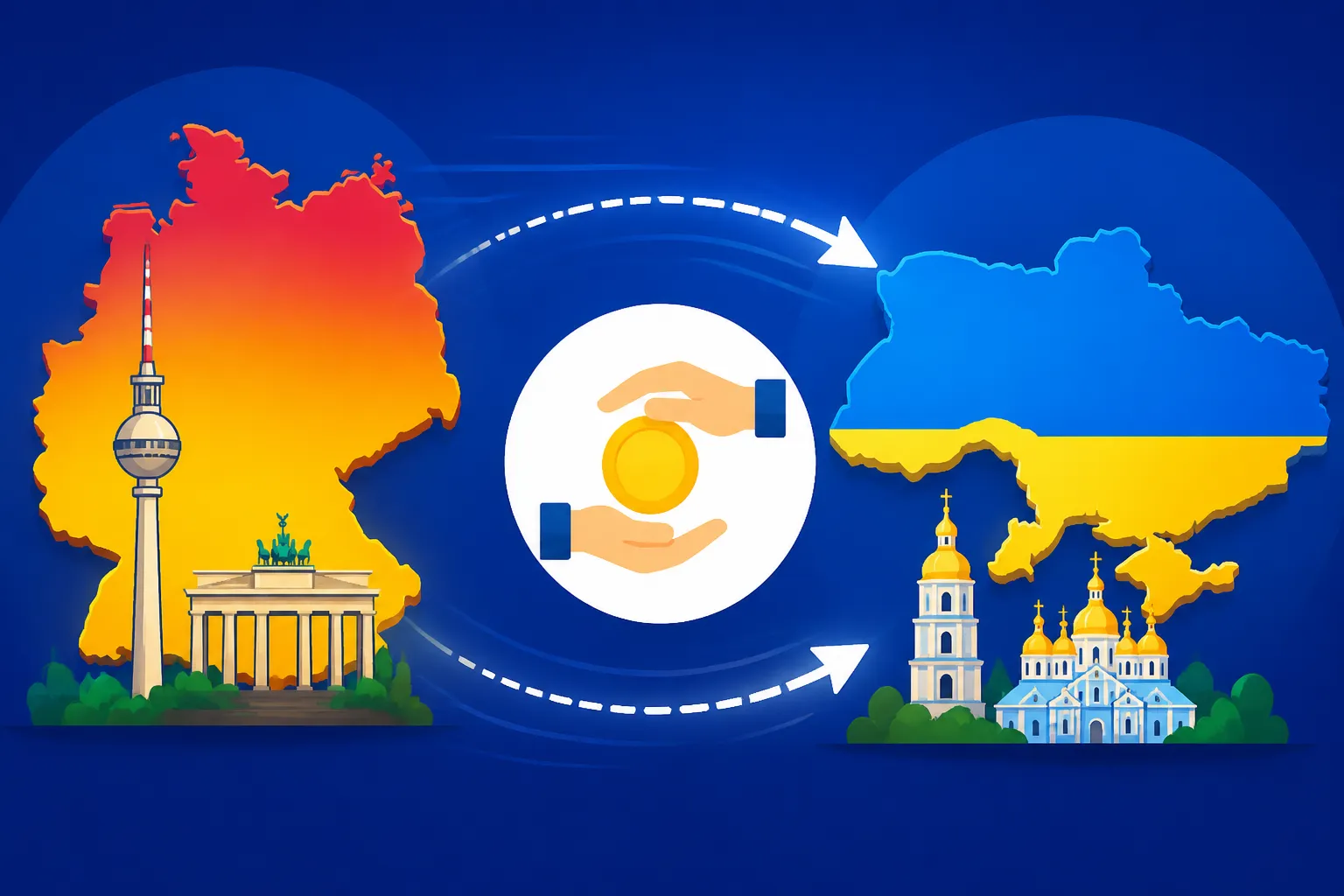
Sending Money From Germany to Ukraine: Current Transfer Routes
Trying to send money from Germany to Ukraine can feel like navigating a minefield, especially with everything happening in the world. You want to make sure your hard-earned euros reach your loved ones quickly, safely, and without being eaten alive by exorbitant fees or cryptic exchange rates. This guide is here to cut through the confusion, offering a clear, empathetic look at the best current transfer routes, and showing you why services like Wise have become a lifeline for so many.
Disclosure: This post may contain affiliate links. We may earn a commission at no extra cost to you if you make a purchase through these links. Read full disclosure.
The Unseen Hurdles of Sending Money to Ukraine Today
Let's be honest, sending money from Germany to Ukraine isn't just a financial transaction; it's often an act of support, love, and solidarity. For many expats living here, the need to send money home is paramount, whether it's for daily expenses, medical care, or rebuilding efforts. But the process itself, especially in these turbulent times, can be incredibly stressful, fraught with hidden fees, unpredictable exchange rates, and the nagging worry that your money might not arrive.
The Impact of Geopolitical Realities on Transfers
The ongoing conflict in Ukraine has dramatically reshaped the financial landscape. Banks, for understandable security and regulatory reasons, have tightened their protocols. This can mean longer processing times, increased scrutiny, and sometimes, outright restrictions on certain types of transfers or to specific regions. You might find your regular bank, which was fine for sending money to, say, Spain, suddenly presents a mountain of paperwork or expresses concerns about transferring funds to a conflict zone. It’s not that they don't want to help, but their systems just aren't built for the agility and low-cost needs of urgent, frequent international support.
Imagine you're trying to send money to your grandmother in a small Ukrainian village. You go to your local Sparkasse, and suddenly you're facing a bewildered teller, complicated forms in German, and a stern lecture about SWIFT codes and intermediary banks. You leave feeling more confused and anxious than when you arrived, wondering if the money will ever make it, or if half of it will disappear into fees. This isn't an uncommon scenario, and it's frustrating because the last thing you need when trying to help family is more bureaucracy.
Navigating Fees, Exchange Rates, and Hidden Costs
One of the biggest headaches when sending money internationally, especially to countries with different currencies, is the opaque nature of fees and exchange rates. Traditional banks often lure you in with seemingly low transfer fees, only to hit you with a less-than-favorable exchange rate that effectively inflates the cost. They might also have correspondent bank fees, which pop up unexpectedly, taking another chunk out of your transfer.
For example, let's say you send €500. Your German bank charges a €10 transfer fee, which seems reasonable. But then, they use an exchange rate that's 2-3% worse than the market rate. That's another €10-€15 effectively taken from your transfer without being explicitly called a "fee." And then, there's the Ukrainian receiving bank, which might levy its own charges. Before you know it, that €500 has dwindled considerably, and your recipient receives much less than you intended. This lack of transparency is incredibly frustrating and makes it hard to budget accurately when every euro counts. You can learn more about understanding German bank statements: Fees and Transactions Explained to spot these deductions.
Traditional Banking vs. Modern Money Transfer Services
When it comes to international money transfers, you essentially have two main avenues: the old guard (traditional banks) and the new wave (online money transfer services). While banks have their place, for sending money to Ukraine, particularly in the current climate, modern services often offer a significantly better experience.
The Slow, Costly Grind of Bank Transfers
Traditional bank transfers, typically via SWIFT, are the method most people think of first. You visit your branch or use online banking, input the recipient's details (IBAN, SWIFT/BIC), and off it goes. Sounds simple enough, right? In theory, yes. In practice, especially for a route like Germany to Ukraine, it can be anything but.
First, speed. SWIFT transfers are not instant. They can take anywhere from 2 to 5 business days, sometimes even longer if there are intermediary banks involved or if the receiving bank in Ukraine is facing operational challenges. When your family needs money for essentials, waiting nearly a week is simply not an option. Second, cost. We've already touched on this, but it bears repeating: banks often have higher explicit fees and significantly worse exchange rates than specialist services. Plus, those pesky intermediary bank fees can sneak up on you. You're effectively paying for the privilege of using an outdated system. For those interested in how these systems compare, check out our guide on Transferring Money Internationally: Cheapest Ways to Send Money Abroad.
The Rise of Fintech: Speed, Transparency, and Lower Costs
This is where modern money transfer services like Wise (formerly TransferWise) really shine. These companies were born out of the frustration with traditional banking's high costs and slow speeds. Their entire business model is built around making international transfers faster, cheaper, and more transparent.
Imagine this: You decide you need to send money, open the Wise app on your phone, enter the amount, see the exact exchange rate before you commit, view all fees upfront, and know precisely how much your recipient will get in their local currency. Then, you hit send, and the money often arrives within minutes, or at most, a few hours. This isn't a pipe dream; it's the reality with Wise. They use a smart system of local bank accounts. When you send money from Germany, your euros go into Wise's German account. Then, Wise sends the equivalent amount from their Ukrainian account to your recipient, effectively avoiding slow, expensive international SWIFT transfers. It’s like magic, but it’s just clever financial engineering. Their commitment to transparency is a breath of fresh air, especially when dealing with such sensitive transfers. You're never left guessing about hidden charges or murky exchange rates.
Here's a quick comparison of the two main approaches:
| Feature | Traditional Bank Transfer (SWIFT) | Modern Money Transfer Service (e.g., Wise) |
|---|---|---|
| Speed | 2-5 business days, sometimes longer | Minutes to a few hours, often same-day |
| Fees | Higher, often with hidden intermediary bank fees | Generally lower, clearly displayed upfront |
| Exchange Rate | Bank's own mark-up, often worse than mid-market | Mid-market rate, with a small, transparent fee |
| Transparency | Often opaque, final cost can be a surprise | Full transparency, you know the exact amount received |
| Convenience | Can require branch visits, complex online forms | Fully online/app-based, user-friendly |
| Reliability to Ukraine | Can be slower and more complicated due to geopolitical factors | Often more reliable and faster, designed for international movement |
Your Go-To for Ukraine Transfers: Wise
When it comes to getting your money from Germany to Ukraine efficiently and affordably, Wise stands out as the absolute hero. I've heard countless stories from fellow expats who've switched from their German banks and haven't looked back. The peace of mind that comes from knowing exactly what you're sending and that it will arrive swiftly is invaluable, especially in these challenging times. They’ve consistently been at the forefront of transparent, low-cost international transfers, which is precisely what you need when supporting family far away. For a broader look at these solutions, consider reading our piece on Using Wise, TransferWise and Revolut: Fintech Solutions for Expats.
Why Wise is the Best Solution for This Route
Wise's strength lies in its relentless focus on simplicity, cost-effectiveness, and speed. Their model bypasses the traditional, often cumbersome, correspondent banking network, which means less red tape and fewer opportunities for your money to get stuck or incur unexpected charges. For transfers to Ukraine, where every bit of support makes a real difference, this efficiency is critical. They offer the real mid-market exchange rate, the one you see on Google, and only charge a small, upfront fee that's clearly stated before you initiate the transfer. No surprises, no hidden markups.
Let me give you a common scenario. You’re working hard in Germany, maybe at a tech company in Berlin or a manufacturing plant in Stuttgart. Your family back in Kyiv needs funds for groceries or to replace something damaged. With your traditional bank, you'd be looking at a minimum €15-€25 in fees and a few days' wait. With Wise, that same transfer could cost you as little as a few euros and arrive almost instantly. That difference isn't just about money; it's about the emotional relief for both you and your family. It's about knowing your support is getting there when it's most needed.
A Step-by-Step Guide to Sending Money with Wise
Using Wise is surprisingly straightforward, even if you’re not particularly tech-savvy. Here’s how you can do it:
- Sign Up or Log In: If you don't already have an account, head over to the Wise website or download their app (available on iOS and Android). The registration process is usually quick and requires basic personal information and identity verification, which is standard for financial services. You might need to provide a photo ID and proof of address, but it’s all done online.
- Start a Transfer: Once logged in, click "Send money" or "Get started." You’ll then choose the currency you’re sending from (EUR, from Germany) and the currency you’re sending to (UAH, to Ukraine).
- Enter the Amount: Input the amount of Euros you want to send. Immediately, Wise will show you the exact exchange rate they're using, the transparent fee, and precisely how much your recipient will receive in Ukrainian Hryvnia. This is the transparency I was talking about – no guesswork.
- Choose Recipient: You can either send money to yourself in Ukraine (if you have a Ukrainian bank account) or to someone else. You’ll need their full name, their Ukrainian bank account number (IBAN), and possibly their bank's BIC/SWIFT code, though often just the IBAN is enough. Make sure these details are absolutely correct to avoid delays or lost funds. If you need help with bank accounts, our guide on Opening a Bank Account in Germany: Step-by-Step for Newcomers might be useful for your recipient’s general understanding.
- Fund Your Transfer: This is where you pay Wise. You have several options, depending on what's convenient for you:
- Bank Transfer (Überweisung): You'll get Wise's German bank details and transfer the money from your German bank account. This is usually the cheapest option but can take a business day or two to reach Wise.
- Debit Card: Instantly fund your transfer using your German debit card (EC-Karte). This is quick and usually incurs a small fee. Our article on Understanding EC Cards (Girocard) vs Credit Cards in Germany delves into these card types.
- Credit Card: Similar to a debit card, but often with slightly higher fees.
- SOFORT or Giropay: Popular direct online bank transfer methods in Germany that are fast.
Choose the method that suits your urgency and budget.
- Confirm and Send: Double-check all the details – amount, recipient, and payment method. Once you're sure everything is correct, confirm the transfer. Wise will send you email updates on the status of your transfer, and often, your recipient will also get a notification once the money has arrived.
It's that simple. Many expats keep a separate budget for their international financial commitments, and Wise helps them manage it all without a hitch.
Important Considerations and Tips for Transfers to Ukraine
While modern services like Wise make the process much smoother, there are still a few things you should always keep in mind when sending money to Ukraine to ensure everything goes off without a hitch.
Verifying Recipient Details and Bank Information
This might sound obvious, but it's the single most crucial step: double-check every single detail of your recipient's bank information. A single wrong digit in an IBAN or a misspelled name can lead to significant delays, the money being sent back (minus fees, of course), or in worst-case scenarios, going to the wrong account. Given the sensitive nature of transfers to Ukraine, you absolutely cannot afford mistakes here.
Always ask your recipient to send you their bank details in writing – a copy-pasted IBAN and full name are far better than trying to type it out from a phone call. Confirm their bank’s name and any other identifiers they might provide. Ukrainian banks include major players like PrivatBank, Monobank, and Oschadbank. If your recipient uses one of these, double-check that the details match the format for that specific bank. Think of it like sending an important letter: you wouldn't just guess the address. This is even more vital.
Understanding Exchange Rate Fluctuations
The value of the Ukrainian Hryvnia (UAH) can be subject to volatility, especially during times of geopolitical instability. This means that the exchange rate you see today might be slightly different tomorrow. While services like Wise offer the real mid-market rate, you still need to be aware of how fluctuations can impact the final amount your recipient receives.
If you're sending a large sum, or if your recipient has an urgent need for a specific amount, it might be worth keeping an eye on the exchange rates for a day or two. Some services offer rate alerts, notifying you when the rate reaches a certain point. Wise always locks in the rate for a specific period once you initiate the transfer, giving you a clear window to fund your transfer at the displayed rate. This transparency and rate locking feature offer crucial protection against sudden, unfavorable shifts, allowing you to maximize the amount your loved ones receive.
Security and Fraud Prevention
Unfortunately, where there's money involved, there's always a risk of scams and fraud. This is particularly true when sending money to vulnerable regions. Always be suspicious of unexpected requests for money, especially from people you don't know well or whose identities you cannot verify. Never share your bank details or Wise login information with anyone.
Stick to reputable services like Wise, which employ robust security measures to protect your funds. They use bank-level encryption and adhere to strict financial regulations in both Germany and internationally. Be wary of unsolicited emails or messages asking for personal information related to your transfers. If something feels off, it probably is. Our guide on Financial Scams to Watch Out for in Germany: How to Protect Your Money provides further insights into common tricks used by fraudsters. Remember, if you’re ever in doubt, contact Wise's customer support directly through their official channels, not through links in suspicious emails.
Choosing Your Funding Method Wisely
When you’re funding your Wise transfer from your German bank account, you have choices that impact both speed and cost. As mentioned, a standard bank transfer (Überweisung) from your German bank is generally the cheapest but takes a day or two for Wise to receive the money. If speed is your absolute priority, using a debit or credit card will get the money to Wise almost instantly, though it comes with a slightly higher fee.
Consider your own banking habits in Germany. Do you primarily use your N26 or Commerzbank account for quick transfers? Or do you prefer the traditional route? Knowing the typical processing times of your own German bank (e.g., how long an Überweisung usually takes to clear) will help you estimate when Wise will receive your funds and thus when your Ukrainian recipient will get their money. Think about what works best for your personal financial setup and the urgency of the transfer.
Disclaimer
Please remember that while this guide provides comprehensive information, financial regulations and geopolitical situations can change rapidly. Always check the latest terms and conditions, fees, and exchange rates with your chosen service provider before initiating any transfer. This information is for general guidance and does not constitute financial advice.