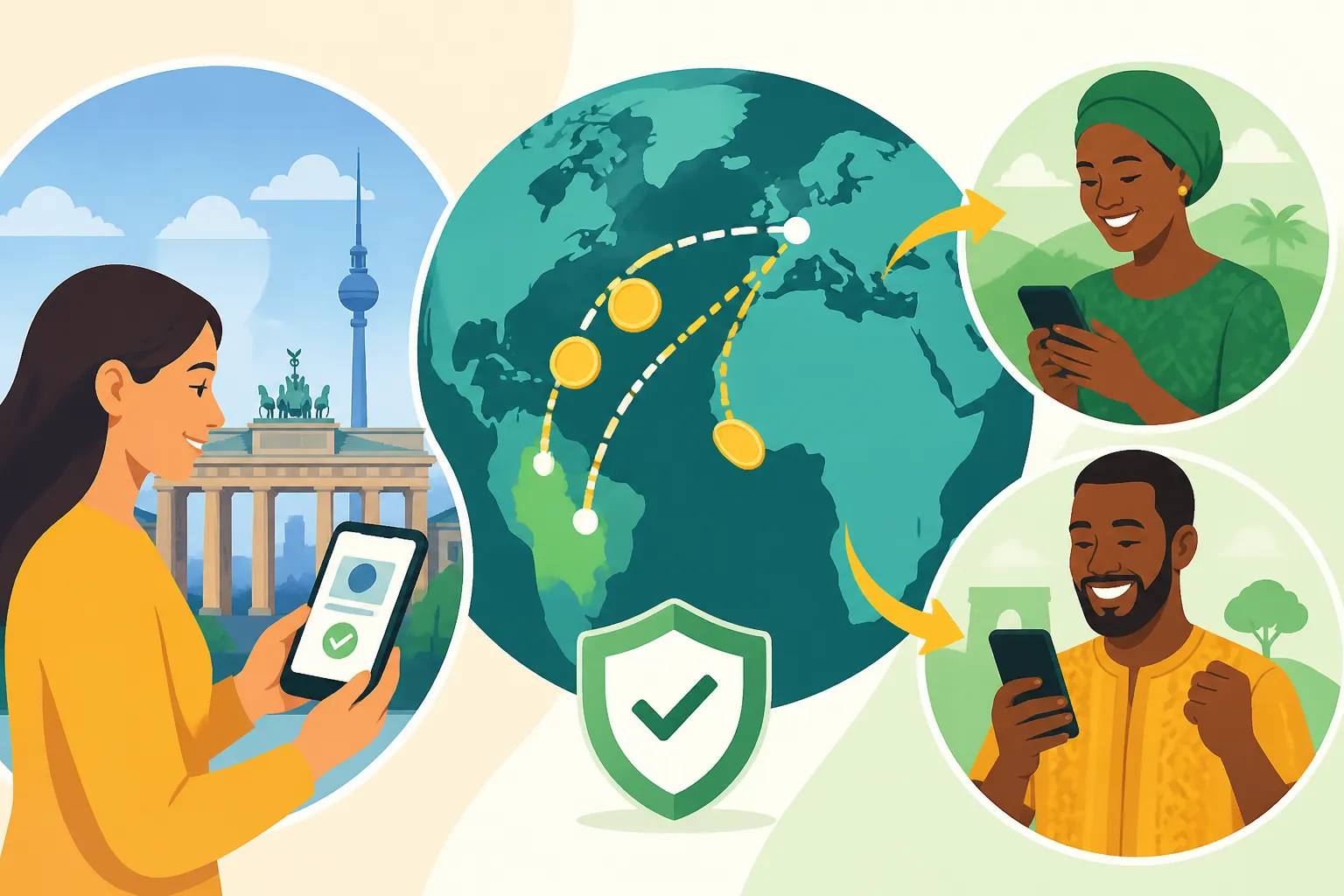
Sending Money From Germany to Nigeria and Ghana: Routes and Restrictions
Oh, the joy of sending money home from Germany, isn't it? It feels like an Olympic sport sometimes, navigating the labyrinthine rules, the ever-changing exchange rates, and the sheer number of options. If you've ever stood at a bank counter, trying to explain to a perplexed German teller why you need to send euros to someone named 'Aisha' in Accra or 'Chukwudi' in Lagos, you know the struggle is real. This guide is for you, my friend. We're going to cut through the confusion and help you find the best, most efficient ways to send your hard-earned cash from Germany to Nigeria and Ghana, with a special focus on making your money go further.
Disclosure: This post may contain affiliate links. We may earn a commission at no extra cost to you if you make a purchase through these links. Read full disclosure.
Understanding the Landscape: Why Sending Money to Nigeria and Ghana Can Be Tricky
Let's be honest, dealing with money matters in Germany often feels like walking through a minefield, especially when it involves international transfers. It’s not just about finding a service; it’s about understanding the deep-seated systems on both sides.
The Bureaucratic Hurdles and Financial Regulations in Germany
Germany prides itself on order and strict adherence to rules, and nowhere is this more apparent than in its financial sector. The German banking system is designed for security and transparency, which is fantastic for preventing fraud and money laundering (AML), but it can feel incredibly stifling for someone just trying to send a few hundred euros to family. Every transaction, especially international ones, is scrutinized. You’ll often be asked for proof of funds, your relationship to the recipient, and sometimes even the purpose of the transfer. This isn't personal; it's simply how the Bundesbank (Germany's central bank) and other regulatory bodies ensure compliance.
Think about it: when you try to open a bank account in Germany, even that simple process can be loaded with paperwork and demands for specific documents. Now imagine transferring money across continents. The banks here are cautious. They want to ensure they're not facilitating illicit activities, which means a lot of questions for you. While annoying, it's part of the price of living in a country with a robust financial system.
Navigating Nigerian and Ghanaian Receiving Regulations and Exchange Rates
The challenges don't end on the German side. Nigeria and Ghana, like many countries, have their own sets of regulations regarding international remittances. These can change with little notice, influenced by economic policies, currency stability, and government directives. For example, there might be limits on how much cash can be received, or specific channels might be prioritized by local banks to encourage formal transfers over informal ones.
Then there’s the beast that is the exchange rate. Oh, the dreaded exchange rate! It's not just a number; it's a constantly fluctuating entity that can make or break how much value your family receives. Many traditional banks and older transfer services will offer you what's called a "tourist rate" or a "bank rate," which is often significantly worse than the actual "mid-market rate" – the rate you see on Google. This hidden cost can quietly eat away at your transfer, leaving your loved ones with less than you intended. Furthermore, understanding the difference between the official rates and what you might get on the street or through less formal channels can be a headache, making it difficult to predict the exact amount your recipient will get.
Traditional vs. Modern: Exploring Your Options for Remittance
When it comes to sending money, you've got a spectrum of choices, from the tried-and-true (and often slow) methods to the sleek, digital-first platforms that have revolutionized international payments.
The Old School Way: Banks and Wire Transfers
For many years, the only real option was to walk into a physical bank branch and initiate a wire transfer. Services like Sparkasse, Deutsche Bank, Commerzbank, or even your local Volksbank offer these services. You fill out a form, provide your details, the recipient's bank information (SWIFT/BIC, IBAN for international accounts, or sometimes just an account number), and the money is eventually sent.
The process often involves high transfer fees, which can be fixed (e.g., €25 regardless of the amount) or a percentage of the transfer. The exchange rates are rarely favorable, meaning you lose money on two fronts: the fee and the conversion rate. Plus, the speed? Don't even get me started. A bank transfer from Germany to Nigeria or Ghana can take anywhere from 3 to 7 business days, sometimes longer if there are intermediary banks involved or if compliance checks on either end are extensive. In a world where minutes matter, waiting a week for critical funds to arrive can be excruciating.
Here's a quick rundown of the pros and cons:
| Feature | Traditional Bank Wire Transfer |
|---|---|
| Fees | High (fixed + percentage) |
| Exchange Rate | Often unfavorable |
| Speed | 3-7+ business days |
| Transparency | Low (hidden fees in rate) |
| Convenience | Requires branch visit |
| Limits | Generally high |
The Digital Revolution: Online Transfer Services (Highlighting Wise)
Thankfully, we're not living in the Dark Ages anymore! The internet has ushered in a new era of international money transfers, making it faster, cheaper, and much more transparent. Companies like Wise (formerly TransferWise) have utterly transformed the landscape by directly challenging the old banking model.
Wise is a game-changer. Imagine sending money from Germany to Nigeria or Ghana without those sky-high fees or confusing exchange rates. That's exactly what Wise offers. They operate on a simple, brilliant principle: they use the real, mid-market exchange rate – the one you see on Google – and charge a small, upfront fee. No nasty surprises, no hidden markups. When you input the amount you want to send on the Wise platform, you immediately see the exact fee and the precise amount your recipient will receive. This level of transparency is truly a breath of fresh air after years of opaque banking charges.
How does Wise achieve this? They don't actually transfer your money across borders in the traditional sense. Instead, they have local bank accounts in various countries. When you send euros from Germany to Nigeria, your euros go into Wise's German account. Then, Wise pays out the equivalent amount in Naira from its Nigerian account. It's like a genius currency exchange club, bypassing international wire fees and swift codes. This also means transfers are often much faster, with many reaching Nigeria or Ghana within minutes or a few hours, depending on the recipient's bank and local processing times.
While there are other online services out there, like Western Union and MoneyGram (which are more widely known but often come with higher fees and less favorable rates for bank transfers, though they are good for cash pickups), or services like Remitly and WorldRemit, Wise consistently stands out for its commitment to transparency and its use of the real exchange rate. For anyone living in Germany and looking to send money home to Nigeria or Ghana, Wise is genuinely the hero of this story, designed specifically to cut out those frustrating hidden costs. Don't let your money get eaten by unfair fees; try Wise and see the difference for yourself.
Essential Considerations and Restrictions for Sending Funds
Before you hit "send," there are a few critical factors to keep in mind, covering everything from paperwork to how much bang you're getting for your buck. These are the details that often catch expats off guard.
Documentation, Limits, and Compliance in Germany
Remember those bureaucratic hurdles we talked about? They come into sharp focus when it's time to actually execute a transfer. For any significant international transfer from Germany, you'll need to be prepared.
- Identification: Always have your official German ID (e.g., your Aufenthaltstitel or national ID card if you're an EU citizen) ready. Most services, including Wise, will require verification of your identity when you set up an account and potentially for larger transactions.
- Proof of Residence: You might be asked for proof of your German address, such as a recent utility bill or your Meldebescheinigung (address registration). This helps confirm your legal residency in Germany.
- Source of Funds: For larger transfers, you might need to prove where the money came from. This could be recent payslips (if you’re an employee, understanding your German Payslip (Gehaltsabrechnung) can be helpful here), a bank statement showing savings, or even tax documents. This is a common requirement under anti-money laundering (AML) regulations and applies to all financial institutions. Don't be surprised if your bank or even an online service asks for this.
- Transfer Limits: Each service will have its own daily, weekly, or monthly transfer limits. Traditional banks tend to have higher default limits, but online services also allow you to increase limits once your account is fully verified and you've established a track record. Be aware that sending money from Germany to Nigeria and Ghana might also be subject to specific limits imposed by the receiving country's central bank or financial institutions. It's always a good idea to check current regulations on both ends before initiating a large transfer.
Compliance with German and international financial laws is paramount. Failing to provide requested documentation or attempting to bypass regulations can lead to delays, frozen funds, or even legal trouble. It's far better to be transparent and prepared. If you have questions about your financial dealings in Germany, don't hesitate to consult a tax advisor or research official government sources. Understanding nuances like Filing a Tax Return in Germany: A Guide for Employees and Expats can also provide peace of mind regarding the legality of your funds.
Speed, Fees, and Exchange Rates: What Really Matters
These three elements are the holy trinity of international money transfers. They dictate how much money actually arrives and how quickly.
- Fees: These come in two main flavors:
- Fixed Fees: A set amount charged per transaction, regardless of the sum.
- Percentage Fees: A portion of the transferred amount.
Often, you'll see a combination. Always compare these explicitly. Remember that some services, especially banks, might also charge an additional fee on the receiving end. One of the biggest advantages of services like Wise is its transparent fee structure. Before you even commit to the transfer, you see exactly how much you're paying in fees and how much will reach your recipient. This clarity is invaluable for budgeting, especially when considering your overall Cost of Living in Germany: Budgeting Guide for Expats.
- Exchange Rates: This is where many traditional services sneak in hidden costs. They offer you an exchange rate that's slightly worse than the "mid-market rate" (the real rate you see on Google or Reuters). That small difference, multiplied by a large sum, can add up to a significant loss. Wise is celebrated precisely because it uses the mid-market rate. This means more of your money actually gets converted at a fair value, not at a rate inflated for the service provider's profit. Always check the live mid-market rate before initiating a transfer and compare it to what your chosen service is offering.
- Speed: How fast does the money arrive? For emergencies, speed is crucial. For regular support, consistency is key. Traditional bank transfers are notoriously slow. Online platforms, especially those using the local-account model like Wise, can be incredibly quick – often within minutes to a few hours for major currencies and destinations. However, keep in mind that the receiving bank's processing times can still introduce delays, particularly during weekends or public holidays in Nigeria or Ghana.
The combination of low, transparent fees, the real exchange rate, and fast transfer times is what makes Wise such a compelling choice for expats in Germany needing to send money to Nigeria and Ghana. It’s about ensuring your efforts mean more to your loved ones back home.
Making Your Transfer with Wise: A Step-by-Step Guide
If you're tired of hidden fees, unfavorable exchange rates, and the glacial pace of traditional banks, Wise is genuinely worth exploring. It’s designed to be straightforward, even for those who might not be digital natives.
Setting Up Your Wise Account from Germany
Getting started with Wise is pretty painless, which is a rare treat when it comes to financial administration in Germany!
- Sign Up Online or via App: Head over to the Wise website or download their mobile app (available for both iOS and Android). You can sign up using your email, Google, Facebook, or Apple ID.
- Choose Your Account Type: You'll typically be asked if you want a personal or business account. For sending money to family, a personal account is what you need.
- Provide Personal Details: You'll enter your name, date of birth, address in Germany, and contact information. Remember, your address must match what's on your official documents.
- Verification (The German Way): This is where Germany's strict identity checks come into play, but Wise makes it as smooth as possible. You'll likely need to upload a clear photo of your German residence permit (Aufenthaltstitel) or national ID card, and possibly a proof of address (like a utility bill or Meldebescheinigung). They might also ask for a selfie or a short video call to verify your identity – this is standard procedure for financial institutions to comply with German regulations. It might feel like a lot, but once it's done, you're good to go. This initial verification typically takes a day or two, but sometimes it's much faster.
Once your account is set up and verified, you're ready to start sending money! This process is often simpler and more user-friendly than trying to Open a Bank Account in Germany: Step-by-Step for Newcomers from scratch.
Sending Money to Nigeria or Ghana via Wise
Now for the main event: getting your euros into the hands of your loved ones. The process with Wise is incredibly intuitive.
- Initiate a Transfer: Log in to your Wise account. Click on "Send money" or "Send funds."
- Enter Amount and Currency: You'll specify how much you want to send in EUR (Euros). Wise will then automatically show you the exact amount your recipient will receive in Nigerian Naira (NGN) or Ghanaian Cedi (GHS), along with the transparent fee and the locked-in mid-market exchange rate. This is where you really appreciate the clarity – no guesswork involved.
- Choose Recipient: You can select an existing recipient or add a new one. For a new recipient, you'll need their full name, address, phone number, and their bank details (bank name, account number). Ensure all details are accurate to avoid delays or issues.
- Select Payment Method: You have several options to fund your transfer from Germany:
- Bank Transfer (Überweisung): You initiate a standard bank transfer from your German bank account to Wise's German account. This is usually the cheapest but can take 1-2 business days for Wise to receive the funds.
- Debit Card: Faster but might have slightly higher fees.
- Credit Card: Usually the fastest but also the most expensive option due to credit card processing fees.
- SOFORT / Giropay: Popular German online banking payment methods that allow for instant transfers directly from your bank account.
- Review and Confirm: Double-check all the details: amount, recipient, fees, and the final amount to be received. Once you're confident, confirm the transfer.
- Track Your Transfer: Wise provides real-time updates via email and within your app, so you know exactly where your money is at every step of the journey. Many transfers to Nigeria and Ghana via Wise arrive within the same day, sometimes even within minutes, making it incredibly reliable.
With Wise, you're not just sending money; you're sending it smarter. You get to keep more of your hard-earned cash where it belongs – with your family.
Navigating Potential Hiccups and Ensuring Smooth Transactions
Even with the best services, international money transfers can sometimes hit a snag. Being prepared for common issues and understanding how to stay informed can save you a lot of stress.
Common Issues and How to Resolve Them
Let's face it, bureaucracy and technology, while helpful, aren't always flawless. You might encounter a few bumps in the road.
- Delayed Transfers: The most common frustration. If your transfer is taking longer than expected, first, check your Wise app or email notifications. Often, Wise will inform you if there's a delay and why. The most frequent causes are:
- Recipient Bank Processing: Even if Wise sends the money quickly, the receiving bank in Nigeria or Ghana might have its own internal processing times, especially if it's a weekend or public holiday.
- Incorrect Details: A misspelled name, wrong account number, or incorrect swift code can halt a transfer. Always double-check recipient details before confirming.
- Additional Verification: Sometimes, for larger sums or unusual patterns, either Wise or the receiving bank might request extra verification documents from you or your recipient.
- Incorrect Recipient Details: This is a big one. If you've sent money to the wrong account, contact Wise customer support immediately. They might be able to recall the funds, but it's not guaranteed, especially if the money has already been credited to another account. Prevention is key here!
- Failed Transfers: If your transfer fails, it's usually due to insufficient funds in your German bank account, an expired card, or issues with your payment method. Wise will notify you, and you can simply retry with a different method.
- How to Resolve:
- Check Wise Status: Your Wise account dashboard is your first port of call. It often has the most up-to-date information.
- Contact Support: If you can't find the answer, reach out to Wise's customer service. They are generally responsive and helpful.
- Inform Recipient: Keep your recipient updated. They can also check with their local bank if the funds seem delayed on their end.
To avoid these issues, adopt a meticulous approach. Always, always verify your recipient's information before every transfer. For first-time transfers, perhaps start with a smaller amount to ensure everything goes smoothly before sending a larger sum.
Staying Informed: Exchange Rate Volatility and Regulatory Changes
The world of international finance is dynamic, and nowhere is this more true than with exchange rates and regulations affecting remittances to Nigeria and Ghana.
- Exchange Rate Volatility: Currencies fluctuate constantly. The Nigerian Naira and Ghanaian Cedi, in particular, can experience significant shifts. What might be a good rate today could be slightly worse or better tomorrow.
- Rate Alerts: Services like Wise allow you to set up exchange rate alerts. You can tell them the rate you're hoping for, and they'll notify you when it's reached. This is a brilliant feature for maximizing your transfers, especially if you're not in an urgent rush. You can also monitor these rates using Mobile Banking Apps in Germany: N26, Revolut, and More, many of which offer currency conversion tools.
- Timing: If you're sending larger amounts, even a small change in the exchange rate can make a big difference. Try to time your transfers when the rate is most favorable.
- Regulatory Changes: Both Germany and the receiving countries can change their financial regulations. Nigeria and Ghana, for example, have sometimes introduced policies to encourage remittances through official channels or placed limits on certain types of transfers.
- Stay Updated: Follow financial news from Nigeria and Ghana, especially from their central banks. Online transfer services like Wise are usually quick to adapt to these changes and will notify you if anything impacts your ability to send money.
- German Regulations: Keep an eye on German financial news, especially regarding any new EU-wide anti-money laundering directives that might affect international transfers. Remember to be vigilant for Financial Scams to Watch Out for in Germany: How to Protect Your Money, as new regulations can sometimes be exploited by fraudsters.
Staying proactive and informed is your best defense against unexpected issues. With a service like Wise, you have a powerful tool that helps you navigate these complexities with greater ease and transparency, ensuring your money gets where it needs to be, when it needs to be there.
Disclaimer
Please remember that while I strive to provide accurate and up-to-date information, financial regulations and service offerings can change. This guide is for informational purposes only and does not constitute financial or legal advice. Always verify the latest terms and conditions directly with service providers and consult with a professional for personalized financial guidance.