Child Benefits in Germany: Kindergeld and Elterngeld
Navigating the mountain of paperwork that comes with starting a family in a foreign country can feel like trying to solve a Rubik's Cube in the dark. I remember sitting at my kitchen table with a crying newborn, staring at a twelve-page application for the Familienkasse and wondering if I needed a law degree just to buy diapers. This guide breaks down Kindergeld and Elterngeld so you can secure your family's financial future without the bureaucratic headache.
Disclosure: This post may contain affiliate links. We may earn a commission at no extra cost to you if you make a purchase through these links. Read full disclosure.
Understanding Kindergeld: The Foundation of Family Support
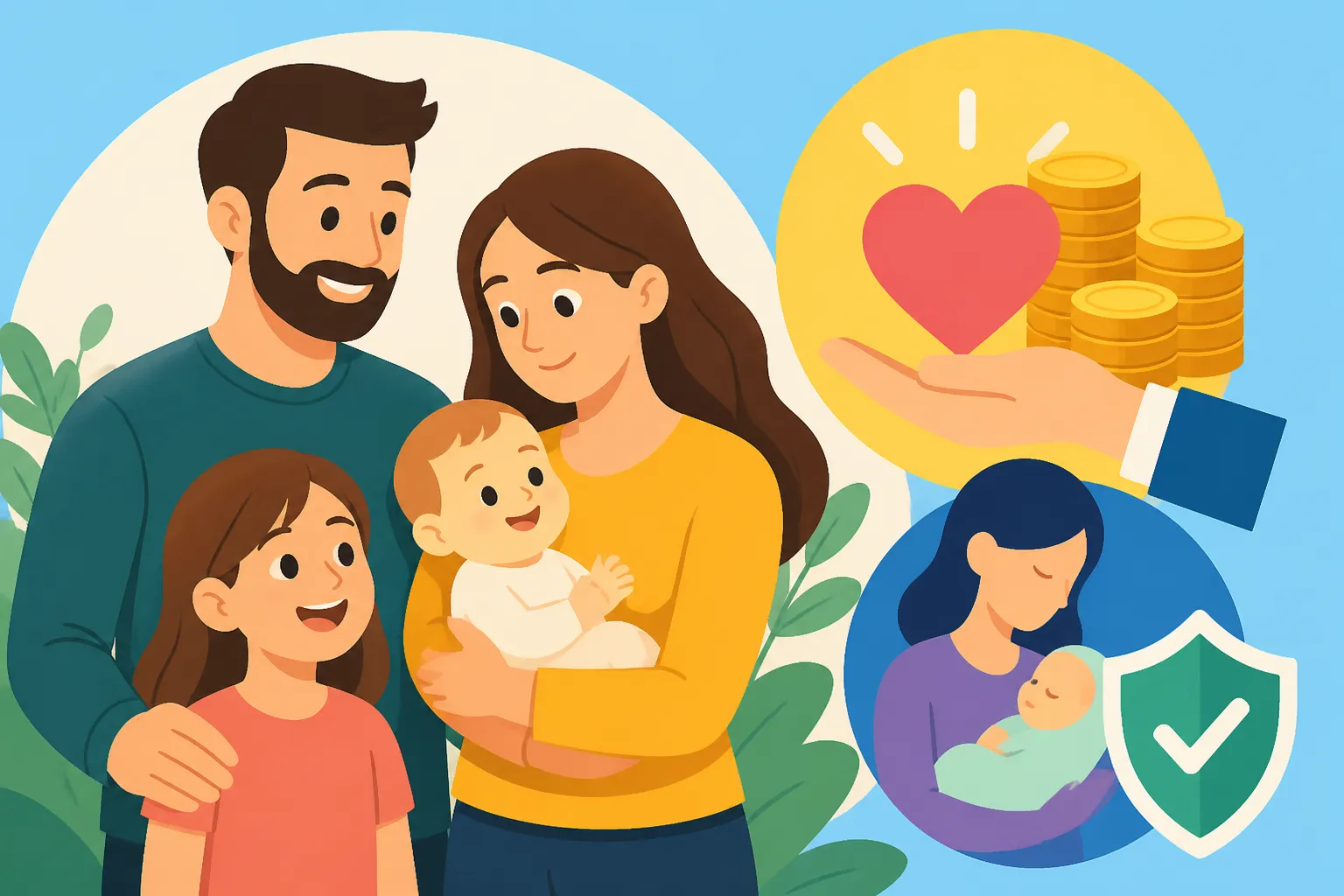
In Germany, the state believes that every child deserves a baseline of financial support, and this manifests as Kindergeld (Child Benefit). Unlike some other countries where benefits are strictly means-tested, Kindergeld is available to almost everyone living and working in Germany, regardless of their income. It is a monthly payment designed to help cover the costs of food, clothing, and general upbringing. For most expats, this is the first major interaction with the German social system after having a child, and while the process is relatively straightforward, the timing and documentation are everything.
What is Kindergeld and Who Qualifies?
If you are a legal resident of Germany with a valid residence permit that allows you to work, you are likely entitled to Kindergeld. This includes EU citizens, Blue Card holders, and those on various work or freelance visas. The primary requirement is that the child must live in your household and you must be a resident for tax purposes. Even if your child was born outside of Germany but has moved here with you, you are entitled to start receiving payments once your Moving to Germany: Comprehensive Visa & Immigration Guide is finalized and your address is registered.
The benefit is typically paid until the child turns 18. However, if your child continues their education (university or vocational training), you can often extend these payments until they reach the age of 25. There are specific rules for children who are registered as job seekers or those with disabilities, which can also extend the eligibility period. It is vital to notify the Familienkasse of any changes in your child’s status to avoid the dreaded "Rückforderung" (repayment demand), which often happens if you forget to send in a university enrollment certificate.
How Much Can You Expect to Receive?
As of 2024, the German government has simplified the payment structure. Previously, the amount increased with the third or fourth child, but now there is a flat rate of €250 per month, per child. This means a family with three children receives a total of €750 every month. While it won't pay for a private education, it certainly covers the essentials and helps manage the Cost of Living in Germany: Budgeting Guide for Expats when your family grows.
The money is usually transferred directly into your German bank account. If you are using a modern mobile banking solution like N26, you can easily track these incoming government payments with real-time notifications. The payments are scheduled based on the last digit of your Kindergeldnummer (assigned after your application), so don't panic if your neighbor gets their money on the 5th and you don't see yours until the 15th.
The Application Process: Navigating the Familienkasse
The application for Kindergeld is handled by the Familienkasse (Family Fund), which is part of the Federal Employment Agency. You will need your child’s birth certificate (Geburtsurkunde) and, most importantly, the child’s Tax ID (Steuer-ID). The Tax ID is usually sent to you automatically by mail a few weeks after you complete the Anmeldung: Registering Your Address in Germany. If you haven't received it, you can request it from the Bundeszentralamt für Steuern.
You can now submit much of the application online through the "Kindergeld Online" portal, but many expats still find it easier to fill out the paper forms to ensure every detail is captured. You’ll need the "Antrag auf Kindergeld" (Main application) and the "Anlage Kind" (Appendix for the child). If you have moved from abroad, you might also need to prove that you aren't receiving similar benefits from your home country, as the EU has strict rules against "double-dipping."
Elterngeld: Navigating Parental Allowance in Germany
Elterngeld (Parental Allowance) is where things get a bit more complex, but also more rewarding. This benefit is designed to replace a portion of your income while you take time off work to care for your new baby. It allows parents to stay home during the most critical first months without losing their entire financial footing. It is a revolutionary system, but the math involved can make your head spin, especially when trying to decide between the different "modes" of payment.
The Three Flavors: Basis Elterngeld, ElterngeldPlus, and Partnerschaftsbonus
Basis Elterngeld is the traditional model. It typically covers the first 12 to 14 months of the child's life. One parent can take up to 12 months, and if the other parent also takes at least two months of leave (the "partner months"), the total eligibility extends to 14 months. This is paid at roughly 65% to 67% of your average net income from the 12 months prior to the birth.
ElterngeldPlus is a newer option designed for parents who want to return to work part-time sooner. One month of Basis Elterngeld can be converted into two months of ElterngeldPlus. While the monthly payment is halved, the duration is doubled, allowing for a much longer period of supported part-time work. This is particularly useful if you want to maintain a connection to your career while still being present for your child's early milestones.
The Partnerschaftsbonus is an extra incentive for equality. If both parents work part-time (between 24 and 32 hours per week) simultaneously for four consecutive months, each parent receives four additional months of ElterngeldPlus. This is a fantastic way to ease back into the workforce while sharing the childcare burden. For those managing complex tax situations during this period, services like Taxes for Expats can help ensure your global income doesn't negatively impact your German benefit calculations.
Calculating Your Payout: Why Your Net Salary Matters
The amount of Elterngeld you receive is tied directly to your "Erwerbseinkommen" (earned income). The calculation looks at your net salary after taxes and social security. The minimum payment is €300 per month (for those who weren't working), and the maximum is capped at €1,800 per month. If your income was between €1,000 and €1,200, you generally get 67%. For higher earners, this percentage drops slightly toward 65%.
One "pro-tip" many expats miss: since the calculation is based on the net income of the 12 months before birth, married couples can sometimes optimize their Elterngeld by changing their tax classes (Steuerklassen). By moving the parent who intends to take the most leave into Tax Class III several months before the birth, their net income increases, which in turn increases their Elterngeld payout. However, this requires forward planning and an understanding of German Tax Classes (Steuerklassen) Explained.
Strategizing Your Time Off: Combining Work and Leave
The beauty of the German system is the flexibility, but that flexibility requires a strategy. You must decide how to split the months between parents before you apply, although you can make changes later. For example, the mother might take months 1-10 as Basis Elterngeld, while the father takes months 11-12. Or, they might both take the first two months together to survive the "newborn fog" and then spread the rest out as ElterngeldPlus.
Be aware that any income you earn while receiving Elterngeld will be deducted from your benefit amount. If you are a freelancer, this can be particularly tricky. You’ll need to report your expected earnings to the Elterngeldstelle. Many freelancers use Wise to keep their business and personal finances separate, making it easier to provide clear bank statements to the authorities when they inevitably ask for proof of income during your leave period.
Kinderzuschlag and Other Financial Add-ons
While Kindergeld and Elterngeld are the "big two," there are other layers of support available depending on your financial situation. Germany has a vested interest in preventing child poverty, and as an expat, you shouldn't overlook these additional resources if your budget is tight.
Supplementing Low Incomes with Kinderzuschlag
Kinderzuschlag is an additional payment for parents who earn enough to cover their own needs but not enough to fully cover the needs of their children. As of 2026, this can be up to €297 per child, per month. To qualify, your income must fall within a specific "window"—too high for standard unemployment benefits (Bürgergeld) but low enough to meet the threshold.
Applying for Kinderzuschlag also unlocks the "Bildung und Teilhabe" (Education and Participation) package. This is a lifesaver for families, as it covers the costs of school lunches, school trips, and even a €195 annual allowance for school supplies. If your child wants to join a local sports club or take music lessons, the state may even provide a €15 monthly voucher to help cover those costs. It is a deeply empathetic system that ensures children aren't left out of social activities due to their parents' bank balance.
Tax Breaks: Kinderfreibetrag vs. Kindergeld
In the German tax system, there is a concept called the Kinderfreibetrag (Child Tax Allowance). Essentially, the government calculates whether you benefit more from the monthly Kindergeld payments or from a reduction in your taxable income. You don't have to choose; the Finanzamt performs a "Günstigerprüfung" (favorability test) automatically when you file your Filing a Tax Return in Germany: A Guide for Employees and Expats.
For most middle-to-low-income families, Kindergeld is the better deal. However, for high earners, the tax allowance might provide a greater financial benefit. When you file your taxes—using a tool like Wundertax makes this process much less intimidating for expats—the system will work out if you are owed a refund because the tax allowance was more valuable than the Kindergeld you already received.
| Benefit Type | Monthly Amount (Approx.) | Eligibility Duration | Key Requirement |
|---|---|---|---|
| Kindergeld | €250 per child | Until age 18 (or 25) | Residency & Tax ID |
| Basis Elterngeld | 65-67% of net income | Up to 14 months total | Living with & caring for child |
| ElterngeldPlus | Up to 50% of Basis | Up to 28 months total | Part-time work permitted |
| Kinderzuschlag | Up to €297 per child | While income is low | Must receive Kindergeld |
Practical Tips for Expats Dealing with German Bureaucracy
After years of helping fellow expats navigate these waters, I’ve realized that the struggle isn't usually the law itself, but the "how" of the application. German bureaucracy is precise, and a single missing document can stall your payments for months.
Managing Your Benefits Across Borders
If you are a "cross-border" worker or if your spouse lives in another EU country, things get interesting. The EU Coordination of Social Security Systems determines which country is primarily responsible for paying your child benefits. Usually, it's the country where the parent and child reside, but if both parents work in different EU countries, there may be a "top-up" payment (Differenzkindergeld) if one country's benefit is higher than the other's.
Always keep your home country's social security office informed of your move to Germany. You will often need an "S041" or "P1" form to prove when your benefits ended elsewhere. If you’re sending money back home or managing international expenses during this transition, using Wise can save you a fortune in hidden bank fees compared to traditional German sparkassen.
Essential Documents and Common Pitfalls
The "Holy Trinity" of documents for family benefits in Germany are the Geburtsurkunde (Birth Certificate), the Steuer-ID (Tax ID), and your Aufenthaltstitel (Residence Permit). If your child was born abroad, you will need a certified translation of their birth certificate. Avoid the mistake of using a simple Google Translate printout; the authorities require "beglaubigte Übersetzungen" from sworn translators.
Common pitfalls include:
- Missing Deadlines: Elterngeld can only be paid retroactively for three months. If you apply when your baby is six months old, you’ve lost three months of money forever.
- Incorrect Income Proof: For Elterngeld, you need your "Lohnabrechnungen" (payslips) for the 12 months prior to the birth. If you were on sick leave or received other benefits, these months might be skipped in the calculation, which could be to your advantage.
- The Signature Trap: Both parents must sign the Elterngeld application if they have joint custody (Sorgerecht), even if only one parent is applying for the money.
Budgeting for Your New Arrival: Costs and Savings
Once the benefits start rolling in, the next challenge is managing them. Having a baby in Germany involves unique costs—like the fact that many apartments come without a kitchen, or the high cost of high-quality "Bio" baby food.
Setting Up Your Financial Infrastructure
I highly recommend opening a dedicated sub-account for your child's expenses. Many digital banks like N26 allow you to create "Spaces" where you can siphon off the Kindergeld as soon as it hits your account. This ensures the money is actually used for the child’s needs (or saved for their future) rather than disappearing into your monthly rent or Utilities Setup: How to Get Electricity, Gas, and Water in Your New Home.
Don't forget to look into Family Health Insurance: Adding Your Spouse and Kids to Your Plan. In Germany, if you are in the public system, your child is covered for free under "Familienversicherung." This is a massive financial relief compared to the private insurance models in many other countries. You simply need to send a copy of the birth certificate to your Krankenkasse, and they will send out a tiny health insurance card for your little one.
Long-term Savings and Education Planning
While university in Germany is largely tuition-free, there are still costs for living, books, and semester fees. Many expat parents choose to invest the Kindergeld into an ETF (Exchange Traded Fund) or a specific "Junior Depot." Because of the Compound Interest and Investing in Germany: Building Wealth as an Expat, starting this when the child is a newborn can result in a significant nest egg by the time they are 18.
If you are planning to file a tax return to claim childcare costs (which are partially tax-deductible), Wundertax can help you identify exactly where those deductions go. Childcare (Kita) costs are deductible up to two-thirds of the expenses, with a maximum of €4,000 per child per year. This is another reason why keeping meticulous records of your Daycare and Kindergarten in Germany: Finding a Kita receipts is essential for your annual tax refund.
Disclaimer
This article is intended for informational purposes only and does not constitute legal or financial advice. While we strive to keep the information up to date, German laws and benefit amounts can change frequently. We strongly recommend consulting with a professional tax advisor (Steuerberater) or contacting the Familienkasse and Elterngeldstelle directly to discuss your specific circumstances.