Financial Inclusion: Banking Options if You Don’t Speak German
Sitting across from a stern bank clerk who refuses to speak a word of English while handing you a thirty-page contract is paralyzing. I once blindly signed a traditional checking account agreement, terrified I had accidentally committed to hidden fees I could not translate. This guide explains how to bypass the language barrier and open a fully functional German bank account entirely in English.
Disclosure: This post may contain affiliate links. We may earn a commission at no extra cost to you if you make a purchase through these links. Read full disclosure.
The Language Barrier at Traditional German Banks
When you first arrive, well-meaning locals might direct you to a neighborhood Sparkasse, Volksbank, or Deutsche Bank branch to set up your financial foundation. For an expat who has not yet mastered the local language, walking into these legacy institutions is a recipe for immense frustration and administrative dead ends.
The Fear of Legal Liability
The reluctance of German bank tellers to speak English with you is rarely born out of personal rudeness. It is deeply rooted in strict corporate compliance and the German legal framework. Financial contracts in Germany are incredibly complex, laden with a highly specific bureaucratic vocabulary known as Beamtendeutsch.
Bank employees are legally terrified of misrepresenting a financial product, an overdraft fee structure, or a loan term in a second language. If they translate a clause incorrectly and you lose money, the bank could be held liable. As a result, the strict internal policy of most legacy banks is to refuse service or flatly deny account openings to foreigners unless they bring a fluent, native-speaking translator with them to the branch. This creates an immediate exclusionary wall for international professionals trying to integrate, a roadblock that heavily compounds the initial stress of navigating German Bureaucracy 101: Understanding the Anmeldung, Schufa, and Tax ID.
Translating Physical Mail and Hidden Fees
Even if you successfully navigate the branch appointment with a translator, the language barrier persists long after you secure the account. Traditional German banks are intensely analog. They communicate almost exclusively via physical mail.
Every month, you will receive dense, multi-page paper statements filled with obscure abbreviations. Important updates to your terms and conditions, notifications of rising maintenance fees, or warnings about overdraft charges will arrive in your mailbox written in highly complex legal German. Trying to scan these documents with a translation app on your phone often results in garbled, confusing text. If you miss a critical update because you could not decipher the letter, you end up paying the price. Figuring out exactly what you are being charged for is an agonizing process decoded in Understanding German Bank Statements: Fees and Transactions Explained.
Digital First Banks The English Language Savior
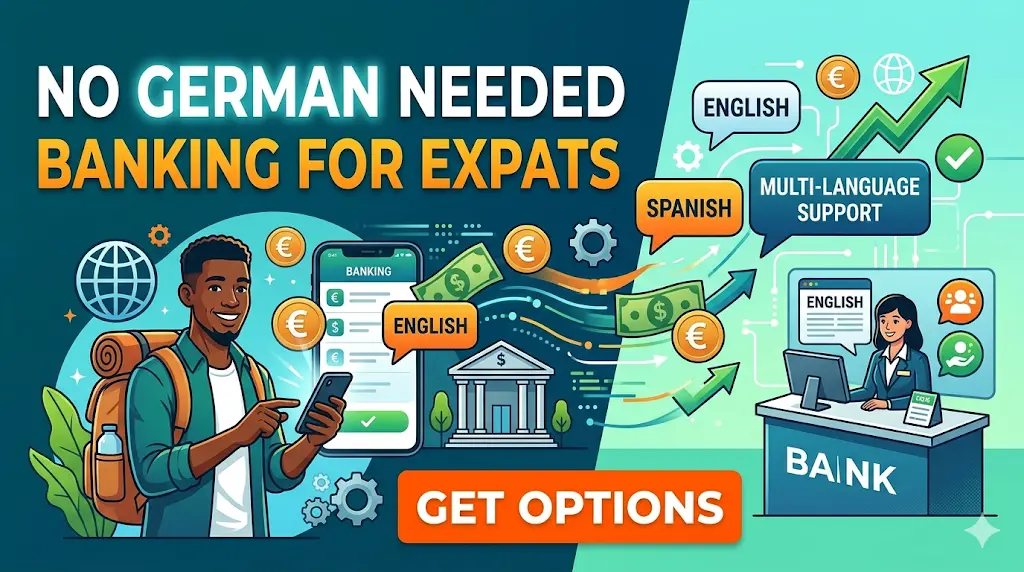
Fortunately, the European fintech revolution was largely built on solving this exact expat pain point. You no longer need to rely on legacy brick-and-mortar institutions to secure a localized financial setup.
Seamless Onboarding Without Appointments
Mobile-first challenger banks recognized that a massive segment of the international workforce was being locked out of the financial system simply due to language. By utilizing these modern platforms, you completely bypass the need to schedule an in-person appointment, endure an interrogation by a teller, or bring a translator.
Opening a daily checking account with N26 is a streamlined, entirely digital process that can be completed from your smartphone in minutes, completely in English. The app interface, the legally binding terms and conditions, and the customer support are all natively built to support non-German speakers. To verify your identity, you simply complete a short video call within the app with an English-speaking agent, showing your passport and residence permit.
More importantly, N26 provides a fully licensed, German IBAN. This is critical for your financial inclusion. In Germany, you need a local IBAN to set up SEPA direct debits for your apartment rent, health insurance, and internet provider. Attempting to manage these domestic necessities without a recognized local account is nearly impossible, a reality deeply explored in How to Pay Rent and Bills in Germany: Banking Tips for Expats.
Real Time Translation and Transparent Operations
The true value of an English-first banking experience becomes apparent in your day-to-day life. Instead of waiting for paper statements, digital apps provide instant push notifications on your phone the moment a transaction occurs, fully categorized in English.
If a direct debit for your utility bill is higher than expected, you see it immediately on your screen in a language you understand, rather than discovering it three weeks later in a mailed letter. This real-time transparency allows you to actively protect your budget and prevents you from accidentally falling into unapproved overdrafts. Mastering this localized digital liquidity is essential for surviving the unique economic quirks outlined in Using Cash vs Card in Germany: Is Germany Going Cashless?. For a broader comparison of how these digital entities stack up against the old guard, reviewing Mobile Banking Apps in Germany: N26, Revolut, and More is highly recommended.
| Banking Feature | Traditional German Banks | Digital Expat-Friendly Banks |
| Interface Language | 100% German | English, German, French, Spanish, etc. |
| Account Opening | In-person appointment required | Smartphone video verification (Minutes) |
| Customer Support | German (Strict liability policies) | Dedicated English chat and phone support |
| Communication Method | Physical paper mail | Instant push notifications & email |
| Monthly Maintenance Fees | Typically €4.00 to €10.00+ | Often €0.00 for basic accounts |
Managing Cross Border Transfers and Expat Wealth
Financial inclusion is not just about paying for groceries; it is about effectively managing the assets and obligations you have scattered across different countries. When you do not speak the local language, executing complex international transactions through a legacy bank is a severe risk.
Navigating International Remittances
If you are a new arrival attempting to transfer your home country savings into Germany to pay an apartment deposit, or if you need to send a portion of your German salary back home to pay off a student loan, navigating a traditional German banking portal is terrifying.
Standard international SWIFT wire forms are buried deep within complex German desktop portals, utilizing confusing billing codes like OUR, BEN, and SHARE. If you select the wrong checkbox because of a translation error, the bank will charge you exorbitant intermediary fees. To completely sidestep this linguistic and financial trap, veteran expats utilize Wise.
Because Wise was built for an international audience, its interface is entirely in flawless English. You simply enter the amount you wish to send, and the platform transparently displays the exact mid-market exchange rate and the tiny upfront fee before you confirm. By routing your international capital through Wise, you eliminate the anxiety of misinterpreting a foreign banking portal and protect your wealth from hidden exchange rate markups. Securing these massive capital transfers flawlessly is a foundational survival skill mapped out in Moving Money to Germany: Declaring Savings and Large Transfers and Cross-Border Banking: Managing Your Home Country Account While in Germany.
English Friendly Investing Platforms
Once your monthly salary stabilizes and your living expenses are covered, you must protect your surplus capital from inflation. Navigating the German stock market and the complex tax laws surrounding capital gains is difficult enough; doing it through a brokerage platform written entirely in high-level German financial jargon is financial suicide.
Domestic German brokers do not cater to non-German speakers, and worse, they are structurally restrictive. If you leave Germany, they will often force you to liquidate your portfolio, triggering a massive tax penalty. To compound your wealth safely in a language you actually understand, utilizing an internationally compliant platform is key. Opening your portfolio with Interactive Brokers ensures you have a robust, highly sophisticated trading environment entirely in English.
Because Interactive Brokers supports expats globally, it provides the localized European tax reporting documents you need for the German tax authority, while maintaining an English-language dashboard that makes managing your diversified ETFs stress-free. By separating your long-term wealth from domestic linguistic barriers, you remain financially agile. This strategy of leveraging global tools to beat local restrictions is thoroughly decoded in Should You Invest in German or International Stocks? Diversifying as an Expat. By building this three-pillar ecosystem—N26 for daily local banking, Wise for cross-border capital flow, and Interactive Brokers for wealth generation—you achieve total financial inclusion without needing to pass a German language exam.
Overcoming the German Credit Score System
Even if you successfully isolate your active banking to English-first platforms, you cannot entirely escape the underlying German financial matrix. The most critical backend system you must understand is the local credit scoring agency.
Schufa Requirements for Non German Speakers
The Schutzgemeinschaft für allgemeine Kreditsicherung, universally known as the Schufa, tracks the creditworthiness of every resident in Germany. Unlike the credit systems in the US or UK where building credit is an active process involving credit cards, the Schufa functions more as a negative registry.
Every time you open a bank account, sign a cell phone contract, or register an internet connection, that data goes to the Schufa. If you miss a payment, a negative mark is recorded. The profound frustration for expats is that the Schufa communicates exclusively in German. When a potential landlord demands a copy of your Schufa report before renting you an apartment, you must navigate their German-only portal to order the certificate.
Thankfully, because you have established a reliable local IBAN through an English-friendly neo-bank and routed your daily bills correctly, your underlying data will remain clean. You are simply managing the output. Ensuring your baseline budget is perfectly balanced prevents accidental missed payments that could ruin this vital score, a dynamic you must track carefully using the metrics in Cost of Living in Germany: Breakdown of Expenses (Rent, Food, Transport).
References
Primary sources (official)
- Bundesanstalt für Finanzdienstleistungsaufsicht (BaFin): The Federal Financial Supervisory Authority’s official consumer guidelines regarding the right to a basic payment account (Basiskonto) for all legal residents, regardless of language capabilities. https://www.bafin.de/EN/Verbraucher/Bank/Produkte/Basiskonto/basiskonto_node_en.html
- Make it in Germany – Bank Account: The federal government’s official English-language portal for skilled international workers, outlining the basic legal steps, required identification, and procedures for opening a domestic account. https://www.make-it-in-germany.com/en/living-in-germany/money-insurance/bank-account
Other helpful sources
- Verbraucherzentrale – Basiskonto: The German Consumer Advice Centre’s breakdown of what fees banks are legally allowed to charge for basic accounts and how to defend yourself against discriminatory branch policies. https://www.verbraucherzentrale.de/wissen/geld-versicherungen/sparen-und-anlegen/basiskonto-das-konto-fuer-jedermann-10745
- Expatova – Banking in Germany in English: A practical expat resource comparing the exact English-language customer support availability, app features, and hidden costs between the major digital challenger banks operating in the German market. https://expatova.com/best-bank-germany-english/
Disclaimer
The information provided in this article is for general informational and educational purposes only and does not constitute professional financial or legal advice. German banking regulations regarding anti-money laundering (GwG) compliance require strict identity verification, and traditional banks have the right to refuse service if they believe a language barrier prevents the customer from fully understanding the legal terms of a contract. While European law guarantees access to a basic payment account (Basiskonto), the administrative interface is not legally required to be in English.