Sending Money From Germany to the Philippines and Vietnam: Fee Comparison
Moving your life to Germany is an incredible adventure, full of new experiences, but let's be real: sometimes, it feels like an obstacle course, especially when it comes to money. Trying to send your hard-earned euros back home to your family in the Philippines or Vietnam often feels like you're navigating a jungle of hidden fees, abysmal exchange rates, and frustrating delays. This guide is here to shed light on those financial murky waters, validate your frustrations, and introduce you to a service that's been a game-changer for countless expats: Wise.
Disclosure: This post may contain affiliate links. We may earn a commission at no extra cost to you if you make a purchase through these links. Read full disclosure.
The Expat's Challenge: Getting Your Hard-Earned Euro Home
For many of us who've built a life in Germany, sending money back home isn't just a transaction; it's a lifeline, a gesture of love, and a fundamental part of supporting our families. Whether it's for rent, groceries, education, or medical bills in Manila, Ho Chi Minh City, or a smaller provincial town, ensuring that the maximum amount reaches its destination with minimal fuss is paramount. Yet, the reality of international money transfers can be a significant source of stress, eating away at your hard-earned savings.
The Emotional and Financial Strain of International Transfers
Think about it: you work hard, often enduring long hours and navigating a new language and culture, all to build a better life for yourself and those you cherish back home. Every euro you earn represents effort, sacrifice, and a piece of your future. When you decide to send some of that money across continents, you want it to arrive quickly, safely, and without being chipped away by exorbitant fees and unfavorable exchange rates. It’s not just about the numbers; it’s about the trust you place in the system, and the anxiety when that trust feels misplaced. Expats often feel a deep sense of responsibility, and any hiccup in remitting funds can cause immense worry, not just for the sender but also for the recipients who are relying on that money. This emotional burden is a silent cost often overlooked.
Traditional Banking Hurdles for Overseas Remittances
Most of us initially turn to our German banks because, well, that's where our money is. It seems logical, right? However, traditional banks, while reliable for domestic transfers, often fall short when it comes to international remittances, especially to countries like the Philippines and Vietnam. They typically offer less competitive exchange rates, which means your pesos or dongs won't go as far. On top of that, you'll encounter a medley of transfer fees: an initial fee from your German bank, potentially a receiving fee from the beneficiary's bank, and sometimes even intermediary bank fees that pop up unexpectedly. These charges can quickly add up, leaving your recipient with significantly less than you intended. Plus, the transfer times can be agonizingly long, sometimes taking several business days, which is far from ideal if there's an urgent need for funds. This old-school approach feels clunky and expensive in our fast-paced, interconnected world. For insights on managing all your finances in Germany, take a look at our comprehensive guide on Money Matters in Germany: Complete Financial Guide for Expats.
Unmasking the True Cost: Fees, Exchange Rates, and Hidden Charges
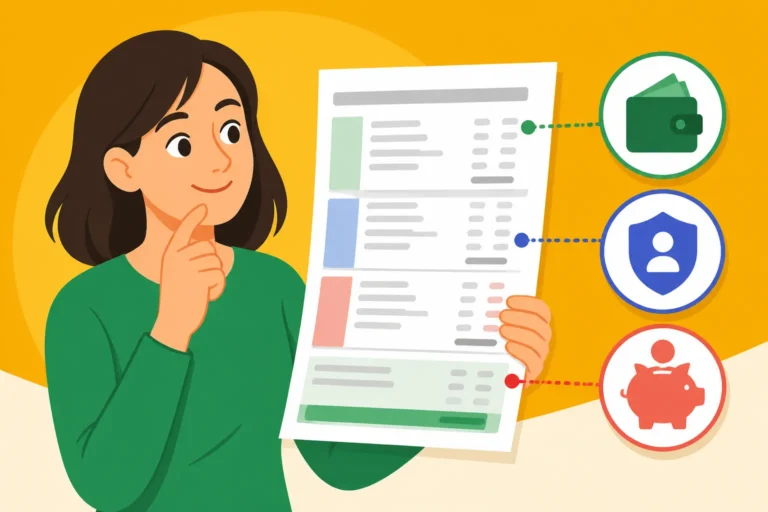
Understanding where your money goes during an international transfer is crucial. It's not just the explicit fees you see; it's often the hidden ones lurking within the exchange rate that really take a bite out of your remittance. Many financial institutions profit not just from the service fee they charge, but also from the difference between the true market exchange rate and the rate they offer you. This can be a substantial sum, particularly for larger transfers or frequent remittances.
Decoding Transfer Fees and Commission Structures
When you initiate a transfer from your German bank, you'll almost certainly be slapped with an upfront transfer fee. This fee can vary widely, from a flat rate of a few euros to a percentage of the total amount sent. But the fees often don't stop there. Depending on the banks involved and the network used (like SWIFT), there might be additional "correspondent bank" or "intermediary bank" charges. These are fees levied by other banks that help facilitate the transfer, and they can deduct money from your transfer without prior notice, leaving your recipient surprised by a smaller-than-expected sum. For example, sending 500 EUR from a major German bank to the Philippines might incur a 15-25 EUR transfer fee, plus potential hidden fees in the exchange rate, and sometimes another receiving fee on the Philippine side. The same applies to transfers to Vietnam. It's a frustrating maze where transparency is often an afterthought.
The Sneaky Impact of Exchange Rate Markups
This is where many traditional services really make their money, often without you even realizing it. The "mid-market rate" or "interbank rate" is the true exchange rate – the midpoint between what buyers and sellers are willing to pay for a currency. It's the rate you'd see on Google or Reuters. However, most banks and some traditional money transfer operators don't give you this rate. Instead, they add a markup, selling you the foreign currency at a higher price than they bought it for. This difference, often a percentage point or two, is pure profit for them. For instance, if the true rate is 1 EUR = 60 PHP, a bank might offer you 1 EUR = 59 PHP. For every 1,000 EUR you send, that's 1,000 PHP (around 17 EUR) you're losing before any explicit fees. Over time, these small differences accumulate into significant losses for expats. Understanding this dynamic is key to truly comparing different services, and it’s why just looking at the upfront fee isn't enough. Learning about these nuances can help you make more informed financial decisions, not just for transfers but for all your Money Matters in Germany: Complete Financial Guide for Expats.
Why Speed Matters And How It Costs You
Beyond the financial implications, the speed of your transfer holds significant weight. For urgent needs like medical expenses, tuition deadlines, or unexpected emergencies, waiting days for a traditional bank transfer to clear can be agonizing. Imagine your family in the Philippines needing money for an immediate hospital visit, and you're told the transfer will take 3-5 business days. This delay isn't just inconvenient; it can have real, detrimental consequences. The slowness of traditional systems often comes from their reliance on older, more complex banking networks that involve multiple intermediaries, each adding their own processing time. While some traditional services offer "express" options, these usually come with an even higher premium, forcing you to pay more for speed that should arguably be standard in today's digital age. For a broader understanding of how your financial decisions impact your overall budget, you might want to read our guide on the Cost of Living in Germany: Budgeting Guide for Expats.
Wise: Your Transparent Bridge from Germany to the Philippines and Vietnam
After years of dealing with the headaches of international transfers, many expats, including myself, have found a true ally in Wise (formerly TransferWise). It's a service designed specifically to tackle the pain points we've just discussed, making it my go-to for sending money from Germany to places like the Philippines and Vietnam. Wise isn't just another money transfer company; it's built on a principle of transparency and fairness, striving to give you the most bang for your buck, every single time.
The Wise Difference: Mid-Market Rates and Low Fees
What sets Wise apart is its commitment to using the real mid-market exchange rate. They don't hide any markups in the exchange rate, which is a massive relief for anyone who's felt shortchanged by traditional banks. Instead, they charge a small, upfront fee that is clearly displayed before you confirm your transfer. This fee is often a combination of a fixed amount and a small percentage of the transferred sum, and crucially, it's significantly lower than what you'd typically pay through traditional channels.
For example, if you send 500 EUR to the Philippines or Vietnam with Wise, you'll see the exact fee and the exact exchange rate (the mid-market rate) right away. This means no nasty surprises for you or your recipient. Their system works by having local bank accounts in various countries. So, when you send money from Germany, you transfer euros to Wise's German account. Then, Wise sends the equivalent amount in Philippine Pesos or Vietnamese Dong from their local account in the Philippines or Vietnam to your recipient. It bypasses the slow, expensive international SWIFT network, making it faster and cheaper. This innovative approach to currency exchange saves expats a considerable amount of money over time, ensuring more of your hard-earned cash actually reaches your family. For more general advice on sending money abroad, our article on Transferring Money Internationally: Cheapest Ways to Send Money Abroad offers additional perspectives.
How Wise Makes International Transfers Seamless
Beyond the financial benefits, Wise prioritizes user experience, which is a breath of fresh air after navigating Germany's sometimes complex bureaucracy. The process of setting up an account and initiating a transfer is straightforward, even if your German isn't perfect. You can do everything online or through their intuitive mobile app.
Here’s a typical flow for sending money to the Philippines or Vietnam with Wise:
- Set Up Your Transfer: You simply enter the amount you want to send in EUR and select the recipient currency (PHP or VND). Wise immediately shows you the exact exchange rate, the transfer fee, and how much your recipient will receive. This upfront transparency is truly liberating.
- Add Recipient Details: You’ll need the recipient’s bank account details (bank name, account number, full name). For the Philippines, this often includes major banks like BDO, BPI, Metrobank, or GCash details for mobile wallets. For Vietnam, it could be Vietcombank, Techcombank, or similar.
- Verify Your Identity (if it's your first time): For regulatory reasons, Wise, like all financial institutions, requires identity verification, which is typically a quick process involving uploading a photo ID and sometimes a proof of address. This is a one-time step that ensures security and compliance.
- Pay for Your Transfer: You have several options to fund your transfer from Germany, including bank transfer (Überweisung), debit card, or credit card. Paying via bank transfer is usually the cheapest, though a card payment can be faster.
- Track Your Transfer: Once the transfer is initiated, you receive regular updates via email or through the app, so you always know where your money is. This real-time tracking gives peace of mind, especially when sending money for urgent needs.
The entire process is designed for maximum efficiency and minimum fuss, cutting down on the time and stress often associated with international remittances. If you’re just starting your financial journey in Germany, our guide on Opening a Bank Account in Germany: Step-by-Step for Newcomers might be helpful before you start making transfers.
Real-World Savings and Speed for Your Family Back Home
The real impact of using Wise becomes evident when you see the tangible benefits for your loved ones. What might have been a 5 EUR transfer fee plus a hidden 2% exchange rate markup with a traditional bank could translate into a much lower, transparent fee with Wise, often under 1% of the transfer amount, while always guaranteeing the mid-market rate. This means more pesos or dong in your family's hands.
Let's illustrate with a hypothetical scenario:
Sending 1,000 EUR from Germany to the Philippines
| Service | Exchange Rate (Example) | Transfer Fee (Example) | Total EUR Cost | PHP Received (Approx.) | Speed (Business Days) |
|---|---|---|---|---|---|
| Wise | 1 EUR = 60.00 PHP | 5.50 EUR | 1,005.50 EUR | 59,670 PHP | 0-1 |
| Traditional Bank | 1 EUR = 59.00 PHP | 15.00 EUR | 1,015.00 EUR | 57,640 PHP | 3-5 |
| Traditional MTO* | 1 EUR = 59.20 PHP | 10.00 EUR | 1,010.00 EUR | 58,580 PHP | 1-3 |
*Money Transfer Operator (e.g., Western Union online rates can vary widely)
Disclaimer: These are simplified examples for illustrative purposes. Actual fees and exchange rates fluctuate and vary by provider and exact transfer details. Always check the current rates and fees before sending money.
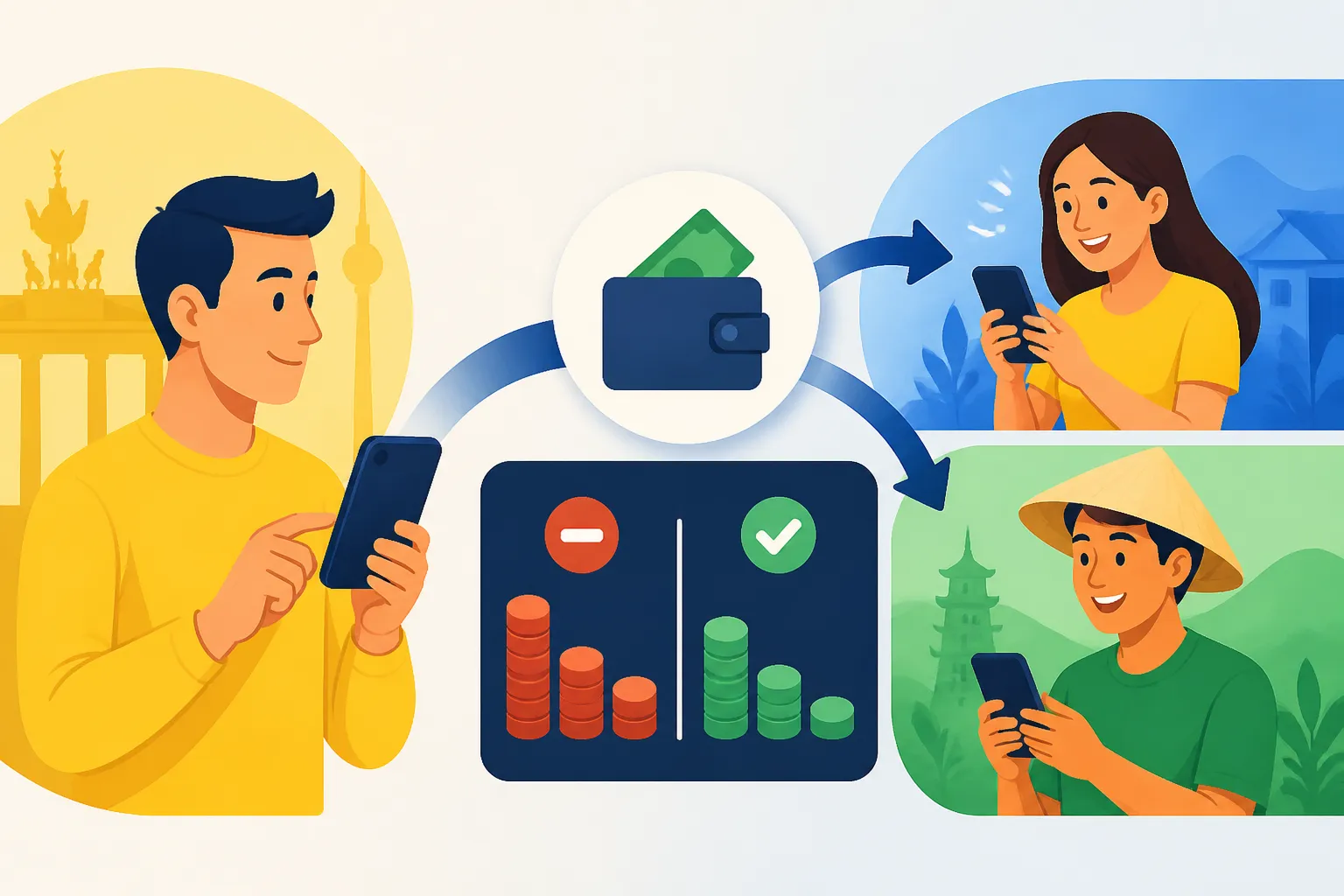
As you can see from this simplified table, the difference can be substantial. With Wise, your family receives significantly more money, and often much faster. Many transfers arrive within hours, sometimes even minutes, depending on the recipient bank and local processing times. This speed is invaluable for maintaining peace of mind and responding to immediate needs. When you're managing your budget as an expat, every euro saved on fees means more money for your family or for your own cost of living in Germany. For tips on smart budgeting, check out our guide on Budgeting for Life in Germany: Tips to Save Money as an Expat.
Beyond Wise: Comparing Other Options for Sending Money Abroad
While Wise is my strong recommendation, it's important to understand the landscape of other options available for sending money from Germany to the Philippines and Vietnam. Each comes with its own set of pros and cons, and knowing these can help you appreciate why Wise stands out. It's about making an informed decision, rather than just going with the first option that comes to mind.
Traditional Banks vs. Modern Money Transfer Services
As we've touched upon, traditional German banks like Sparkasse, Deutsche Bank, or Commerzbank, while providing familiar and seemingly secure channels, often charge higher fees and offer less favorable exchange rates for international transfers. Their primary business isn't international remittance, so their infrastructure and pricing reflect that. They are often slower because they rely on the complex SWIFT network, which can involve multiple intermediary banks, each potentially taking a cut.
On the other hand, several modern money transfer services have emerged to challenge the traditional banking model. Companies like Remitly, WorldRemit, and even PayPal (though often pricier for international transfers) cater specifically to the need for faster, more affordable cross-border payments. These services typically offer various payout options, including bank deposits, cash pickup, and mobile wallet transfers, which can be particularly convenient for recipients in the Philippines (e.g., GCash, PayMaya) or Vietnam. While these can be better than traditional banks, it's crucial to always compare their exchange rates and fees diligently against the mid-market rate offered by Wise. Many still add a margin to the exchange rate, or have tiered fees that can get confusing.
When you receive your monthly Understanding Your German Payslip: Gross vs Net Salary Explained, you see how much you earn. Don't let unnecessary fees erode it when sending it home.
Understanding Different Payment Methods and Their Costs
The method you choose to fund your transfer and how your recipient receives the money can also impact the overall cost and speed.
- Bank Transfers (Überweisung) from Germany: This is a common way to pay for a transfer with services like Wise. It's usually the cheapest funding option because banks charge minimal (or no) fees for domestic transfers within Germany. The downside is that it might take an extra day for the funds to clear from your bank account to the transfer service.
- Debit/Credit Card Payments: Paying with a debit or credit card is almost instant, making it the fastest way to fund a transfer. However, it often comes with a slightly higher fee, as the transfer service incurs processing charges from card networks. If speed is your absolute top priority and the amount is small, this might be a viable option, but for larger, regular transfers, the fees can add up.
- Cash Pickup Services (e.g., Western Union, MoneyGram): These services are still prevalent, especially for those without bank accounts. They offer immediate cash availability for recipients, which can be critical in emergencies. However, they almost always come with higher fees and significantly worse exchange rates compared to online-only services like Wise. This convenience often comes at a steep financial cost.
- Mobile Wallets (e.g., GCash in the Philippines): Many modern transfer services, including Wise, allow direct transfers to mobile wallets. This is incredibly convenient in countries where mobile banking is widespread. These transfers are often instant and cost-effective, bypassing traditional bank accounts entirely.
When you're trying to How to Pay Rent and Bills in Germany: Banking Tips for Expats, you quickly learn about payment efficiency. The same principle applies to international transfers: choosing the right method can save you time and money. Always check the fees for both sending and receiving, and scrutinize the exchange rate. Don't just look at the advertised transfer fee; do the math to see how many PHP or VND your recipient will actually get.
Making Smart Choices: Tips for Regular International Transfers
Navigating international transfers as an expat in Germany can be tricky, but armed with the right knowledge and tools, it doesn't have to be a constant source of worry. The goal is to maximize the value of every euro you send home, ensuring your family receives as much as possible.
Always Compare Before You Commit
This is the golden rule of international money transfers. Before you hit "send," take a moment to compare at least two or three services. Use their online calculators to see the exact amount your recipient will receive for a given amount, factoring in both fees and the exchange rate. Don't just look at the fee; the exchange rate is often where the biggest difference lies. Services like Wise make this easy by showing you the mid-market rate upfront and clearly stating their fees, allowing for transparent comparison. Remember, what looks like a low fee might hide a terrible exchange rate, effectively costing you more. Keeping track of your bank statements is also important, and you can learn how to do that in our guide on Understanding German Bank Statements: Fees and Transactions Explained.
Batch Transfers for Better Value
If you send money home regularly, consider batching your transfers. Sending larger sums less frequently can often result in lower percentage-based fees compared to sending small amounts very often. For example, sending 500 EUR once a month might be more cost-effective than sending 125 EUR every week, as many services have a fixed component to their fees. This strategy requires a bit of planning and budgeting, but the savings can add up over a year.
Keep an Eye on Exchange Rate Fluctuations
Currency exchange rates are dynamic and can change throughout the day, even minute by minute. While you can't predict the market perfectly, being aware of general trends can sometimes allow you to time your transfers for a slightly better rate. Services like Wise often allow you to set up rate alerts, notifying you when the EUR to PHP or EUR to VND rate hits a certain point. This can be a useful tool for optimizing your transfers, especially for non-urgent funds. Just remember, don't let the pursuit of a perfect rate delay truly urgent transfers.
Secure Your Transfers and Watch for Scams
Finally, always prioritize security. Only use reputable, regulated money transfer services. Wise, for example, is regulated by financial authorities in numerous countries, including Germany's BaFin, ensuring your money is protected. Be extremely wary of unsolicited emails, calls, or messages asking for personal financial information or requesting you to send money to unfamiliar accounts. International money transfer scams are unfortunately common, often targeting vulnerable expats. Always double-check recipient details and never share your login credentials or card information with anyone. Staying informed about potential threats is part of being financially savvy; check out our guide on Financial Scams to Watch Out for in Germany: How to Protect Your Money for more detailed warnings. By following these tips and leveraging transparent services like Wise, you can manage your remittances efficiently and securely, ensuring your financial support reaches your family without unnecessary burdens.
Disclaimer
The information provided in this article is for general guidance and informational purposes only, and does not constitute financial, legal, or professional advice. While we strive to keep the information up-to-date and correct, we make no representations or warranties of any kind, express or implied, about the completeness, accuracy, reliability, suitability, or availability with respect to the website or the information, products, services, or related graphics contained on the website for any purpose. Any reliance you place on such information is therefore strictly at your own risk. Always consult with a qualified professional for advice tailored to your specific situation. Fees and exchange rates for money transfer services are subject to change and should be verified with the service provider directly before making any transaction.