Transferring Money Internationally: Cheapest Ways to Send Money Abroad
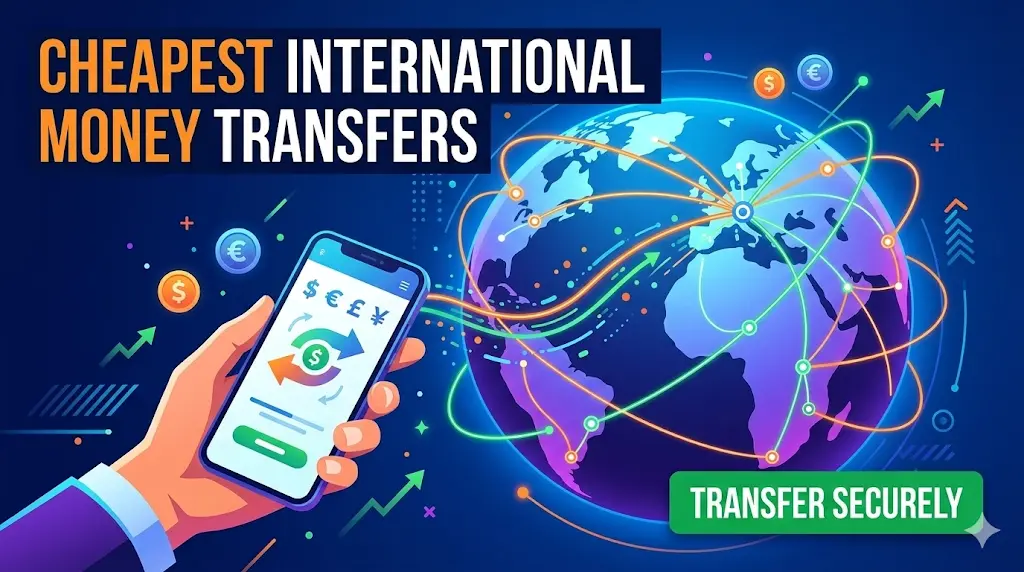
Sending money across borders from Germany doesn’t have to drain your savings. This comprehensive expat guide breaks down hidden bank fees, explores the most cost-effective digital transfer platforms, and provides actionable strategies to keep your international remittances affordable and secure.
Disclosure: This post may contain affiliate links. We may earn a commission at no extra cost to you if you make a purchase through these links. Read full disclosure.
Understanding the True Cost of International Transfers
When expats first relocate to Germany, managing finances across two or more countries becomes an immediate reality. Whether you are paying off a student loan back home, supporting family members, or transferring savings to fund a new life in Europe, understanding how international money transfers are priced is your first line of defense against exorbitant fees.
The Hidden Fees of Exchange Rate Markups
The most significant cost of transferring money internationally is rarely advertised upfront. Traditional financial institutions and legacy money transfer operators often promote “zero fee” or “commission-free” transfers to lure customers. However, they generate massive profits by manipulating the exchange rate, creating a hidden markup that eats directly into your capital.
The true benchmark for currency exchange is the mid-market rate, also known as the interbank rate. This is the rate banks use to trade money with one another, and it is the exact figure you see when you search for an exchange rate on Google or financial news sites. When a retail bank or traditional provider processes your transfer, they usually offer you a rate that is 1% to 5% worse than the actual mid-market rate.
For small transfers, a 3% markup might only cost you a few euros. But if you are transferring the deposit for an apartment or repatriating years of savings, that hidden margin can cost you hundreds or even thousands of euros. As an expat, your primary financial objective must be to find providers who transparently offer the real mid-market rate rather than burying their profit margins in inflated exchange rates.
SWIFT Network Charges and Correspondent Banks
If you initiate an international transfer outside of Europe using a traditional bank, the transaction will almost certainly rely on the SWIFT network. SWIFT (Society for Worldwide Interbank Financial Telecommunication) is a highly secure messaging system that banks use to securely transmit information and instructions. However, SWIFT was designed decades ago and operates much like a relay race.
Because your local German bank likely does not have a direct relationship with your receiving bank in the United States, India, or Australia, the money must bounce through one to three “correspondent” or “intermediary” banks. Every time your money touches an intermediary bank along the SWIFT chain, that bank takes a cut, usually ranging from 10 to 30 EUR per hop.
These correspondent fees are incredibly frustrating because your German bank often cannot predict them in advance. You might send 1,000 EUR and pay a 15 EUR upfront fee to your local branch, only for the recipient to receive 940 EUR equivalent because intermediary banks siphoned off 45 EUR in transit. Avoiding the SWIFT network entirely by using localized peer-to-peer payout networks is one of the most effective ways to lower your transfer costs.
Fixed Fees Versus Percentage Costs
When comparing different money transfer services, you must analyze their fee structures carefully to match them to your specific transfer size. Providers typically charge a combination of a flat fixed fee and a variable percentage-based fee. Understanding where the breakeven points lie will dictate which service you should use for different scenarios.
A fixed fee is a set amount charged regardless of how much money you send. For example, a bank might charge a flat 15 EUR fee for an international wire. If you are only sending 100 EUR, a 15 EUR fixed fee represents a catastrophic 15% loss. However, if you are sending 10,000 EUR, that same 15 EUR flat fee becomes a negligible 0.15% expense.
Conversely, percentage-based fees scale with the size of your transaction. Modern digital platforms often charge a small percentage, such as 0.5% of the total transfer volume. This makes them incredibly cost-effective for smaller, day-to-day remittances. However, for massive, six-figure transactions, a percentage-based fee can sometimes outweigh a traditional bank’s flat wire fee, provided the bank also gives you a highly negotiated, premium exchange rate.
Traditional German Banks for International Transfers
Upon arriving in the country and Opening a Bank Account in Germany, your first instinct might be to use your newly acquired local Girokonto to handle all your international financial obligations. While traditional banks offer familiarity and security, their cross-border payment systems are often outdated and expensive.
How High Street Banks Process Global Payments
Traditional German high street banks, such as Deutsche Bank, Commerzbank, or the regional Sparkassen, process international non-Euro transfers using the legacy SWIFT system. To execute a transfer, you typically need to visit a branch in person or navigate a complex online banking portal, providing the recipient’s full name, physical address, account number, and their bank’s BIC/SWIFT code.
The process is inherently slow. Because the transfer requires manual batch processing and must clear through multiple intermediary banks across different time zones, a standard international wire can easily take anywhere from three to seven business days to arrive. If any information is entered incorrectly, the payment can be stalled in a correspondent bank for weeks before being returned, often minus the processing fees.
Furthermore, traditional banks operate with massive overhead costs—physical branches, extensive staffing, and legacy IT systems. To subsidize these costs, their international transfer departments operate as major profit centers. They capitalize on the fact that many consumers value the perceived safety of a brick-and-mortar institution and are willing to pay inflated margins for cross-border services.
Pros and Cons of Using Your Local Girokonto
The primary advantage of using your traditional German bank account for international transfers is convenience. You do not need to sign up for third-party services, undergo additional identity verification, or learn a new software interface. The funds are drawn directly from the account where your salary is deposited, making the initial setup seamless.
Additionally, for extraordinarily large transfers—such as buying property abroad or repatriating an inheritance—some high-net-worth individuals prefer using their primary bank. If you have an assigned private banker, you can sometimes negotiate the exchange rate markup down to a competitive level for six-figure sums, and the SWIFT network’s absolute reliability provides peace of mind for massive transactions.
However, the cons heavily outweigh the pros for the average expat making regular, moderately sized transfers. The combination of high upfront fees, unpredictable intermediary bank deductions, terrible exchange rate markups, and slow processing times makes traditional German banks the most expensive and inefficient way to move money internationally.
SEPA Transfers Within the European Union
It is crucial to differentiate between global international transfers and transfers made within the European Union. If you are sending euros from your German bank account to another account within the Single Euro Payments Area, the rules change entirely. SEPA was designed by the European Central Bank to make cross-border electronic payments as fast, secure, and inexpensive as domestic transfers.
Under EU regulations, a SEPA credit transfer must cost exactly the same as a domestic transfer. Since domestic transfers are almost universally free with German checking accounts, sending money to France, Italy, or Spain will cost you nothing. Furthermore, SEPA transfers are incredibly fast, typically arriving by the next business day.
The SEPA network has also introduced SEPA Instant Credit Transfers. If both your German bank and the receiving European bank support the instant scheme, the funds will arrive in the recipient’s account within ten seconds, 24 hours a day, 365 days a year. Therefore, if your financial life is strictly contained within the Eurozone, your standard German bank account is perfectly adequate and highly efficient.
| Transfer Method | Average Processing Time | Exchange Rate Quality | Hidden Intermediary Fees | Best Use Case |
| Traditional German Bank | 3 – 7 Business Days | Poor (High Markup) | Yes (SWIFT network) | Extremely large, negotiated transfers |
| Digital FinTech Platform | Minutes to 2 Days | Excellent (Mid-Market) | No (Local payout networks) | Regular expat remittances and salary transfers |
| SEPA Transfer (EU Only) | Instant to 1 Business Day | N/A (Euro to Euro) | No | Paying bills or friends within the Eurozone |
| Cash Transfer Operators | Minutes | Very Poor (Highest Markup) | No | Emergency cash pickups for unbanked recipients |
Modern Digital Platforms and FinTech Solutions
The frustration with expensive legacy banking has given rise to a booming financial technology sector. Over the past decade, digital platforms have completely revolutionized the remittance industry, forcing transparency and driving down costs for expats globally.
The Rise of Peer to Peer Transfer Services
Modern digital platforms operate on a fundamentally different infrastructure than traditional banks. Instead of sending money across borders via the clunky SWIFT network, they utilize a localized peer-to-peer model. Providers maintain their own localized bank accounts in dozens of countries worldwide.
When you want to send Euros from Germany to the UK, you simply make a local domestic transfer into the provider’s German bank account. The provider’s software then instantly instructs its UK bank account to pay out the equivalent amount in British Pounds directly to your recipient. The money never actually crosses a border, bypassing the SWIFT network and its associated intermediary fees entirely.
This elegant system allows platforms like Wise to offer incredibly fast, often instant, international transfers at a fraction of the cost of a traditional bank. Because they operate with lower overhead and rely on algorithmic localized payouts, they can afford to give you the real mid-market exchange rate, charging only a small, fully transparent upfront percentage fee so you know exactly what your recipient will get.
Integrating Multi Currency Accounts for Expats
For expats, freelancers, and digital nomads, simply sending money is often not enough; you need to actively hold and manage multiple currencies. This is where modern digital banking platforms excel, offering multi-currency accounts that traditional German banks simply cannot provide without charging exorbitant maintenance fees.
By utilizing an agile, digital-first bank like N26, you benefit from a system designed specifically for the mobile European lifestyle. Their premium tiers often integrate seamlessly with third-party currency exchange APIs, allowing you to manage your budget and execute low-cost international transfers directly from your primary mobile banking app without needing to open secondary brokerage accounts.
Furthermore, having a platform that issues a universally accepted Visa or Mastercard debit card with zero foreign transaction fees is a game-changer. It allows you to spend your euros seamlessly when traveling back home or vacationing outside the Eurozone, calculating the conversion at the Mastercard interbank rate rather than penalizing you with the standard 2% markup levied by most traditional German Girocards.
Security and Regulation of Digital Providers
A common concern among expats transitioning away from legacy banks is the safety of their funds with digital-only platforms. It is crucial to understand that reputable financial technology companies operate under the exact same stringent regulatory frameworks as traditional brick-and-mortar institutions.
In Germany, financial operations are heavily monitored by the Federal Financial Supervisory Authority. This regulatory body ensures that digital providers adhere to strict anti-money laundering protocols, maintain robust cybersecurity defenses, and undergo regular independent audits. Before using any transfer service, you should verify their regulatory status at the bottom of their homepage to ensure they are licensed to operate within the European Economic Area.
To protect consumer funds, regulated electronic money institutions are legally required to practice “safeguarding.” This means they cannot use customer deposits to issue loans or fund their own operational investments, a practice known as fractional reserve banking that traditional banks use. Your transferred funds must be held in segregated, protected accounts at tier-one banking institutions, ensuring that even if the digital provider were to go bankrupt, your money would be completely safe and returned to you.
Specialized Solutions for Large Transfers and Investments
While digital peer-to-peer platforms are perfect for monthly remittances, moving massive sums of money requires specialized knowledge. Whether you are funding a real estate purchase or consolidating global retirement accounts, large transactions trigger unique logistical and tax challenges.
Moving Savings for Real Estate and Relocation
If you are planning on Buying Property in Germany and need to transfer your down payment from a foreign country, a standard retail transfer platform might impose daily or monthly sending limits. Furthermore, when dealing with sums exceeding 50,000 EUR, even a fractional difference in the exchange rate translates to a massive financial swing.
For these major life events, utilizing a specialized FX (foreign exchange) brokerage is highly recommended. These firms cater specifically to high-value transfers. Unlike automated consumer apps, they assign you a dedicated currency broker who can guide you through the process, help you navigate compliance documentation, and execute the trade when market conditions are most favorable.
Specialized brokerages also offer advanced hedging tools like forward contracts. A forward contract allows you to lock in today’s exchange rate for a transfer that will take place months in the future. If you have signed a property contract but the closing date is six months away, a forward contract protects your budget from a sudden, unfavorable currency swing, ensuring you don’t fall short of your required euro amount at the notary appointment.
Managing Expat Investments and Brokerage Transfers
Many expats maintain robust investment portfolios in their home countries. Relocating to Germany complicates this, as European financial regulations often restrict domestic banks from easily interfacing with non-EU brokerages. Attempting to fund an overseas investment account using a standard German bank wire is inefficient and expensive.
To maintain a globally diversified portfolio without bleeding capital on conversion fees, expats should look to international brokerage platforms that offer native multi-currency support. A platform like Interactive Brokers allows you to deposit euros via a free SEPA transfer, convert those euros to US Dollars or British Pounds at institutional-grade, near-zero spread exchange rates, and immediately deploy that capital into global equity markets.
This infrastructure is infinitely superior to paying retail currency conversion fees. Furthermore, using a globally recognized brokerage ensures that if your career eventually takes you away from Germany to a third country, you can maintain your investment portfolio without the massive administrative headache and potential tax triggers of having to liquidate and transfer a localized German securities account.
Navigating Tax Implications of Large Remittances
A crucial, often overlooked aspect of international money transfers is taxation. Transferring your own post-tax savings between your international bank accounts does not trigger an income tax event in Germany. However, if you are transferring large sums to family members, or receiving money from relatives abroad to help buy a house, you must navigate the complex German gift tax regulations.
According to the Federal Central Tax Office, individuals residing in Germany are subject to taxation on their worldwide assets, which includes receiving large financial gifts from abroad. The tax-free allowances depend entirely on the familial relationship. Spouses can gift each other up to 500,000 EUR tax-free every ten years, and parents can gift children up to 400,000 EUR.
However, if you are transferring money to a sibling, a friend, or an unmarried partner, the tax-free allowance plummets to a mere 20,000 EUR over a ten-year period. Any amount transferred above that threshold is subject to steep gift taxes. Always consult with a certified German tax advisor before executing a massive international transfer to a third party to ensure you remain compliant and optimize your tax exposure.
Practical Strategies to Minimize Transfer Costs
Beyond choosing the right platform, your personal transfer habits dictate how much money you ultimately save. By implementing a few strategic practices, you can shield your remittances from market volatility and digital security threats.
Timing Your Transfers With Market Fluctuations
Currency markets are highly volatile, reacting constantly to geopolitical events, central bank interest rate decisions, and global inflation data. If you blindly transfer a large sum of money on the first of the month without looking at the exchange rate, you might inadvertently execute your trade on the worst possible day of the quarter.
While timing the market perfectly is impossible, expats should develop a basic awareness of macroeconomic trends affecting their currency pairs. Utilize financial news apps to set up custom rate alerts. These alerts notify you via push notification or email when your desired currency pair hits a specific target rate.
If you have the luxury of time, holding your funds in a multi-currency account allows you to wait out temporary dips in the market. When the exchange rate swings in your favor, you can execute the conversion instantly. For smaller, regular transfers, setting up rate alerts ensures you capture the best possible value for your hard-earned euros.
Setting Up Automated Recurring Payments
Human error and forgetfulness are the enemies of efficient budgeting. If you manually initiate your international transfers every month, you are susceptible to forgetting deadlines, panicking, and potentially using a faster but vastly more expensive transfer method to ensure a mortgage or loan payment clears on time.
Automation is the key to financial peace of mind. Both modern digital banks like N26 and specialized transfer platforms like Wise offer highly reliable automated recurring payment features. You can set up a standing order to automatically convert and send a specific amount of money on the day after your German salary arrives.
Automating these payments utilizes the principle of dollar-cost averaging. Because you are converting money on the same day every month regardless of the exact exchange rate, the highs and lows of the currency market average out over the course of a year. This minimizes your risk of executing all your transfers during a prolonged market dip, creating a predictable, stress-free international budget. To optimize your broader financial life, check out our guide on Cost of Living in Germany.
Conclusion
Expats are highly mobile individuals. You will frequently find yourself managing your international transfers, checking brokerage accounts, and paying bills while connected to public Wi-Fi networks in airports, hotels, and cafes across Europe. This mobility exposes you to significant digital security risks.
Public Wi-Fi networks are notoriously insecure, making it relatively easy for malicious actors to intercept your data, capture your banking passwords, or monitor your financial transactions. The cost of a compromised bank account far outweighs the fees of any international transfer.
To secure your cross-border financial life, utilizing a Virtual Private Network is an absolute necessity. By running your mobile connection through a premium service like NordVPN, you encrypt all data passing between your device and your financial institution’s servers. This creates a secure, impenetrable tunnel that shields your sensitive information, ensuring that you can manage your international wealth safely from anywhere in the world.
References
Primary sources (official)
- Federal Ministry of Justice (BMJ): Legal framework governing the “Payment Accounts Act” (Zahlungskontengesetz), which guarantees every resident the right to a basic bank account. https://www.gesetze-im-internet.de/zkg/index.html
- Deutsche Bundesbank: Detailed statistics and descriptions of the German payment landscape, SEPA integration, and the role of the Girocard. https://www.bundesbank.de/en/tasks/payment-systems
Other helpful sources
- Make it in Germany: The official government portal for international professionals, offering a comprehensive step-by-step checklist for opening a bank account in Germany. https://www.make-it-in-germany.com/en/living-in-germany/money-insurance/bank-account
Disclaimer
The information provided in this article is for educational and informational purposes only and does not constitute financial, investment, tax, or legal advice. Exchange rates are highly volatile, and the fees charged by banks and transfer platforms are subject to frequent changes. Always independently verify the total cost of a transfer—including all markup margins and fixed fees—directly with the provider before executing a transaction. We assume no liability for any financial losses or tax implications resulting from the decisions made based on the contents of this guide.