Gift Taxes in Germany: If You Receive Money or Assets from Abroad
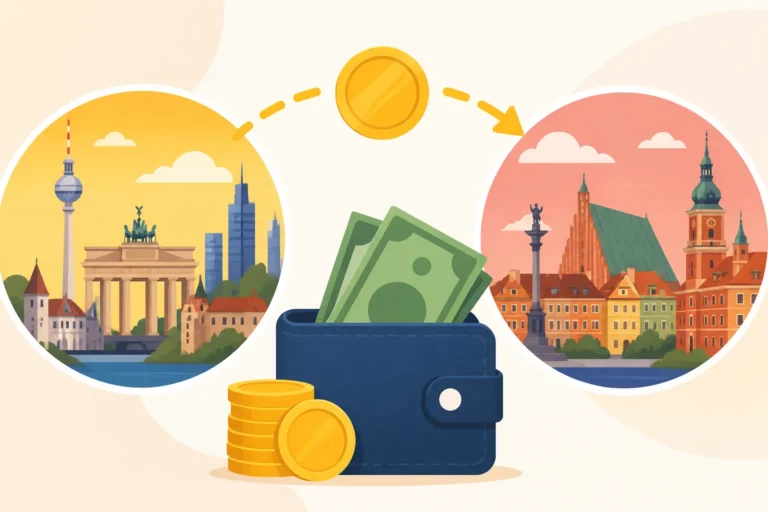
Receiving a generous cash gift from your parents back home is wonderful until you realize the German tax office wants a massive cut. I spent weeks in a sheer panic after my family wired me money for an apartment down payment, convinced I had accidentally committed tax evasion. This guide explains German gift tax allowances, reporting deadlines, and cross-border transfers.
Disclosure: This post may contain affiliate links. We may earn a commission at no extra cost to you if you make a purchase through these links. Read full disclosure.
The Trap of Unlimited Tax Liability for Expats
When you relocate to Germany, you do not just bring your luggage; you bring your entire global financial footprint into the local tax system. Assuming your home country’s rules still protect your wealth is the fastest way to trigger a devastating and highly expensive audit.
Donor vs Recipient Residency Rules
In Germany, gift tax (Schenkungsteuer) is triggered if either the donor or the recipient is a German tax resident at the time of the transfer. If you live, work, and are registered in Germany, you possess unlimited tax liability. This means if your parents in the United States, the United Kingdom, or Australia wire you a large sum of money, it is fully subject to the German gift tax system, completely regardless of where the money originated or the tax laws of your native country.
Many expats mistakenly believe they can shield the gift simply by having it deposited into a foreign checking account that they keep off the local books. The German state taxes the financial enrichment of its residents, not just the money that physically crosses its borders. If you receive the gift in an offshore account while living in Berlin or Munich, the liability is exactly the same. Understanding how your physical residency permanently locks you into these strict local rules is critical, a concept explored deeply in Taxing Worldwide Income: How Germany Taxes Foreign Income and Assets.
The Illusion of Double Taxation Protection
Naturally, expats panic about being taxed twice—once by the country where the money originated and once by Germany. Germany has double taxation treaties regarding inheritance and gift taxes with only a handful of countries (most notably the United States, France, and Switzerland).
Even with a treaty in place, the administrative burden of proving that foreign gift taxes were already paid falls entirely on your shoulders. The German tax authority (Finanzamt) does not automatically communicate with foreign tax authorities to verify your claims. If a massive, unexplained capital inflow triggers a money laundering flag at your bank, you will be forced to prove the origin and tax status of every single euro. Properly documenting these large financial injections to avoid suspicion is a bureaucratic hurdle thoroughly outlined in Moving Money to Germany: Declaring Savings and Large Transfers.

Understanding Tax Allowances and the Ten-Year Rule
Unlike the extremely high lifetime exclusion limits in places like the United States, Germany has a much stricter, highly categorized threshold for tax-free gifts. The amount you can receive without paying tax depends entirely on your exact legal and biological relationship to the donor.
The Familial Allowances and Tax Classes
The German government provides specific tax-free allowances (Freibeträge) based on assigned tax classes. Spouses and children receive the highest exemptions, while unmarried partners, distant relatives, and lifelong friends are treated brutally by the tax code.
| Relationship to Donor | Tax-Free Allowance | German Tax Class |
| Spouse or Registered Civil Partner | 500,000 EUR | Class I |
| Child or Stepchild | 400,000 EUR | Class I |
| Grandchild | 200,000 EUR | Class I |
| Parent or Grandparent | 20,000 EUR | Class II |
| Sibling, Niece, or Nephew | 20,000 EUR | Class II |
| Unmarried Partner or Friend | 20,000 EUR | Class III |
To maximize these allowances, it is crucial to understand that they apply per donor. For example, the 400,000 EUR allowance for a child applies to each parent individually. This means a mother can gift her child 400,000 EUR, and the father can separately gift the same child another 400,000 EUR, resulting in 800,000 EUR of entirely tax-free capital.
The Unmarried Partner Real Estate Trap
The most devastating trap for international residents involves unmarried couples pooling their finances. Because unmarried partners fall into Tax Class III, their allowance is a shockingly low 20,000 EUR, and any amount exceeding that is taxed at a staggering base rate of 30 percent.
If an unmarried expat couple decides to buy an apartment in Germany, and Partner A transfers 100,000 EUR from their personal savings to Partner B to cover a shared down payment, the German state views that as an 80,000 EUR taxable gift to Partner B. Partner B would instantly owe the Finanzamt 24,000 EUR in pure gift tax. This easily avoidable disaster highlights why aligning your relationship status with your financial goals is just as important as managing your Cost of Living in Germany: Breakdown of Expenses (Rent, Food, Transport).
The Ten-Year Renewal Cycle
The absolute silver lining of the German system is that these allowances are not strict lifetime limits. The tax-free allowance fully renews every ten years.
If your parents gift you 400,000 EUR today, they can gift you another 400,000 EUR entirely tax-free exactly ten years and one day from now. If your relatives plan to support you long-term or wish to pass down an inheritance early to avoid heavy death duties, spreading the gifts over multiple decades is the ultimate strategy to legally bypass the tax. Strategizing these long-term financial injections prevents nasty surprises when the government calculates your final Understanding Your Tax Assessment (Steuerbescheid): After You File in Germany.
The Strict Three-Month Reporting Deadline
The most dangerous expat mistake is assuming that because a gift is under the tax-free allowance limit, the tax office does not need to know about it. The German bureaucracy operates on a system of absolute disclosure, and silence is penalized.
The Mandatory Notification (Anzeigepflicht)
Under Section 30 of the German Inheritance and Gift Tax Act (ErbStG), you are legally required to report any gift to the tax office within three months of receiving it. Even if your parents send you 50,000 EUR and it is perfectly shielded by your 400,000 EUR child allowance, failing to report the transfer within 90 days is a direct violation of tax law. Both the donor and the recipient are technically required to report it, but if the donor lives abroad, the burden falls entirely on you as the German resident.
You must submit an informal letter to your local Finanzamt to fulfill this obligation. This letter must explicitly state the first and last names of both parties, the exact current addresses of both parties, your German tax identification numbers, your precise legal relationship to the donor, the exact amount or value of the asset gifted, and the date the transfer occurred. Ensuring you do not miss these silent administrative deadlines is just as critical as your initial city registration, a process decoded in German Bureaucracy 101: Understanding the Anmeldung, Schufa, and Tax ID.
What Happens After You Report
Once you mail the notification letter, the Finanzamt will review the facts. If it is blindingly obvious that the gift falls well below your tax-free allowance, they will usually just file the letter away and you will never hear from them.
However, if the gift is close to the limit, involves complex foreign assets like international real estate, or exceeds the threshold, the tax office will mail you a formal request to file a comprehensive gift tax return (Schenkungsteuererklärung). You normally have one month to complete this massive, complex document, which almost always requires the intervention of a certified German tax advisor.
Safely Receiving and Managing Gifted Capital
Once you understand the tax liabilities and reporting rules, you must actually move the capital across international borders. Wiring large gifts using legacy banking infrastructure will destroy a massive percentage of your windfall before it even clears customs.
Bypassing Hidden Bank Fees on International Transfers
If your parents wire 50,000 USD from an American legacy bank to your traditional German savings account, the transfer will automatically route through the archaic SWIFT network. Intermediary banks will arbitrarily shave off routing fees along the way. Worse, the receiving German bank will convert the funds using a proprietary exchange rate that hides a massive 3 to 5 percent markup. You could easily lose over a thousand euros simply to bank greed.
To protect the gift, your family must bypass the legacy banking system entirely. By utilizing Wise, your relatives can transfer the funds into euros at the real, transparent mid-market exchange rate. Wise guarantees the true exchange rate with a tiny upfront fee, ensuring your hard-earned family money arrives completely intact. Safely managing these massive international flows is an essential survival skill explored deeply in Cross-Border Banking: Managing Your Home Country Account While in Germany.
Receiving Funds in a Local Hub
Once the money is cleanly converted to euros, you need a robust digital hub to receive it. Traditional German banks frequently freeze large, unexpected incoming transfers from abroad under the suspicion of money laundering. They will lock your checking account and force you to mail physical proof of the gift’s origin, leaving you stranded without cash for weeks.
Using a modern, mobile-first bank like N26 allows you to receive these converted euros seamlessly. N26 provides instant push notifications, allowing you to verify the funds have arrived safely immediately. You can then quickly segregate the gifted money into dedicated digital sub-accounts using the N26 Spaces feature, completely separating it from your daily operational budget. This ensures your down payment or emergency fund is never accidentally spent on groceries. Managing this localized liquidity safely and keeping your financial ledger perfectly clean is a core concept covered in Mobile Banking Apps in Germany: N26, Revolut, and More and Understanding German Bank Statements: Fees and Transactions Explained.
Investing the Windfall Globally
If you receive a massive financial gift, leaving it to stagnate in a standard German checking account means European inflation will silently destroy its purchasing power year over year. Once the tax office has been officially notified and the funds are secure, you must put the capital to work.
Opening a globally compliant brokerage account with Interactive Brokers allows you to funnel your gifted euros into a highly diversified portfolio of global ETFs. Because Interactive Brokers operates across multiple international jurisdictions and caters to highly mobile expats, you can compound your newfound wealth without trapping it in rigid, domestic German pension products that restrict your geographic mobility. Furthermore, Interactive Brokers generates localized European tax reports, keeping your long-term wealth perfectly compliant with the German state while remaining globally agile. Protecting and growing these windfalls is the hallmark of a savvy expat, a long-term strategy deeply analyzed in Should You Invest in German or International Stocks? Diversifying as an Expat.
References
Primary sources official
- Bundesfinanzministerium (Federal Ministry of Finance): The official government overview detailing the exact tax-free allowances (Freibeträge), tax classes, and the legal ten-year renewal period for gifts and inheritances. https://www.bundesfinanzministerium.de/Content/DE/Glossareintraege/E/Erbschaft_und_Schenkungsteuer.html
- Gesetze im Internet – ErbStG: The legal text of the German Inheritance and Gift Tax Act, specifically Section 30 outlining the mandatory three-month reporting obligation (Anzeigepflicht). https://www.gesetze-im-internet.de/erbstg_1974/__30.html
Other helpful sources
- Rose & Partner – Gift Tax Return Germany: An excellent, plain-English legal guide by a German law firm breaking down exactly what information must be included in your informal three-month notification letter to the tax office. https://www.rosepartner.de/en/gift-tax-return-declaration-lawyer-germany.html
- German Probate Lawyer – German Gift Tax: A highly detailed resource for expats explaining the concept of unlimited tax liability and providing exact mathematical breakdowns of the progressive tax rates that apply once an allowance is exceeded. https://www.german-probate-lawyer.com/publications/detail/german-gift-tax-4250.html
Disclaimer
The information provided in this article is for general informational and educational purposes only and does not constitute professional tax, financial, or legal advice. German gift tax laws (Schenkungsteuer) regarding unlimited tax liability and the strict three-month reporting obligation (Anzeigepflicht) are highly complex and strictly enforced by the Finanzamt. Relying on informal gifts between unmarried partners or friends carries severe tax risks due to the exceptionally low 20,000 EUR allowance. While utilizing modern financial platforms like Wise, N26, and Interactive Brokers can significantly optimize your currency conversion, capital tracking, and cross-border wealth generation, your legal tax reporting liabilities remain your absolute responsibility.