Healthcare in Germany: A Comprehensive Guide for Expats
Disclosure: This article contains affiliate links. If you buy through them, we may earn a commission at no extra cost to you. Read our full disclosure.
Navigating the German healthcare system can feel overwhelming for new arrivals. This comprehensive guide breaks down insurance requirements, finding doctors, visiting hospitals, and managing medical costs, ensuring you have all the essential information to secure reliable healthcare during your time in Germany.
Overview of the German Healthcare System
The Principle of Solidarity and Statutory Insurance
The German healthcare framework is built upon the principle of solidarity, meaning that the system is designed to provide comprehensive care for everyone regardless of their income level or health status. The statutory health insurance system is funded by the contributions of its members, which are calculated as a percentage of their gross income. This ensures that higher earners contribute more to the pool, while lower earners pay less, yet everyone receives the exact same standard of necessary medical care.
For expats moving to the country, understanding this foundational concept helps clarify why monthly premiums might seem high compared to tax-funded systems in other nations. The solidarity principle ensures that dependents, such as non-working spouses and children, can be co-insured at no additional cost. This family insurance policy is a cornerstone of the system, preventing families from facing financial ruin due to unexpected medical bills.
Furthermore, the system is decentralized. Instead of a single national health service, Germany relies on a network of non-profit sickness funds that manage statutory insurance. These funds compete slightly on customer service and minor supplemental benefits, but the core medical treatments they must cover are strictly regulated by federal law.
Mandatory Coverage Rules for Residents
In Germany, having health insurance is not a choice; it is a strict legal requirement for all residents. From the moment you register your address at the local citizen’s office, you are legally obligated to hold valid health insurance. If you delay signing up, you will eventually be back-charged for the months you were uninsured, which can lead to a significant and unexpected financial burden.
For expats, proof of insurance is also a mandatory prerequisite for obtaining or renewing any type of residence permit. Immigration authorities will meticulously check your policy to ensure it meets the legal minimum standards. If you arrive on a temporary visa, such as a job seeker visa, you must have adequate travel or incoming insurance that satisfies these legal requirements until you secure a job and switch to a standard local policy.
It is crucial to be proactive about your coverage. Many newcomers make the mistake of assuming their home country’s insurance will suffice indefinitely. Unless you hold a valid European Health Insurance Card from another EU member state, you must transition to a compliant German policy as quickly as possible. Reading a guide like How to Get Health Insurance in Germany: Step-by-Step for Newcomers can help you navigate this initial setup seamlessly.
Key Differences Between Public and Private Sectors
Germany operates a dual-system consisting of public statutory health insurance and private health insurance. The public system is heavily regulated, income-based, and covers the vast majority of the population. The private system is risk-based, meaning premiums are calculated based on your age, health status at the time of application, and the specific level of coverage you choose.
One of the most defining differences is how billing is handled. In the public system, you present your insurance card at the doctor’s office, and the provider bills the insurance company directly. You rarely see an invoice for standard care. In the private system, the doctor sends the invoice directly to you. You must pay the bill out of pocket and then submit the receipt to your private insurer for reimbursement.
Additionally, private patients often experience shorter wait times for non-emergency specialist appointments and enjoy access to certain private clinics. However, the public system is generally considered safer for families and those planning to retire in Germany, as private premiums can increase significantly as you age. For a deep dive into these differences, it is highly recommended to read Health Insurance in Germany: Understanding Public vs Private Coverage.

Understanding Public Health Insurance
Who Qualifies for Statutory Coverage
Statutory health insurance is the default system for the majority of the German population and most newly arriving expats. If you are an employee earning less than the mandatory insurance threshold, you are automatically required to join a public sickness fund. Your employer will handle the initial registration process once you choose your preferred fund, making the transition relatively straightforward for traditional workers.
Students under the age of 30 are also highly encouraged and typically required to enroll in public student health insurance. This student rate is heavily subsidized and very affordable, providing full access to the healthcare system. Once a student turns 30, the subsidized rate expires, and they must either transition to a voluntary public membership or explore private options, depending on their employment status.
Freelancers, self-employed individuals, and employees earning above the high-income threshold have the right to opt out of the public system, but they can also choose to remain in it as voluntary members. For many expats starting a family, remaining a voluntary member in the public system is often the most sensible choice due to the free co-insurance of dependents.
Calculating Monthly Premiums and Contributions
The cost of public health insurance is directly tied to your gross salary. Currently, the base contribution rate is legally set at 14.6% of your gross income. On top of this, each sickness fund charges a small supplemental premium, which usually averages around 1.6% to 1.7%, depending on the specific provider.
If you are employed, this financial burden is shared equally between you and your employer. Your half of the contribution is automatically deducted from your monthly paycheck before it hits your bank account, so you never have to worry about making manual transfers. There is also an income ceiling; any income earned above this cap is not factored into the health insurance calculation, meaning there is a maximum amount you can be charged regardless of how high your salary becomes.
For freelancers and voluntary members, calculating the premium can be more complex. They are responsible for paying the entire amount themselves, though they can often deduct these contributions from their taxable income. Freelancers must estimate their annual income for the insurance fund, which will adjust the premiums retroactively once the final tax assessment is available. You might find it useful to manage these larger international transfers and freelance income efficiently using platforms like Wise.
Standard Benefits and What Is Included
The benefits provided by public health insurance are robust and strictly defined by law, meaning you will receive the same high standard of necessary medical care regardless of which fund you choose. This includes unlimited visits to general practitioners and specialists, necessary surgeries, hospital stays, and standard prescription medications.
Preventative care is also a major focus of the public system. Your insurance covers routine checkups, basic dental cleanings once a year, cancer screenings, and a comprehensive schedule of vaccinations for children. Maternity care, including prenatal appointments, midwife services, and the entire hospital delivery process, is fully covered without any copayments required.
While the coverage is comprehensive, there are minor statutory co-payments for certain items. For example, adults usually pay a small fee of between 5 and 10 Euros for each prescription medication, and a nominal daily fee for the first 28 days of a hospital stay. However, these out-of-pocket costs are capped at a percentage of your annual income to protect vulnerable individuals. You can read more details in Public Health Insurance (gesetzliche Krankenkasse): What It Covers and Costs.
How to Register with a Public Provider
Registering for public health insurance is typically one of the first bureaucratic steps you will take upon arriving or securing a job. You have the freedom to choose from dozens of available sickness funds. While the core medical benefits are identical, they differ slightly in customer service, digital app features, and minor perks like subsidies for fitness classes or professional teeth cleaning.
To register, you usually fill out a membership application online or via a paper form. If you are employed, you must inform your HR department of your chosen provider so they can set up the automatic payroll deductions. The insurance company will require a passport photo, which they will use to print your electronic health card. This card is your golden ticket to the medical system and must be brought to every doctor’s visit.
Expats often look for providers that offer customer support in English, as navigating medical bureaucracy in German can be incredibly stressful. Some digital-first brokers, like Feather Insurance, have become popular because they facilitate the signup process for traditional public funds entirely in English, providing an invaluable layer of support for newcomers trying to understand their letters and coverage limits.
Navigating Private Health Insurance
Eligibility Requirements for Expats and Freelancers
Access to full private health insurance is legally restricted to specific groups to ensure the stability of the public system. To qualify as an employee, your gross annual salary must exceed the compulsory insurance threshold, which is adjusted slightly each year. Only when you cross this high-income line do you gain the right to opt out of the public system and apply for private coverage.
Freelancers, self-employed individuals, and civil servants, on the other hand, are generally eligible for private insurance regardless of their income level. For young, healthy freelancers, the private system can initially appear very attractive because the premiums are often significantly lower than the income-based contributions required by the public system.
It is crucial to understand that switching back from private to public insurance is heavily restricted and, in many cases, impossible once you pass the age of 55. This law exists to prevent people from enjoying cheap private premiums while young and then fleeing back to the public system when they age and their private premiums skyrocket. Therefore, opting for private insurance is a major, long-term life decision. Private Health Insurance in Germany: Benefits, Costs, and Eligibility covers these permanent implications in detail.
Customizing Your Coverage and Deductibles
Unlike the rigid public system, private health insurance allows you to tailor your policy to your specific needs and budget. When applying, you can choose a tariff that dictates the level of luxury and care you receive. You can opt for a basic tariff that mirrors public benefits, or a premium tariff that includes a single-bed room in hospitals, treatment by the chief physician, and comprehensive coverage for alternative medicine.
One of the primary ways to manage your monthly premium is by selecting a deductible. A deductible is the amount of medical expenses you agree to pay out of pocket each year before the insurance company starts reimbursing you. Choosing a higher deductible will lower your monthly premium, which can be a smart financial strategy for healthy individuals who rarely visit the doctor.
When setting up a private policy, the insurer will require a thorough medical history check. Pre-existing conditions may lead to risk surcharges, where your premium is increased, or exclusions, where the insurer refuses to cover treatments related to that specific condition. Digital providers like Ottonova have streamlined this application process for expats, offering English interfaces and clear explanations of the different tariff modules available.
The Reimbursement Process Explained
The most tangible difference for private patients in their day-to-day lives is the billing and reimbursement process. When you visit a doctor or hospital, you are treated as a private patient. After the treatment, the medical provider will send an invoice directly to your home address or via a digital portal. These invoices are highly detailed, listing the specific medical codes and multipliers used to calculate the cost.
You are personally legally responsible for paying this invoice within the stated timeframe, usually 14 to 30 days. You transfer the money directly to the doctor’s bank account. After paying, or sometimes concurrently, you submit a copy of the invoice to your private insurance company. The insurer processes the claim according to your tariff and transfers the reimbursed amount back into your bank account.
This process requires a degree of financial liquidity and administrative organization. You must keep track of incoming bills, ensure they are paid on time to avoid late fees, and manage the submissions to your insurance. Many modern private insurers offer smartphone apps where you can simply scan the barcode on the medical invoice, significantly reducing the paperwork burden compared to the traditional mail-in methods.
Long Term Considerations for Aging Residents
The most critical factor to consider before choosing private insurance is how the premiums evolve over time. While public insurance premiums only increase if your income rises or if the government adjusts the base rate, private premiums naturally increase as you age and the collective medical costs of your age cohort rise.
To mitigate catastrophic price hikes in old age, private insurers are legally required to build aging reserves. A portion of your premium in your younger years is invested to subsidize your costs later in life. However, these reserves are often not enough to completely offset the increases, and many elderly private patients find their premiums becoming a heavy financial burden when they retire and their income drops.
Because you cannot easily switch back to the public system, it is vital to honestly assess your long-term financial trajectory. If you plan to have a large family, the cost of paying separate private premiums for every single child and a non-working spouse can quickly surpass the maximum possible contribution in the public system. It is a decision that requires projecting your lifestyle decades into the future.
| Feature | Public Health Insurance (GKV) | Private Health Insurance (PKV) |
| Eligibility | Mandatory for employees below income threshold. | Employees above threshold, freelancers, civil servants. |
| Cost Basis | Percentage of gross income. | Age, health status, and chosen coverage level. |
| Dependents | Co-insured for free (spouses/children). | Must pay a separate premium for each dependent. |
| Billing | Direct billing between doctor and insurer. | Patient pays upfront and seeks reimbursement. |
| Wait Times | Can be longer for specialists. | Often shorter; access to private clinics. |
Finding and Visiting a Doctor
Choosing a General Practitioner
Your first point of contact within the German healthcare system should be a General Practitioner. While the public system technically allows you to visit a specialist directly without a referral in many cases, having a dedicated GP is highly recommended. They maintain your comprehensive medical history, coordinate your care, and issue vital documents like sick notes for your employer.
You have the freedom to choose any GP you like, provided they have the capacity to accept new patients. It is common for popular clinics in major cities to enforce a registration freeze. To find a doctor, you can use search portals provided by your insurance company, or general directory platforms like Doctolib, which allow you to filter by spoken languages. Finding an English-speaking doctor is a priority for many expats, and resources like Finding a Doctor (Hausarzt) in Germany: How to Choose and Register offer practical tips.
When you find a suitable practice, you simply call or book an appointment online. On your first visit, you will present your health insurance card, fill out a medical history questionnaire, and be officially registered in their system. Building a good relationship with your GP ensures you have an advocate who understands your health baseline.
Booking Appointments and Wait Times
Booking medical appointments in Germany can require patience, particularly for specialists or in rural areas. While you can usually get a same-day or next-day appointment with your GP for an acute illness like a severe flu, routine checkups or non-urgent consultations might require booking weeks in advance.
Wait times for specialists, such as dermatologists or neurologists, can be significantly longer for publicly insured patients, sometimes stretching to several months for non-emergency issues. If you require urgent specialist care, your GP can provide a referral code that prioritizes your case through a centralized appointment service, legally guaranteeing you an appointment within a specified timeframe.
Private patients often experience much faster access to specialists. Many practices reserve specific time slots or even entire days solely for private patients, as the remuneration rates are higher. Regardless of your insurance, always arrive punctually for your appointments. The German medical system values punctuality, and arriving late may result in a canceled appointment and a potential fee.
Getting Referrals for Specialist Care
While you can technically book an appointment with most specialists directly, using the referral system through your GP is the most efficient and medically sound approach. If you present with a complex issue, your GP will perform an initial assessment and issue a referral slip detailing their findings and exactly what type of specialist you need to see.
This referral slip serves several purposes. It ensures the specialist has a clear medical context before examining you, preventing duplicated tests. It also signals to the specialist’s office that your issue has been deemed medically necessary by a fellow physician, which can sometimes expedite the booking process.
Certain highly specialized fields, such as radiology or complex surgical consultations, strictly require a referral from another doctor before they will even offer an appointment. Always keep copies of your referral slips and any test results your GP hands you to take to the specialist, as seamless digital transfer of patient files between different practices is still not universally implemented in Germany.
Hospitals and Emergency Care
Types of Hospitals in Germany
The German hospital landscape is diverse, comprising three main categories: public hospitals, non-profit hospitals, and private hospitals. Public hospitals are operated by local municipalities or state governments and include large university clinics equipped to handle the most complex and rare medical cases. They provide high-level care and are deeply integrated into medical research.
Non-profit hospitals are often run by religious organizations or charities, such as the Red Cross. They form a massive part of the infrastructure and provide excellent standard care to all patients. Private hospitals are run by corporate entities. While they accept publicly insured patients for emergencies or standard treatments, they often feature specialized wards or hotel-like amenities that are exclusive to private patients or those willing to pay out-of-pocket upgrades.
Regardless of the ownership structure, the medical standards are strictly regulated across the board. If you are admitted for a standard procedure, the quality of surgical care you receive will be highly professional whether you are in a municipal hospital or a private clinic.
What to Expect During an Inpatient Stay
If your doctor determines you require an inpatient stay, they will issue a hospital referral. Except for emergencies, you usually have the right to choose which hospital you attend, though your insurance might gently steer you towards partner institutions. Before admission, you will have a pre-operative consultation to discuss the procedure, risks, and anesthesia.
Inpatient wards typically consist of multi-bed rooms, often housing two to four patients per room for those on public insurance. If you desire a single or double room, you must either have a private insurance tariff that covers it or sign a contract to pay the supplemental costs yourself. Hospital food is notoriously utilitarian, focusing on basic nutrition rather than culinary delight.
During your stay, you will interact with a hierarchy of medical staff. The chief physician oversees the department, but your daily care will likely be managed by attending physicians and a dedicated team of nurses. Nurses in Germany handle medication administration, wound care, and patient hygiene, but they generally perform fewer diagnostic tasks than nurses in some other countries.
How to Handle Medical Emergencies
In a life-threatening medical emergency, such as suspected heart attacks, severe accidents, or massive bleeding, you should immediately dial 112. This is the free, pan-European emergency number that connects you to the rescue coordination center. The dispatchers generally speak basic English and will send an ambulance and, if necessary, an emergency doctor to your location.
For urgent but non-life-threatening situations outside of regular doctor’s hours—such as a high fever on a Sunday or a minor sprain in the evening—you should dial 116 117. This connects you to the medical on-call service. They can advise you over the phone, direct you to an open after-hours clinic, or send an on-call doctor to your home if you are too ill to travel.
If you are mobile, you can also go directly to the emergency room of the nearest hospital. However, be prepared for a triage system. If your issue is not deemed a true emergency, you may wait several hours while more critical patients are treated first. You will not be turned away, but patience is required.
Pharmacies and Medications
The Role of the Local Apotheke
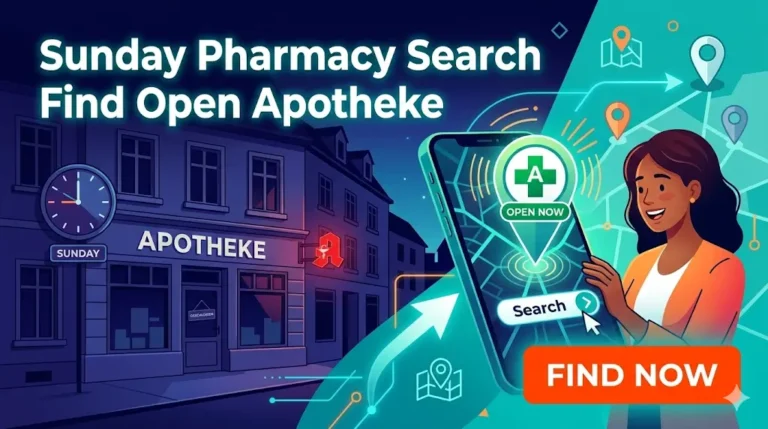
In Germany, pharmacies are ubiquitous, easily identified by the large red ‘A’ sign. They play a much more regulated and clinical role than drugstores in many other countries. You cannot buy pain relievers, cold medicine, or even strong vitamins at a standard supermarket or drugstore chain. All medicines must be purchased at a licensed pharmacy.
Pharmacists undergo rigorous academic training and are highly respected healthcare professionals. They serve as a vital line of consultation, checking for drug interactions and advising on minor ailments. If you present with symptoms of a mild cold, the pharmacist can recommend appropriate over-the-counter remedies and will clearly explain the dosage instructions.
By law, pharmacies take turns providing night and weekend emergency service. There is always at least one pharmacy open 24/7 in every district. You can find the currently open emergency pharmacy posted on the door of any closed pharmacy, or by checking online. Be aware that a small emergency fee is added to your purchase if you buy medication during these after-hours shifts.
Prescription Versus Over the Counter Drugs
Germany has incredibly strict regulations regarding which medications require a prescription. Antibiotics, strong painkillers, blood pressure medication, and most hormone treatments strictly require a doctor’s signature. It is impossible to buy these over the counter, and pharmacists face severe legal penalties if they dispense them without a valid script.
Over-the-counter medications are available for minor issues like headaches, seasonal allergies, and mild digestive problems. However, because they must be sold in a pharmacy, they tend to be more expensive than expats might be used to in their home countries. You cannot browse the aisles for these drugs; you must ask the pharmacist at the counter to fetch them from the back drawers.
For expats who rely on specific over-the-counter supplements or niche health products that are either unavailable or prohibitively expensive in German pharmacies, utilizing international shipping from platforms like iHerb can be a practical workaround for maintaining your wellness routine, though strictly regulated medications cannot be imported this way.
Co-payments for Prescription Medications
When a doctor prescribes medication under the public health insurance system, they issue a specific prescription, traditionally a pink paper slip, though e-prescriptions are rapidly becoming the standard. When you take this prescription to the pharmacy, you do not pay the full price of the drug.
Instead, public insurance covers the bulk of the cost, and the patient pays a statutory co-payment. This co-payment is strictly regulated: it is 10% of the drug’s price, but with a minimum of 5 Euros and a maximum of 10 Euros per medication. For example, if a drug costs 15 Euros, you pay 5 Euros. If a drug costs 200 Euros, you pay 10 Euros.
Private patients receive a different prescription, usually a blue slip. They must pay the full retail price of the medication upfront at the pharmacy and then submit the receipt to their private insurance provider for reimbursement according to their specific tariff conditions.
Dental and Vision Care
Standard Dental Coverage Under Public Insurance
Dental care in Germany is generally of a very high standard, but the coverage provided by public health insurance is relatively basic, focusing heavily on preventative care and essential pain relief. Public insurance fully covers two routine checkups per year, basic tartar removal, and necessary extractions or simple amalgam fillings.
However, if you require more complex restorative work, the costs can escalate quickly. Public insurance only pays a fixed subsidy for things like crowns, bridges, and dentures. This subsidy usually covers about 50% to 60% of the cost of the most basic, functionally adequate treatment option. If you want aesthetic upgrades—such as tooth-colored ceramic crowns instead of metal—you are entirely responsible for the price difference.
To encourage preventative care, public funds use a bonus booklet system. If you get your booklet stamped at your annual checkup every year without interruption, the insurance company will slightly increase their subsidy percentage if you eventually need major dental work like a crown.
Supplemental Dental Insurance Options
Because the out-of-pocket costs for high-quality dental work can easily run into thousands of Euros, supplemental dental insurance is one of the most popular add-on policies in Germany. These policies are purchased privately, even by those who are in the public health system, specifically to bridge the gap in dental coverage.
Supplemental policies vary wildly in price and coverage. A good policy will cover 80% to 100% of the costs for high-end composite fillings, professional teeth cleaning, implants, and major orthodontic work. When choosing a policy, pay close attention to the waiting periods—many insurers will not cover major work within the first eight months to prevent people from signing up only when they already have a toothache.
Expats should evaluate their dental history. If you know you are prone to cavities or may need an implant in the future, securing supplemental insurance early is highly advisable.
Eye Exams and Paying for Glasses
Vision care is another area where public insurance provides limited financial support for adults. If you experience medical issues with your eyes, such as infections, glaucoma, or cataracts, visits to the ophthalmologist and necessary medical treatments or surgeries are fully covered by both public and private insurance.
However, when it comes to vision correction—glasses and contact lenses—adults on public insurance must pay out of pocket. The public system only subsidizes lenses for individuals with severe visual impairments or specific medical eye conditions. The cost of frames and standard prescription lenses is considered a private lifestyle expense.
For children and teenagers under the age of 18, the public insurance will cover the cost of basic prescription lenses, but parents still generally have to pay for the frames. To obtain a prescription for glasses, you can either visit an ophthalmologist or go directly to an optician. German opticians are highly trained and perfectly equipped to perform comprehensive eye exams and prescribe lenses without a doctor’s intervention.
Mental Health Resources for Expats
Coverage for Therapy and Psychiatric Care
Mental healthcare is recognized as a crucial medical necessity in Germany. Both public and private health insurance fully cover the costs of outpatient psychotherapy, including cognitive behavioral therapy, psychoanalysis, and systemic therapy, provided it is administered by a licensed psychological psychotherapist or psychiatrist.
Psychiatrists, who are medical doctors, can diagnose mental health conditions and prescribe medications like antidepressants. Psychotherapists provide talk therapy. You can access these services directly without a referral from a GP, though discussing your struggles with your GP is often a good first step, as they can rule out underlying physical causes and help guide your search.
If a mental health crisis becomes acute, inpatient treatment in psychiatric hospitals or specialized psychosomatic clinics is also fully covered. The system aims to provide comprehensive support, from weekly outpatient sessions to intensive residential care, ensuring patients have the resources needed to recover.
Finding English Speaking Therapists
While the financial coverage for mental health is excellent, the logistical reality of finding a therapist is one of the biggest bottlenecks in the German healthcare system. There is a severe shortage of available therapy slots nationwide, resulting in wait lists that can stretch for many months, even for patients willing to undergo therapy in German.
For expats, this challenge is amplified exponentially. Finding a therapist who is not only accepting new patients but also fluent enough in English to conduct nuanced psychological therapy is incredibly difficult. Expat groups and international networks are often the best resources for finding recommendations for English-speaking professionals.
If you are publicly insured and cannot find an English-speaking therapist who accepts public insurance within a reasonable timeframe, there is a legal mechanism called cost reimbursement. Under certain strict conditions, if you can prove you desperately need therapy and no public therapist is available, the public insurance fund may be forced to pay the costs of a private English-speaking therapist. This process is highly bureaucratic but vital for expats in crisis.
Navigating Burnout and Sick Leave
Germany has very robust labor laws regarding illness, including mental health struggles like severe burnout or clinical depression. If you are mentally unable to work, you go to your doctor, explain your symptoms, and they will issue a sick note. Your employer is legally forbidden from asking your diagnosis; they only receive a notification of how long you will be absent.
For the first six weeks of any illness, your employer must continue paying 100% of your regular salary. If your burnout or depression requires a longer recovery period, your health insurance will step in and pay sickness benefit, which is approximately 70% of your gross salary, for up to 78 weeks for the same illness.
This financial safety net is designed to ensure that individuals can take the necessary time away from a stressful work environment to genuinely recover without the immediate threat of poverty or job loss. It reflects a cultural understanding that mental health is as debilitating as physical injury and requires adequate time to heal.
Maternity and Pediatric Care
Prenatal Checkups and Midwife Services
Maternity care in Germany is exceptional and heavily focused on the wellbeing of both the mother and the child. As soon as a pregnancy is confirmed by a gynecologist, the mother receives a maternity logbook. This small booklet tracks every single medical detail of the pregnancy. Public insurance covers a comprehensive schedule of prenatal checkups, including multiple ultrasound scans and blood tests.
A unique and highly valued aspect of the German system is the role of the midwife. Every pregnant woman is entitled to the care of a certified midwife, entirely paid for by health insurance. Midwives provide prenatal advice, assist during childbirth, and offer crucial postnatal care by visiting the mother at home for several weeks after delivery to help with breastfeeding, monitor the baby’s weight, and check the mother’s physical recovery.
Because midwives are in extremely high demand, it is strongly advised to start searching for one the moment your pregnancy is confirmed. You can search independently or ask your gynecologist for recommendations. Their home visits in the chaotic first weeks of parenthood are considered an invaluable resource by most families.
Giving Birth in German Hospitals
The vast majority of births in Germany take place in hospitals, though birthing centers and home births are options for low-risk pregnancies. Hospital delivery wards are well-equipped, and the emphasis is heavily placed on natural birth, although epidurals and necessary medical interventions like cesarean sections are readily available and fully covered by insurance.
When you go into labor, the primary care is usually led by the hospital’s team of midwives, with doctors stepping in for complications or the final stages of delivery. The atmosphere aims to be supportive and calm. After a standard delivery, mothers typically stay in the hospital for three to four days to recover and ensure the baby is feeding well.
During this hospital stay, the baby will undergo their first comprehensive medical examinations, known as the U1 and U2 checkups, performed by hospital pediatricians. These checks screen for vital reflexes, heart function, and metabolic disorders, ensuring any potential issues are caught immediately.
Routine Checkups for Children
Pediatric care in Germany is meticulously structured around a mandatory schedule of preventative examinations. These checkups are free of charge and are designed to monitor the child’s physical and cognitive development at specific milestones, from birth through adolescence.
These appointments are taken very seriously by the health authorities. Parents are issued a yellow examination booklet where the pediatrician stamps and records the results of each visit. Kindergartens and schools will regularly ask to see this booklet to ensure the child is up to date on their health checks and mandatory vaccinations, such as the legally required measles vaccine.
Finding a good pediatrician is as crucial as finding a GP. They will be your primary contact for the inevitable childhood illnesses, fevers, and developmental questions. Like GPs, popular pediatricians can be fully booked, so it is wise to register your newborn with a local clinic before they are even born.
Special Considerations for Expats
Language Barriers in Medical Settings
The language barrier is arguably the most significant hurdle expats face in the German healthcare system. While many German doctors—especially younger ones or those in major cities like Berlin or Munich—speak excellent English, the reception staff, nurses, and hospital administrators often do not. Medical paperwork, from intake forms to complex surgical consent documents, will exclusively be in complex administrative German.
It is highly advisable to bring a German-speaking friend or hire a professional medical interpreter for important appointments, such as discussing surgery risks or complex diagnoses. Relying on Google Translate for critical health information can be dangerous.
Even if your doctor speaks English, ensuring you fully understand medication dosages and follow-up instructions is your responsibility. Never hesitate to ask the doctor to write things down or repeat themselves. Medical misunderstandings due to language issues are common, and advocating for yourself clearly is essential.
European Health Insurance Card Usage
For EU citizens relocating to Germany, the European Health Insurance Card provides a vital temporary safety net. If you hold a valid EHIC from your home country, you are entitled to receive medically necessary, state-provided healthcare in Germany during a temporary stay under the same conditions and at the same cost as people insured in Germany.
However, it is crucial to understand that the EHIC is not a substitute for permanent local health insurance. Once you officially register your residence in Germany and intend to live and work there long-term, you must transition to the German health insurance system. The EHIC is designed for tourists and short-term visitors, not permanent expats.
If you attempt to rely on your foreign EHIC while living and working in Germany permanently, you may face administrative issues with your employer and immigration authorities, and you will miss out on the comprehensive preventative care and long-term security provided by the local system.
Integrating Alternative Medicine
Germany has a strong cultural tradition of integrating alternative and natural therapies alongside conventional medicine. Homeopathy, naturopathy, and osteopathy are widely practiced. A specific class of state-licensed alternative practitioners, known as Heilpraktiker, offer various non-traditional treatments.
While conventional doctors focus on evidence-based medicine, it is not uncommon for a GP to prescribe herbal remedies or suggest acupuncture for chronic pain. The coverage for these alternative treatments depends entirely on your insurance. Statutory health insurance generally covers very few alternative therapies, though some specific funds might offer partial subsidies for osteopathy as a customer perk.
Private health insurance, depending on the tariff, often provides extensive coverage for Heilpraktiker services and alternative treatments. If natural medicine is important to you, this is a key factor to consider when comparing insurance options and designing your coverage plan.
References
Primary sources (official)
- Bundesministerium für Gesundheit (Federal Ministry of Health): https://www.bundesgesundheitsministerium.de/en/en.html
- Make it in Germany (Official Information Portal for Qualified Professionals): https://www.make-it-in-germany.com/en/living-in-germany/money-insurance/health-insurance
- Federal Foreign Office (Medical Emergencies Information): https://www.germany.info/us-en/consulates/losangeles/emergencies/medical-emergencies/1349586
Other helpful sources
- How to Call Emergency Services in Germany: https://www.lingoda.com/blog/en/emergency-calls-in-germany/
- Understanding the German Pharmacy System (gesund.bund.de): https://gesund.bund.de/en/apotheken
Disclaimer
The information provided in this guide is for general informational and educational purposes only and does not constitute professional medical, legal, or financial advice. While every effort has been made to ensure the accuracy of the content regarding the German healthcare system, insurance regulations and medical policies are subject to change. Always consult directly with a certified insurance broker, a licensed medical professional, or the relevant German authorities regarding your specific health insurance needs and medical treatments.