Respecting Quiet Hours: How to Keep Good Relations with Neighbors
Moving to a new country involves learning a million tiny rules, but nothing hits quite as hard as getting your first stern look—or a handwritten letter—from a neighbor because you vacuumed on a Sunday. I remember the paralyzing fear of dropping a glass in my kitchen at 10:05 PM during my first month in Berlin, certain that the police would be at my door within minutes. This guide solves the mystery of the German quiet hours, helping you avoid unnecessary conflict and navigate the cultural nuances of "Ruhezeit" like a seasoned local.
Disclosure: This post may contain affiliate links. We may earn a commission at no extra cost to you if you make a purchase through these links. Read full disclosure.
Understanding the Concept of Ruhezeit in Germany
When you first arrive in Germany, the concept of mandatory quiet time can feel like an infringement on your personal freedom. In many other cultures, your home is your castle, and if you want to assemble a bookshelf at midnight, that is your business. In Germany, however, the social contract is built on the "Recht auf Ruhe" (the right to peace). This isn't just a polite suggestion; it is a deeply ingrained cultural expectation that is often backed by local ordinances and specific clauses in your lease.
The Legal Framework and Local Regulations
While there is no single "Federal Quiet Law" that covers every square inch of the country, the framework is established through a mix of state laws (Landes-Immissionsschutzgesetze) and municipal regulations. Generally, the most important period to remember is the "Nachtruhe" (night rest), which typically runs from 10:00 PM to 6:00 or 7:00 AM. During these hours, any noise that can be heard outside your four walls and disturbs your neighbors is technically prohibited.
It is vital to check your specific house rules, known as the "Hausordnung." This document is usually an attachment to your rental agreement. If you found your home through a platform like Wunderflats, you might find that the house rules are clearly outlined in English, which is a massive help for newcomers. The Hausordnung can be stricter than the general city law. For instance, some buildings still enforce a "Mittagsruhe" (midday rest) between 1:00 PM and 3:00 PM. While this is becoming less common in major cities, in many residential areas, it is still expected that you don't use power tools or play loud music during your lunch break. Understanding German Culture & Etiquette: A Guide to Social Life and Customs is essential here, as the legal side is often secondary to the social expectation of being a "good neighbor."
Sunday and Holiday Silence
Sundays and public holidays in Germany are sacred—not necessarily in a religious sense for everyone, but certainly in a "no-noise" sense. This is known as "Sonn- und Feiertagsruhe." On these days, the quiet hours apply for the entire 24-hour period. This means no drilling, no hammering, no mowing the lawn, and no glass recycling (the clinking of bottles in the public bins is a major no-no).
For many expats, this is the hardest rule to follow. Sunday is often the only day we have free to catch up on housework or DIY projects. However, firing up a loud appliance can lead to an immediate confrontation. If you are struggling to adjust to this slower pace, it might help to read about Coping with Culture Shock: Adjusting to Life in Germany to understand why these traditions persist. The logic is that everyone deserves one day a week of total mental and auditory recovery. If you absolutely must do something on a Sunday, stick to "room volume" (Zimmerlautstärke) activities like reading, cooking, or watching a movie at a low decibel level.
Common Pitfalls and Everyday Activities to Watch Out For
The definition of "noise" in Germany can be surprisingly broad. It isn't just about loud parties or construction; it extends to the mundane sounds of daily life that we often take for granted. Understanding what constitutes a violation will save you from receiving an "Abmahnung" (formal warning) from your landlord.
Domestic Chores and Power Tools
One of the most common mistakes newcomers make is running the washing machine or dishwasher late at night. While modern machines are relatively quiet, the vibration through old wooden floors in an "Altbau" apartment can be deafening for the person living below you. Most Hausordnungen explicitly forbid running loud appliances after 10:00 PM. If you have a busy schedule, consider looking for appliances with "silent" modes on Amazon Germany to mitigate the risk of disturbing anyone.
DIY projects are another major source of friction. In Germany, if you need to hang a picture frame, you often need a heavy-duty drill because of the solid brick or concrete walls. This creates a massive amount of noise. You should strictly limit your drilling to weekdays and Saturdays between 8:00 AM and 1:00 PM, and 3:00 PM and 8:00 PM. Never, under any circumstances, should you drill on a Sunday. If you are unsure about the specifics of your lease, refer to Understanding German Rental Contracts: Key Terms and Conditions to see if there are additional restrictions on when you can perform renovations.
Social Gatherings and Musical Instruments
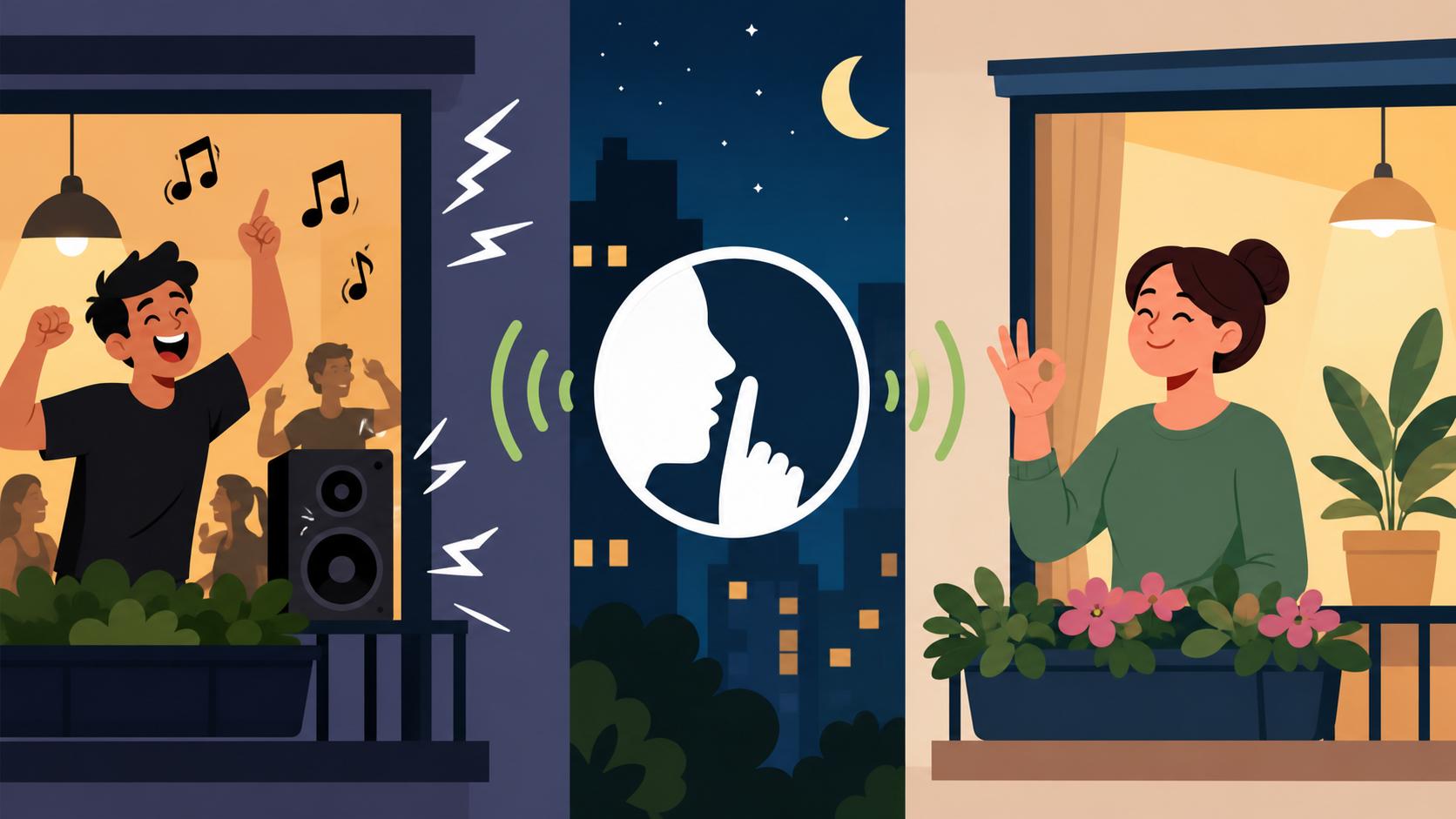
We all want to host friends and celebrate our new life in Germany, but the "10:00 PM rule" is the ultimate party pooper. At exactly 10:00 PM, you are expected to move the party indoors, close the windows, and lower the volume of your music and conversation to room level. It doesn't matter if it's your birthday; the right of your neighbor to sleep at 11:00 PM generally trumps your right to celebrate.
Musical instruments follow a similar logic. While you have a legal right to practice an instrument in your home—usually for 1.5 to 2 hours a day—you must do so outside of the designated quiet hours. If you are a professional musician or a dedicated hobbyist, it is worth checking Living in Germany: Essential Guide to Daily Life for New Expats for tips on finding practice spaces or soundproofing your room. Some neighbors might be more tolerant than others, but it is always better to assume a low threshold for noise.
| Type of Activity | Allowed Days | Permitted Hours (Typical) |
|---|---|---|
| General Household Noise | Mon – Sat | 6:00 AM – 10:00 PM |
| Heavy Drilling/DIY | Mon – Sat | 8:00 AM – 1:00 PM & 3:00 PM – 8:00 PM |
| Gardening (Mowing) | Mon – Sat | 7:00 AM – 1:00 PM & 3:00 PM – 8:00 PM |
| Musical Instruments | Mon – Sat | 9:00 AM – 12:00 PM & 3:00 PM – 7:00 PM |
| Parties/Social Events | Mon – Sat | Move to Room Volume at 10:00 PM |
| Any Audible Noise | Sun & Holidays | Generally Prohibited All Day |
Building a Positive Relationship with Your Neighbors
The best defense against a noise complaint is a good relationship with the people living around you. Germans value directness and transparency. If they know who you are and feel that you respect them, they are much more likely to come to you personally with a problem rather than calling the landlord or the authorities.
The Importance of Communication and the Party Notice
If you are planning something that will inevitably be noisy—like a small housewarming party or a day of furniture assembly—the "Ankündigung" (notice) is your best friend. A week before the event, post a polite note in the hallway or the elevator. Write it in German (even if it's basic) and mention that you will try to keep the noise to a minimum.
A classic move is to leave your phone number and tell them they can call or text you if it gets too loud. This gives the neighbor a sense of control and prevents them from stewing in their anger until they call the police. For more advice on navigating these interactions, check German Etiquette: Do’s and Don’ts in Social and Professional Settings. Often, inviting your immediate neighbors to have a drink at your party (even if you know they won't come) is the ultimate way to smooth things over. It shows you aren't an anonymous "loud foreigner" but a person trying to integrate into the community.
Handling Conflict Without the Police
If a neighbor knocks on your door to complain, do not get defensive. Even if you think they are being unreasonable (and sometimes they are), the best approach is to listen, apologize, and lower the volume immediately. In Germany, persistent noise complaints can lead to a "Mietminderung" (rent reduction) for the neighbor, which the landlord will then try to recover from you. Understanding German Tenant Rights and Laws: What Expats Need to Know is crucial because it helps you realize the financial and legal stakes involved in neighborly disputes.
If you have a neighbor who is consistently loud, the polite first step is always a personal conversation. Do not leave anonymous notes; they are seen as passive-aggressive and rarely work. Knock on their door during non-quiet hours and explain the situation calmly. "I work from home and the music between 2:00 PM and 4:00 PM makes it hard to focus" is much more effective than yelling through the walls. If you are looking for ways to build these connections, Making Friends in Germany: Social Tips for Expats offers great insights into the German social psyche.
Practical Tips for a Quiet Expat Life
Living in a German apartment building often requires a bit of "defensive living." You can't control your neighbors, but you can control your own environment and how much noise you project.
Soundproofing and Essential Gear
If you live in an Altbau with thin walls, consider investing in some basic sound-dampening items. Thick rugs can do wonders for muffling the sound of footsteps for the neighbors below. You can find high-quality area rugs and even acoustic foam panels on Amazon Germany that can be aesthetically pleasing while serving a functional purpose.
If you are a light sleeper and your neighbors are the ones violating the Ruhezeit, white noise machines or high-quality earplugs are lifesavers. Sometimes, despite your best efforts, you might end up in a building with a "problem neighbor." In these cases, it is helpful to document the noise in a "Lärmprotokoll" (noise log) which you can later present to your landlord. If you are currently in the process of moving, using a service like Wunderflats can help you find apartments in quieter neighborhoods or buildings that cater specifically to professionals who need a peaceful environment.
Navigating Temporary Living vs. Long-term Rentals
The rules of quiet hours apply whether you are staying in a hotel, a short-term serviced apartment, or a long-term rental. However, the culture can vary. In a student-heavy area like Neukölln in Berlin or the Univiertel in Munich, the tolerance for a bit of late-night noise might be slightly higher than in a leafy suburb populated by families and retirees.
When you are Finding an Apartment in Germany: Best Websites and Tips for Expats, pay attention to the surroundings. Is there a bar downstairs? Is there a playground right outside the window? These factors will dictate the "ambient noise" of your life. If you choose a long-term path, remember that Housing in Germany: Renting, Buying, and Finding Your Home as an Expat requires a long-term commitment to these social norms. The "quiet life" in Germany isn't about being silent; it's about being mindful. Once you master the rhythm of the quiet hours, you'll find that the peace and predictability of a German Sunday can actually be quite refreshing.
Disclaimer
This article is for informational purposes only and does not constitute legal advice. Laws and local ordinances regarding noise and quiet hours can vary significantly between different federal states and municipalities in Germany. Always refer to your specific rental contract (Hausordnung) and consult with a qualified legal professional or a tenant association (Mieterverein) if you are facing legal issues or disputes with your landlord or neighbors.