How to Tip in Germany: Customs for Restaurants, Taxis, and More
Navigating the unwritten rules of social etiquette in a new country can feel like walking through a minefield, especially when it involves money. I remember my first month in Berlin, sitting in a crowded Brauhaus, paralyzed as the waiter stood over me with his leather wallet open, waiting for a number I didn't know how to calculate. This guide settles the confusion once and for all, providing the specific cultural nuances of tipping in Germany so you can dine, travel, and live with confidence.
Disclosure: This post may contain affiliate links. We may earn a commission at no extra cost to you if you make a purchase through these links. Read full disclosure.
The German Tipping Philosophy and Trinkgeld Basics
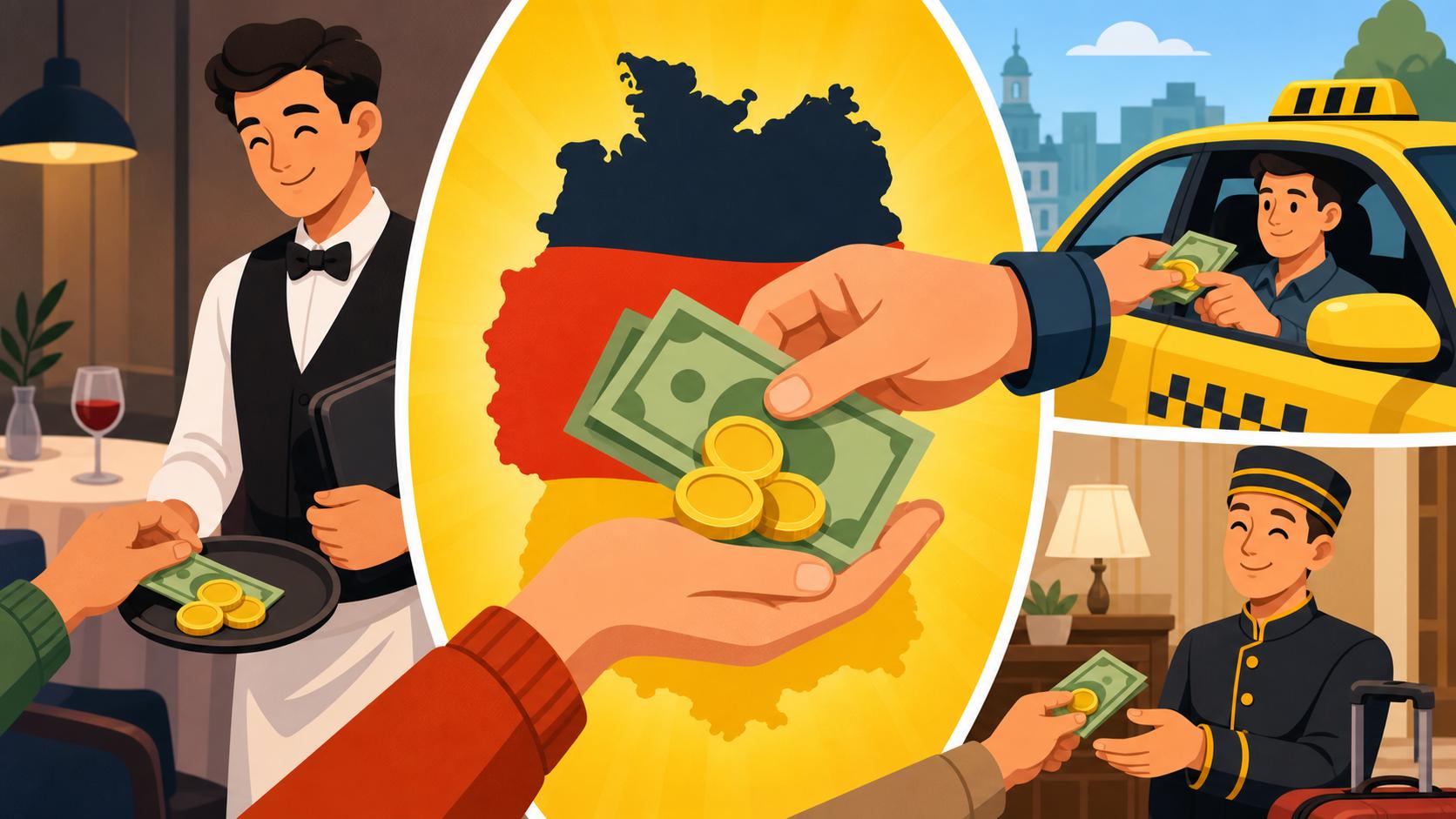
To understand how to tip in Germany, you first have to unlearn the "percentage-based guilt" often found in North America. In Germany, service staff are paid a living wage, receive health insurance, and have job security. This means that a tip, or Trinkgeld (literally "drink money"), is truly meant as a gesture of appreciation for good service rather than a mandatory subsidy for a low hourly wage. When you look at your bill, you might see a line that says "Bedienung inklusive" or "Service included." Legally, the menu price must include tax and service charges, but this does not mean a small extra tip isn't expected.
In my experience, the most significant hurdle for newcomers is the immediacy of the transaction. Unlike in many countries where you leave cash on the table and walk away, German tipping happens face-to-face. The waiter will tell you the total, and you are expected to state the final amount you wish to pay, including the tip, right then and there. This directness can be jarring if you are experiencing Coping with Culture Shock: Adjusting to Life in Germany for the first time. It requires a bit of mental math on the fly, but once you get the hang of "rounding up," it becomes second nature.
Generally, the rule of thumb is to round up to the next even Euro for small amounts or add about 5% to 10% for larger meals. If your coffee is €3.60, you give €4.00. If your dinner is €44.00, you might say €48.00 or €50.00. The key is that the tip is rarely a flat 20%. In fact, leaving a massive tip can sometimes be seen as ostentatious or confusing rather than generous. It is all about finding that middle ground of respectful appreciation.
Restaurant and Cafe Etiquette in Germany
When you are out enjoying German Dining Etiquette: Eating Out, Tipping, and Table Manners, the process is a choreographed dance. After you ask for the bill (Zahlen bitte!), the waiter will usually bring a mobile card reader or a large leather purse. If your total is €18.20 and you want to tip, you don't wait for change to give it back. You look the waiter in the eye and say "Neunzehn" (nineteen) or "Zwanzig" (twenty). They will then charge you that amount or give you change based on that figure. If you want them to keep the change entirely, you simply say "Stimmt so," which is the golden phrase of German tipping.
Waiters in Germany are often more formal and less "chatty" than what you might be used to in the US or UK. Don't mistake this for bad service; it is simply the German way of being professional and efficient. Because the service is already factored into the price, you are tipping for the extra effort—bringing the food quickly, being helpful with the menu, or handling a large group with ease. If the service was genuinely poor, it is perfectly acceptable to tip nothing or just the bare minimum of rounding up by a few cents.
Card payments have become much more common, especially in cities like Munich or Hamburg. However, the tipping function on card machines can be hit or miss. Some modern systems will prompt you for a percentage, but many older ones do not. In those cases, it is often better to pay the bill by card and hand the waiter a few Euro coins in cash. This ensures the money goes directly to the person who served you. If you are still setting up your local finances, check out the Best Banks in Germany for Expats: Low Fees and English Support to ensure you have a card that works seamlessly in these situations.
Tipping for Services Taxis Hairdressers and Deliveries
Taxis in Germany are highly regulated and generally quite expensive. When the ride ends, the driver will show you the meter. Much like in restaurants, the standard practice is to round up. If the fare is €13.40, giving €15.00 is a generous and standard tip. If the driver helped you with heavy suitcases or navigated through a particularly nasty traffic jam near the Frankfurt airport, an extra Euro or two is always appreciated.
For personal services like hairdressers or manicurists, the tipping culture is a bit more personal. Since these services involve a significant amount of one-on-one time, a tip of 5% to 10% is standard. I usually hand the cash directly to the stylist at the end, rather than adding it to the card payment at the front desk, as it feels more personal. If you are an expat living in a temporary apartment from a provider like Wunderflats, you might find yourself exploring local neighborhood salons; a consistent tip is a great way to build a relationship with a local stylist.
Delivery drivers are another category where customs are shifting. Whether you are ordering a pizza or receiving a heavy package from Amazon Germany, a small tip is a kind gesture. For food delivery, €1.00 to €2.00 is standard. For package delivery, tipping isn't strictly expected, but during the holidays or if someone carries a heavy box up four flights of stairs in an old "Altbau" building, a small coin or a chocolate bar is a very German way of saying thank you. I often keep a small bowl of change near the door specifically for the people delivering my orders from Amazon Germany to make the process quick and easy.
Tipping Standards at a Glance
To make things easier, I’ve put together a quick reference table for the most common scenarios you’ll encounter. Keep this in mind as you calculate your Cost of Living in Germany: Budgeting Guide for Expats during your first few months.
| Service Category | Typical Total Cost | Suggested Tip | Method of Tipping |
|---|---|---|---|
| Casual Cafe / Coffee | €3.00 – €7.00 | Round up to next Euro | Tell waiter the total as you pay |
| Standard Restaurant | €20.00 – €50.00 | 5% to 10% | Round up or state specific total |
| High-end Dining | €100.00+ | 10% | State specific total or leave cash |
| Taxi / Ride Share | Varies by distance | Round up to next €2 or €5 | Tell driver the total as you pay |
| Hairdresser / Barber | €25.00 – €80.00 | €2.00 – €5.00 | Hand cash to stylist |
| Food Delivery | €15.00 – €30.00 | €1.00 – €2.00 | Hand cash at the door |
| Hotel Housekeeping | Per night | €1.00 – €2.00 | Leave on the pillow/desk |
Tipping in Social and Unique Situations
Bars and pubs have a slightly different vibe. If you are ordering at the bar, you usually round up to the nearest Euro for each round. If you are sitting at a table in a busy beer garden, you tip much like you would in a restaurant. One thing that surprises many is the "Toilet Attendant" or "Klofrau." In many public places, shopping malls, or even some larger restaurants, you will see a small plate with coins near the restroom entrance. It is customary to leave €0.50 here. Even if you don't have change, the "Klofrau" is a staple of German public life, and passing by without acknowledging them can feel quite awkward.
When it comes to moving into a new home, perhaps one you found through Wunderflats, you might encounter tradespeople or movers. If a team spends all day carrying your furniture up several flights of stairs, it is common to provide them with cold drinks (water or lemonade) and perhaps a small cash tip of €5.00 to €10.00 per person at the end of the day. This isn't just about the money; it’s about the hospitality, which is a key part of German Culture & Etiquette: A Guide to Social Life and Customs.
Don't forget that German Money Matters: Using Cash, Cards, and Payment Apps are still evolving. While the "cash is king" mentality is fading, having a pocket full of €1 and €2 coins is still the most efficient way to handle tipping for small services. Whether it’s the person who helped you with your groceries or the street performer who made your afternoon, those coins are the lifeblood of German Trinkgeld culture.
Common Mistakes and How to Avoid Them
The biggest mistake is leaving money on the table and walking away. In many German establishments, if you leave cash on the table, the waiter might think you simply forgot it and will chase you down the street to return it. Always settle the tip during the payment process. If you really want to leave it on the table, make sure you have made eye contact with the server and indicated that the meal is finished.
Another common point of confusion involves the Understanding VAT (MwSt) in Germany: What Consumers Should Know. Remember that the price on the menu is what you pay; there are no hidden 15% taxes added at the end. This makes calculating your 5-10% tip much easier because you are working with the final number. If you are a student or on a tight budget, don't feel pressured to tip 10% every time. Rounding up to the nearest Euro is always socially acceptable for small interactions.
Lastly, be mindful of the difference between "Stimmt so" and "Danke." In Germany, saying "Danke" (thank you) at the exact moment you hand over a large bill can sometimes be interpreted as "Keep the change." If your bill is €12.00 and you hand over a €20.00 note and say "Danke," the waiter might assume the remaining €8.00 is their tip. To avoid this, hand over the bill, wait for them to start reaching for change, and then state the amount you want to pay, such as "Dreizehn, bitte" (Thirteen, please).
Long-term Integration and Financial Planning
As you settle into your life here, perhaps after Opening a Bank Account in Germany: Step-by-Step for Newcomers, you’ll start to see tipping as less of a math problem and more of a social lubricant. It’s a way to show you understand the local rhythm. When you order your household essentials from Amazon Germany, you’ll start to recognize your regular delivery driver, and a small tip at the end of a snowy week goes a long way in building neighborhood rapport.
Living in a managed apartment through Wunderflats can also simplify things, as many of your initial utility and service interactions are handled. However, for those times you do need to call a plumber or a technician, remember that a polite "Guten Tag" and a small tip for a job well done are the hallmarks of a well-integrated expat. Germany may have a reputation for being "cold" or "rigid," but the Trinkgeld culture shows a side of the country that is deeply appreciative of hard work and good service.
Mastering these small social cues is what truly makes a house a home in a foreign land. It takes time, and you will likely have a few more awkward moments where you overtip or undertip, but that is all part of the journey. Just keep some coins handy, remember your "Stimmt so," and you will be navigating the German service industry like a local in no time.
Disclaimer
The information provided in this guide is for educational and informational purposes only. While every effort has been made to ensure the accuracy of these cultural customs and financial tips, social norms can vary by region and individual establishment in Germany. This guide does not constitute legal or professional financial advice.