Continuing Education (Weiterbildung): Opportunities for Professional Development
Staring at a German job description that feels like a coded message of requirements can be soul-crushing when you know you have the talent but lack the specific "Schein" or certificate they demand. I remember sitting in a drafty Berlin apartment, staring at my CV and realizing that despite years of experience, I was being overlooked because I hadn't ticked a very specific German box. This guide solves that exact puzzle by showing you how to navigate the massive world of Weiterbildung to level up your career.
Disclosure: This post may contain affiliate links. We may earn a commission at no extra cost to you if you make a purchase through these links. Read full disclosure.
The Cultural Weight of Certifications in Germany
In many countries, your portfolio or a firm handshake might get you through the door, but Germany operates on a different frequency. Here, the "Urkunde" (certificate) is king. The German labor market is deeply rooted in the tradition of formal qualifications, dating back to the medieval guild system. If you want to move from a junior role to a senior one, or pivot into a new field entirely, simply "learning on the job" is often viewed with skepticism by HR departments. They want to see that you have undergone a structured process of learning.
This is where the concept of Working in Germany: Comprehensive Guide for Foreign Professionals becomes so relevant. To truly thrive, you have to understand that professional development is not just a personal choice; it is a cultural expectation. Whether you are an engineer or a digital marketer, obtaining a German-recognized qualification acts as a seal of approval that signals you understand local standards and professional ethics.
The Nuance Between Weiterbildung and Fortbildung
It is easy to get lost in the vocabulary. Generally, "Fortbildung" refers to training that helps you stay current in your current job—think of it as sharpening the saw. "Weiterbildung," however, is a much broader term. it encompasses everything from a weekend seminar on Excel to a multi-year Master’s degree. For an expat, focusing on Weiterbildung is often the faster track to Career Advancement in Germany: Promotions, Titles, and Further Training because it demonstrates a long-term commitment to the local market.
I’ve seen many colleagues struggle because they assumed their foreign degrees were enough. While they are a great start, a local certification shows that you aren’t just a "guest" worker, but a professional who has integrated into the German system of standards. This distinction is vital when negotiating your salary or applying for high-level management positions.
Why the Labor Market Craves Continuous Learning
Germany is currently facing a massive "Fachkräftemangel" (shortage of skilled workers). You might think this means employers are lowering their standards, but it’s actually the opposite. They are looking for people who can bridge the gap between their existing skills and the digital future. If you can show a history of continuous learning, you become a lower-risk hire.
Employers here value stability and precision. When you invest in your education, you are speaking their language. You are proving that you are capable of the "Gründlichkeit" (thoroughness) that German industry is famous for. This is particularly true if you are looking into Recognizing Your Profession: Do You Need a License to Work in Germany? because often, a bit of extra education is the final bridge needed for full recognition of your foreign credentials.
Funding and Subsidies: Making the System Work for You
One of the biggest shocks for expats is realizing that the German government actually wants to pay for your education. If you find yourself unemployed, or even if you are just at risk of losing your job because your skills are becoming obsolete, the "Agentur für Arbeit" or the "Jobcenter" can be your best friend. The most powerful tool in their arsenal is the Bildungsgutschein (Education Voucher).
This voucher can cover 100% of the costs of a training program, including travel expenses and even childcare. I’ve seen expats use this to pivot from administrative work into high-paying coding roles or project management. However, getting your hands on one requires a bit of "Behörden-Fußball" (bureaucratic football). You have to prove to your caseworker that the training will significantly increase your chances of finding a job. It helps to bring printed job advertisements that list the specific skills you lack.
The Bildungsgutschein Process
To get a Bildungsgutschein, you first need to be registered with the Agentur für Arbeit. You’ll be assigned a "Berater" (advisor). My advice? Don't go in asking for "any course." Go in with a specific plan. Show them a course from an accredited provider (look for "AZAV" certification) and explain how it connects to In-Demand Jobs in Germany: Sectors Looking for Foreign Talent. When you show up prepared, you stop being a "case" and start being a proactive professional they want to invest in.
Once you have the voucher, you "redeem" it at the school of your choice. The school handles the billing directly with the government. It is a fantastic system that levels the playing field for those who might not have thousands of Euros sitting in a savings account. It’s a core part of Money Matters in Germany: Complete Financial Guide for Expats that many newcomers completely overlook.
Aufstiegs-BAföG and Other Grants
If you aren't unemployed but want to pursue a higher qualification like a "Meister" or a "Fachwirt," you might qualify for Aufstiegs-BAföG. This is a mix of a grant and a low-interest loan provided by the state. Unlike the regular student BAföG, the age limits are much more flexible, making it perfect for mid-career professionals. There are also "Weiterbildungsstipendium" (scholarships) for those under 25 who have excelled in their initial vocational training.
| Funding Type | Best For | Typical Coverage |
|---|---|---|
| Bildungsgutschein | Unemployed or at-risk | 100% of course fees + costs |
| Aufstiegs-BAföG | Higher vocational exams | Grants + low-interest loans |
| Bildungsprämie | Low-income employees | Up to 50% (Max €500) |
| Tax Deduction | All working professionals | Varies based on income tax |
Tax Deductibility of Education Expenses
If you end up paying for your own courses, keep every single receipt. In Germany, education expenses are often fully tax-deductible as "Werbungskosten" (income-related expenses). This includes the course fees, books, study materials, and even the kilometers you drive to the testing center. This is a massive relief when filing your tax return. It effectively means the government is subsidizing 20% to 40% of your education depending on your tax bracket. If you are confused about how this works, checking out Filing a Tax Return in Germany: A Guide for Employees and Expats is a great next step.
Language Proficiency as the Career Catalyst
Let’s be honest: you can have the best technical skills in the world, but if your German is stuck at "A2 – I can order a beer," your ceiling in the German job market will be quite low. Language learning is perhaps the most important form of Weiterbildung for any expat. While English-speaking roles exist, especially in tech hubs like Berlin or Munich, the real "career gold" is found when you can participate in meetings and write emails in German.
For many, the jump from B1 to B2 is where the magic happens. B2 is the level where you can finally start to express professional opinions without sounding like a child. This is where specialized tools come into play. If you need a flexible way to build your vocabulary while commuting, GermanPod101 is a lifesaver with its podcast-style lessons that focus on real-world scenarios. It’s great for filling those 15-minute gaps in your day.
Structured Learning for Professional Success
If you are more of a visual or social learner, Lingoda offers structured online classes with native speakers. The beauty of Lingoda is the "Sprint" challenges, which can push you to complete a level in a matter of months. I've found that having a live teacher to correct your "der/die/das" mistakes in a professional context is worth its weight in gold.
Language isn't just about grammar; it's about cultural nuance. Knowing when to use "Sie" versus "du" in a business setting can make or break a deal. Using platforms like GermanPod101 to hear how Germans actually talk in offices helps you avoid the stiff, textbook language that marks you as an outsider. If you are serious about Working in Tech in Germany: Opportunities for IT Professionals, don't assume English is enough—learning the language shows respect and long-term intent.
The Role of Integration Courses
If you are new to the country, you might be eligible for an "Integrationskurs." These are heavily subsidized by the BAMF (Federal Office for Migration and Refugees). While they start at the very basics, they often lead into "Berufssprachkurse" (professional language courses) that are specifically designed to help you navigate the workplace. These courses are a fundamental part of Learning German: Top Language Schools and Resources for Expats.
Legal Rights and Educational Leave
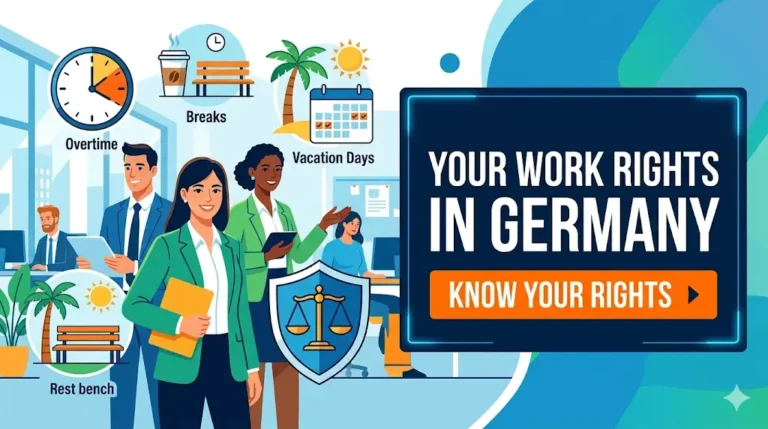
One of the most hidden gems of German labor law is "Bildungsurlaub." In most federal states (except Bavaria and Saxony), employees have a legal right to five days of paid leave per year specifically for professional or even political education. This is in addition to your regular vacation days. Your employer continues to pay your salary, while you attend a recognized seminar.
I remember the first time I told a colleague I was taking a week off to study "Digital Ethics" and they asked which beach I was going to. I had to explain that I was actually going to a classroom! It’s a right that surprisingly few expats use, but it’s an incredible way to attend an intensive workshop without burning through your precious holiday time.
How to Claim Your Bildungsurlaub
To use this right, you must find a course that is "anerkannt" (recognized) for Bildungsurlaub in your specific state. You usually need to notify your employer at least six to nine weeks in advance. They can only refuse if there are "dringende betriebliche Belange" (urgent operational reasons), like half the team being out sick.
This is a perfect time to use a platform like Lingoda for an intensive week of language study or to attend a technical bootcamp. Understanding your rights here is a key part of navigating German Workplace Rights: Overtime, Breaks, and Vacation Days Explained. It’s about more than just taking time off; it’s about signaling to your boss that you are invested in your own growth, which often leads to better performance reviews.
Balancing Work and Studies
If you are planning a more significant qualification, like a part-time Master’s, you might need to negotiate a "Teilzeit" (part-time) arrangement. Germans are very open to this. The "Work-Life Balance" culture here actually supports the idea of "Lifelong Learning." Many companies will even contribute to your tuition if the degree is relevant to your role.
Before you sign up for a three-year program, look into Understanding German Work Contracts: Probation, Notice Periods, and More to see how your contract handles side-studies or reduced hours. It is always better to be transparent with your employer from the start.
Navigating the Bureaucracy of Skill Recognition
Before you dive into new education, you need to know exactly where you stand. This is the painful process of "Anerkennung." If you have a degree from abroad, you need to check if it is recognized in Germany. The database "Anabin" is the primary tool for this. If your degree is listed as "H+", you are in good shape. If not, you might need a "Zeugnisbewertung" (statement of comparability) from the ZAB.
This is a critical first step in Getting Your Foreign Credentials Recognized: Degree and Qualification Recognition. Sometimes, you don't need a whole new degree; you just need a "bridge course" to cover the gaps between your home country’s curriculum and the German one. This is especially common in regulated professions like healthcare, law, or teaching.
The Role of the IHK and HWK
The Chambers of Commerce (IHK) and Chambers of Crafts (HWK) are the gatekeepers of vocational training in Germany. They offer a plethora of "Zertifikatslehrgänge" (certificate courses) that are highly respected. If you are a freelancer or entrepreneur, these chambers are also great places for networking and finding Small Business Support: Chambers of Commerce (IHK) and Networks.
When I was looking to specialize, I found that an IHK certificate in "Project Management" carried more weight with local mid-sized companies (the "Mittelstand") than an expensive certificate from a flashy international online university. The IHK is a brand that German bosses trust. They know exactly what the curriculum entails and that the exam was rigorous.
Seeking Professional Advice
If you are feeling overwhelmed, you can book a consultation with the "Netzwerk IQ" or specialized expat counseling centers. They can help you map out a "Qualifizierungsplan." They often know about local funding pots that aren't widely advertised. This level of planning is what separates successful expats from those who get stuck in "entry-level loops."
Strategic Networking and Course Selection
Finally, professional development isn't just about what you know, but who sees you knowing it. Attending in-person Weiterbildung courses is one of the best ways to build a local network. Your classmates are often other professionals in your industry who might know about "hidden" job openings.
In Germany, "Vitamin B" (B for "Beziehungen" or relationships) is just as important as anywhere else. When you are in a classroom setting, you are building trust in a way that LinkedIn can't replicate. You are showing your peers that you are diligent, punctual, and capable of handling German-language materials. This is a massive component of Professional Networking in Germany: LinkedIn vs Xing and More.
Choosing the Right Format: Online vs In-Person
While online learning is convenient, don't underestimate the power of "Präsenzunterricht" (in-person teaching). For language learning, a mix is often best. Use GermanPod101 for your daily "immersion" and Lingoda for your structured practice, but try to find a local "Stammtisch" or a weekend seminar to put those skills into practice.
The German "Volkshochschule" (VHS) is another incredible resource. They offer low-cost courses on everything from "Tax Returns for Freelancers" to "Advanced Java." While the quality can vary, the price is unbeatable, and it’s a great way to meet people in your neighborhood.
Long-term Planning for Career Growth
Don't just take courses at random. Look at the people who have the jobs you want in 5 years. What certifications do they have? Do they have a "Fachwirt"? A "Master"? An IHK certificate? Map out your education budget and your time. Even if you only take one course a year, the cumulative effect on your CV will be massive.
Remember, Starting a Business in Germany: Entrepreneur’s Guide for Foreigners often requires these very same certifications if you want to enter certain regulated crafts. Education is the foundation of your legal and professional standing in this country. It’s an investment that the German system is designed to reward—provided you follow the rules and keep your "Urkunden" organized in a very sturdy binder.
Disclaimer
The information provided in this guide is for informational purposes only and does not constitute legal, financial, or professional career advice. While every effort has been made to ensure the accuracy of the details regarding German laws, subsidies, and educational requirements, these regulations are subject to change. Always consult with official government sources, such as the Agentur für Arbeit or a certified tax advisor, before making significant financial or career decisions.