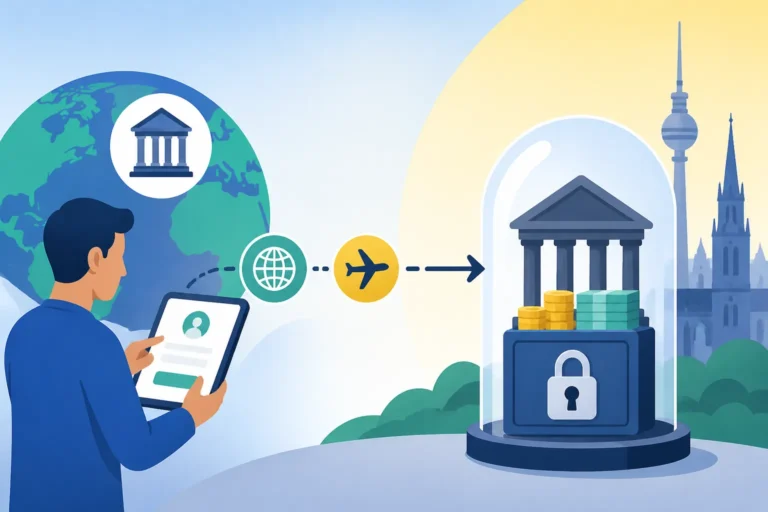
Working in Germany as a Non-EU Spouse: Finding Opportunities While Your Partner Works
Moving to a new country because your partner landed a dream job is an exhilarating adventure, but once the boxes are unpacked, the "trailing spouse" reality often hits hard: you're left navigating a complex bureaucracy without a clear professional roadmap. I remember sitting in our Berlin kitchen, feeling like a guest in my own life while my husband headed to his office every morning. This guide provides the exact steps to transition from being a dependent to finding your own professional footing in the German market.
Disclosure: This post may contain affiliate links. We may earn a commission at no extra cost to you if you make a purchase through these links. Read full disclosure.
Understanding Your Legal Right to Work in Germany
One of the biggest hurdles for non-EU spouses is the nagging doubt about whether they are actually allowed to sign a work contract. In many countries, a dependent visa is strictly for residing, not for working. Fortunately, Germany is quite progressive in this regard. If you have moved here on a family reunification visa to join a spouse who holds a valid work permit, an EU Blue Card, or permanent residency, your right to work is generally granted automatically.
Checking Your Residence Permit for Work Authorization
When you receive your residence permit (the plastic Elektronischer Aufenthaltstitel or eAT card), you must look at the fine print. Usually, there is a supplemental sheet (Zusatzblatt) or a line on the card itself that says "Erwerbstätigkeit gestattet." This is a golden phrase in the world of German bureaucracy. It means you are allowed to take up any kind of employment, whether it is a high-flying corporate role, a part-time job at a local café, or even starting your own business.
If you are still in the application phase, Navigating the Ausländerbehörde: Tips for Dealing with German Immigration Offices can help you prepare for the appointment where this status is finalized. I have seen many spouses wait months to look for a job because they thought they needed a separate work permit. In reality, the moment you have your family reunification permit with that specific phrasing, you are legally on the same playing field as a local in terms of employer eligibility.
The Nuances of the Family Reunification Visa
While the law is generally on your side, the specific paragraph of the Residence Act (Aufenthaltsgesetz) cited on your permit matters. Most spouses fall under Sections 27 to 30. If your partner is here on an EU Blue Card, your rights are even more robust, often allowing you to start working immediately without the federal employment agency needing to conduct a "priority check" to see if a German or EU citizen could do the job.
It is worth noting that if you arrived before your spouse had a permit, or if your marriage occurred after they were already established here, the timelines might shift slightly. Always double-check your documents. If you find yourself in a situation where you want to work but your permit has restrictions, you might need to look into a Freelance Visa in Germany: How to Work as a Self-Employed Professional if you plan on striking out on your own rather than seeking traditional employment.
Overcoming the Language Barrier and Building Skills
Let’s be honest: unless you are in a highly international sector like IT or creative tech, the German language is the "final boss" of your job hunt. Even if your spouse’s office is 100% English-speaking, the rest of the professional world in Germany often operates in German. I spent my first six months thinking I could get by with just "Guten Tag," only to realize that most HR managers wouldn't even open a CV that didn't show some commitment to the language.
Finding Roles Where English is the Primary Language
There is a thriving market for English speakers, particularly in cities like Berlin, Munich, Hamburg, and Frankfurt. Startups, international corporations, and relocation agencies are often looking for the specific cultural nuances and native-level fluency that an expat spouse brings. When searching, you should target "English-speaking" keywords on portals, but don't stop there.
For more targeted advice on where these opportunities hide, check out Finding English-Speaking Jobs: Resources and Tips for Expats. Many spouses find success in roles like Customer Success, International Sales, or specialized consulting. However, even in these roles, being able to chat with your colleagues during the Mittagspause (lunch break) in their native tongue will drastically change your career trajectory and your sense of belonging.
Leveraging Online Tools to Bridge the Gap
Since you might not want to commit to an intensive, 5-day-a-week language school while also job hunting, online platforms are a lifesaver. This is where tools like GermanPod101 become incredibly useful. You can listen to lessons while commuting or exploring your new neighborhood, focusing on practical phrases and business etiquette that textbooks often skip. It's a great way to build confidence for those initial "coffee chats" or networking events.
For those who need more structured, face-to-face interaction to conquer their speaking anxiety, Lingoda offers small group classes with native teachers at all hours of the day. The flexibility is key for a spouse whose schedule might be in flux due to administrative appointments or family commitments. Showing a potential employer that you are actively enrolled in a course proves that you are proactive about integrating, which is a trait highly valued in German work culture.
Navigating the Job Market as an Expat Spouse
The German job market is notoriously traditional when it comes to the application process. Coming from a background where a one-page "creative" resume is the norm, I was shocked to find that German recruiters expect a very specific format. They want to see a clear, chronological history without gaps, and they place a heavy emphasis on certifications and formal qualifications.
Adapting Your CV and Cover Letter
Your resume (Lebenslauf) needs to be "Germanized." This doesn't just mean translating it; it means restructuring it. In Germany, it is still very common to include a professional headshot, your date of birth, and even your marital status (though this is becoming less mandatory in international circles). Recruiters look for stability and "fit." If you have a gap in your CV because of the move, be honest and label it as "Relocation and Cultural Integration."
You will also need to master the art of the Anschreiben (cover letter). This is not just a summary of your resume; it is a formal letter explaining exactly why you are the right fit for that specific company. For a deep dive into these requirements, read Writing a German-Style CV and Cover Letter: Tips for Success. Getting this right is often the difference between getting an interview and being ghosted by a "Bewerber-Management-System."
Networking Beyond the "Expat Bubble"
While expat Facebook groups are great for finding a good plumber, they aren't always the best for finding a high-level job. You need to get onto LinkedIn and its German counterpart, Xing. Networking in Germany is less about "who you know" in a corrupt sense and more about "professional vouching."
Join professional associations or attend "Stammtisch" meetups related to your industry. If you are in a tech hub, go to Meetup.com events. When you talk to people, don't just say you're looking for a job; explain the specific value you brought to your previous roles back home. Many companies have referral bonuses, and employees are often happy to pass your CV to HR if they think you’re a solid candidate.
Administrative Essentials for New Employees
Once you land that job offer, the bureaucracy doesn't stop. You will need to provide your employer with several pieces of information that you probably didn't have to worry about in your home country. This is the part where many expats get overwhelmed, but taking it step-by-step makes it manageable.
Taxes, Social Security, and Insurance
Every worker in Germany needs a Tax ID (Steueridentifikationsnummer). You usually receive this by mail a few weeks after Registering Your Address (Anmeldung): Step-by-Step Guide. If you haven't received it, you can't be paid correctly, so make this your first priority upon arrival. You will also need a social security number (Sozialversicherungsnummer), which your first employer or your health insurance provider can help you obtain.
Speaking of insurance, Germany has a strict system. Most employees are part of the public system, but depending on your income, you might have choices. As a spouse, you might currently be covered under your partner's plan, but once you start earning above a certain threshold, you must have your own. Understanding Family Health Insurance: Adding Your Spouse and Kids to Your Plan is crucial before you sign that contract to ensure there are no lapses in coverage.
Understanding Tax Classes for Couples
This is the part that catches most international couples off guard. Germany has different tax classes (Steuerklassen) that determine how much take-home pay you actually get. If one spouse earns significantly more than the other, you might choose a combination (like Class 3 and 5) to maximize your monthly household net income. However, the lower-earning spouse (often the one who relocated) might see a very high tax deduction on their payslip in Class 5.
It is a bit of a mathematical puzzle. Before you start your new role, sit down with your partner and read Tax Classes for Couples: How Marriage Affects Your Taxes in Germany. Choosing the right class can save you thousands of Euros over a year, and it’s something you can change once a year at the local Finanzamt.
Comparing Employment Types for Spouses
Not everyone wants or needs a 40-hour-a-week corporate grind. Germany offers several different "models" of employment that can be particularly beneficial for spouses who are still trying to balance language classes, childcare, or simply getting used to a new country.
| Employment Type | Max Hours/Earnings | Social Security Benefits | Best For |
|---|---|---|---|
| Full-time (Vollzeit) | 38–40 hours/week | Full health, pension, and unemployment | Career growth and maximum income |
| Part-time (Teilzeit) | Varies (e.g., 20 hours) | Full (pro-rated) | Balancing work with language school or family |
| Mini-job | Max €538/month | Limited (mostly tax-free for you) | Easing into the market or casual work |
| Freelance | Unlimited | Must pay your own | Creative professionals or consultants |
Each of these paths has its own set of rules. For instance, if you take a full-time role, you are entitled to German Workplace Rights: Overtime, Breaks, and Vacation Days Explained, which usually include at least 20 to 30 days of paid vacation—a huge perk of working in the German system.
Financial Integration and the Long-Term View
Working as a spouse isn't just about the extra income; it's about building your own financial history in Germany. If you ever plan on buying a home or staying here long-term, having your own income stream is vital for credit checks and residency extensions.
The Importance of Independent Health Coverage
As mentioned earlier, health insurance is non-negotiable. If you've been relying on your partner's private or public insurance, starting your own job shifts that responsibility. If your partner is privately insured, you might need to look into Health Insurance in Germany: Understanding Public vs Private Coverage to see if you should stay private or move to the public system through your new employer. It’s a decision that has long-term implications for your premiums as you age.
Building Toward Permanent Residency
Every month you work and pay into the German pension system is a step toward your own permanent residency or even citizenship. While you are currently here on a "dependent" permit, having your own path to residency provides a safety net. It means your right to stay in the country is no longer solely tied to your marriage or your spouse's employment contract. This sense of independence is often the most rewarding part of finding your own professional path in Germany.
Disclaimer
The information provided in this guide is for informational purposes only and does not constitute legal or professional tax advice. Immigration laws and tax regulations in Germany are subject to change. Always consult with a qualified legal professional or a certified tax advisor (Steuerberater) regarding your specific situation and before making significant financial or legal decisions.