How to Register With the Finanzamt in Germany
One of the most paralyzing moments for any new expat in Germany is realizing that the simple act of "working" involves a dance with the local tax office that feels more like a high-stakes interrogation than a registration. When I first moved here, I spent an entire Saturday staring at a sixteen-page form called the Fragebogen zur steuerlichen Erfassung, convinced that one wrong checkbox would lead to a prompt deportation. This guide solves that anxiety by breaking down exactly how to register with the Finanzamt, whether you are an employee or a budding freelancer.
Disclosure: This post may contain affiliate links. We may earn a commission at no extra cost to you if you make a purchase through these links. Read full disclosure.
Understanding the Difference Between Your Tax ID and Your Tax Number
Before you even think about filling out a form, you have to understand that Germany loves numbers, and in the tax world, two specific numbers rule your life. Most newcomers get these confused, leading to massive delays in their first paycheck or their ability to invoice clients. You will likely already have a Steuer-ID, but you might not yet have a Steuernummer.
The Steuerliche Identifikationsnummer (Steuer-ID) is your permanent, lifelong number. It is issued to you automatically once you complete your How to Register Your Address (Anmeldung) in Germany. This number follows you from the cradle to the grave, or at least from your first apartment in Berlin to your retirement in the Black Forest. It is what your employer needs to deduct your income tax correctly. If you haven't received it within a few weeks of registering your address, you should check our guide on How to Get a Steuer-ID in Germany to find out how to nudge the authorities.
The Steuernummer (Tax Number), on the other hand, is specific to your local Finanzamt and your current freelance or business activity. If you move from Munich to Hamburg, your Steuernummer will change, while your Steuer-ID stays the same. If you are strictly an employee, you rarely have to worry about the Steuernummer; your Steuer-ID is usually enough. However, if you plan to do any freelance work, even on the side, you cannot legally issue an invoice without a Steuernummer. Getting this number is the core reason you "register" with the Finanzamt.
| Number Type | Purpose | How to Get It | Is it Permanent? |
|---|---|---|---|
| Steuer-ID | National Identification | Sent by mail after Anmeldung | Yes |
| Steuernummer | Local Freelance/Business Tax | Questionnare for Tax Collection | Changes if you move |
| VAT ID (Ust-IdNr) | Intra-EU Business | Requested on the Tax Questionnaire | Yes |
Who Actually Needs to Register Manually
It is a common misconception that every single person who moves to Germany needs to walk into a Finanzamt office and announce their arrival. In reality, the "registration" process depends entirely on how you intend to earn your money. Germany’s bureaucracy is efficient in its own rigid way, meaning if you are an employee, the system mostly takes care of you.
If you are coming to Germany for a traditional 9-to-5 job, your registration is largely passive. Once you give your Steuer-ID to your HR department, they link your profile to the tax office. They will determine your tax class based on your marital status and whether you have children. You can read more about how this impacts your monthly take-home pay in our breakdown of German Tax Classes (Steuerklassen) Explained. Your employer then handles the Social Security Contributions in Germany: What Comes Off Your Salary and sends your income tax directly to the state.
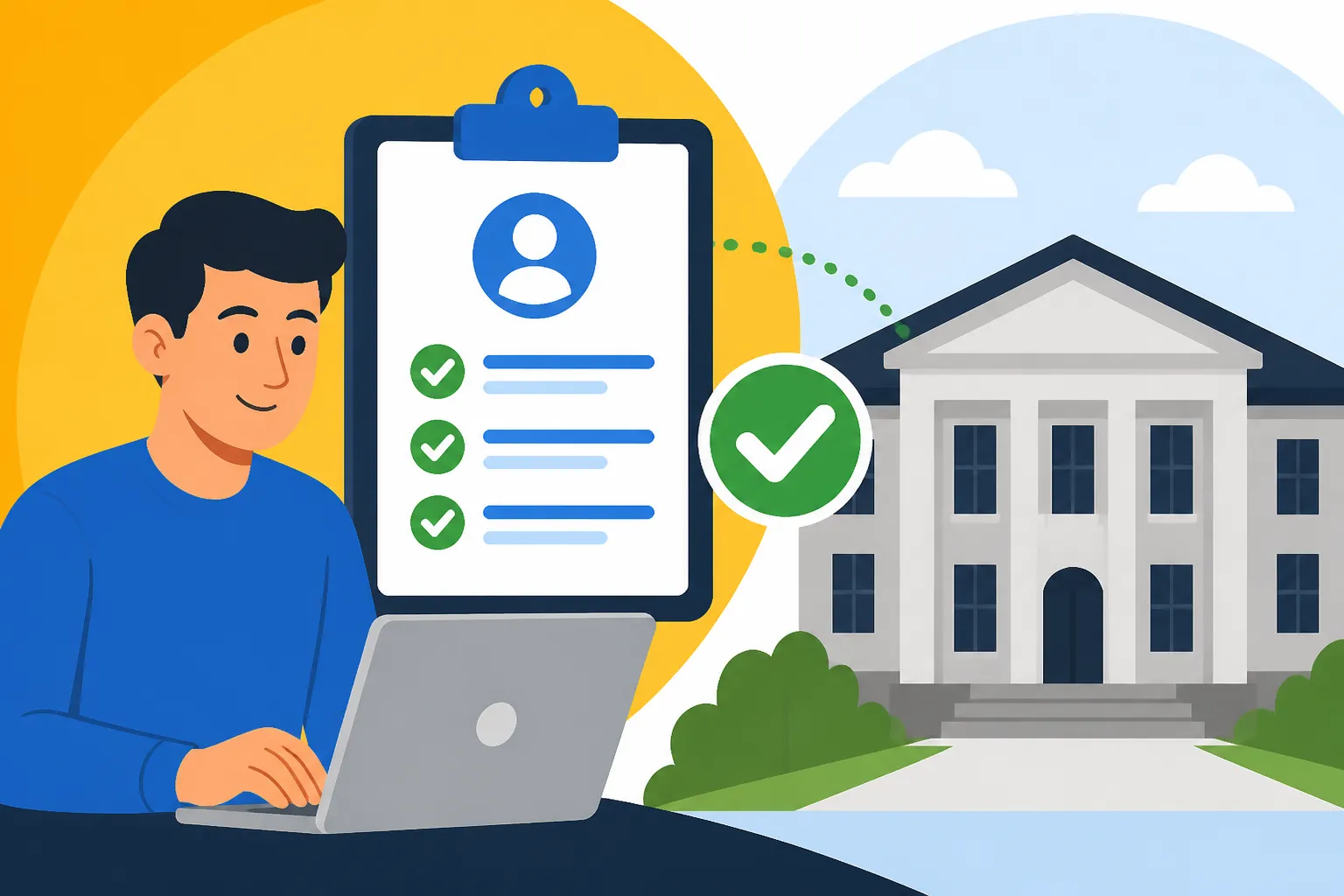
The manual registration process is mandatory for anyone entering the world of "Selbstständigkeit" (self-employment). This includes "Freiberufler" (liberal professions like journalists, artists, or engineers) and "Gewerbetreibende" (traders and commercial business owners). If you fit into this category, the Finanzamt has no way of knowing you exist until you tell them. You must submit the "Fragebogen zur steuerlichen Erfassung" (Questionnaire for Tax Collection). Failure to do this doesn't just mean you can't get paid; it can lead to hefty fines once the tax office eventually catches up with you—and they always do.
Completing the Fragebogen zur steuerlichen Erfassung
This is the "Final Boss" of German tax registration. In the old days, you could print this out and mail it, but today, the government mandates that you submit it electronically. For most expats, this form is a nightmare of technical German terms. I remember trying to figure out the difference between "Einkünfte aus Gewerbebetrieb" and "Einkünfte aus selbständiger Arbeit" and feeling like my brain was melting.
The form is divided into several sections. The first section asks for your basic personal details and your bank account information. The Finanzamt will use this account to either take money from you (for prepayments) or send you refunds. It is highly recommended to have a local or Euro-based account ready for this. While traditional banks can be slow to set up for newcomers, digital-first options like N26 or the business features of Wise are often much faster for expats who need a SEPA-compliant IBAN immediately.
The most stressful part of the form for most is Section 3, where you must estimate your expected income and expenses for the first and second year. Many expats fear that if they guess wrong, they will be in trouble. In reality, these are just estimates. However, be careful: if you estimate a high profit, the Finanzamt will immediately send you a schedule for Quarterly Tax Prepayments (Vorauszahlungen) for Self-Employed People. If you are just starting out and your cash flow is uncertain, it is often wiser to be conservative with your estimates so you aren't paying tax on money you haven't actually earned yet.
Navigating the ELSTER Portal and Modern Alternatives
The official way to submit your registration is through ELSTER (Elektronische Steuererklärung). It is the government's own portal, and while it is powerful, it is also entirely in German and looks like it was designed in the late 90s. To use it, you have to create an account, wait for a physical letter in the mail with an activation code, and then upload a security certificate to your browser. It is a slow, methodical process that requires patience. If you want to dive into the technical side, check out our guide on Filing Your German Tax Return With ELSTER.
Because ELSTER is so user-unfriendly, several private companies have stepped in to bridge the gap. For many expats, using a tool like Wundertax or similar platforms is a lifesaver. These services often provide the registration form in English, translating the bureaucratic jargon into something understandable. They guide you through each section and then submit the data to the Finanzamt on your behalf. While they usually charge a fee, the peace of mind of knowing you didn't accidentally tell the government you're running a multi-million euro conglomerate is often worth the cost.
If your situation is particularly complex—for example, if you are a US citizen with tax obligations back home or you have significant assets abroad—you might need more than just a software tool. In these cases, reaching out to specialized firms like Taxes for Expats can ensure that your German registration doesn't conflict with your home country's requirements. It is always better to spend a little on professional advice early on than to spend a lot on back-taxes and penalties later. You might want to consider Hiring a Tax Advisor in Germany: Do You Need One? if you feel truly out of your depth.
VAT and the Small Business Regulation
One of the most important decisions you will make during your registration is whether to opt for the "Kleinunternehmerregelung" (Small Business Regulation). This is found in Section 7 of the questionnaire. If you expect to earn less than €22,000 in your first year (and less than €50,000 in subsequent years), you can choose to be exempt from charging Value-Added Tax (VAT) on your invoices.
Choosing this option simplifies your life significantly. You won't have to file monthly or quarterly VAT declarations (Umsatzsteuervoranmeldung), which is a huge administrative burden. However, the downside is that you cannot "deduct" the VAT you pay on business expenses, like a new laptop or office rent. If you plan to work primarily with large corporate clients who are themselves VAT-registered, they won't mind if you charge VAT, so being a Kleinunternehmer might not be an advantage. For a deeper dive into this choice, see our article on Value-Added Tax (VAT) for Freelancers: When Do You Need to Register?.
If you decide not to use the small business regulation, or if you plan to work with clients in other EU countries, you should also request a VAT ID (Umsatzsteuer-Identifikationsnummer) on the form. This is a separate number from your Steuernummer and allows you to participate in the "reverse charge" mechanism, which is essential for modern digital freelancing. Even if you are a Kleinunternehmer, having a VAT ID can be useful for buying services like Google Ads or Adobe software from other EU countries without being double-taxed.
What to Expect After Submission
Once you have hit "submit" on your questionnaire, the waiting game begins. The Finanzamt is not known for its lightning-fast speed. Depending on the city you live in and the current workload of your local office, it can take anywhere from two to eight weeks to receive your Steuernummer. In cities like Berlin or Munich, where The Finanzamt: Dealing With German Tax Authorities are notoriously overwhelmed, it can sometimes take even longer.
You will receive a physical letter in the mail—Germany's preferred method of communication—containing your new tax number. At this point, you are officially in the system. You can now issue invoices, set up your professional accounting, and start your life as a self-employed professional in Germany. You should also take this time to ensure you have the right insurance in place, as the Finanzamt may eventually ask for proof that you are handling your own Social Security Contributions in Germany: What Comes Off Your Salary correctly.
If you don't hear back after six weeks, it is perfectly acceptable to call your "Sachbearbeiter" (case officer). Their phone number is usually listed on any previous correspondence you’ve had from the tax office, or you can find it by searching for your local Finanzamt online. Having your Steuer-ID ready when you call will make the process much smoother. If you need more help understanding the numbers you've been assigned, refer back to Getting Your Tax ID (Steuer-ID) and Tax Number in Germany for a clear explanation of what each digit means.
Disclaimer
This article is for informational purposes only and does not constitute professional tax or legal advice. German tax laws are complex and subject to frequent changes. We strongly recommend consulting with a qualified Steuerberater (tax advisor) or legal professional regarding your specific financial situation and registration requirements.