Lost or Stolen Bank Card: How to Block and Replace Cards in Germany
Reaching into your pocket at the grocery checkout to find your bank card gone is a universally terrifying moment. I still get cold sweats remembering the day my wallet was stolen on the U-Bahn, leaving me stranded and scrambling to stop the bleeding in broken German. This guide demystifies the uniquely German dual-blocking system, helping you secure your compromised accounts, replace your cards, and survive the administrative waiting game without cash.
Disclosure: This post may contain affiliate links. We may earn a commission at no extra cost to you if you make a purchase through these links. Read full disclosure.
Immediate Actions When You Lose Your Bank Card
The German financial system is notoriously rigid, and when a card goes missing, the clock starts ticking immediately. You cannot afford to wait and see if it turns up in your winter coat tomorrow. Acting within the first few minutes protects you from liability and limits the financial damage.
The Panic of Realizing It is Gone
Germany still operates heavily on a cash-and-card dual economy. Losing your primary Girocard (formerly EC-Karte) or debit card does not just mean you cannot shop online; it means you might not be able to buy groceries, pay for your tram ticket, or buy lunch at the university cafeteria. The moment you realize your card is missing, panic naturally sets in, especially when you are calculating how much of your monthly budget is suddenly at risk.
Your first instinct might be to call your local bank branch. However, local branches in Germany often have limited operating hours, and if you lose your card on a Friday evening, the branch will not open again until Monday morning. You cannot wait that long. German banking infrastructure has centralized emergency protocols designed to bypass local branch hours, but you must know how to navigate them. To prepare for the overall financial reality of living here, understanding the baseline costs is vital, as explored in Cost of Living in Germany: Breakdown of Expenses (Rent, Food, Transport).
Before you initiate any blocks, quickly verify if you have the card details stored securely elsewhere. You will need your IBAN (International Bank Account Number) and ideally your card number to process a block over the phone. If you do not have these memorized, check your recent bank statements or your digital banking portal immediately.
The National Emergency Number 116 116
If you cannot block your card via an app, your immediate next step is to call the national emergency blocking hotline: 116 116 (Sperr-Notruf). This is a central, free, 24/7 hotline established specifically to block lost or stolen debit cards, credit cards, and even digital identity cards across Germany.
If you are calling from a German phone number, you simply dial 116 116. If you are traveling abroad when the card goes missing, you must dial the international code first: +49 116 116. When you call, an automated menu will guide you, and you can usually request an English-speaking operator. You will need to provide your bank sorting code (Bankleitzahl or BLZ) and your account number, or your full IBAN.
Once the operator processes the block, your card’s microchip and PIN functionality are instantly frozen. No one will be able to walk up to an ATM and withdraw cash, nor will they be able to insert the card into a terminal and verify a transaction with a PIN. However, as many expats discover the hard way, the 116 116 hotline does not stop every type of transaction in Germany.
Using Your Banking App to Freeze Cards
For expats who use modern digital banks, the absolute fastest way to stop fraudulent charges is to bypass the phone lines entirely and use your smartphone. Traditional German savings banks (Sparkassen) have historically lagged in this area, but the landscape is improving.
If you bank with N26, the process is incredibly frictionless. The moment you realize your card is missing, you simply open the N26 app, navigate to the cards section, and toggle the “lock card” button. The card is instantly frozen. If you find the card at the bottom of your backpack an hour later, you can unlock it just as easily without having to order a replacement.
This level of control is a massive stress reliever for foreigners who might struggle to explain their situation to a German telephone operator. It also allows you to individually block specific features—like disabling ATM withdrawals or online payments—while keeping the physical card active if you suspect only your digital details were compromised. Maintaining this kind of agile control over your finances is a core component of managing Cross-Border Banking: Managing Your Home Country Account While in Germany.
Navigating Police Reports for Stolen Cards
If you suspect your card was stolen—or even if you simply lost it on the street—calling 116 116 is only step one. Germany has a deeply entrenched secondary payment system that bypasses PIN codes entirely, requiring a physical visit to the police station to fully secure your account.
Why You Must File a Police Report
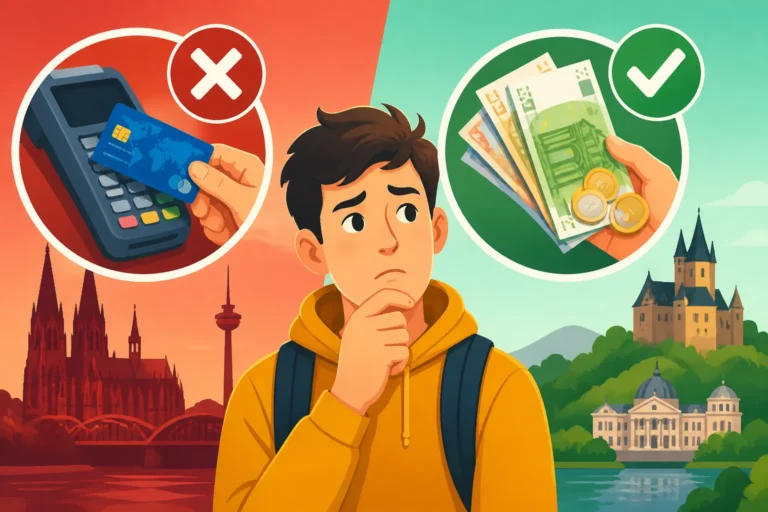
In many countries, blocking your card with the bank is the end of the story. In Germany, it is not. Many retail stores, supermarkets, and pharmacies in Germany use the Elektronisches Lastschriftverfahren (ELV) system. When you use your Girocard at these stores, you do not enter a PIN. Instead, you sign a physical receipt.
This signature authorizes the store to pull the money from your account via a SEPA direct debit (Lastschrift). Because this transaction is processed via the card’s magnetic stripe and your signature—not the microchip and PIN—the 116 116 blocking hotline cannot stop it. A thief can take your blocked Girocard to a supermarket, forge your signature, and successfully walk out with hundreds of euros worth of goods.
To stop these signature-based direct debits, you must file an official police report (Diebstahlanzeige or Verlustanzeige). You cannot do this over the phone; you must go to the nearest local police station (Polizeiwache). Reporting the loss officially shields you from liability if fraudulent direct debits appear on your statement later.
The KUNO System and KUNO Sperrung
When you sit down with the police officer, you must explicitly ask for a KUNO-Sperrung (KUNO block). KUNO stands for Kriminalitätsbekämpfung im unbaren Zahlungsverkehr unter Nutzung nichtpolizeilicher Organisationsstrukturen. It is a centralized IT system used by the German police and retail merchants.
When the police enter your IBAN and card sequence number into the KUNO system, it flags your card across the databases of participating German retailers. If a thief tries to use your stolen card with a forged signature at a participating supermarket, the cashier’s terminal will reject the transaction and alert the store that the card is stolen.
Not all expats know about the KUNO system, and bank operators often fail to explain it clearly in English. It is a critical layer of financial defense. You must bring your passport or residence permit, your IBAN, and your bank code to the police station to ensure the officer can initiate the KUNO block accurately. Understanding these distinct administrative layers is crucial, much like decoding the processes in German Bureaucracy 101: Understanding the Anmeldung, Schufa, and Tax ID.
Overcoming the Language Barrier at the Station
Walking into a German police station is an intimidating experience. The officers are generally polite, but they are state officials, and they operate strictly in formal, legal German. They are not required to speak English, and in smaller towns, they often will not.
If you are not comfortable navigating legal vocabulary, you should ask a German-speaking friend or colleague to accompany you. They can help translate the details of the incident. If you must go alone, prepare a written timeline of events using translation tools beforehand. Be ready to explain exactly when and where you last had the card, and whether you believe it was stolen (e.g., wallet pickpocketed on the train) or simply lost.
The officer will print out an official protocol (Protokoll) of your report. You must keep this document safe. Your bank will almost certainly demand a copy of this police protocol before they agree to reimburse you for any fraudulent charges that occurred before the block was fully enacted. If you are struggling with daily cultural and linguistic interactions, reaching out to your network for help is normal; learning how to build that network is covered in Making Friends in Germany: Social Tips for Expats.
The Bureaucracy of Replacing Your Bank Card
Once the card is fully blocked via the bank and the KUNO system, the waiting game begins. Replacing a bank card in Germany is rarely an instantaneous process, and the postal logistics involved will test your patience.
Ordering a Replacement Girocard or Visa
If you used the 116 116 hotline, the operator will block the card, but they cannot issue a new one. You must contact your bank directly to order an Ersatzkarte (replacement card).
With traditional German banks, this usually involves logging into your online banking portal and filling out a replacement request form, or physically walking into your local branch to sign paperwork. The bank will permanently invalidate the old card and issue a completely new card number. Depending on your bank’s fee schedule, replacing a lost card will usually cost you between 10 and 20 EUR, which is automatically deducted from your account balance.
If your wallet was stolen and you lost both your primary Girocard and your secondary credit card, you must order replacements for both separately. This cascading administrative burden highlights why having an organized financial life is critical when navigating the hurdles discussed in Moving Money to Germany: Declaring Savings and Large Transfers.
Timeframes and Living Without Cash
This is where the true expat frustration sets in. In many countries, you can walk into a local bank branch and they will print you a temporary debit card on the spot. In Germany, this is virtually impossible.
For security reasons, your new card will be mailed to your registered home address. It typically takes five to ten business days for the card to arrive. But Germany’s security protocols demand that your new PIN code is mailed separately, usually arriving two to three days after the physical card. You cannot use the card at an ATM or in a store until you have both pieces of mail.
This means you could be entirely without access to your main bank account for up to two weeks. If you do not have emergency cash hidden in your apartment, you will have to rely on friends or family to loan you grocery money. If you are a student, this can derail your entire month, highlighting the importance of having backup funds as explored in Working Part-Time as a Student: Rules for Working on a Student Visa.
Dealing with Traditional vs Digital Banks
The replacement experience varies wildly depending on your financial institution. Traditional German banks strictly adhere to the agonizingly slow postal process.
Conversely, modern digital banks offer immediate solutions that bypass the German postal service entirely. If you lose your physical N26 card, you can block it in the app and immediately order a replacement. While you wait for the plastic card to arrive in the mail, N26 allows you to instantly generate a new virtual card within the app. You can link this virtual card to Apple Pay or Google Pay immediately, allowing you to buy groceries with your phone the very same day your wallet was stolen.
This digital agility is a massive lifesaver for expats who do not have a robust local support network to borrow cash from. It transforms a two-week financial crisis into a minor, 10-minute administrative inconvenience.
| Feature | Traditional Bank (e.g., Sparkasse) | Digital Bank (e.g., N26) |
| Initial Blocking | Call 116 116 or bank hotline | Instant toggle in mobile app |
| Replacement Cost | Usually 10 – 20 EUR | Usually 10 EUR (depends on tier) |
| Time to Access Funds | 1 – 2 weeks (Postal mail only) | Immediate (via Virtual Card) |
| PIN Delivery | Mailed separately days later | Set instantly in the app |
| KUNO Registration | Required at police station | Recommended, but app limits risk |
Protecting Your Finances from Fraud
Blocking the card prevents future theft, but what happens if the thief already went on a shopping spree before you realized the card was missing? Navigating liability and reclaiming your stolen funds requires understanding German consumer protection laws.
Liability Limits for Unauthorized Transactions
Under European and German banking law (specifically the implementation of the Payment Services Directive – PSD2), your financial liability for unauthorized card transactions is strictly capped.
If your card is lost or stolen and used fraudulently before you block it, your maximum legal liability is capped at 50 EUR. Your bank is legally required to cover any fraudulent losses exceeding that 50 EUR limit. Once you successfully block the card (via 116 116 or your app), your liability drops to zero; the bank must cover 100% of any fraudulent charges that occur after the block is registered.
However, there is a massive legal exception: Grobe Fahrlässigkeit (gross negligence). If the bank proves you acted with gross negligence, the 50 EUR liability cap is voided, and you are responsible for the entire stolen amount. In Germany, keeping a piece of paper with your PIN code written on it inside your wallet alongside your card is the textbook definition of gross negligence. If a thief uses your card with the correct PIN shortly after stealing your wallet, the bank will assume you kept the PIN with the card, and they will refuse to refund you.
Reversing Direct Debits and SEPA Charges
If a thief bypasses the PIN and uses the signature-based direct debit method at a supermarket, the charge will appear on your statement as an ELV or SEPA Lastschrift.
You have immense power to reverse these charges. Under SEPA rules, you have an absolute legal right to reverse any unauthorized direct debit within 13 months of the transaction date. You do not even need to call the bank to do this; most German online banking portals have a “Lastschrift zurückgeben” (Return Direct Debit) button directly next to the transaction in your digital statement.
When you click this button, the money is instantly yanked back from the merchant and deposited into your account. The merchant is left to deal with the fraud. This is why having your police report and KUNO block on file is essential; it proves to the bank and the merchant that the signature was forged and that you are not committing friendly fraud.
Maintaining Backup Financial Ecosystems
The ultimate lesson of losing a bank card in a foreign country is that you must never rely on a single point of failure. If your only German bank card is stolen, and your cash is gone, you are completely financially paralyzed.
Veteran expats survive these crises by maintaining backup financial ecosystems. You should always have at least two distinct bank accounts. Keeping a global account like Wise active alongside your primary German account ensures you are never stranded. If your main German card is blocked, you can instantly log into Wise, transfer funds from your home country, and use your physical or digital Wise card to buy groceries and pay bills until your replacement German card arrives in the mail.
Treating your financial setup with redundancy is a core survival tactic, similar to understanding the complex tax implications of your global wealth, a dynamic explored deeply in Taxing Worldwide Income: How Germany Taxes Foreign Income and Assets.
Securing Your Global Expat Portfolio
When your wallet is stolen, the immediate panic is focused on your daily checking account. However, expats often carry debit cards, credit cards, and authentication tools linked to massive global portfolios. A compromised physical wallet can threaten your long-term financial security.
The Danger to Linked Foreign Accounts
Many expats continue to use credit cards from their home countries to avoid foreign transaction fees or to collect travel points. If your American, British, or Australian credit card is stolen in Berlin, calling 116 116 will not help you. The German emergency hotline only works for cards issued by German institutions.
You must immediately contact the international fraud department of your home country bank. This often means staying up late to navigate time zones and waiting on hold for international operators. The logistical nightmare of replacing a foreign card is severe; most foreign banks will refuse to mail a replacement card directly to a German residential address due to fraud protocols. You will likely have to have it mailed to a trusted family member back home, who then securely couriers it to you in Germany.
Safeguarding Your Investment Accounts
If your wallet is stolen, your physical identification cards (residence permit, driver’s license) are likely gone as well. A sophisticated thief with your physical ID and your debit cards possesses a dangerous amount of personal data.
While they cannot easily drain your long-term investment accounts without complex passwords, identity theft is a real threat. Expats who hold significant capital in global brokerage accounts must ensure their assets are walled off from their daily spending infrastructure.
Using a highly secure platform like Interactive Brokers is crucial here. Interactive Brokers employs aggressive two-factor authentication (2FA) that is decoupled from your physical wallet. Because your brokerage account is intentionally separated from your daily German checking account, a thief who steals your Girocard on the U-Bahn has absolutely zero access to your investment portfolio. This structural separation protects your life savings while you deal with the localized chaos of replacing your debit card.
Best Practices for Long Term Financial Security
To survive a lost wallet scenario without spiraling into a crisis, you must institute rigid financial hygiene.
Never carry all your bank cards in one wallet. If you have a primary German card, a backup Wise card, and a home-country credit card, keep one of those cards securely locked in a drawer in your apartment. This guarantees you will always have access to emergency funds if your primary wallet is compromised.
Store your IBANs, bank sorting codes, and the international fraud numbers for all your accounts in a secure, encrypted digital password manager. When you are standing in a German police station trying to initiate a KUNO block, you do not want to be desperately scrolling through old emails trying to find your account number. Preparation turns a terrifying expat emergency into a manageable administrative chore.
References
Primary sources (official)
- Sperr-Notruf 116 116: The official portal for the national emergency blocking hotline, providing detailed instructions on what information is required to block cards, SIMs, and digital identities. https://www.sperr-notruf.de/
- KUNO-Sperrdienst: The official website explaining the KUNO system, operated by the German police and retail associations, detailing why a police report is necessary to block signature-based direct debits. https://www.kuno-sperrdienst.de/
- BaFin – Federal Financial Supervisory Authority: The regulatory body’s official guidelines on unauthorized card payments, consumer liability limits (the 50 EUR rule), and gross negligence clauses. https://www.bafin.de/EN/Verbraucher/Bank/Zahlungsverkehr/Kartenverlust/kartenverlust_node_en.html
Other helpful sources
- Make it in Germany – Bank Account: The federal government’s guide to navigating the German banking system, offering practical advice on managing accounts and understanding basic consumer rights. https://www.make-it-in-germany.com/en/living-in-germany/money-taxes/bank-account
Disclaimer
The information provided in this article is for general informational and educational purposes only and does not constitute professional financial or legal advice. German banking regulations, consumer liability limits under the Payment Services Directive (PSD2), and police reporting protocols for the KUNO-Sperrdienst are strictly enforced and subject to individual banking terms and conditions. Finding your card after reporting it stolen requires a formal unblocking process that varies by institution; never attempt to use a previously blocked card without explicit bank authorization.