Permanent Residence in Germany: Paths and Timelines
The constant cycle of renewing residence permits is one of the most draining parts of life in Germany. I still remember the pit in my stomach every time my current visa neared its expiration date, wondering if the clerk at the Ausländerbehörde would find a reason to send me packing. This guide solves that anxiety by laying out the exact roadmap to secure your permanent residency and finally stop living in two-year increments.
Disclosure: This post may contain affiliate links. We may earn a commission at no extra cost to you if you make a purchase through these links. Read full disclosure.
The Holy Grail of German Bureaucracy: Understanding the Niederlassungserlaubnis
When you first arrive in Germany, you are usually granted a temporary residence permit (Aufenthaltstitel). These are tied to specific purposes: a job, a degree, or a spouse. The moment that purpose disappears—say, you lose your job or your relationship ends—your right to stay in Germany becomes incredibly precarious. This is why The Settlement Permit (Niederlassungserlaubnis) in Germany is the ultimate goal for most expats. It is an unlimited residence permit that allows you to live and work anywhere in the country without being tethered to a specific employer or marital status.
What Exactly Is Permanent Residency?
Permanent residency is not citizenship, but it is the closest thing to it. It grants you the right to stay in Germany indefinitely. Unlike a temporary visa, you don't have to prove every few years that you still meet the initial requirements of your stay. You can quit a corporate job to become a freelancer, take a sabbatical, or even retire here. The only major thing you cannot do is vote in federal elections or hold a German passport.
One of the biggest misconceptions I see in expat circles is that permanent residency "happens automatically" after a certain number of years. It absolutely does not. You have to proactively apply for it, pay the fees, and prove that you have integrated into German society. It is a rigorous check of your financial history, your criminal record, and your language skills.
The Immediate Benefits of Staying Forever
Beyond the psychological relief of not having to visit the immigration office every 24 months, there are massive practical perks. For one, you become eligible for certain social benefits that are often restricted for temporary residents. If you decide to buy a home, getting a mortgage as a permanent resident is significantly easier. Banks are notoriously cautious with foreigners on limited visas; they want to know you’ll be around to pay off a 30-year loan.
Furthermore, your status becomes "secure." If you were to lose your job, you wouldn't be looking at a ticking clock to find a new one or face deportation. You would have access to the same unemployment benefits as a German citizen. This safety net is what truly makes Germany feel like home rather than just a temporary stopover. To ensure your transition from a limited visa is smooth, many newcomers use services like Expatrio to manage their initial health insurance and financial requirements, which builds a solid paper trail for future residency applications.
Standard Paths to Permanent Residence
If you are in Germany on a standard work permit (not a Blue Card or a specialized researcher visa), the road is a bit longer, but it is very well-defined. The German government wants to see that you are a "settled" member of society, which they define largely through your contributions to the social security system and your ability to speak the language.
The General 5-Year Rule
For the average professional moving to Germany, the magic number is five. According to Paragraph 9 of the Residence Act, you can generally apply for permanent residency after living in Germany for five years on a valid residence permit. During these five years, you must have been employed and paying into the public pension system for at least 60 months.
This 60-month requirement is the "make or break" for many. I’ve seen people who lived here for seven years but spent two of them as students or on a "searcher" visa where they weren't paying pension contributions. Those months often don't count toward the 60-month total for the standard path. It is vital to keep your Rentenversicherungsverlauf (your pension insurance record) organized. You can request this document from the Deutsche Rentenversicherung at any time, and it is a core piece of your application.
Financial Stability and Pension Contributions
It isn't just about the time spent; it’s about the money paid in. The German state needs to be sure that if you stay forever, you won't become a "burden" on the social system. This means you must prove you can support yourself and your family without relying on public funds (Bürgergeld). They will look at your current salary, your rental costs, and your overall debt-to-income ratio.
For those who are self-employed or freelancers, this section is even more scrutinized. You’ll need to provide tax assessments (Steuerbescheide) from the last few years and often a net profit calculation from a tax advisor. Because the paperwork can get incredibly dense, especially with foreign documents, I always recommend using Lingoking for any certified translations of your birth certificates or foreign marriage licenses. The Ausländerbehörde is famously picky about "official" translations, and having a professional service handle it prevents your application from being tossed out on a technicality.
Accelerated Timelines for High-Achievers and Specialized Workers
Germany is desperate for talent, and the immigration laws reflect this by offering "fast tracks" for certain groups. If you fall into one of these categories, you could be looking at permanent residency in as little as 21 months rather than five years.
The EU Blue Card Fast Track
The EU Blue Card Germany: Eligibility, Benefits, and Application Process is arguably the best visa to have if your goal is long-term settlement. If you hold a Blue Card, you don't have to wait 60 months. If you can prove B1 level German language skills, you can apply for your Niederlassungserlaubnis after just 21 months of employment. If your German is only at an A1 level, the timeline extends to 33 months—still significantly faster than the standard five-year wait.
This is a massive incentive for tech workers, engineers, and doctors. I personally know several developers who moved to Berlin, buckled down on their German lessons for two years, and had their permanent residency before they even finished their third year in the country. It changes the entire dynamic of your expat experience when the "big hurdle" is cleared so early on.
Graduates of German Universities
If you moved here as a student and successfully completed a degree at a state-recognized German university, the government rewards your integration effort. You can apply for permanent residency after only two years of working in a position related to your degree. This "two-year rule" is a fantastic bridge for international students.
However, there is a catch: during those two years, you must have held a residence permit for employment (Skilled Worker visa) and paid into the pension system for those 24 months. Time spent as a student doesn't count toward the 24 months of pension contributions, but it does count toward the overall "time spent in Germany" requirement. If you are just starting your student journey, platforms like Expatrio are essential for setting up the mandatory blocked account and finding student-specific health insurance that the embassy requires for your initial visa.
Skilled Workers and Professionals
Even if you don't have a Blue Card (perhaps your salary is just below the threshold), you may still qualify for an accelerated path if you are considered a "Skilled Worker" under the newer immigration laws. Since the 2020 and 2024 updates, professionals with recognized vocational training or university degrees can often apply for permanent residency after three years, provided they meet the language and pension requirements.
The key here is the Recognition of Foreign Qualifications in Germany (Anerkennung and Anabin). Your degree must be recognized as equivalent to a German one. If your degree isn't in the Anabin database, you’ll have to go through a formal recognition process, which can take months. Do not wait until the three-year mark to check this. Verify your degree status the moment you arrive.
Family-Based Paths and Humanitarian Considerations
The "German way" of immigration heavily favors the concept of the family unit. If you are married to a German citizen, your path to staying forever is one of the smoothest available, though it still requires a fair amount of "paper-pushing."
Family Reunification with German Citizens
If your spouse is a German national, you can usually apply for a settlement permit after only three years of living together in Germany. The requirements are slightly relaxed compared to the work-based paths. For instance, you generally only need to prove B1 German, and the 60-month pension rule is often waived or significantly reduced because the government assumes the household's joint income and the German spouse's status provide enough stability.
However, the "living together" part is strictly enforced. You will need to show that you are still in a "marital community." This usually involves providing a joint Anmeldung (Address Registration) vs Visa: Why Both Are Needed in Germany and sometimes even showing joint bank accounts or insurance policies. If your marriage certificate is from outside the EU, make sure to get a certified translation through Lingoking well in advance, as the authorities will need to verify its authenticity through a process called an Apostille or Legalization.
Self-Employed and Freelance Considerations
Freelancers often feel like the "black sheep" of the German immigration system. While employees have their pension contributions automatically deducted, freelancers have to prove they’ve made private provisions. If you are on a freelance visa, you can generally apply for permanent residency after five years, but the scrutiny of your business's "sustainability" is intense.
The caseworker will look at your profit and loss statements, your tax returns, and your future contracts. They want to see that your business is not just surviving, but thriving enough to pay for your healthcare and your retirement. If you are a freelance artist or a "creative" in Berlin, the rules can sometimes be slightly more flexible under specific local guidelines, but the core requirement of being "financially self-sufficient" never goes away.
Essential Requirements: The "Checklist" That Stops Everyone in Their Tracks
Regardless of which path you take, there are a few "non-negotiables" that catch people off guard. I have seen many people get to their appointment only to be turned away because they lacked one specific document or didn't meet a minor sub-requirement.
Language Proficiency and the B1 Barrier
Unless you are a "highly qualified" researcher or an exceptionally high earner, you will almost certainly need to prove you speak German at a B1 level. This is defined by the Common European Framework of Reference for Languages (CEFR). An "attendance certificate" from a language school isn't enough; you need a formal certificate from a recognized testing body like German Language Certificates: TestDaF, DSH, and Goethe.
B1 means you can handle most everyday situations, talk about your work, and understand the main points of clear standard input. It is the level where you stop being a "visitor" and start being an "inhabitant." I highly recommend starting your language journey the day you arrive. Trying to cram for a B1 exam three months before your permanent residency eligibility kicks in is a recipe for a nervous breakdown.
Living Space and the Proof of Accommodation
One of the more unique German requirements is that you must have "sufficient living space" for yourself and your family members. The definition of "sufficient" varies by state (Bundesland), but generally, it’s about 12 square meters per person over the age of six. You will need to provide your rental contract and a signed document from your landlord called a Wohnungsgeberbestätigung.
The Ausländerbehörde will also check your Nebenkosten (utilities). They want to see that you are actually paying for your heating and water and that your rent is "reasonable" compared to your income. If you are sub-letting or living in a WG (flatshare), make sure your name is officially on the Anmeldung (Address Registration) vs Visa: Why Both Are Needed in Germany records, or your application will be stalled indefinitely.
Navigating the Application Process
Once you’ve checked the boxes and hit your timeline, the actual process of applying can feel like a part-time job. Between the Navigating the Ausländerbehörde: Tips for Dealing with German Immigration Offices and the massive document folders, organization is your best friend.
Document Preparation and the Lingoking Advantage
The sheer volume of paperwork required for the Niederlassungserlaubnis is staggering. You’ll need:
- The application form (Antrag auf Erteilung der Niederlassungserlaubnis).
- A valid passport and current residence permit.
- One biometric photo (don't smile!).
- Proof of income (last 6 months of payslips).
- Your pension contribution statement (Rentenauskunft).
- Proof of health insurance (a letter from your Krankenkasse).
- Your rental contract and proof of monthly rent payments (bank statements).
- Your B1 language certificate.
- The "Life in Germany" (Leben in Deutschland) test results.
If any of your foundational documents—like your university degree or your marriage license—are not in German, you cannot just translate them yourself. The bureaucracy requires "certified" translations. Using a service like Lingoking ensures that your translations are legally recognized by every government office in Germany, saving you from the dreaded "this is not an official document" speech from a stony-faced clerk.
The Ausländerbehörde Appointment Reality
In cities like Berlin, Munich, or Hamburg, getting an appointment can feel like winning the lottery. You often have to refresh the booking page at 7:00 AM on a Wednesday or hire a service to find a slot for you. If your current visa is about to expire while you wait for your permanent residency appointment, don't panic. You can request a The Fiktionsbescheinigung: Bridging Your Permit in Germany, which legally extends your current status until your appointment takes place.
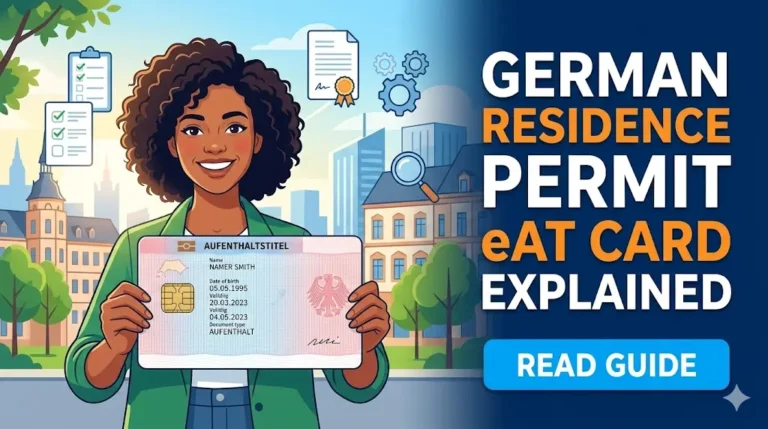
When you finally get into that office, be prepared. Organize your documents in a clear binder with tabs. Dress professionally. Even if your German is good, the stress of the situation can make you forget basic words. Be patient, be polite, and remember that the person across the desk is dealing with hundreds of people just as stressed as you are. Once the application is approved, it usually takes 4-8 weeks for your new eAT (electronic residence title) card to be printed and mailed to you.
Comparison Table: Timelines at a Glance
| Path to Permanent Residence | Minimum Years in Germany | Pension Contributions Required | German Language Level |
|---|---|---|---|
| Standard Work Permit | 5 Years | 60 Months | B1 |
| EU Blue Card (Fast Track) | 21 Months | 21 Months | B1 |
| EU Blue Card (Standard) | 33 Months | 33 Months | A1 |
| German University Graduate | 2 Years | 24 Months | B1 |
| Spouse of a German Citizen | 3 Years | N/A (Varies) | B1 |
| Skilled Worker (New Law) | 3 Years | 36 Months | B1 (Varies) |
| Self-Employed / Freelance | 5 Years | 60 Months (Private) | B1 |
Note: Timelines assume you have been continuously employed and meet all financial stability requirements. Always check with your local Ausländerbehörde for specific regional variations, as places like Bavaria can be more stringent than Berlin.
Staying Insured Throughout the Process
A hidden trap in the residency application is the "gap" in health insurance. The German government is obsessed with insurance continuity. If there is even a one-month gap where you weren't covered, it can derail your permanent residency. If you are transitioning between jobs or moving from a student status to a work permit, make sure you understand the nuances of Health Insurance in Germany: Understanding Public vs Private Coverage.
For those who started their journey with Expatrio, you likely already have a good grasp of the system, but as you move toward permanent residency, you might need to switch to a more comprehensive private or public plan. Ensure you have your "Mitgliedsbescheinigung" (proof of membership) ready for your appointment, and make sure it explicitly states that your coverage is "unlimited" or "automatically renewing."
Finally, once you have your settlement permit, you might want to look toward the next big step: German Citizenship (Einbürgerung): Requirements Overview. With the 2024 dual citizenship laws, many people are finding that they can apply for citizenship shortly after getting their permanent residency, or in some cases, skip the settlement permit entirely if they meet the 5-year naturalization requirement.
Disclaimer
The information provided in this guide is for informational purposes only and does not constitute legal advice. German immigration laws and local regulations at the Ausländerbehörde are subject to frequent changes and regional interpretations. Always consult with an official government source or a qualified immigration lawyer before making legal decisions regarding your residence status in Germany.