How to Apostille US Documents for Germany
You finally have your visa appointment booked, your bags are half-packed, and you think you are ready to move to Germany until a clerk mentions the word "apostille." I remember the exact moment I realized my standard US birth certificate wasn't "official" enough for the local Ausländerbehörde; I was standing in a cold hallway in Berlin, clutching a folder of papers that had taken me months to gather, only to be told they were essentially useless without an apostille from the Secretary of State in the state that issued them. This guide solves the confusing, multi-layered nightmare of getting your US documents apostilled so you can actually start your life in Germany without the bureaucratic heartbreak.
Disclosure: This post may contain affiliate links. We may earn a commission at no extra cost to you if you make a purchase through these links. Read full disclosure.
What is an Apostille and Why Germany Requires It
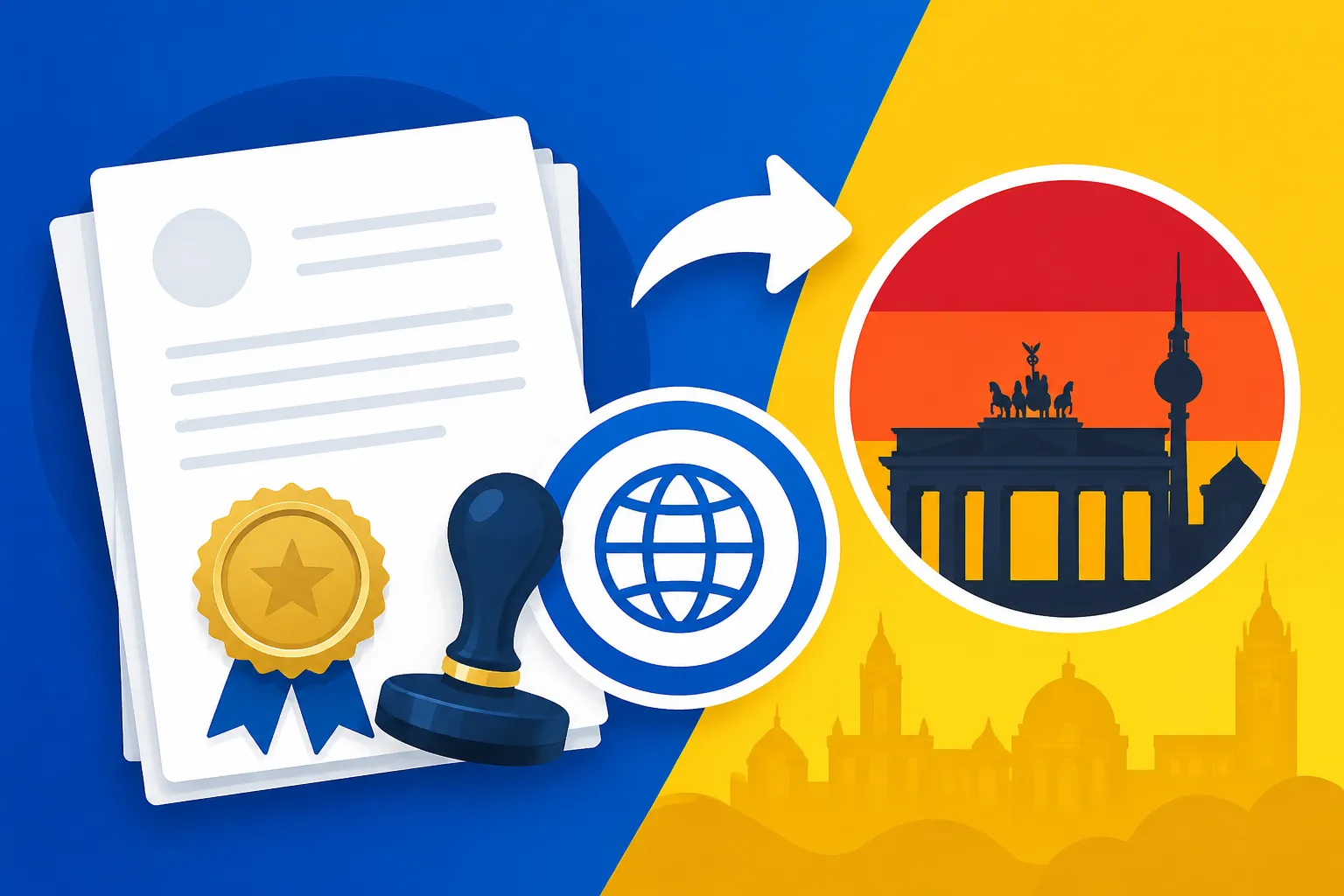
If you are moving from the United States to Germany, you are moving between two countries that are signatories to the Hague Convention of 1961. In simple terms, this convention was designed to abolish the requirement of "legalization" for foreign public documents, which used to be a much more grueling process involving embassies and consulates. Instead, we now use the apostille—a specialized certificate issued by a competent authority that proves your document is authentic.
Germany is famously meticulous about paperwork. Whether you are applying for an EU Blue Card Germany: Eligibility, Benefits, and Application Process or preparing for Family Reunification in Germany: Ultimate Guide for Bringing Your Loved Ones, the German authorities need to know that your US-issued marriage license or university diploma is real. They cannot simply take your word for it, nor can they easily verify the signatures of thousands of different US notaries or county clerks. The apostille acts as the universal "stamp of approval" that tells a German official, "Yes, this signature is valid, and the person who signed it had the authority to do so."
Without this seal, your documents are often viewed as mere photocopies in the eyes of the German law. It is a frustrating hurdle, especially when you realize that an apostille must be obtained in the country where the document was issued. If you are already in Munich and realize you need an apostilled birth certificate from California, you cannot get it at the US Consulate in Germany. You have to send that document back across the Atlantic. This is why understanding German Immigration Terms Explained: A Glossary for Newcomers is so vital before you even board your flight.
Identifying Which Documents Need the Seal
Not every piece of paper in your folder needs an apostille, but the ones that do are non-negotiable. Generally, any "public document" issued by a government body or notarized by a public official will require one if it is being used for a residency permit, marriage, or professional recognition.
Common documents that require an apostille for Germany include:
- Birth Certificates (for residency and family permits)
- Marriage Licenses (for spouse visas)
- Divorce Decrees (to prove you are eligible to remarry or for name changes)
- FBI Criminal Background Checks (often required for certain high-security jobs or specific visa types)
- University Diplomas and Transcripts (for the Recognition Partnership Visa: Working While Validating Foreign Qualifications)
- Death Certificates (for inheritance or survivor benefits)
It is important to note that Germany usually requires these documents to be relatively "fresh." While a diploma doesn't expire, birth and marriage certificates often need to have been issued within the last six months to a year depending on the specific city office you are visiting. If you are working with a relocation provider like Expatrio, they can often help you verify the specific requirements for your visa category so you don't waste money apostilling an outdated document.
The State Level Apostille Process for Vital Records
Most of the documents you will deal with—birth, marriage, and death certificates—are issued at the state or county level. Therefore, the apostille must be issued by the Secretary of State in the state where the document originated. If you were born in New York but married in Nevada, you will need to deal with two different state offices.
The process usually follows these steps:
- Obtain a Certified Copy: You cannot apostille a document you printed at home or a simple photocopy. You must have an official "Certified Copy" with a raised seal or colorful signature from the Vital Records office.
- Verify Notarization: For documents like diplomas or private contracts, you must first have them notarized by a local Notary Public. For vital records (birth/marriage), the signature of the Health Department official or County Clerk usually acts as the "notarization," but some states require a "County Clerk Certification" before the Secretary of State will touch it.
- Submit to the Secretary of State: You will fill out a request form (usually found on the state’s "Notary" or "Authentication" webpage), pay a fee (ranging from $5 to $40 per document), and mail it in or visit in person.
I highly recommend using a trackable mailing service. Losing your original marriage certificate in the mail three weeks before your move is a stress level I wouldn't wish on anyone. When you are How to Prepare Documents for the Ausländerbehörde, having these state-level seals clearly visible is the first thing the officer will look for.
Federal Apostilles for FBI Background Checks
If your visa requires a criminal record check, you will likely need an FBI Identity History Summary. Because this is a federal document, a state Secretary of State cannot apostille it. You must send it to the US Department of State’s Office of Authentications in Washington, D.C.
This is arguably the most painful part of the process for US expats. While state offices might take a few days, the federal office can take anywhere from four to twelve weeks.
- Request your FBI Check: Use an FBI-approved channeler to get your fingerprints done and receive your digital or paper results.
- Submit to the US Dept of State: You must mail the physical results (or a printed copy of the digital PDF) along with Form DS-4194.
- Include a Prepaid Return Envelope: They will not mail it back to you unless you provide a self-addressed, stamped envelope (preferably via UPS or FedEx).
If you are in a rush to secure your Germany’s Skilled Worker Visa: Requirements and How to Apply, start the FBI apostille process the moment you decide to move. Waiting until the last minute for a federal seal is the leading cause of delayed start dates for US professionals moving to Germany.
Comparing the Two Paths of Authentication
| Document Type | Issuing Authority | Apostille Authority | Typical Timeline |
|---|---|---|---|
| Birth/Marriage Certificate | State/County Vital Records | Secretary of State | 1-10 Business Days |
| University Diploma | University Registrar | Secretary of State (after Notarization) | 5-15 Business Days |
| FBI Background Check | Federal Bureau of Investigation | US Department of State (DC) | 4-12 Weeks |
| Notarized Power of Attorney | Local Notary Public | Secretary of State | 1-5 Business Days |
Managing the Translation Requirements
Once you have your document and its attached apostille, you are still not quite finished. Most German offices (the Standesamt for marriage or the Ausländerbehörde for visas) will require a certified translation into German. Here is the golden rule: Always get the apostille first, then get the translation.
The translator needs to translate the entire document, including the text on the apostille seal itself. If you translate the birth certificate and then get the apostille, you’ll have a German translation that is missing the most important part of the legal chain. For high-quality, government-accepted translations, I always recommend using a service like Lingoking. They specialize in "certified translations" (beglaubigte Übersetzungen) done by translators sworn in by German courts. This is a crucial detail—a translation done by your bilingual friend or a random agency in the US might be rejected. German officials want to see the stamp of a translator registered in the German system.
If you are using Expatrio to set up your blocked account or health insurance, they are usually very flexible with English documents, but for the actual government visa process, a Lingoking translation is the standard "safe bet" to avoid being sent home from your appointment.
Real-World Scenarios and Troubleshooting
Let’s look at a hypothetical scenario. Imagine Sarah, a software engineer from Austin, Texas, is moving to Munich. She needs to bring her husband on a Spouse Visa for Germany and the A1 German Requirement. Sarah has their marriage certificate from Travis County.
First, Sarah needs to ensure the certificate she has is a "certified copy" from the County Clerk. She then sends it to the Texas Secretary of State in Austin for the apostille. While she waits, she realizes she also needs an How to Get a Police Clearance Certificate for a German Visa because her employer requested it. She gets her fingerprints done at a local station, submits them to the FBI, and as soon as the report is ready, she mails it to Washington, D.C.
The mistake many make is thinking the Texas Secretary of State can apostille the FBI report. They can't. Sarah has to manage two different timelines. Once both documents return with their respective seals, she uploads them to Lingoking to get the German versions. Only then is she truly ready for her meeting with the German consulate or the local authorities.
If you find yourself already in Germany and realize you forgot a seal, don't panic, but prepare to pay. There are "apostille couriers" in the US who, for a hefty fee, will physically take your documents to the Secretary of State or the DC office to speed things up. It’s expensive, but when your residency permit is on the line, it’s often worth every penny. You can also check Legalizing and Translating Documents for German Visa Applications for more specific advice on handling older documents.
Common Pitfalls to Avoid
The most frequent error I see expats make is confusing a "notarized copy" with an "apostilled document." A notary in the US simply confirms that the person signing the document is who they say they are. An apostille confirms that the notary (or government official) is legitimate. In the eyes of a German bureaucrat, a US notary stamp on its own carries almost zero weight.
Another pitfall is the "Original vs. Copy" debate. You must apostille the original certified copy. Do not apostille a photocopy and expect the German government to accept it. They want to see the physical, multi-colored, or embossed seal attached to the original government-issued paper.
Finally, be aware of the "staple rule." In many states, the apostille is a separate sheet of paper stapled to your original document. Do not, under any circumstances, remove that staple. If the papers are separated, the apostille is considered tampered with and is legally void. I have seen people try to "neatly" scan their documents by removing the staples, only to have to restart the entire process from scratch.
Final Preparations Before Your Appointment
As you gather your final pile of papers, take a moment to breathe. The apostille process is the "final boss" of US-to-Germany relocation bureaucracy. Once you have these seals, you have effectively bridged the legal gap between the two countries. You are no longer just a person with some papers; you are a documented resident-to-be whose credentials have been verified at the highest levels of government.
Make sure to keep digital scans of everything—the document, the apostille, and the certified translation. While the German office will want to see the originals, having the digital copies stored safely will save you if anything is ever lost. If you are still feeling overwhelmed, revisit the Germany Immigration Checklist: 10 Steps to Moving Legally to ensure you haven't missed any other small but vital requirements. Living in Germany is an incredible experience, and once you get past this "mountain of paper," the high quality of life and cultural richness of the country make every single apostille worth the effort.
Disclaimer
This guide is intended for informational purposes only and does not constitute legal advice. Requirements for apostilles and document legalization can change based on updated international treaties or local German state regulations. Always verify requirements with the specific German consulate or Ausländerbehörde you are dealing with, and consider consulting a legal professional for complex immigration matters.