How to Prepare Documents for the Ausländerbehörde
The sheer weight of a thick, plastic folder is a sensation every expat in Germany knows too well. I still remember the cold sweat I broke into when I realized I’d forgotten to print a single month’s bank statement for my first residency appointment in Berlin. This guide is designed to ensure you never feel that panic, walking you through exactly how to organize your life for the Ausländerbehörde.
Disclosure: This post may contain affiliate links. We may earn a commission at no extra cost to you if you make a purchase through these links. Read full disclosure.
The Psychological Battle of the Ausländerbehörde Folder
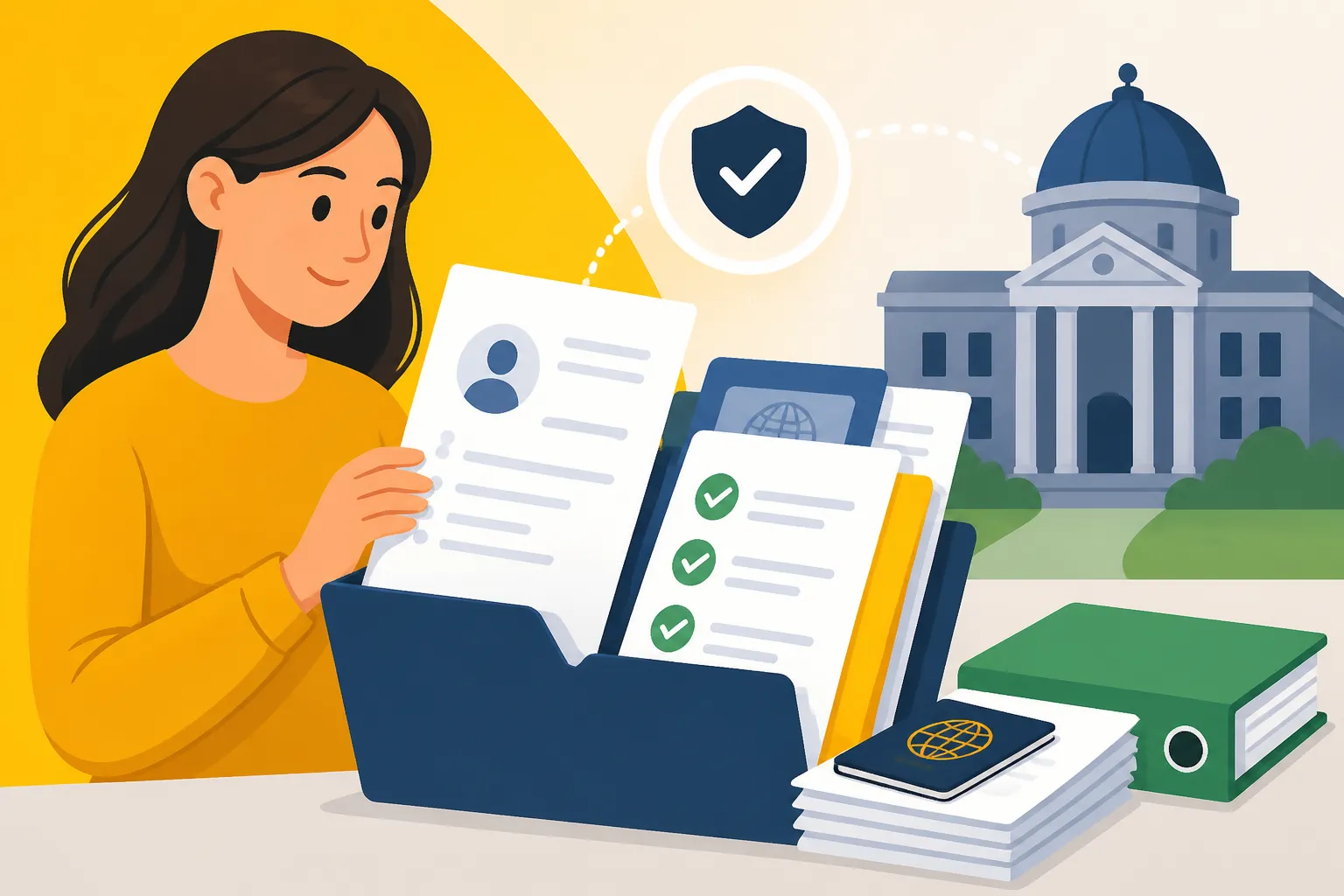
Walking into a German immigration office is less like a casual administrative visit and more like a high-stakes performance. You are there to prove that you belong, that you are self-sufficient, and that you have followed every minute regulation to the letter. In my years of living here, I have learned that the "Case Officer" (Sachbearbeiter) is not just looking at your documents; they are looking at your organization. A messy pile of loose papers signals a messy life, whereas a perfectly tabbed binder suggests someone who respects the German love for "Ordnung."
When you begin Navigating the Ausländerbehörde: Tips for Dealing with German Immigration Offices, you must understand that the burden of proof is entirely on you. If a document is missing, the officer has the right to send you home immediately, often resulting in months of waiting for a new slot. The bureaucracy can feel cold and impersonal, but being hyper-prepared is your best defense against the "missing paper" look that haunts so many newcomers.
The Golden Rule of Completeness and Order
The most important advice I can give is to never assume the officer already has your information on file. Even if you have submitted documents digitally or during a previous renewal, bring a physical copy of everything. Germany is slowly digitizing, but at the immigration office, paper is still king.
The Master Checklist for Every Appointment
Every visa type—be it for work, study, or family reunification—requires a core set of documents. Before you dive into the specifics of your niche, ensure you have these "Big Five" ready:
- Valid Passport: It must be valid for at least six months beyond your intended stay.
- Biometric Photo: Not a holiday snap or a casual selfie. It must meet the strict federal standards for biometric identification.
- The Application Form: Known as the Antrag auf Erteilung eines Aufenthaltstitels, this should be filled out completely in German.
- Proof of Residence: This is your Meldebescheinigung. If you haven't done this yet, read up on The Anmeldung: Registering Your Address in Germany to understand why this is the cornerstone of your life here.
- Proof of Health Insurance: A simple card is usually not enough; you need a specific letter for the authorities from your provider.
Document Translations and Legalizations
One of the biggest hurdles is the language barrier. Most officers are not required to speak English, and even if they do, they will usually refuse to accept documents in any language other than German. This is where people often get stuck. Your birth certificate from home or your marriage license won't cut it unless it’s accompanied by a certified translation.
For this, I always recommend using a service like Lingoking. They specialize in sworn translations that are legally recognized by German authorities. It is vital to use a "beeidigter Übersetzer" (sworn translator) because a standard translation has no legal standing in the eyes of a Sachbearbeiter. If you are bringing documents from outside the EU, you might also need an apostille. You can find more detail in our guide on Apostilles and Certified Translations for German Immigration to ensure your foreign papers are actually usable.
Financial Proof and Insurance Requirements
The German state wants to ensure you won't become a burden on the social system. Consequently, proving your financial stability is often the most scrutinized part of the process. The officer will look at your bank statements with a magnifying glass, checking for consistent income and enough remaining balance to cover your living costs.
Demonstrating Financial Stability
If you are an employee, this means bringing your last three to six months of payslips (Lohnabrechnungen). If you are a freelancer, the requirements are much steeper, often requiring a professional profit-and-loss statement from a tax advisor. For those looking for work, you might be utilizing the Opportunity Card (Chancenkarte): Germany’s Points-Based Job-Seeker Visa Explained, which has very specific requirements regarding how you prove you can support yourself while searching for a role.
The Role of the Blocked Account
For students and job seekers, the most reliable way to prove financial means is through a Sperrkonto (blocked account). This is a special type of bank account where you deposit a required sum—currently over 11,000 Euros—and the bank releases a set amount to you each month. Providers like Expatrio are a lifesaver here. They offer an all-in-one package that includes the blocked account and the necessary health insurance, which are both accepted without question by the Ausländerbehörde. Using Expatrio simplifies the process because their documents are pre-formatted to meet the exact expectations of German bureaucrats.
Health Insurance Standards
Insurance is non-negotiable. You cannot live in Germany without it, and the immigration office will check that your coverage meets the "minimum requirements." This usually means it must cover at least 30,000 Euros and include repatriation costs. Understanding the nuances of Health Insurance in Germany: Understanding Public vs Private Coverage is essential because "travel insurance" is almost never accepted for long-term residence permits. Again, services like Expatrio can help bridge this gap for newcomers by providing "Incoming Insurance" that satisfies the visa requirements until you can transition into a standard German plan.
| Document Category | Item Required | Notes for Expats |
|---|---|---|
| Identity | Valid Passport | Check for at least 2 empty pages. |
| Status | Current Visa/Permit | Bring your current Biometric Residence Permit (eAT): Understanding Your German Residence Card. |
| Residence | Anmeldung | Must be dated within the last 3-6 months. |
| Finances | Bank Statements | Provide at least 3 months of history. |
| Health | Insurance Letter | Must explicitly state "valid for visa purposes." |
| Employment | Work Contract | Signed by both parties; include an updated salary statement. |
Biometrics and Photos: The Strict Standards
I once saw a man get turned away because his biometric photo had a slight shadow on one side of his face. It felt cruel, but that is the reality of German precision. When getting your photos taken, do not go to a regular "fun" photo booth unless it specifically has a "Biometric" setting. It is always safer to go to a professional photography shop and tell them, "Ich brauche biometrische Passfotos für die Ausländerbehörde."
Do not smile, keep your hair away from your face, and ensure your eyes are looking directly at the camera. If you wear glasses, make sure there is no reflection on the lenses. These photos will be used for your Biometric Residence Permit (eAT): Understanding Your German Residence Card, so while you might not love the mugshot aesthetic, it is better than having your application rejected.
Housing and Rental Documentation
Your housing situation is a major factor in your visa approval. The government needs to know you aren't living in an overcrowded apartment and that your living situation is stable. You will need to bring your original rental contract (Mietvertrag) and, most importantly, a Wohnungsgeberbestätigung. This is a document signed by your landlord confirming you actually live at the address.
In some cases, the officer might calculate your "available income" by subtracting your rent from your net earnings. If your rent is too high compared to your salary, they might question your ability to support yourself. If you are struggling to understand the math the officer might use, check out How to Prove Income for a German Residence Permit for a deeper dive into the calculations.
The Day of the Appointment: Final Practicalities
Once your folder is ready, there are a few "survival" tips for the day itself. First, arrive at least 15 to 20 minutes early. Finding the right room in a massive building like the one at Friedrich-Krause-Ufer in Berlin can be a labyrinthine task. Second, bring a "language safety net." If your German is not at a B1 level, consider bringing a friend who is fluent or hiring a professional relocation consultant.
If you have complex documents in English or your native tongue, ensure you have already secured your How to Get a Certified Translation for German Immigration through a service like Lingoking. Handing over a well-organized folder with a professional translation on top immediately sets a positive tone for the interview. It shows the officer that you respect their time and the process.
Lastly, bring a book or a fully charged phone. Waiting times can be unpredictable. Even if you have a 10:00 AM appointment, you might not be called until 11:30 AM. Be patient, stay calm, and remember that once those documents are accepted, you are one step closer to making Germany your long-term home.
Summary Table of Action Items
To keep your preparation on track, follow this chronological order:
- 3 Months Before: Check your passport expiry and book your appointment (if possible).
- 2 Months Before: Order any necessary Apostilles and Certified Translations for German Immigration from Lingoking.
- 1 Month Before: Finalize your insurance and financial proof. If using a blocked account, set it up via Expatrio.
- 2 Weeks Before: Get your biometric photos taken and print all bank statements.
- 1 Week Before: Complete the application form in German and double-check your folder order.
Preparing for the Ausländerbehörde is a marathon, not a sprint. It is a grueling process that tests your patience and your attention to detail, but with the right tools and a bit of "Leitz-folder" discipline, you can navigate it successfully.
Disclaimer
The information provided in this guide is for informational purposes only and does not constitute legal advice. Immigration laws and local office requirements in Germany are subject to frequent changes. Always verify the latest requirements on the official website of your local Ausländerbehörde or consult with a qualified immigration lawyer before your appointment.