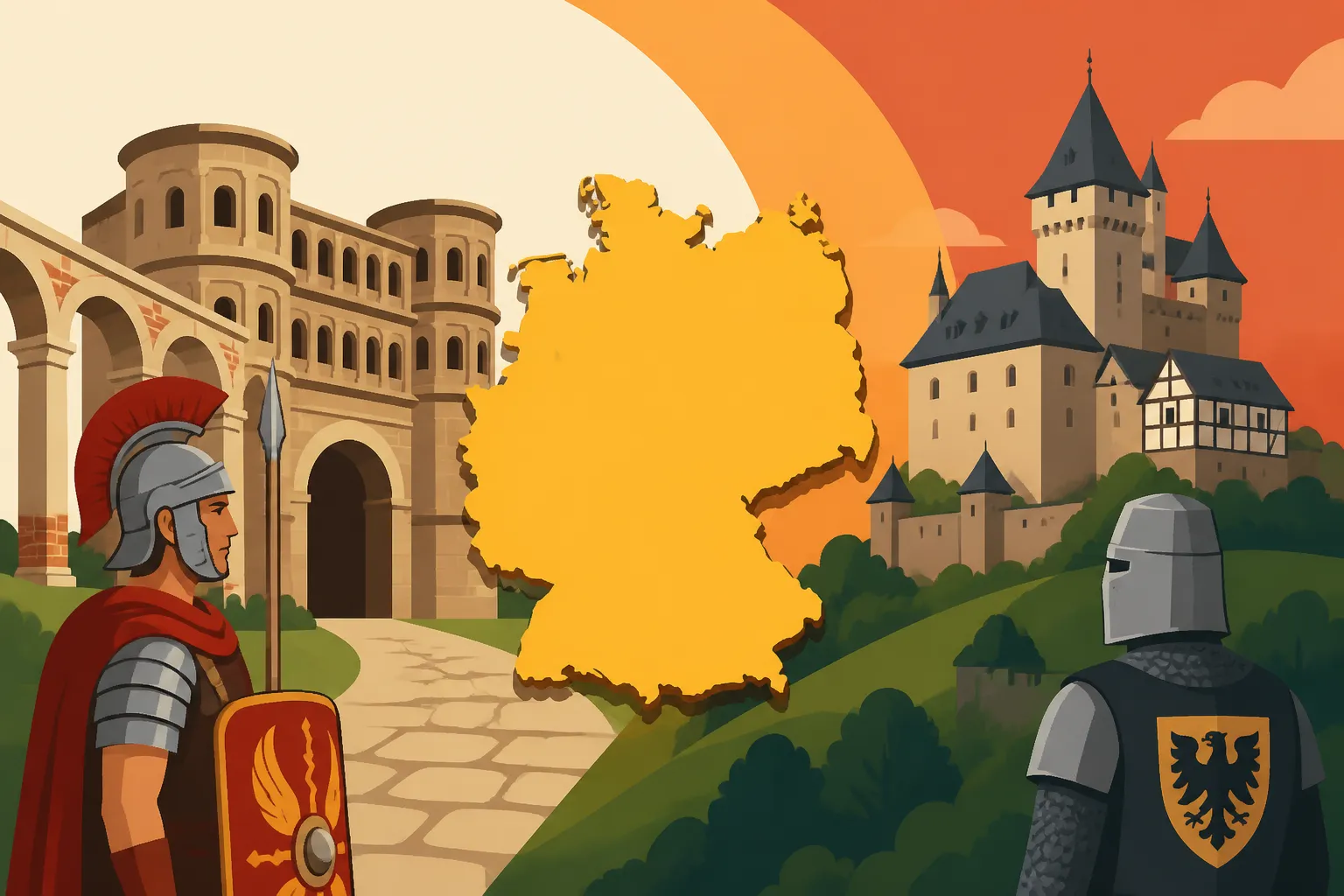
Roman and Medieval Germany: Sites to Visit
You've settled into Germany, perhaps mastered the local recycling rules, and even navigated the Anmeldung with a triumphant, albeit slightly sweaty, smile. But beyond the efficient trains and the delicious Döner, there's a profound, ancient history etched into the very stones of this country. It's easy to get caught up in the modern rhythms of expat life, but I'm here to tell you that Germany holds a treasure trove of Roman and Medieval marvels, waiting to transport you back centuries. This guide is your ticket to discovering those incredible sites, offering a deep dive into the fascinating layers of history that shaped this nation.
Disclosure: This post may contain affiliate links. We may earn a commission at no extra cost to you if you make a purchase through these links. Read full disclosure.
Stepping Back to Roman Times: Germany's Imperial Legacy
It's a common misconception that Germany's history only truly "begins" with the Middle Ages or even more recent eras. But trust me, as someone who’s spent years here, the Roman footprint is surprisingly deep and utterly captivating. Imagine legions marching through lush forests, grand public baths, and bustling markets – it was all here, and much of it is still remarkably preserved.
Trier: The 'Second Rome' on German Soil
When you think of Roman cities, Rome itself or maybe Pompeii comes to mind. But let me tell you, Trier, nestled in the Moselle valley, proudly carries the title of Germany's oldest city and was once a major Roman imperial residence. It's truly mind-blowing to walk through a German city and feel like you've landed in the heart of the Roman Empire. The scale of the surviving structures here is simply breathtaking, making it a must-visit for any history enthusiast.
The Porta Nigra, or "Black Gate," is perhaps the most iconic symbol of Trier, standing majestically as the best-preserved Roman city gate north of the Alps. It’s not just a gate; it's a testament to Roman engineering and grandeur. You can actually climb up inside it and imagine the guards watching over the city, a truly immersive experience that brings the past to life. Beyond the gate, the colossal Imperial Baths (Kaiserthermen), the Basilica of Constantine (Aula Palatina) – which was Emperor Constantine's throne hall – and the Roman Bridge are all UNESCO World Heritage sites. The Imperial Baths, in particular, give you a real sense of the daily life and social rituals of Romans, showcasing advanced heating systems and expansive halls. It’s hard not to feel a connection to those ancient inhabitants as you wander through the ruins, picturing them soaking in the warm waters.
Roman Traces Along the Limes: Forts and Frontier Walls
The Roman Empire’s reach extended far into what is now modern Germany, marked most notably by the Upper Germanic-Rhaetian Limes, another UNESCO World Heritage site. This wasn’t just a line on a map; it was a complex system of walls, watchtowers, and forts spanning hundreds of kilometers, defining the frontier between the Roman Empire and the Germanic tribes. For an expat exploring Germany, it's a fantastic way to understand the ancient geographical and political boundaries.
Visiting parts of the Limes today offers a unique blend of history and nature. You can hike or cycle along reconstructed sections of the palisade and ditches, encountering reconstructed watchtowers that give you a sense of the constant vigilance required to maintain the border. One of the most impressive sites along the Limes is the Saalburg Roman Fort (Römerkastell Saalburg), near Bad Homburg. This completely reconstructed fort offers an unparalleled insight into a Roman military outpost. It’s not just a collection of ruins; you can explore barracks, commander’s quarters, a bathhouse, and even a taberna (ancient Roman pub). The museum at Saalburg also houses an incredible collection of artifacts, from tools and weapons to everyday pottery, making it a brilliant educational experience for all ages. It really puts into perspective the sheer logistical effort and human lives dedicated to securing such a vast empire.
Roman Life and Leisure: Museums and Public Baths
Beyond the grand fortifications, Roman life in Germany was vibrant and sophisticated. The Romans brought their culture, technology, and way of life, leaving behind a wealth of evidence in museums and archaeological parks. It's a fantastic way to see how deeply Roman influences permeated the region, shaping everything from architecture to agriculture.
Many German cities boast excellent museums dedicated to their Roman heritage. The Römisch-Germanisches Museum in Cologne (Köln), for instance, is built directly over the ruins of a Roman villa and showcases the famous Dionysus mosaic. Just being there, knowing you're standing on ancient ground, adds an extra layer of awe. Another prime example is the Archaeological Park Xanten (APX), one of Germany’s largest archaeological open-air museums. Here, you can walk through the remains of Colonia Ulpia Traiana, a Roman city, with reconstructed buildings like an amphitheater, temple, and thermal baths. It truly allows you to visualize what a thriving Roman settlement would have looked like. These sites aren't just for looking; they often offer interactive displays and events that make history accessible and engaging, providing a window into the daily routines, belief systems, and even the culinary tastes of the Romans who once called this land home.
The Dawn of the Middle Ages: Carolingian Powerhouses
As the Roman Empire eventually receded, Germany entered the fascinating, complex, and often turbulent era of the Middle Ages. This period saw the rise of powerful kings and emperors, the establishment of mighty abbeys, and the laying of foundations for many of the towns and cities we know today. It's a different kind of history than the Roman one, more focused on spiritual power and dynastic struggles, but equally rich.
Aachen: Charlemagne's Imperial City
If there's one figure who encapsulates the early medieval period in Germany, it's Charlemagne. His name is synonymous with the Carolingian Empire, and his chosen residence, Aachen, remains a testament to his ambition and vision. For anyone interested in the roots of European identity, a visit to Aachen is nothing short of a pilgrimage.
The undeniable centerpiece is the Aachen Cathedral (Aachener Dom), a UNESCO World Heritage site and a masterpiece of Carolingian architecture. Stepping inside, particularly into the Palatine Chapel, you are enveloped in history. This chapel, built by Charlemagne himself in the late 8th century, was the spiritual and political heart of his empire and served as the coronation church for German kings for over 600 years. The sheer age and beauty of the mosaics, the marble, and the bronze work are astounding. Adjacent to the cathedral is the Treasury (Domschatzkammer), which houses an incredible collection of medieval artifacts, including the Lothar Cross and Charlemagne’s reliquary, offering a glimpse into the immense wealth and religious devotion of the era. The city itself, with its thermal springs, was a hub of activity and governance, and you can almost feel the echoes of emperors and scholars walking its streets. While planning your visit, you might consider booking your train tickets via Omio to get there efficiently, or look for guided walking tours on GetYourGuide to truly uncover its secrets.
From Abbeys to Emperors: Early Medieval Monasteries
Monasteries played an absolutely pivotal role in the Early Middle Ages, serving as centers of learning, art, and political influence. They preserved knowledge, developed agricultural techniques, and often acted as power bases for bishops and abbots who wielded considerable sway over the local populace and even emperors. For an expat trying to grasp German history, understanding the monastic tradition is crucial.
One outstanding example is the Abbey of Corvey, another UNESCO World Heritage site located by the Weser River. This former Benedictine monastery was once one of the most important imperial abbeys in the Carolingian Empire, known for its scriptorium and library, which housed some of the earliest German literature. The surviving Westwork, with its unique frescoes, is an architectural marvel and provides a rare insight into early medieval church design. Similarly, the Benedictine Abbey of Prüm, though largely rebuilt, also holds significant historical weight as an imperial abbey, with ties to the Carolingian dynasty. These sites often offer serene, reflective experiences, far removed from the hustle and bustle of modern life, allowing you to contemplate the intellectual and spiritual life of centuries past. They often host cultural events and exhibitions, making them dynamic centers of historical preservation.
Ottonian Renaissance: Magdeburg and Quedlinburg
Following the Carolingian period, the Ottonian dynasty ushered in a distinct cultural and artistic flourishing in the 10th and early 11th centuries, sometimes referred to as the "Ottonian Renaissance." This era left an indelible mark on central Germany, giving us some truly spectacular medieval towns and structures.
Magdeburg, the capital of Saxony-Anhalt, was a favorite residence of Emperor Otto I and played a crucial role in his eastward expansion. The Magdeburg Cathedral (Magdeburger Dom) is a prime example of Gothic architecture, but its foundations and some of its earlier sculptures speak to its Ottonian origins. Otto I envisioned Magdeburg as a "second Rome," and while much of his original vision has been overlaid by later construction, the ambition is palpable. For a more direct journey into the Ottonian past, Quedlinburg is an absolute gem, recognized as a UNESCO World Heritage site. This town feels like stepping directly into a medieval fairy tale, with its remarkably preserved half-timbered houses and the imposing Collegiate Church of St. Servatius, located on a sandstone cliff. This church, with its Ottonian crypt and treasury, is where the first German king, Henry the Fowler, and his son, Emperor Otto I, are buried. Walking through Quedlinburg, you get an incredibly vivid picture of medieval urban life, unmarred by extensive modern development. It’s a wonderful place to simply wander and soak in the atmosphere.
Fortresses, Fiefdoms, and Feudal Lords: High and Late Middle Ages
The High and Late Middle Ages in Germany, roughly from the 11th to the 15th century, were characterized by the proliferation of castles, the growth of powerful city-states, and the construction of soaring Gothic cathedrals. This was an age of knights, crusades, burgeoning trade, and intense religious devotion, leaving us with some of Germany's most romantic and imposing historical sites.
Majestic Castles: Guardians of the Landscape
If there’s one image that defines medieval Germany, it’s the castle. Perched dramatically on hilltops, nestled in valleys, or towering over rivers, these fortresses were not just defensive structures but also centers of power, administration, and noble life. Visiting a German castle is an essential part of understanding the country's feudal past.
There are countless castles to explore, each with its own story. The Burg Eltz, for example, is a fairy-tale castle that has remained in the same family for over 850 years, a rarity in Germany. Its unique architecture, untouched by war, makes it incredibly picturesque and a popular spot. Then there’s the mighty Wartburg Castle, another UNESCO site, near Eisenach. This castle is steeped in history, not just as a medieval fortress but also as the place where Martin Luther translated the New Testament into German, a pivotal moment in both religious and linguistic history. You can take guided tours, explore the lavish living quarters, and imagine the lives of nobles, knights, and even reformers within its ancient walls. Many castles also host medieval markets and knight tournaments, particularly during the summer, offering a lively glimpse into the past. Websites like Booking.com can help you find charming hotels or guesthouses nearby, allowing you to fully immerse yourself in the ambiance of these historic regions.
Walled Cities and Historic Centers: Preserved Medieval Gems
Beyond individual castles, many German towns have remarkably preserved their medieval character, with intact city walls, narrow cobblestone streets, and centuries-old buildings. These places offer a holistic experience of medieval urban life, where you can trace the footsteps of merchants, artisans, and townspeople.
Rothenburg ob der Tauber on the Romantic Road is arguably the most famous example, almost perfectly preserved within its medieval walls. Walking its ramparts, you can literally circumnavigate the entire old town, taking in panoramic views of the half-timbered houses and the surrounding countryside. It often feels like a living museum, and while it can get busy, its charm is undeniable. Another fantastic example is Goslar, in the Harz Mountains, a UNESCO World Heritage site once a wealthy imperial city due to its silver mines. Its historic town center, with its Kaiserpfalz (Imperial Palace) and numerous Romanesque churches, transports you straight back to the High Middle Ages. These cities allow you to not only see medieval architecture but also understand the layout of medieval society, with distinct areas for guilds, markets, and religious institutions. Don't forget to check out the local bakeries in these towns; their traditions often stretch back centuries, offering a truly authentic taste of history.
Gothic Grandeur: Cathedrals and Churches
The Middle Ages, especially the High Gothic period, witnessed an extraordinary explosion of religious architecture, resulting in some of the most awe-inspiring cathedrals and churches in the world. These towering structures were not just places of worship but also symbols of civic pride, artistic achievement, and deep spiritual devotion.
Cologne Cathedral (Kölner Dom), a colossal Gothic masterpiece and UNESCO World Heritage site, is perhaps the most iconic example. Its construction spanned over 600 years, and its sheer size and intricate details are nothing short of miraculous. Standing before it, you can’t help but feel a profound sense of human ambition and faith. You can even climb the south tower for breathtaking views over Cologne and the Rhine River – just be prepared for a good workout! Another stunning example is the Ulm Minster (Ulmer Münster), which boasts the tallest church steeple in the world. Imagine the dedication and skill of the medieval craftsmen who built these structures, often over generations, using only rudimentary tools. Other notable examples include the Frauenkirche in Munich and the Freiburg Minster, both showcasing incredible stained glass, sculptures, and architectural innovation. These churches are not just historical monuments; they are often still active places of worship, where you can attend services and experience their timeless spiritual atmosphere.
Planning Your Historical Journey: Practical Tips for Expats
As an expat, you’ve probably mastered the art of German bureaucracy and daily life, but planning a trip to these historical sites requires a bit of thoughtful preparation. Don't let the logistics deter you; with a little planning, you can easily transform a weekend into a historical adventure.
Getting There: Navigating Germany's Transport Network
Germany's public transport system is renowned for its efficiency, making it relatively easy to reach even some of the more secluded historical sites. You have several excellent options, depending on your budget and preferred travel style. The Deutsche Bahn (DB) train network is extensive, connecting major cities and often providing connections to smaller towns that host these ancient treasures. I always recommend booking train tickets in advance, especially for high-speed ICE trains, to get better deals. You can check schedules and purchase tickets easily through the DB Navigator app or platforms like Omio. For those on a tighter budget or looking to reach places not well-served by trains, long-distance buses like FlixBus are a fantastic alternative. These buses can get you to many cities where you can then use local public transport or even walk to the main attractions.
If you prefer more flexibility, especially when visiting sites along the Limes or multiple castles in a rural area, renting a car is a great option. Germany's Autobahns are famous, and driving here is generally straightforward. Just remember to familiarize yourself with the German road rules and consider getting familiar with Renting a Car and Driving on the Autobahn. Having your own wheels allows you to explore at your own pace, stopping at charming villages or scenic viewpoints that public transport might miss. For those looking to make regular use of public transport within a region, exploring options like the Deutschland-Ticket Explained can be a cost-effective way to travel regionally and access many historical spots.
Accommodation and Local Experiences
When visiting these historical gems, your choice of accommodation can significantly enhance your experience. Instead of just a generic hotel, why not embrace the local charm? Many towns with Roman and medieval sites offer quaint guesthouses (Pensionen), family-run hotels, or even apartments for rent, often within walking distance of the main attractions.
For example, in a town like Quedlinburg or Rothenburg ob der Tauber, you can find hotels situated in beautifully restored medieval buildings, adding another layer to your historical immersion. Platforms like Booking.com are invaluable for finding these unique stays, allowing you to filter by location, amenities, and price. Beyond just sleeping there, look for local experiences. Many cities offer free walking tours (sometimes tip-based) that provide fantastic insights from local guides. You might also find specialized tours on GetYourGuide that focus on specific historical periods or themes, like a "Roman Trier" or "Medieval Castle Tour." Don’t shy away from trying the local cuisine in these historic settings; many regional dishes have roots stretching back centuries, connecting you to the past through taste. Embrace the opportunity to sample traditional German bread, sausages, and local wines, especially around the Moselle or Rhine regions.
Maximizing Your Visit: Guides and Resources
To truly appreciate the depth of these sites, a little research beforehand goes a long way. Don't just show up; understand what you're seeing. Many major sites offer audio guides, which are usually available in English, providing detailed explanations as you explore. I highly recommend picking one up.
Another fantastic resource is a good old-fashioned guidebook or, if you prefer digital, checking out the official websites of the specific sites. These often have opening hours, admission fees, and information about special exhibitions. Many German museums and historical sites are excellent at providing English information, acknowledging the diverse audience. Consider checking if there are any special events or festivals taking place during your visit. Medieval markets, reenactments, or historical parades can transform a visit into an unforgettable experience, truly bringing the past to life. Understanding the general German etiquette, such as quiet hours (Ruhezeit) and how to approach interactions, will also make your journey smoother and more enjoyable. Lastly, always keep an eye on your belongings, and while Germany is generally safe, it's wise to know What to Do If You Lose Your Passport in Germany, just in case.
More Than Just Stones: The Enduring Impact of History
Exploring Roman and Medieval Germany is about much more than just looking at old stones and buildings. It's about understanding the deep historical currents that shaped the country, influenced its culture, and continue to resonate in surprising ways even today. It offers a unique lens through which to appreciate your new home.
Festivals and Reenactments: Bringing History to Life
Germany has a wonderful tradition of historical festivals and reenactments that truly bring the past to life. These events are not just for tourists; they are deeply ingrained in local culture and provide a vibrant, interactive way to experience Roman and Medieval times.
Throughout the summer and autumn, you can often find "Römerfeste" (Roman festivals) at sites like the Saalburg Roman Fort or the Archaeological Park Xanten, where reenactors in full Roman regalia demonstrate legionary drills, gladiator fights, and civilian life. It's a fantastic spectacle and incredibly engaging, especially for families. Similarly, medieval markets (Mittelaltermärkte) and knight tournaments (Ritterturniere) are commonplace, particularly around castles like Burg Eltz or during special events. These events are a feast for the senses: the smell of roasting meat, the sound of traditional music, the sight of craftsmen practicing ancient trades, and the spectacle of knights jousting. Many towns also have specific historical festivals celebrating their medieval heritage, such as the Landshuter Hochzeit (Landshut Wedding) which is a massive reenactment of a 15th-century ducal wedding, held every four years. These events allow you to step beyond the static exhibits and feel the pulse of history, often with opportunities to try on costumes, taste medieval food, or even learn a traditional craft.
Culinary Echoes: Food and Drink Through the Ages
Even your plate can tell a story about Germany's Roman and Medieval past. While modern German cuisine has evolved, many traditional elements and ingredients have surprising historical roots, connecting you to the daily lives of people centuries ago.
The Roman influence brought new agricultural techniques and foods, some of which became staples. For example, grapes were introduced by the Romans to regions like the Moselle and Rhine valleys, establishing a winemaking tradition that continues to flourish today. You can still visit ancient Roman wineries or taste wines from vineyards with histories stretching back to antiquity. During the Middle Ages, German cuisine relied heavily on local produce, grains, and preserved meats. Bread, in particular, was (and still is) a fundamental part of the diet, with bakeries continuing ancient traditions of baking diverse, hearty loaves. Many of the German regional dishes you might enjoy today, while refined over time, have conceptual roots in medieval peasant and noble cooking. Think of hearty stews, roasted meats, and seasonal vegetables. Exploring German regional dishes every visitor should try is not just a culinary adventure, but also a journey through the evolution of German eating habits. Even visiting an authentic German Christmas market offers a taste of traditions that began in the Late Middle Ages, with treats like Lebkuchen (gingerbread) and Glühwein (mulled wine) having centuries-old histories.
Key Roman and Medieval Sites in Germany
To help you plan your explorations, here’s a quick overview of some essential Roman and Medieval sites.
| Site Name | Historical Period | Location | Key Highlights | Best For |
|---|---|---|---|---|
| Trier | Roman | Rhineland-Palatinate | Porta Nigra, Imperial Baths, Basilica of Constantine, Roman Bridge | Comprehensive Roman city experience, UNESCO World Heritage site |
| Saalburg Roman Fort | Roman | Hesse | Fully reconstructed Roman fort, museum, reenactments | Immersive Roman military life, educational for families, hiking along the Limes |
| Aachen Cathedral | Early Medieval (Carolingian) | North Rhine-Westphalia | Palatine Chapel, Charlemagne's throne, Imperial Treasury, coronation site for German kings | Understanding Charlemagne's empire, religious history, stunning architecture, UNESCO World Heritage site |
| Quedlinburg | Ottonian/Medieval | Saxony-Anhalt | Preserved half-timbered town, Collegiate Church of St. Servatius, Castle Hill | Fairytale medieval town experience, Ottonian history, UNESCO World Heritage site |
| Burg Eltz | High/Late Medieval | Rhineland-Palatinate | Unspoiled medieval castle, treasury, armory, scenic hikes in the Elzbach valley | Romantic castle experience, picturesque photography, authentic medieval architecture |
| Rothenburg ob der Tauber | Late Medieval | Bavaria | Complete medieval city wall, half-timbered houses, Christmas Museum | Quintessential medieval town, romantic atmosphere, walking the ramparts |
| Cologne Cathedral | High/Late Medieval (Gothic) | North Rhine-Westphalia | Colossal Gothic architecture, Reliquary of the Three Kings, panoramic tower views | Iconic German landmark, Gothic art and architecture, UNESCO World Heritage site |
| Abbey of Corvey | Early Medieval (Carolingian) | North Rhine-Westphalia | Westwork, imperial abbey, library ruins, cultural events | Early medieval monastic life, architectural rarity, peaceful historical setting, UNESCO World Heritage site |
Disclaimer
The information provided in this guide is intended for general informational purposes only. While every effort has been made to ensure accuracy and provide helpful advice, circumstances and regulations in Germany can change. It is always recommended to verify specific details such as opening hours, ticket prices, and travel requirements directly with the relevant authorities or service providers before making plans. Travel safely and enjoy your historical adventures!