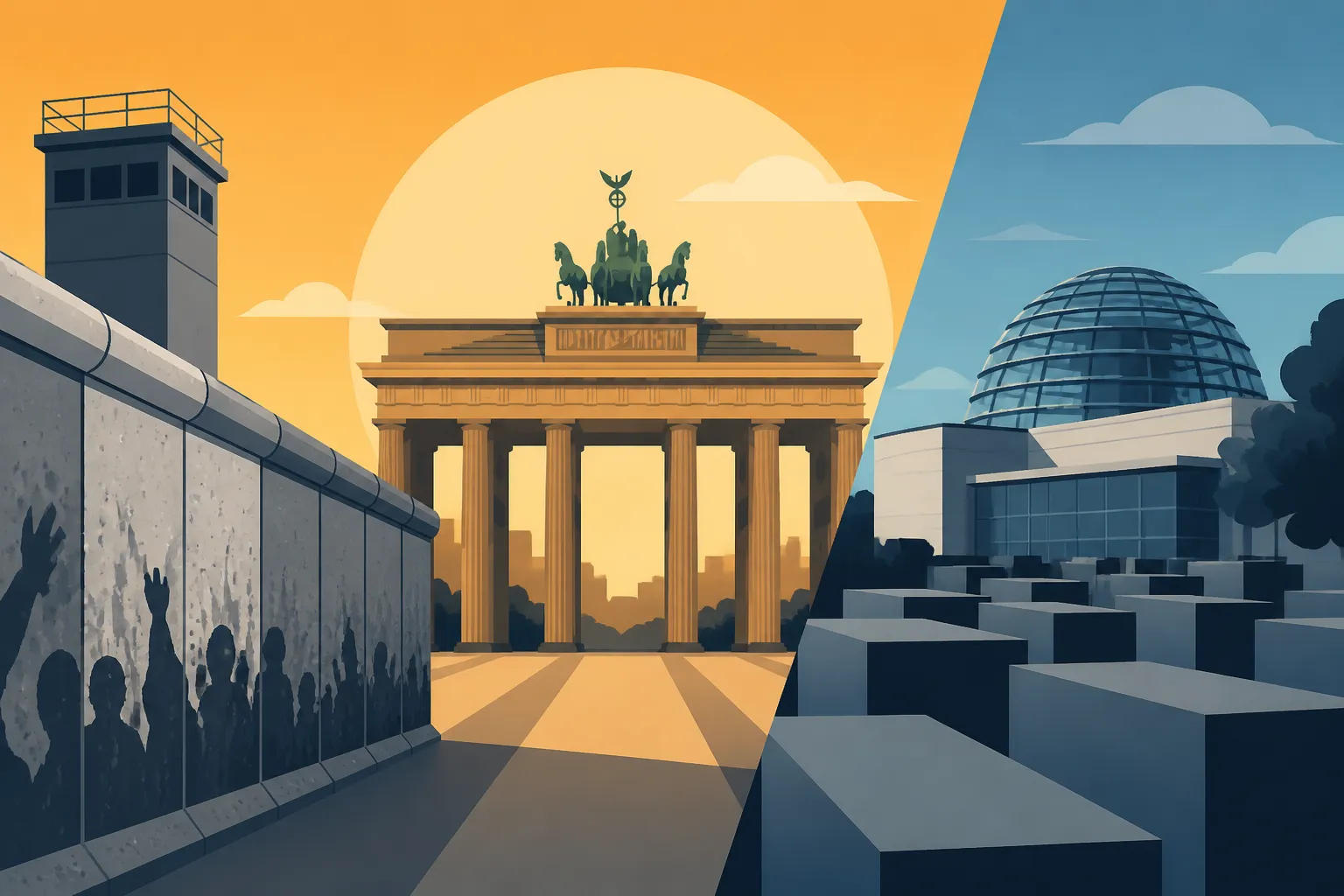
Berlin’s 20th-Century History: Wall, Memorials, and Museums
Stepping into Berlin is like walking through a living history book, but sometimes, trying to connect all the dots of its intense 20th-century past can feel incredibly overwhelming. It’s not just about visiting a few spots; it’s about understanding the deep scars and incredible resilience etched into the very fabric of the city. This comprehensive guide will walk you through the most pivotal historical sites, memorials, and museums, helping you truly grasp the profound impact of the Berlin Wall, the Cold War, and the echoes of darker times on Germany's vibrant capital.
Disclosure: This post may contain affiliate links. We may earn a commission at no extra cost to you if you make a purchase through these links. Read full disclosure.
The Shadow of the Berlin Wall: A Divided City
For anyone who didn't live through it, the concept of a city literally bisected by a wall can feel almost unreal. Yet, for decades, Berlin was exactly that – a stark, tangible representation of the ideological divide that gripped the world. Understanding the Berlin Wall isn't just about knowing its dates; it's about grasping the human cost of a divided nation and a broken city.
Life Before and After the Wall's Construction
To truly appreciate the Wall, you need to rewind a bit. After World War II, Germany and its capital, Berlin, were carved into four sectors, controlled by the Allied powers: the US, UK, France, and the Soviet Union. This post-war arrangement quickly soured as Cold War tensions escalated, particularly between the Soviet Union and the Western Allies. Berlin, deep within Soviet-controlled East Germany, became an ideological battleground. By the late 1940s, two distinct German states emerged: the democratic Federal Republic of Germany (West Germany) and the communist German Democratic Republic (East Germany), with West Berlin existing as an island of capitalism within the socialist East.
Life in East Germany, or the German Democratic Republic (GDR), became increasingly restrictive, marked by economic stagnation and a lack of personal freedoms compared to the burgeoning prosperity and openness of West Germany. As the disparity grew, an alarming number of East Germans, particularly young, skilled professionals, began to "vote with their feet," fleeing to West Berlin. This brain drain was hemorrhaging the GDR's economy and undermining its legitimacy. The Soviet and East German leadership knew they had to stop it, and quickly.
Then came August 13, 1961. Without warning, East German soldiers, police, and workers began sealing off the border between East and West Berlin, initially with barbed wire and temporary barriers. Overnight, families were torn apart, commutes became impossible, and an entire city woke up to an unimaginable new reality. The suddenness of it all was brutal, severing personal connections and forcing people to adapt to a new normal of constant surveillance and restricted movement, all under the looming shadow of an impenetrable barrier.
Everyday Realities of Division
The Berlin Wall wasn't just a physical barrier; it was a psychological one that permeated every aspect of daily life. East Berliners faced severe travel restrictions, needing special permits for even internal travel, let alone visits to the West, which were almost entirely forbidden. The Stasi, East Germany's notorious secret police, employed an extensive network of informants and surveillance to monitor citizens, creating an atmosphere of fear and distrust. Neighbors spied on neighbors, and any hint of dissent could lead to severe repercussions, including imprisonment.
For those living on the immediate border, particularly in areas like Bernauer Strasse, the Wall was literally at their doorstep. Windows facing West Berlin were bricked up, and buildings were sometimes entirely demolished to create a wider "death strip" designed to prevent escapes. Imagine living in an apartment building and having your front door open to the East, but your back windows sealed to prevent you from even glimpsing the free world just meters away. The pressure built up over years, leading many to desperate, often ingenious, attempts to cross the border.
These escape attempts, some daring and successful, many tragic and fatal, became defining stories of the Cold War. People dug tunnels, created makeshift hot air balloons, or tried to swim across rivers. Each attempt, whether successful or not, highlighted the sheer desperation born from a life without freedom. Over 140 people are estimated to have died at the Berlin Wall, many shot by East German border guards while trying to reach freedom. These stories are a stark reminder of the human spirit's yearning for liberty and the horrific measures taken to suppress it.
The Fall of the Wall and Its Aftermath
The late 1980s saw increasing unrest and reform movements sweeping across Eastern Europe. In Hungary and Czechoslovakia, borders began to open, allowing East Germans to find alternative routes to the West. Protests, particularly in cities like Leipzig and Berlin, grew in size and intensity, with citizens demanding greater freedoms and reforms. The East German government, facing mounting internal pressure and international scrutiny, was struggling to maintain control.
On November 9, 1989, a seemingly innocuous press conference by an East German government official, Günter Schabowski, led to an announcement about new, more liberal travel regulations. Misinterpreting the directive, he stated that these changes were "effective immediately." The news spread like wildfire, and within hours, thousands of East Berliners converged on the border crossings, demanding passage. The overwhelmed and confused border guards, without clear orders to use force, eventually opened the gates.
The images of joyful East and West Berliners embracing, dancing on the Wall, and chipping away at it with hammers and chisels instantly became iconic. The fall of the Berlin Wall was a pivotal moment, not just for Germany but for the world, signaling the beginning of the end of the Cold War. While the initial euphoria was immense, the aftermath presented huge challenges. Reunification was swift, but integrating two vastly different economic and social systems led to widespread unemployment in the East, cultural adjustments, and a sometimes painful process of confronting the legacy of the Stasi. The scars of division, both physical and psychological, would take decades to heal, and in some ways, they are still felt today.
Essential Memorials and Sites of Remembrance
Berlin has done an admirable job of preserving the memory of its divided past, transforming remnants of oppression into powerful sites of education and reflection. These places aren't just historical markers; they are immersive experiences that force you to confront the realities of the 20th century.
Berlin Wall Memorial (Gedenkstätte Berliner Mauer)
If you want to truly grasp the physical reality of the Wall, the Berlin Wall Memorial on Bernauer Strasse is non-negotiable. This isn't just a stretch of graffiti-covered wall; it’s a thoughtfully designed complex that integrates original sections of the Wall, watchtowers, and the chilling "death strip" with an outdoor exhibition, a documentation center, and the Chapel of Reconciliation. Walking along the preserved sections, seeing the actual barrier, the inner wall, and the anti-vehicle trenches gives you a visceral sense of how impenetrable it truly was.
The memorial does an exceptional job of detailing the history of the Wall and the personal stories of those affected. The observation deck on top of the documentation center provides an unparalleled panoramic view of a fully reconstructed section of the border fortifications, allowing you to see the multi-layered defenses. You can gaze down into the preserved "death strip" and imagine the terror of attempting to cross it. The Chapel of Reconciliation, built on the site of a church that was demolished by the GDR regime because it stood in the death strip, offers a quiet place for reflection and commemorates those who died trying to cross. It’s a powerful place that puts the stark reality of the division into perspective, far better than any textbook ever could.
East Side Gallery
From the solemnity of the Wall Memorial, head to the vibrant East Side Gallery. This 1.3-kilometer-long section of the former inner wall, running alongside the Spree River in Friedrichshain-Kreuzberg, has been transformed into the world's longest open-air gallery. Soon after the Wall fell in 1989, over 100 artists from around the world painted murals directly onto the East-facing side of the concrete, creating a vibrant commentary on political change, hope, and the joys of freedom.
The East Side Gallery is a testament to the power of art and the human spirit to reclaim symbols of oppression. Iconic paintings like Dmitri Vrubel's "My God, Help Me to Survive This Deadly Love" (the "Fraternal Kiss") or Birgit Kinder's "Test the Best" (a Trabant car breaking through the Wall) are instantly recognizable and deeply resonant. While it's a popular spot for tourists, often bustling with people taking photos, don't let the crowds distract you from the profound transformation this stretch of wall represents. It’s a powerful symbol of artistic freedom emerging from censorship, and a colourful reminder of a turning point in history, offering a stark contrast to the grim reality it once embodied.
Brandenburg Gate and Reichstag Building
No discussion of Berlin’s 20th-century history is complete without mentioning the Brandenburg Gate (Brandenburger Tor) and the Reichstag Building. These two architectural icons stood as powerful symbols throughout the Cold War and played significant roles in both Germany’s division and its eventual reunification. The Brandenburg Gate, once a grand city gate, found itself marooned in the "death strip" during the division, a stark, inaccessible symbol of a divided nation. For decades, it was a poignant backdrop to Cold War speeches, most famously Ronald Reagan's 1987 "Mr. Gorbachev, tear down this Wall!" address.
When the Wall fell, the opening of the Brandenburg Gate became a global image of freedom and unity, a symbol of hope shining brightly after decades of darkness. Today, it stands proudly as Germany's national symbol of peace and unity. Similarly, the Reichstag Building, Germany's parliament, located just steps from the Gate, bears the scars of both World War II and the Cold War. Famously burned in 1933 and heavily damaged during the Battle of Berlin in 1945, it was painstakingly restored after reunification and topped with a stunning glass dome by architect Norman Foster. You can visit the dome for free (booking ahead is essential!) and look out over the reunited city, reflecting on its tumultuous past and vibrant present. These buildings are not just historical relics; they are living testaments to Germany's journey through the 20th century.
Museums to Deepen Your Understanding
While standing at a memorial offers a powerful sense of place, museums provide the detailed narratives, personal accounts, and artifacts that weave together the complex tapestry of Berlin's history. Each museum offers a unique lens through which to understand the Cold War era and its impact on everyday lives.
Checkpoint Charlie Museum (Mauermuseum)
Checkpoint Charlie was arguably the most famous border crossing between East and West Berlin, a tense flashpoint that saw standoffs between Soviet and American tanks. The Mauermuseum, or Checkpoint Charlie Museum, located right next to the former crossing point, focuses intensely on the ingenuity and desperation of those who attempted to escape East Germany. The museum is a fascinating, if sometimes overwhelming, collection of artifacts, photographs, and detailed stories of successful escape attempts. You'll see everything from a tiny self-built submarine and hot air balloons to modified cars with hidden compartments and zip lines used to cross the border.
While the stories are compelling and incredibly moving, the museum itself can feel a bit chaotic and, for some, overly commercialized given its prime tourist location. It often faces criticism for its layout and the sheer volume of information presented. However, its strength lies in bringing to life the human spirit of resistance and the incredible lengths people went to for freedom. It serves as a stark reminder that beneath the grand political narratives, there were countless individual struggles for liberty. Don't go expecting a quiet, contemplative museum experience, but rather a vibrant, albeit crowded, testament to human ingenuity.
DDR Museum
For a truly immersive experience of daily life in East Germany, the DDR Museum is an absolute must-visit. Unlike more conventional museums, this one is designed to be highly interactive and tactile. It aims to counter the often-romanticized or overly negative portrayals of the GDR by showing what life was actually like for ordinary citizens. You can literally pull open drawers, explore a recreated GDR apartment, sit in an original Trabant car (and even "drive" it in a simulation!), watch East German television, and sift through everyday objects from the era.
The museum covers everything from education and work to fashion, music, and the pervasive surveillance by the Stasi. It brilliantly manages to be informative without being preachy, allowing visitors to form their own impressions. You'll learn about the subtle ways propaganda infiltrated daily life, the limited consumer choices, and the specific quirks of a socialist planned economy. It's an excellent way to get a tangible, personal sense of what it was like to grow up and live behind the Iron Curtain, offering insights that a purely political history often misses. The interactive nature makes it engaging for all ages, and it certainly helps demystify a significant, complex period of German history.
Allied Museum and The Tränenpalast (Palace of Tears)
Venturing slightly off the main tourist trail can lead you to equally profound insights. The Allied Museum in Zehlendorf (a bit of a journey but worth it) provides an in-depth look at the role of the Western Allied forces—the Americans, British, and French—in Germany from 1945 to 1994, particularly focusing on the Berlin Blockade and the Cold War. Housed partly in a former American cinema, it features fascinating exhibits like a real British Royal Air Force Hastings transport plane used during the Berlin Airlift, and a section of a genuine spy tunnel built by the US and UK to tap into Soviet communication lines. It offers a crucial perspective on the Western efforts to maintain West Berlin's freedom and the broader geopolitical struggles of the era.
Back in the city center, near Friedrichstrasse station, is the Tränenpalast, or "Palace of Tears." This former departure hall was where East Germans would say goodbye to Western visitors, and crucially, where many East Germans who had obtained rare travel permits had to leave their families behind, knowing it might be years before they could return. The name "Palace of Tears" comes from the often tearful goodbyes exchanged here. Today, it’s a powerful, free exhibition that chronicles the experiences of travelers and those crossing the inner German border, focusing on the bureaucratic hurdles, the emotional toll, and the subtle terror of the border control process. You walk through the original booths where passports were checked, giving you a chilling sense of the anxiety and fear that defined these passages. It’s a deeply emotional experience that brings the human drama of separation vividly to life.
Beyond the Wall: Other 20th-Century Milestones
While the Berlin Wall is often the primary focus, Berlin's 20th-century history stretches far beyond the Cold War, encompassing the unspeakable horrors of the Nazi regime and the devastating consequences of World War II. Understanding these earlier chapters is crucial for a complete picture of why the Wall came to be and how Berlin continues to grapple with its past.
Topography of Terror
Just a short walk from Potsdamer Platz, the Topography of Terror exhibition stands on the former site of the principal institutions of Nazi terror: the headquarters of the Gestapo (Secret State Police), the SS (Schutzstaffel), and the Reich Security Main Office. This outdoor and indoor exhibition is chillingly effective in its stark presentation of facts, documents, and photographs detailing the atrocities committed by the Nazi regime. It meticulously chronicles the rise of Nazism, the perpetrators of the Holocaust, the systematic persecution of Jews, Roma, Sinti, homosexuals, and political opponents, and the machinery of terror that operated from this very location.
Walking through the excavated cellars of the former Gestapo headquarters, with the raw, unfinished walls, is a particularly sobering experience. The exhibition's strength lies in its unvarnished, factual approach, refusing to sensationalize, but instead allowing the sheer weight of historical evidence to speak for itself. It connects the crimes directly to the places where they were planned and executed, ensuring that visitors understand the direct link between bureaucracy and systematic murder. It's a heavy experience, but an absolutely essential one for anyone seeking to understand the darkest chapter of German history.
Memorial to the Murdered Jews of Europe
The Memorial to the Murdered Jews of Europe, often simply called the Holocaust Memorial, is another profound and challenging site in central Berlin, close to the Brandenburg Gate. Designed by architect Peter Eisenman, it consists of 2,711 concrete stelae (blocks) of varying heights, arranged in a grid pattern on a sloping field. The abstract nature of the memorial means different things to different people; some find it unsettling, others find it deeply moving. As you walk through the narrow, undulating pathways between the towering blocks, the ground slopes and the stelae rise, creating a disorienting, isolating, and sometimes claustrophobic experience.
Beneath the field of stelae is an underground Information Centre, which provides context and personal stories. Here, the abstract becomes concrete: it features rooms dedicated to individual victims, families, and communities, offering heartbreaking letters, diaries, and photographs. It tells the stories of persecution and murder in a deeply personal way, ensuring that the victims are remembered not as statistics, but as individuals with lives that were brutally cut short. The memorial, with its dual nature of abstract design and intimate personal histories, powerfully communicates the immensity and incomprehensibility of the Holocaust while ensuring that individual lives are not forgotten.
The Nazi Era's Lingering Presence
Even after so many decades, the shadows of the Nazi era are still very much present in Berlin, sometimes in subtle ways, sometimes in open wounds. Beyond the major memorials, you’ll find Stolpersteine (stumbling blocks) embedded in pavements throughout the city. These small, brass plaques commemorate individual victims of the Holocaust, placed directly outside the last known residence of the person they remember. Each stone bears the name, date of birth, date of deportation or death, and place of murder. Stumbling upon these unexpectedly as you walk through a residential street is a powerful, personal reminder of the millions of lives lost.
Berlin, like all of Germany, is constantly engaged in a process of Vergangenheitsbewältigung – "coming to terms with the past." This isn't just about building memorials; it's an ongoing societal debate about memory, responsibility, and ensuring that such atrocities are never repeated. You’ll notice the deliberate lack of overt Nazi symbols (which are illegal), but you’ll also see architecture from the era repurposed or deliberately left as a stark reminder. From the Olympic Stadium built for the 1936 games to the surviving fragments of Albert Speer’s grand vision for Germania, Berlin's landscape is dotted with these echoes. It means that while the city is fiercely modern, its past is never far from the surface, inviting continuous reflection and vigilance against intolerance.
Navigating Berlin's Historical Landscape
Diving into Berlin's history can be emotionally intense, but with a little planning, you can make your journey both manageable and deeply rewarding. Think of it as preparing for a marathon, not a sprint – pace yourself, know your routes, and ensure you have support.
Planning Your Historical Journey
When tackling a city with as much layered history as Berlin, it's easy to feel overwhelmed. My biggest piece of advice is: don't try to see everything in one go! Prioritize what interests you most. Do you want to focus primarily on the Wall, or delve deeper into the Nazi era? Perhaps a mix of both? Many visitors dedicate a full day, or even two, just to the Cold War sites, and another to the World War II and Holocaust memorials. Consider breaking up the heavy historical sites with lighter, more modern Berlin experiences.
Logistically, Berlin has an excellent public transport system, making it relatively easy to get between sites. The U-Bahn (underground) and S-Bahn (overground) trains, along with trams and buses, connect virtually every corner of the city. You might find resources on Getting Around German Cities: U-Bahn, S-Bahn, Trams, and Buses particularly helpful for navigating. For longer distances, or if you're planning a trip to another German city from Berlin, tools like Omio can be incredibly useful for comparing and booking train or bus tickets, helping you streamline your travel plans. Additionally, if you prefer guided experiences to piece everything together, platforms like GetYourGuide offer a range of walking tours and bus tours specifically focused on Berlin's 20th-century history, which can be invaluable for gaining expert insights and maximizing your time.
Practical Tips for Visitors
Visiting these significant historical sites requires a certain mindset. Many of the memorials, especially the Holocaust Memorial and the Topography of Terror, are somber and deeply moving. Give yourself time to process what you're seeing and feeling. It's okay to take breaks, find a quiet café, or just sit on a park bench and reflect. Don't rush yourself.
Accessibility is generally good at most major sites, but it's always wise to check individual websites if you have specific mobility needs. While many Berliners, especially younger generations and those in tourist-heavy areas, speak excellent English, don't assume it. Learning a few basic German phrases can go a long way, not just for practicalities but also as a sign of respect. You might find our guide on Using Translation Apps in Germany: What Works Best helpful. Most museums offer audio guides in multiple languages, which I highly recommend for a richer experience.
For accommodation, consider booking a place that allows you easy access to public transport. Sites like Booking.com offer a vast selection, from budget hostels to boutique hotels, ensuring you find something that suits your style and proximity needs. After a day of intense historical immersion, having a comfortable base to return to is key. Also, remember that Sundays in Germany are generally quiet, with most shops closed, so plan your museum visits accordingly. While credit cards are widely accepted, it's always a good idea to carry some cash, especially for smaller purchases or market stalls, as detailed in our guide on Money for Travel in Germany: Cash, Cards, and ATMs.
| Site Name | Primary Focus | Location | Entrance Fee (approx.) | Recommended Time | Key Highlights |
|---|---|---|---|---|---|
| Berlin Wall Memorial | History of the Berlin Wall & victims | Bernauer Strasse | Free | 2-3 hours | Original Wall sections, death strip, watchtower, Chapel of Reconciliation, documentation center |
| East Side Gallery | Art on the Wall, fall of communism | Friedrichshain | Free | 1-1.5 hours | Iconic murals (Fraternal Kiss, Trabant), river views |
| Checkpoint Charlie Museum | Escape attempts from East Germany | Friedrichstraße | €17.50 | 2-3 hours | Ingenious escape artifacts, personal stories |
| DDR Museum | Daily life in East Germany | Karl-Liebknecht-Straße | €13.50 | 2-3 hours | Interactive exhibits, recreated apartment, Trabant car |
| Topography of Terror | Nazi regime atrocities & perpetrators | Niederkirchnerstraße | Free | 2-3 hours | Excavated Gestapo cellars, historical documents, photographs |
| Holocaust Memorial | Commemoration of murdered Jews of Europe | Cora-Berliner-Straße | Free (Info Centre) | 1-2 hours | Abstract stelae field, underground Information Centre with personal stories |
| Tränenpalast (Palace of Tears) | Border crossing experiences, division's emotional toll | Reichstagufer | Free | 1.5-2 hours | Original border booths, personal accounts of separation |
Disclaimer
Please remember that while I strive for accuracy and offer comprehensive advice based on my experience and available information, details such as opening hours, ticket prices, and specific regulations can change. Always check the official websites of museums and attractions for the most current information before planning your visit. This guide provides general information and should not be considered legal or professional advice.