Booking German Hotels From Abroad: Cards, Names, and Passport Matching
Planning a trip to Germany can be incredibly exciting, filled with dreams of historic castles, vibrant cities, and delicious Bratwurst. But let's be honest, the moment you start thinking about booking accommodations from abroad, a wave of anxiety can hit. Will my credit card work? Does my name on the booking have to perfectly match my passport, right down to the middle name? Will I accidentally book something in a language I don't understand? These worries are completely valid, but don't fret! This guide is here to demystify the process of booking German hotels from overseas, focusing on how a reliable platform like Booking.com can make your life so much easier.
Disclosure: This post may contain affiliate links. We may earn a commission at no extra cost to you if you make a purchase through these links. Read full disclosure.
The Initial Hurdles: Why Booking German Hotels Can Feel Like a Maze
When you're far away, looking at hotel options in a foreign country, it’s natural to feel a bit overwhelmed. You're probably used to your home country's booking norms, and Germany, bless its efficient heart, sometimes has its own way of doing things. The fear of getting something wrong before you even arrive is a common one among expats and tourists alike.
Decoding Payment Methods: Cash-Heavy, But Changing
Germany has a long-standing reputation as a cash-heavy society, and while that's still true for many small businesses and local eateries, the landscape is slowly but surely changing, especially in the hospitality sector. Hotels, particularly those catering to international guests, are generally well-equipped to handle modern payment methods. However, the anxiety about whether your foreign credit card will be accepted, or if you'll need to pay upfront in cash, is a real concern. Many travelers worry about hidden fees or currency conversion charges.
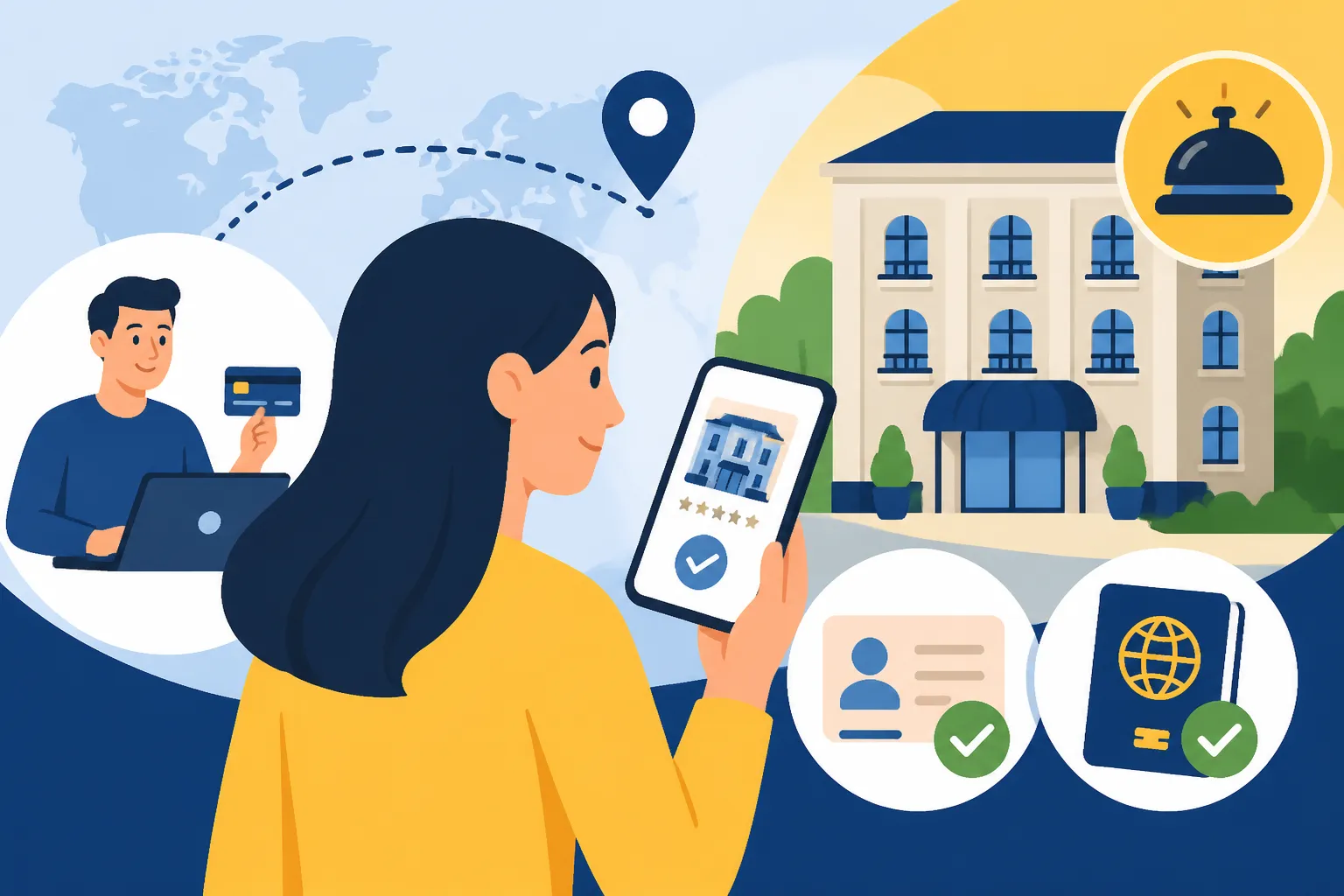
Booking.com acts as a wonderful buffer here. When you use Booking.com, you can clearly see the accepted payment methods for each property, whether it's credit card, debit card, or even Apple Pay in some instances, and often have the option to pay upon arrival or pre-pay securely online. This transparency is a huge relief when you're trying to plan your finances from another continent. It saves you from that awkward moment at reception where your card gets declined and you're left scrambling.
The Name Game: Matching Your Booking to Your Passport
"Is it just my first and last name, or do I need my middle name too? What about hyphens or special characters?" These questions run through every international traveler's mind when filling out booking forms. Germany is generally quite precise with official documentation, and hotels are no exception, especially when it comes to verifying identity upon check-in. The thought of arriving after a long journey only to be told your name doesn't match and your reservation is invalid is a nightmare scenario.
Typically, your first name and last name as they appear on your passport are sufficient for hotel bookings. However, for maximum peace of mind, always use the name that matches your primary identification document (your passport) exactly. If your passport includes a middle name, it's safer to include it on the booking, even if there isn't a dedicated field, perhaps in a notes section if Booking.com provides one, or by including it as part of your first name if no separate field exists. For names with special characters like umlauts (ä, ö, ü) or eszett (ß), Booking.com's system often handles the conversion to ae, oe, ue, and ss automatically, which is widely accepted. If you’re ever in doubt, Booking.com's customer service can help clarify, ensuring your arrival is smooth.
The Language Barrier: Booking with Confidence
Unless you're fluent in German, navigating local hotel websites can be a minefield. From understanding room descriptions to deciphering cancellation policies or breakfast options, every click can feel like a gamble. The fear of missing a crucial detail hidden in untranslated fine print is a very real source of stress. This is where a platform designed for international travelers truly shines.
Booking.com is available in numerous languages, including English, offering detailed descriptions, photos, and reviews that are easily accessible and understandable. This removes the uncertainty and allows you to compare properties, understand amenities, and read cancellation terms clearly, giving you the confidence that you know exactly what you're booking. You won't be surprised by a non-refundable rate or a hidden fee because you misunderstood the German.
Navigating the Booking Process: Your Step-by-Step Guide
Booking your German accommodation from abroad doesn't have to be a daunting task. With a bit of know-how and the right tools, you can secure your perfect stay without any headaches. I've personally relied on platforms like Booking.com countless times, and they truly streamline the entire process.
Step-by-Step with Booking.com: Your Best Friend for German Stays
When it comes to finding and securing a hotel in Germany from outside the country, Booking.com is arguably one of the most expat-friendly platforms out there. It's designed to cater to a global audience, which directly addresses many of the concerns we just discussed.
- Start Your Search: Head over to Booking.com and enter your destination (e.g., Berlin, Munich, Frankfurt), check-in and check-out dates, and the number of guests.
- Filter Smart: This is where Booking.com really helps. Use filters for price range, star rating, amenities (Wi-Fi, breakfast, parking are key in Germany!), and, importantly, cancellation policies. Many properties offer free cancellation, which is a lifesaver if your plans are still a bit fluid, or if you need to adhere to specific visa requirements.
- Read Reviews (Especially the International Ones): Booking.com has a vast database of reviews from travelers worldwide. Pay attention to comments from other international guests regarding check-in processes, staff language skills, and payment experiences. This peer-to-peer insight is invaluable.
- Check Payment Options: On each hotel listing, Booking.com clearly outlines the accepted payment methods and whether you'll pay upfront or at the property. This transparency is crucial for managing your international finances. Look for options that align with your preferred credit or debit card.
- Enter Your Details Carefully: As discussed, ensure your name matches your passport exactly. If there's a specific field for a middle name, use it. If not, include it with your first name to be safe. Double-check all dates and guest numbers. You can often add special requests, like a quiet room or a non-smoking room, in a dedicated box.
- Confirmation and Beyond: Once booked, you'll receive an instant confirmation email from Booking.com. Keep this accessible, either printed or on your phone. It contains all the necessary details, including the hotel's contact information, in English.
Booking.com's robust infrastructure means your booking is generally secure and recognized by the hotel, minimizing the chances of any unwelcome surprises upon arrival. It really takes the guesswork out of what can otherwise be a confusing process.
Name Matching and Identification for Check-in
Upon arrival at your German hotel, the reception staff will almost certainly ask for your passport or national ID card. This isn't just a formality; it's a legal requirement for hotels in Germany to record guest details for registration purposes (Meldeschein). This is precisely why your booking name must align with your identification.
- First and Last Name: These are the critical components. Make sure they are identical to your passport.
- Middle Names: If your passport shows a middle name, and there's a field for it on Booking.com, use it. If not, it's generally not a deal-breaker, but adding it to your first name (e.g., "John David" for the first name field) can sometimes alleviate minor discrepancies.
- Special Characters: German names often feature umlauts (ä, ö, ü) or the sharp 's' (ß). When booking on international platforms like Booking.com, these are usually automatically converted to ae, oe, ue, and ss respectively. This conversion is standard practice and perfectly acceptable. For example, if your name is Müller, it might appear as Mueller, and that's fine.
Don't be surprised if the hotel requests to see the actual credit card used for the booking, especially if you paid in advance. This is a common fraud prevention measure. So, make sure you have the card on hand when you check in. This is another area where Booking.com's secure payment system helps, as they work with hotels to ensure these processes are as smooth as possible.
Payment Methods in German Hotels: What to Expect
While Germany still loves cash, hotels are generally very accommodating with international payment cards.
Most hotels, particularly those you find on Booking.com, accept major credit cards like Visa, MasterCard, and often American Express. Debit cards (EC-Karte/Girocard) are also widely accepted, but your foreign debit card might function as a credit card or require a PIN, depending on its system.
Here's a quick rundown of typical payment scenarios:
| Payment Method | Accepted by Most Hotels | Notes for Travelers |
|---|---|---|
| Credit Card | Yes (Visa, Mastercard, Amex) | Widely accepted for bookings and at check-out. Ensure your card has sufficient funds and inform your bank of international travel. Often requested at check-in for verification, even if pre-paid. |
| Debit Card | Yes (Maestro, V Pay, often as credit card) | Your foreign debit card might work via the Visa/Mastercard network. Have your PIN ready. Some smaller establishments might prefer EC-Karte (German debit). |
| Cash | Yes, but less common for large hotel bills | Always accepted. Good to have for smaller purchases or if you prefer. However, paying a large hotel bill in cash is less common for international travelers and might raise eyebrows, but perfectly legal. |
| Online Payments | Yes (via Booking.com, PayPal, etc.) | Pre-paying through Booking.com is secure and convenient, reducing hassle upon arrival. |
Always remember that while your booking with Booking.com secures your room, some hotels might charge a small city tax (Kurtaxe or Bettensteuer) separately upon checkout, which is a local government fee and not included in the room rate displayed on most booking platforms. It's usually a small amount per person per night.
Essential Considerations Before and After You Book
Booking a hotel is more than just securing a bed for the night; it's about setting the stage for a smooth and enjoyable trip. Taking a few extra steps before and after you click "confirm" can save you a lot of trouble down the road. These are the little things that, as a veteran expat, I've learned can make or break your initial experience in Germany.
Understanding Cancellation Policies and Flexibility
Life happens, especially when traveling internationally. Flights get delayed, plans change, or sometimes, bureaucracy throws a wrench in your visa application. That's why understanding your hotel's cancellation policy is paramount. Booking.com makes this incredibly easy by clearly displaying the terms for each room rate.
- Free Cancellation: Many hotels offer rates with free cancellation up to a certain date (often 24-48 hours before check-in). This is usually slightly more expensive but offers invaluable peace of mind. If your travel plans are uncertain, always opt for this.
- Non-Refundable Rates: These are typically cheaper but come with no flexibility. Once booked, you're committed, regardless of unforeseen circumstances. Only choose this if your plans are absolutely set in stone.
- Partial Refunds: Some policies might offer a partial refund or allow changes for a fee.
It's crucial to read these terms on Booking.com carefully before finalizing your reservation. A slight price difference for free cancellation can save you hundreds if your plans unexpectedly shift. Losing money on a non-refundable booking can be a very frustrating start to any trip. Remember, if you need to cancel, do so through Booking.com's platform to ensure proper documentation and avoid any disputes.
Communication with the Hotel: From Special Requests to Late Arrivals
Once your booking is confirmed on Booking.com, you often have the option to communicate directly with the hotel through the platform. Don't hesitate to use this! German hospitality is generally excellent, and proactive communication can make your stay much better.
- Special Requests: If you have specific needs (e.g., a room on a lower floor, an extra pillow, a crib for a baby, or dietary restrictions for breakfast), send a message well in advance. Most hotels are happy to accommodate where possible.
- Late Arrivals: If you anticipate arriving after the standard check-in time (which can be strict in some smaller German establishments), always inform the hotel. This ensures they don't mark you as a no-show or release your room. Giving an estimated arrival time is a courtesy that's much appreciated and helps the staff plan.
- Language: While many hotel staff, especially in larger cities and tourist areas, speak English, don't assume. Keep your messages clear and concise. Booking.com's messaging system can also help bridge gaps.
A little communication goes a long way in setting expectations for both you and the hotel. It minimizes misunderstandings and ensures a smoother experience, especially after a long journey. Don't be shy about asking questions – it's better to clarify things beforehand than to face an issue on the spot.
Arrival Expectations: Check-in Times and Local Practices
German hotels typically have firm check-in and check-out times. Check-in is usually in the afternoon (e.g., from 3:00 PM), and check-out is in the morning (e.g., by 11:00 AM). While hotels try to be flexible, especially if you communicate your needs in advance via Booking.com, they often have tight schedules for cleaning and preparing rooms.
Upon arrival:
- Passport Ready: Have your passport or ID card ready. This is standard procedure for the Meldeschein registration.
- Payment Card: If you haven't pre-paid, or even if you have, be ready to present the credit card used for the booking. Sometimes, a small deposit for incidentals might be requested, though this is less common in Germany than in some other countries.
- Luggage Storage: If you arrive early and your room isn't ready, most hotels will happily store your luggage for free while you go explore or grab a coffee. Don't be afraid to ask!
Understanding these simple norms will make your arrival much less stressful. German efficiency often means things run on a schedule, and adhering to it, or communicating when you can't, is key. For more general travel logistics, it's always good to be informed, so check out resources like Travel Logistics in Germany: Money, Safety, and Connectivity.
Common Booking Pitfalls and How to Avoid Them
Even with the best planning, sometimes little things can go wrong. But as an expat who's been through it all, I can tell you that most problems are preventable or easily resolved with a bit of foresight. Don't let these minor worries deter you from exploring Germany!
The Dreaded Misspelling: What to Do If Your Name is Wrong
You've triple-checked everything, but somehow, a typo slipped through, or maybe your auto-fill messed up your name on Booking.com. Or perhaps you forgot to include your middle name, and now you're worried about the passport match. Don't panic!
- Contact the Hotel Directly (and Booking.com): As soon as you realize a mistake, reach out to the hotel immediately. Many hotels are understanding and can make minor corrections on their end. Also, contact Booking.com's customer service. They have direct lines to hotels and can often facilitate the correction more quickly and officially.
- Be Prepared to Explain: Have your passport and booking confirmation handy to show the correct spelling and explain the discrepancy.
- Minor Errors vs. Major: A single letter typo is usually not an issue. Completely different names, however, might require a re-booking, which is why early detection and communication are vital.
In most cases, as long as it's clearly a human error and not an attempt to circumvent a booking, hotels are usually accommodating. This is another area where using a reliable platform like Booking.com provides an extra layer of support and mediation.
Understanding Hidden Costs: Tourist Tax, Breakfast, and Minibar
While Booking.com is generally very transparent with pricing, it's important to be aware of certain charges that might be added to your bill, or options you need to consider.
- City Tax (Kurtaxe / Bettensteuer): This is a local tourism tax, usually a few euros per person per night, levied by the city. It's almost never included in the room rate shown on booking platforms because it's a direct municipal charge. The hotel collects it and passes it on. This is normal and unavoidable.
- Breakfast: Check whether breakfast is included in your rate on Booking.com. Many German hotels offer breakfast buffets that are incredibly good but can be pricey if not included. Sometimes, it's cheaper to book a room-only rate and grab a coffee and Brötchen from a local bakery.
- Minibar: Assume anything from the minibar comes with a cost. Check prices before indulging. Similarly, hotel laundry services are typically quite expensive.
- Parking: If you're driving, always check if the hotel offers parking and if it's free or paid. City parking in Germany can be challenging and expensive.
Always review your invoice at checkout. If you see something you don't understand, politely ask the reception staff for clarification. Most charges are legitimate, but it's always good to be informed. You can find more financial tips in Money for Travel in Germany: Cash, Cards, and ATMs.
Checking In and Out Smoothly: Keys, Cards, and Courtesies
A smooth check-in and check-out can set the tone for your whole trip. German hotels, regardless of their size, tend to be very organized.
- Check-in: As mentioned, be punctual or communicate late arrivals. Have your documents ready. You'll likely receive a key card (Schlüsselkarte) or a traditional key. Some smaller Pensionen might have specific entry codes for after-hours.
- Check-out: Settle your bill, return your keys, and say a friendly "Danke schön" (thank you very much) and "Auf Wiedersehen" (goodbye). If you need a taxi, ask the reception to call one for you. If you're using public transport, make sure you know how to get to the station; planning your journey is essential. How to Buy Deutsche Bahn Tickets and Save Money can be a lifesaver.
- Leaving a Review: Once you're home, consider leaving a review on Booking.com. It helps other travelers and provides valuable feedback to the hotel.
Booking German hotels from abroad doesn't have to be complicated. With platforms like Booking.com, you have a powerful tool at your fingertips that addresses language barriers, clarifies payment options, and helps ensure your personal details are handled correctly. Just remember to be thorough with your input, read the terms, and communicate proactively, and you'll be enjoying your German adventure in no time! Safe travels!
Disclaimer
This article is for general informational purposes only and does not constitute professional advice. Laws, prices and regulations vary by location and change over time. Consult a qualified professional for guidance on your specific situation.