Why German Hotels Ask for Your Passport: Meldeschein Registration Explained
You’ve just arrived in Germany, tired from your journey, and you’re ready to check into your cozy hotel room, only to be met with a request that often catches newcomers off guard: "May I see your passport, please? We need to complete the Meldeschein." This isn't just about verifying your booking; it's a mandatory administrative step rooted deep in German law, and it can feel a bit intrusive at first. This guide will demystify the Meldeschein process, explain why German hotels ask for your passport, and reassure you that it’s all perfectly normal.
Disclosure: This post may contain affiliate links. We may earn a commission at no extra cost to you if you make a purchase through these links. Read full disclosure.
What Exactly is the Meldeschein? Unpacking the Registration Form
The Meldeschein, often translated as a registration form or guest registration slip, is a ubiquitous piece of paperwork in German accommodation. From luxury hotels in Berlin to quaint guesthouses in the Black Forest, you'll encounter it. It's not a quirky local custom but a legal requirement, and understanding its purpose can ease any discomfort you might feel about handing over your precious passport.
Historical Context and Purpose
Germany, like many European countries, has a long history of meticulous record-keeping. The roots of the Meldeschein go back to a time when tracking residents and visitors was a matter of public order, security, and even public health. While those early reasons have evolved, the core principle remains: authorities want to know who is staying where, primarily for statistical purposes, local taxation, and sometimes, public safety. It’s part of a broader administrative culture that values knowing who is residing in the country, even temporarily. It’s definitely one of those things that feels a bit old-fashioned compared to some other countries, but it’s just how things are done here.
The Legal Obligation: Bundesmeldegesetz
The requirement for hotels to collect your data via the Meldeschein is enshrined in German law, specifically the Bundesmeldegesetz (Federal Registration Act). This isn't just a hotel's internal policy; it's a mandate they must follow, and they face penalties if they don't comply. This legal backing means that regardless of where you book your stay – be it directly with the hotel, through a travel agent, or using a popular online platform like Booking.com – the Meldeschein will be part of your check-in experience. They're not doing it to be nosy; they're simply following the law.
Who Needs to Fill One Out?
Essentially, anyone staying overnight in commercial accommodation in Germany is subject to the Meldeschein requirement. This includes foreign tourists, business travelers, and even German citizens. However, special rules apply to groups: often, one person from a family or group can fill out the form for everyone, provided they have all the necessary identification details for the others. For families, the main adult usually fills it out, including the children’s names and dates of birth. It’s just another layer of the organized system that governs so much of life here.
Why Does Your Passport Matter? Identification and Data Accuracy
The passport (or national ID card for EU citizens) isn't just a suggestion; it's the cornerstone of the Meldeschein process. Hotels need to ensure the information they record is accurate and legally verifiable, and your official identification document is the best way to do that.
Verifying Identity
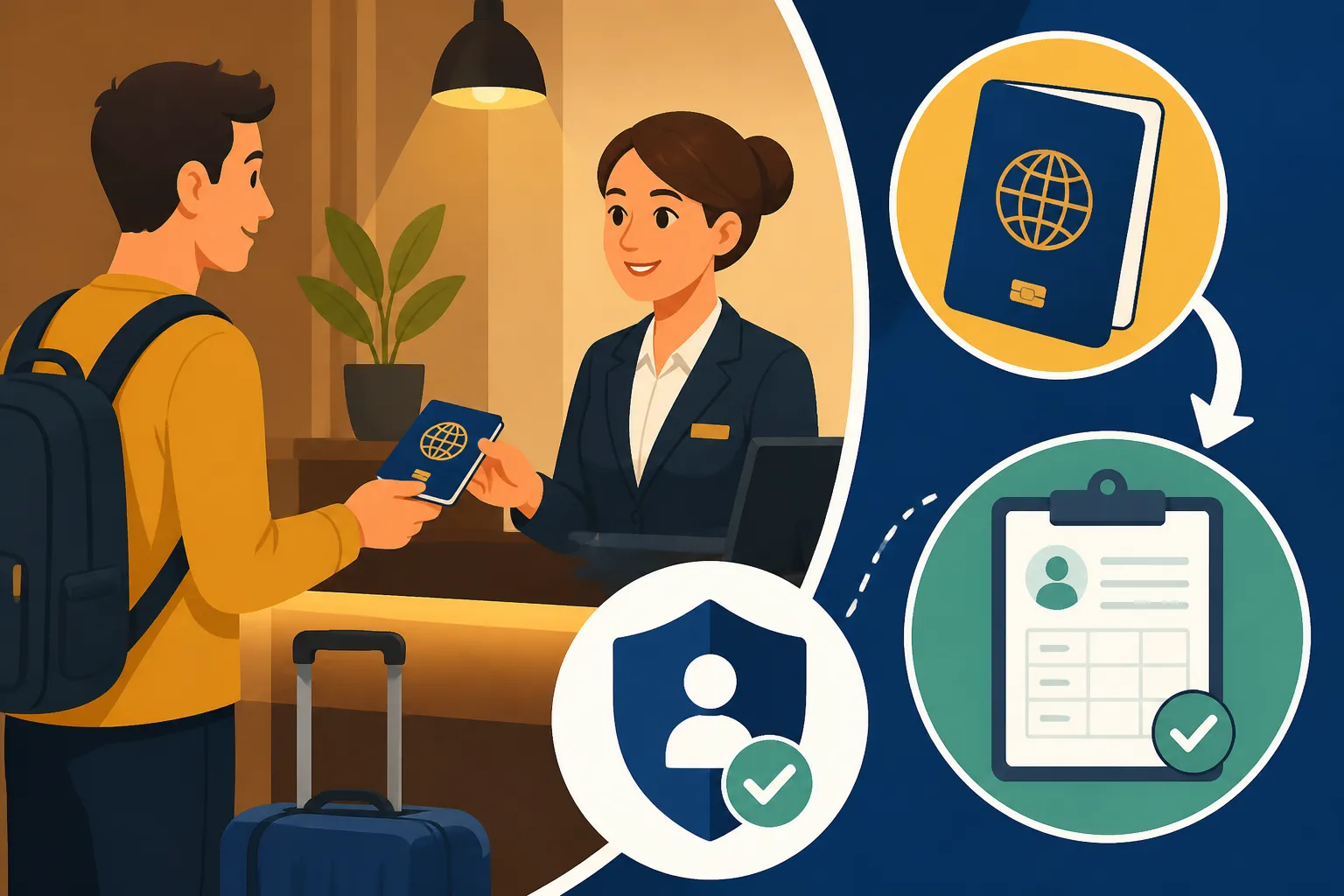
When you present your passport or national ID, the hotel staff use it to verify your identity and ensure the details you provide on the Meldeschein are correct. This helps prevent fraud and ensures that the data submitted to the local authorities (if required) is reliable. Imagine trying to check into a hotel in your home country; you'd almost certainly need photo ID. In Germany, this identity check is directly linked to the Meldeschein data collection. It’s a formality, yes, but an important one for the German system.
The Data Collected
The Meldeschein typically asks for a few key pieces of information: your full name, date of birth, nationality, home address, arrival and departure dates, and sometimes your passport or ID card number. While it might seem like a lot, this data is generally standardized and is primarily used for the purposes outlined by the Bundesmeldegesetz. Don't worry, they aren't going to ask for your blood type or your deepest secrets!
EU vs. Non-EU Citizens
For EU citizens, a national ID card is usually sufficient for the Meldeschein. For non-EU citizens, a passport is almost always required. Hotels may also, particularly for non-EU guests, take a photocopy of the passport. This is less about the Meldeschein specifically and more about general hotel best practices for identifying foreign guests and, in some cases, meeting immigration record-keeping requirements, though hotels generally do not directly manage visa status. When you book a room, perhaps through a platform like Booking.com, this requirement will usually be stated in the fine print.
The Process: How Hotels Handle Your Passport and Data
So, you’ve handed over your passport. What happens next? It’s a pretty straightforward process, and importantly, your data is handled with a certain level of security.
Handing Over Your ID
Typically, when you check into your accommodation, you'll be asked for your passport at the reception desk. The staff will either give you a physical Meldeschein to fill out or enter your details directly into their system. They might hold onto your passport for a minute or two to verify details or make a copy. It’s a quick procedure, usually taking no longer than a few minutes. While it might feel a bit strange to hand over such an important document, rest assured it’s a standard practice across the country.
Photocopying vs. Manual Entry
Some hotels will photocopy your passport, especially for non-EU visitors, while others will simply transcribe the necessary information onto the Meldeschein. Either method is permissible. If they photocopy it, they are legally obliged to do so in a way that respects data protection laws, meaning they shouldn't just leave it lying around. This whole process is often streamlined when you book through major platforms; for instance, when confirming a stay via Booking.com, you often get a heads-up about the ID requirements.
Data Protection and GDPR
One of the biggest concerns for travelers is often data privacy. You'll be relieved to know that hotels in Germany are bound by stringent data protection laws, including the General Data Protection Regulation (GDPR). This means they cannot indiscriminately share your Meldeschein data with third parties. The information is collected for specific purposes (registration, local taxes, statistics) and is handled confidentially. If you’re ever concerned, you can always ask the hotel about their data handling policies, but generally, it’s a non-issue.
Beyond Registration: The Purpose of the Data
While it might seem like just bureaucracy, the data collected through the Meldeschein serves several practical purposes for local municipalities and tourist boards.
Local Tourist Tax (Kurtaxe/Gästetaxe)
One of the primary uses of the Meldeschein data is the collection of local tourist taxes, known as Kurtaxe or Gästetaxe. Many German towns and regions, particularly spa towns, health resorts, and popular tourist destinations like those found when browsing options on Booking.com, levy a small daily fee on visitors. This tax often goes towards maintaining local infrastructure, tourist services, and cultural events. The Meldeschein is the mechanism by which the hotel registers your stay with the municipality, enabling them to calculate and collect this fee. In return, you often receive a "Kurkarte" which might offer discounts on local attractions or free public transport. Cost of Living in Germany: Budgeting Guide for Expats often highlights these small, sometimes unexpected, costs.
Statistical Purposes
The aggregated data from Meldeschein forms provides valuable statistics for local and national tourism boards. This information helps them understand visitor demographics, popular travel times, and average lengths of stay. Such statistics are crucial for planning tourism strategies, allocating resources, and marketing efforts. It's how they figure out what kind of tourist experiences to develop and where to focus their promotions.
Security and Emergency Contacts
While less common, in certain circumstances, the Meldeschein data can be used for public safety. In the event of an emergency, natural disaster, or a security incident, authorities might access this information to identify individuals, check on welfare, or notify next of kin. It's a layer of civic organization that, while rarely invoked, exists to help in critical situations. While your hotel cannot act as your emergency contact, having your registered address means you are officially accounted for.
Common Concerns and Misconceptions for Expats
It’s completely normal to feel a bit confused or even annoyed by the Meldeschein process, especially if you come from a country where such detailed hotel registration isn't standard. Let's tackle some common expat anxieties.
Is It a Privacy Breach?
For many non-Germans, the idea of a hotel having so much of your personal information, including your passport number, can feel like a significant privacy breach. Trust me, you're not alone if you've wondered about this! However, as discussed, German hotels operate under strict data protection laws, including GDPR. They are legally prohibited from misusing or improperly sharing your data. It’s part of the wider German culture of detailed administration, where knowing who is where is seen as a civic norm rather than an intrusion. It’s a different cultural approach, often starkly different from what you might be used to at home. Healthcare Culture Shock: How Germany’s Medical System Differs from Other Countries often covers similar feelings of navigating unfamiliar systems.
What if I Don't Have My Passport?
If you are an EU citizen, your national ID card will generally suffice for the Meldeschein. However, for non-EU citizens, a valid passport is almost universally required. Relying on a driver’s license or other forms of ID often won't be accepted. It's crucial to always carry your official travel document when traveling internationally, especially for check-in procedures. Platforms like Booking.com usually clarify these requirements when you finalize your booking, which is super helpful.
Avoiding It: Is It Even Possible?
In short, no. If you are staying in a legitimate hotel, guesthouse, hostel, or even some officially registered Ferienwohnungen (holiday apartments) in Germany, the Meldeschein is a mandatory part of the check-in process. Attempting to avoid it could lead to refusal of service or even legal issues for the accommodation provider. It's simply a requirement that comes with staying in German lodging. While Short-Term Accommodation in Germany: Options for Your First Weeks might list various types of stays, all will generally adhere to this rule.
Seamless Stays: Booking Your Accommodation in Germany
Navigating the German system, even for something as seemingly simple as checking into a hotel, can sometimes feel like a mini-adventure in bureaucracy. But with the right tools and expectations, it's a breeze.
Planning Ahead with Reliable Platforms
When you're looking for a place to stay in Germany, using reliable booking platforms is key. Booking.com is a fantastic resource, offering a vast array of accommodation options from budget hostels to luxury hotels, all across the country. Their user-friendly interface allows you to filter by location, price, amenities, and even read reviews from other travelers. This helps you find exactly what you're looking for, whether it’s a quick overnight stay in Frankfurt or a longer holiday in Munich. They've made finding accommodation incredibly accessible and simple for expats and tourists alike.
Understanding Hotel Policies Before You Arrive
A major advantage of using platforms like Booking.com is that they usually provide clear information about hotel policies, including check-in requirements. You can often see details about accepted forms of ID and payment methods well before you even leave home. Taking a moment to read through these details can save you any surprises upon arrival, ensuring a smooth and stress-free check-in. It’s always best to be prepared, especially when dealing with the organized German way of doing things. German Social Etiquette for Visitors: Greetings and Punctuality highlights this emphasis on preparation and order.
What to Expect at Check-in
So, you’ve used Booking.com, found your ideal spot, and now you're at the front desk. Expect to be greeted, possibly in English, and asked for your booking confirmation and your passport. You'll either be given a form to fill out with your details or the staff will input them directly. Don't be surprised if they take a moment to copy your passport or scribble down details; it’s just part of completing the Meldeschein. Once that's done, you'll get your room key, and you're free to enjoy your stay. It’s a brief, necessary step in your German travel adventure!
Why Booking.com is a Go-To for Expats
Booking.com simplifies the entire process of finding and securing accommodation in Germany. Its extensive database means you’re more likely to find English-friendly options, and the detailed listings help you anticipate check-in requirements like the Meldeschein. They also offer customer support, which can be invaluable if you encounter any issues with your booking. For anyone new to Germany, or even seasoned travelers, the ease and transparency offered by such platforms are truly a lifesaver.
Summary of Meldeschein Requirements
Here’s a quick overview of what to expect when filling out your Meldeschein:
| Feature | EU Citizens & EEA | Non-EU Citizens |
|---|---|---|
| Required ID | National ID card or passport | Passport |
| Data Collected | Name, DOB, Address, Nationality, Dates of Stay | Name, DOB, Address, Nationality, Dates of Stay, Passport Number |
| Legal Basis | Bundesmeldegesetz | Bundesmeldegesetz |
| Purpose | Registration, local taxes, statistics | Registration, local taxes, statistics |
| Photocopying | Less common | More common |
| Mandatory | Yes | Yes |
| Data Protection | Covered by GDPR | Covered by GDPR |
Remember, the Meldeschein is just a small, albeit sometimes unexpected, part of the German travel experience. Once you understand its purpose, it becomes just another routine step in your journey.
Disclaimer
This article is for general informational purposes only and does not constitute professional advice. Laws, prices and regulations vary by location and change over time. Consult a qualified professional for guidance on your specific situation.