How to Cycle the Rhine or Elbe Cycle Path
Planning a multi-day cycling trip in Germany often feels like an administrative puzzle. You are likely staring at a map, overwhelmed by the logistics of transporting a bike on the Deutsche Bahn, finding bike-friendly hotels that won't lose your deposit, and deciding which river path actually offers the best scenery versus industrial sprawl. This guide solves that paralysis by breaking down the Rhine and Elbe cycle paths into manageable, realistic stages.
Disclosure: This post may contain affiliate links. We may earn a commission at no extra cost to you if you make a purchase through these links. Read full disclosure.
Choosing Your Path: The Rhine vs. The Elbe
The first hurdle every cyclist in Germany faces is the "choice of rivers." Both the Rhine (Rheinradweg) and the Elbe (Elberadweg) are iconic, but they offer fundamentally different experiences. As someone who has spent many weekends regretting a headwind on the Elbe, I can tell you that your direction of travel and your expectations for "scenery" will make or break your trip.
The Rhine Cycle Path (Rheinradweg)
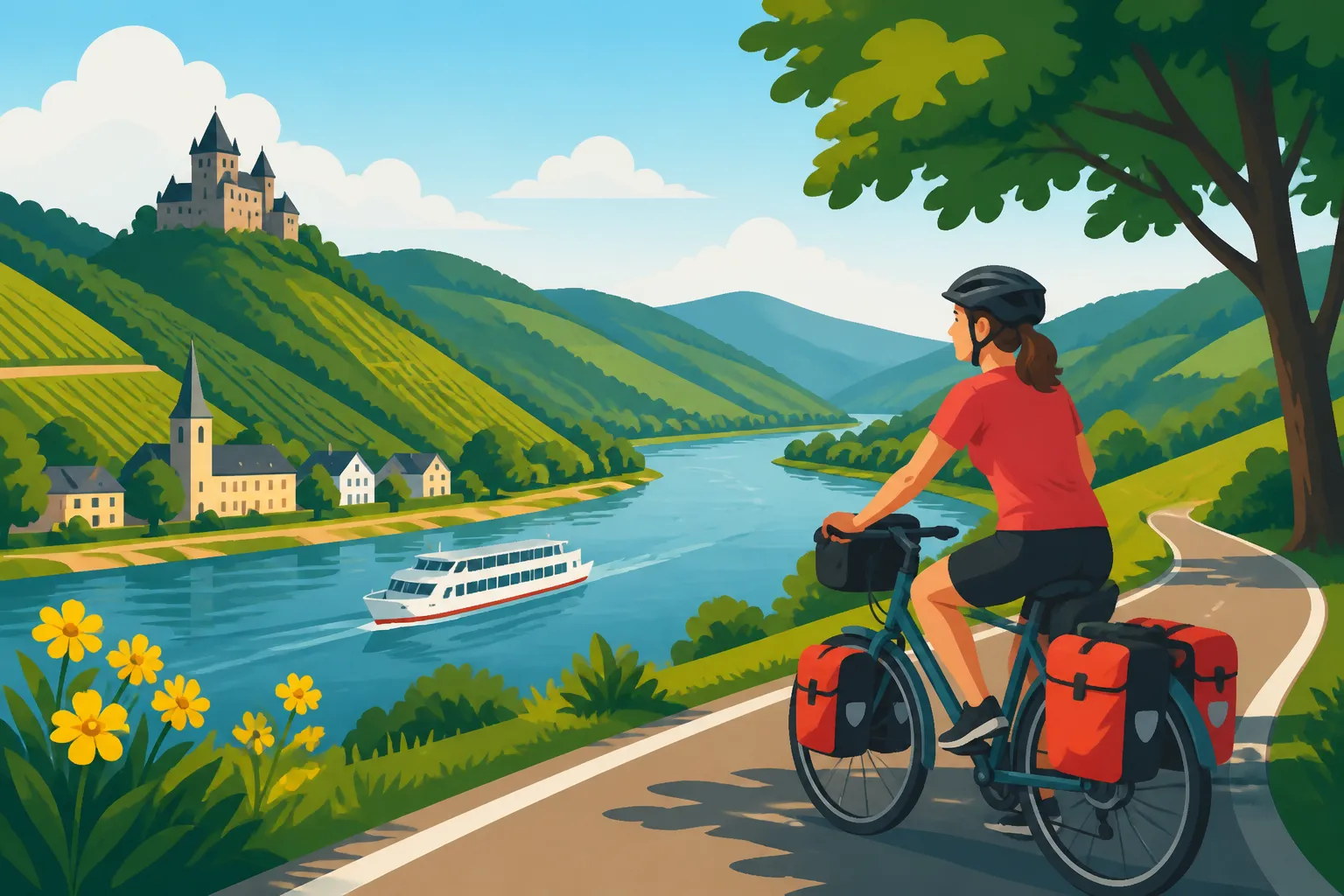
The Rhine Cycle Path, or EuroVelo 15, is a behemoth. It stretches over 1,200 kilometers from the Swiss Alps to the North Sea, but for most people living in or visiting Germany, the focus is on the stretch between Lake Constance (Bodensee) and the Dutch border. The "Hero" section is undoubtedly the Middle Rhine Valley. This is where you get the postcard-perfect castles, the steep vineyards, and the legendary Lorelei rock.
However, the Rhine is also a major industrial artery. If you cycle through the Ruhrgebiet or around Mannheim, you will see as many shipping containers and factories as you do vineyards. This isn't necessarily a bad thing—it is a fascinating look at the engine of the German economy—but if you want pure nature, you have to choose your stages carefully. The Rhine Valley: Castles, Wine, and River Towns is the most sought-after segment for a reason; it provides the highest density of sights with relatively flat terrain, as the path hugs the riverbank.
The Elbe Cycle Path (Elberadweg)
For over 15 years, the Elberadweg has been voted the most popular cycle path in Germany by the ADFC (German Cycling Club). It begins in the Czech Republic and ends at Cuxhaven, where the river meets the North Sea. The beauty of the Elbe lies in its diversity. In the east, you have the dramatic sandstone cliffs of Saxon Switzerland, which feels almost prehistoric. As you move toward Dresden, the path becomes a cultural tour of Baroque architecture and historic riverside beer gardens.
The northern stretch toward Hamburg and the sea is much flatter and quieter, dominated by massive dikes and sheep. The biggest tip I can give you for the Elbe is to watch the wind. Most people cycle from south to north (Dresden to Hamburg), but the prevailing winds often blow from the northwest. Checking a reliable wind forecast on a platform like Omio while planning your transit can save you from a 300-kilometer battle against nature. If the wind is against you, don't be afraid to flip your itinerary.
Direct Comparison: Which One Should You Pick?
| Feature | Rhine Cycle Path | Elbe Cycle Path |
|---|---|---|
| Primary Vibe | Historic, Industrial, Romantic | Natural, Cultural, Pastoral |
| Difficulty | Very flat (mostly), high traffic | Flat, wind-dependent, quieter |
| Best Section | Bingen to Koblenz (Castles) | Bad Schandau to Dresden (Cliffs) |
| Infrastructure | Excellent, many towns/services | Very good, more rural gaps |
| Train Access | Superior (heavy rail lines) | Good (but some remote stretches) |
Logistics: Getting Yourself and Your Gear to the Start Line
The dream is a seamless ride, but the reality of Getting Around Germany: Trains, Buses, Flights, and Car Hire involves navigating the specific rules of the Deutsche Bahn (DB). You cannot just roll your bike onto any train. For long-distance trains (ICE), a bike reservation is mandatory and often sells out weeks in advance during the summer.
Mastering the Deutsche Bahn with a Bike
If you are using regional trains to reach the start of your tour, life is slightly easier but more chaotic. You can use the Regional Trains and the Deutschland-Ticket Explained to travel cheaply, but remember that there is no "reservation" for bikes on regional trains. If the train is full, the conductor has the right to refuse you. This is why veteran cyclists in Germany always aim for the first or last train of the day or travel on weekdays.
When you are looking for the best way to get to your starting point, whether it's Konstanz for the Rhine or Bad Schandau for the Elbe, using a tool like Omio can help you compare the regional versus long-distance options. Sometimes taking a slightly more expensive ICE with a reserved bike spot is worth the peace of mind over a crowded regional train where you might be standing in the vestibule with five other frustrated cyclists.
Finding Bike-Friendly Accommodation
In Germany, look for the "Bett+Bike" certification. These are hotels, pensions, and even youth hostels that have met strict criteria set by the ADFC. They must provide secure, indoor bike storage, tools for minor repairs, and a place to dry your gear.
I usually start my search on Booking.com to filter for properties with "parking" or specific mentions of bicycle storage in the reviews. It’s a common expat mistake to assume any hotel will let you bring your muddy mountain bike into the lobby. They won't. If you’re staying in a smaller village along the Elbe, these spots fill up fast. Use Booking.com to secure a room in advance, especially in "bottleneck" towns like Rüdesheim on the Rhine or Wittenberg on the Elbe.
Practical Survival: Gear, Food, and Culture
Once you are on the path, the German "Radweg" culture takes over. You will notice that everything is meticulously signposted. Look for the white signs with green lettering. On the Rhine, you are following the EuroVelo 15 logo; on the Elbe, look for the stylized "e" in a blue circle.
Essential Gear for the German Climate
Germany's weather is notoriously fickle. You can start the morning in glorious sunshine and end it in a torrential downpour. The "Zwiebelprinzip" (onion principle) or layering is essential. Even in July, a lightweight windbreaker is a must.
If you don't own a touring bike, you can look into Cycling in German Cities: Bikes and Bike-Sharing for local day trips, but for a multi-day tour, you’ll want a proper trekking bike with panniers. Do not wear a heavy backpack; your spine will thank you by day three. If you find yourself in a major city like Cologne or Hamburg and realize you've forgotten a crucial piece of gear, check GetYourGuide for local bike shop tours or rental hubs that offer high-quality equipment.
Refueling Along the Way
One of the greatest joys of cycling in Germany is the food. You are never more than 10 kilometers away from a bakery. For a truly local experience, stop for German Bread, Bakeries, and the German Breakfast before you set off. A "belegtes Brötchen" (filled roll) is the cheapest and most effective fuel for a cyclist.
As you pass through the East, make sure to try Saxony and the East: Dresden, Leipzig, and Beyond regional specialties like Eierschecke (a delicious three-layered cake). On the Rhine, the fuel of choice is often a glass of Riesling at a "Straußwirtschaft"—a seasonal wine tavern run by the growers themselves. Just remember the legal limit for cycling under the influence in Germany is higher than for driving, but it is still strictly enforced if you are showing signs of impairment.
Staying Safe and Navigating Challenges
While Germany is generally very safe, Staying Safe in Germany: Common-Sense Tips for Travelers still apply to your bike gear. Always use a high-quality D-lock, even when stepping into a bakery for two minutes. Professional bike theft "syndicates" are unfortunately common in larger cities like Magdeburg or Düsseldorf.
If you encounter a mechanical issue you can't fix, the Elbe and Rhine are populated with "Radtankstellen" (bike stations) and repair kiosks. If you are feeling exhausted, you can often find river ferries that will take you and your bike across to the other bank or downstream for a few kilometers, giving your legs a break while you enjoy the view. You can even book specialized boat-and-bike tours via GetYourGuide if you prefer a floating hotel that follows you as you ride.
Preparing Your Itinerary: Real-World Scenarios
To make this actionable, let’s look at two classic short itineraries that many expats use as their "entry" into German bike touring.
Scenario A: The Romantic Rhine Weekend (Mainz to Koblenz)
This is roughly 100 kilometers and can be done comfortably in two days.
- Day 1: Start in Mainz, cycle through the vineyards to Bingen. Take the ferry across to Rüdesheim to see the famous Drosselgasse. Use Booking.com to find a spot in a traditional wine-grower's pension.
- Day 2: Enter the UNESCO World Heritage stretch. You will pass castle after castle. End in Koblenz at the "Deutsches Eck," where the Moselle meets the Rhine.
- Pro Tip: If you want to see a castle from the inside without the climb, use GetYourGuide to book a tour of Burg Rheinfels in St. Goar.
Scenario B: The Elbe Sandstone Adventure (Dresden to Torgau)
This is about 120 kilometers and offers a mix of high culture and deep nature.
- Day 1: Start in Dresden. Before you leave, cycle south for 20km to see the Bastei Bridge in Saxon Switzerland, then turn back. Sleep in Dresden.
- Day 2: Cycle north toward Meissen. This is the home of German porcelain. The Albrechtsburg castle overlooking the river is a stunning lunch stop.
- Day 3: Continue through the Elbe meadows toward Torgau. This stretch is incredibly peaceful, with wide-open skies and very little car traffic. Use Omio to find a train back from Torgau to your home city.
Regardless of which path you choose, the key to a successful German cycling tour is flexibility. The infrastructure is there to support you, whether you need to jump on a train because of a sudden thunderstorm or find a last-minute bed in a village because you pushed yourself too hard.
Disclaimer
The information provided in this guide is for informational purposes only and reflects the personal experiences and research of the author. Travel regulations, train schedules, and path conditions in Germany can change frequently. Always check official sources like the Deutsche Bahn (DB) and the ADFC for the most current information regarding bike transport and path closures. The author is not responsible for any issues arising from the use of third-party booking platforms or services mentioned in this article.