How to Visit Lake Constance (Bodensee)
Trying to plan a trip to Lake Constance, or Bodensee as we locals call it, often feels like trying to solve a geographic puzzle. With shores touching Germany, Austria, and Switzerland, many visitors get overwhelmed by the sheer scale of the lake and the logistics of crossing borders while just trying to find a decent beach. This guide breaks down exactly how to navigate the region, select the best base, and move between lakeside gems without the typical tourist stress.
Disclosure: This post may contain affiliate links. We may earn a commission at no extra cost to you if you make a purchase through these links. Read full disclosure.
Choosing Your Home Base on the Lake
One of the most common mistakes I see newcomers make is picking a hotel based solely on price without considering where it actually sits on the lake’s 270-kilometer perimeter. If you choose the wrong side, you might spend three hours a day just sitting on a slow-moving ferry. You need to think about what kind of "vibe" you want for your stay because the German shore alone varies wildly from Bavarian medieval islands to university-driven cultural hubs.
Lindau: The Bavarian Island Charm
Lindau is arguably the most iconic spot on the entire lake, located on the southeastern edge where Germany meets Austria. The "Altstadt" or Old Town is actually situated on an island connected to the mainland by a bridge. Entering the harbor is a core memory for most travelers; you are greeted by a massive Bavarian Lion statue on one side and a white lighthouse on the other, with the snow-capped Swiss Alps looming in the distance. It is breathtaking, but it can be crowded.
Staying here gives you immediate access to the high-speed rail lines that run toward Munich or down into Austria. If you are looking for accommodation, I highly recommend checking Booking.com early, as the island hotels fill up months in advance during the Zeppelinfest or the height of summer. The narrow, cobblestone streets are filled with high-end boutiques and traditional Gasthäuser where you can try your first glass of Müller-Thurgau, the local white wine. Just be prepared for the "island premium" on prices.
For those who want to explore beyond the lake, Lindau is one of the Best Day Trips From Munich due to the direct train connections. However, the island is best enjoyed in the early morning or late evening after the day-trippers have caught their trains home. Walking along the harbor wall with a gelato in hand while the sun sets over the "Dreiländereck" (the three-country corner) is a quintessential Bodensee experience that makes the higher hotel prices worth every cent.
Konstanz: The Cultural Hub and University Vibe
On the opposite side of the lake lies Konstanz, the largest city in the region. Because it shares a seamless border with the Swiss town of Kreuzlingen—you can literally walk across a street and be in a different country—it has a very international, bustling feel. This is a university city, which means it stays alive year-round, unlike some of the smaller villages that can feel like ghost towns in November.
The Niederburg district is the oldest part of the city, with crooked houses and wine bars tucked into every corner. If you are a history buff, this is where the Council of Constance took place in the 15th century. Because it’s a major transport node, you’ll find it much easier to find various lodging options on Booking.com here than in the smaller villages. It’s a great base if you want to balance nature with shopping, nightlife, and a wide variety of restaurants.
Konstanz is also the gateway to the "Lake Finger" known as the Überlinger See. From the main harbor, you can catch the car ferry to Meersburg every 15 minutes, making it incredibly convenient for those who don't want to be tied to a rigid schedule. If you are coming from further afield in Germany, you can easily compare train and bus routes to Konstanz using Omio to ensure you aren't overpaying for the scenic route.
Meersburg: Medieval Romance and Vineyards
If your goal is to feel like you’ve stepped into a Brothers Grimm fairytale, Meersburg is your place. It is split into the "Unterstadt" (lower town) right on the water and the "Oberstadt" (upper town) which clings to the steep hillside. The two are connected by winding stairs and steep paths lined with half-timbered houses. The town is dominated by the Alte Burg, the oldest inhabited castle in Germany, which is an absolute must-visit for the views alone.
Meersburg is surrounded by steep vineyards that produce some of the best Pinot Noir (Spätburgunder) in the country. Life here moves a bit slower. You’ll spend your afternoons sitting on a terrace overlooking the water, watching the white sails of the boats. However, a veteran tip: Meersburg does not have a train station. You have to rely on buses or the ferry from Konstanz. This keeps some of the massive crowds away, but it requires a bit more planning when you're Getting Around Germany: Trains, Buses, Flights, and Car Hire during your trip.
The romantic atmosphere makes it a top pick for couples, but the steep hills can be a challenge for those with mobility issues or heavy luggage. When booking your stay on Booking.com, pay close attention to whether the hotel is in the upper or lower town. Dragging a suitcase up the "Steigstraße" in the humidity of July is a mistake you only make once.
Navigating the Bodensee Transport System
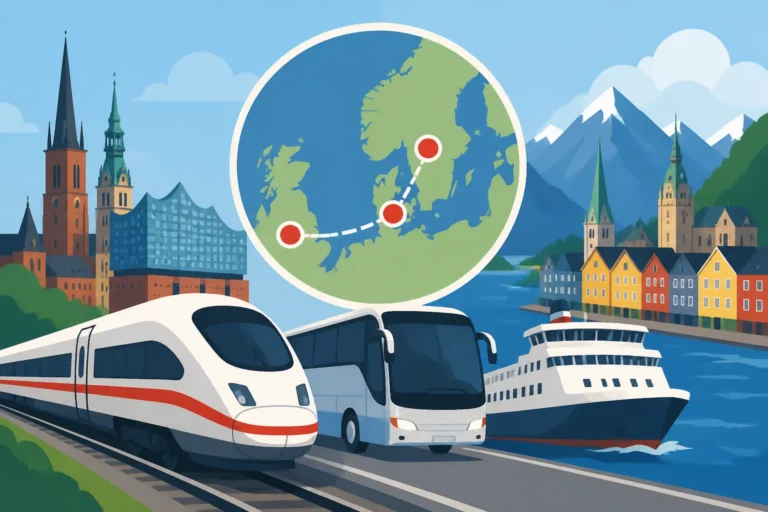
Moving around the lake is part of the attraction itself. You shouldn't think of the water as an obstacle, but rather as your primary highway. Whether you choose to travel by water, rail, or two wheels, the infrastructure here is world-class, though it does come with a "tourist tax" in the form of slightly higher ticket prices than in other Germany's Regions and Where to Go: A Traveler's Overview locations.
The White Fleet (Weiße Flotte) and Ferries
The "Weiße Flotte" refers to the fleet of white passenger ships that crisscross the lake. These are not just commuter vessels; they are leisure boats with sun decks, restaurants, and bars. Taking a boat from Lindau to Friedrichshafen or from Konstanz to Mainau Island is the best way to see the shoreline. For many of these scenic routes, you can find tickets or organized boat tours through GetYourGuide which often include skip-the-line entry to popular island attractions.
Beyond the leisure boats, there are two main "Pendelferren" (shuttle ferries) that carry cars and pedestrians. The Konstanz-Meersburg line is a lifesaver, running 24 hours a day. The other major crossing is between Friedrichshafen and Romanshorn (Switzerland). If you’re planning a multi-day exploration, look into the "Bodensee Card Plus," which covers many of these boat trips and entrance fees for a fixed price. It can save you a fortune if you're an active sightseer.
Remember that the lake is vast. A boat trip from one end to the other can take several hours. It’s delightful if you have a glass of wine and a book, but frustrating if you’re in a rush. Always check the seasonal schedules, as the frequency of boats drops significantly starting in October. If you need to get to the lake from major airports like Zurich or Stuttgart, Omio is an excellent tool for booking the initial leg of your journey before you switch to the slower pace of the water.
Trains and the Bodensee Ticket
The "Bodensee Ticket" is a special regional pass that allows you to use trains, buses, and even some ferries across all three countries (Germany, Austria, and Switzerland). It is divided into zones, and you can buy a day pass or a three-day pass. This is incredibly empathetic to the needs of the expat or tourist who wants to have breakfast in Germany, lunch in Switzerland, and dinner in Austria without worrying about different national rail systems.
The German side is served by the "Bodenseegürtelbahn," a railway that hugs the northern shore. The views from the train windows between Lindau and Friedrichshafen are stunning, with the tracks often running just meters from the water’s edge. If you are connecting from Berlin or Frankfurt, using Omio to secure a long-distance ICE ticket to a hub like Ulm or Singen is your best bet before transferring to the local regional trains.
One thing to keep in mind is that German and Swiss trains are generally punctual, but connections can be tight. If you are traveling on a Sunday, be aware of the Quiet Hours and Sundays in Germany (Ruhezeit), as some local bus feeders to the train stations might run less frequently. Always give yourself a 15-minute buffer when switching from a boat to a train, as the walk from the pier to the "Bahnhof" can be longer than it looks on a map.
Cycling the Bodensee-Radweg
The Bodensee-Radweg is one of Europe’s most popular cycling paths, and for good reason. It is almost entirely flat, incredibly well-signposted, and takes you through apple orchards, vineyards, and medieval villages. You can do the full 260-kilometer loop in about 4 to 7 days, or just rent a bike for a day to hop between towns like Hagnau and Immenstaad.
Bike rental shops are everywhere, especially near the train stations. Many people choose to ride one way and take the boat back with their bikes. This is a great way to see more of the lake without exhausting yourself. If you’re worried about the logistics of moving your luggage while cycling the whole loop, there are specialized services that will ferry your bags from hotel to hotel, many of which can be found through local tours on GetYourGuide.
Safety is high, and the path is mostly separated from car traffic. However, in peak summer (July and August), the path can get "traffic jams" of e-bikes and families. My advice? Start early—around 8:00 AM—to have the path to yourself. If you're staying for a while, Health Tips for Travelers: Staying Healthy During Trips Around Europe suggests staying hydrated and wearing sunblock, as the reflection of the sun off the lake can be surprisingly intense even on cooler days.
Top Attractions and Hidden Gems
Once you've settled into your base and mastered the transport, it's time to actually see the sights. Lake Constance isn't just about the water; it’s a massive cultural landscape that has been inhabited for thousands of years.
Mainau: The Flower Island
Owned by the Bernadotte family (royalty of Swedish descent), Mainau is a 45-hectare floral paradise. No matter when you visit, something is in bloom—tulips in the spring, roses in the summer, and dahlias in the autumn. The island also features a butterfly house, a baroque palace, and massive redwood trees. It is the single most visited attraction on the lake, so booking your entry tickets via GetYourGuide is a smart move to avoid the long queues at the pier.
Mainau is completely car-free, so you’ll be doing a lot of walking. There are several restaurants on the island, but they are quite pricey. Many locals bring a picnic and find a spot overlooking the "Überlinger See." If you are visiting with kids, the "Mainau Kinderland" is one of the best playgrounds in Southern Germany. Just be sure to check the boat schedule for your return trip, as the last ferry usually leaves shortly after sunset.
Reichenau: Monastic History and Fresh Produce
While Mainau is about flowers, Reichenau is about history and food. This island is a UNESCO World Heritage site thanks to its three Romanesque churches that date back to the 9th and 11th centuries. It was once one of the most important monastic centers in Europe. You can reach the island via a long, tree-lined causeway by bus, car, or bike.
Today, the island is also known as the "Vegetable Island." Because of the lake's unique microclimate, Reichenau produces a huge portion of the region's salads, tomatoes, and herbs. Walking through the greenhouses and then stopping at a local "Fischbrötchen" stand to eat freshly caught Felchen (a local whitefish) is a must. It feels much more authentic and less "touristy" than Mainau. You can often find guided walking tours of the historic churches on GetYourGuide if you want to dive deep into the medieval history.
The Pfahlbauten: Prehistoric Pile Dwellings
In the town of Unteruhldingen, you’ll find the Pfahlbauten, an open-air museum featuring reconstructed stilt houses from the Stone and Bronze Ages. These dwellings were built over the water to protect the inhabitants from predators and flooding. It is a fascinating look at how people lived on this lake 3,000 to 6,000 years ago.
The museum is very interactive and great for families. You can see how they made fire, wove cloth, and processed grain. Since it’s right on the water, you can easily reach it by boat from Mainau or Meersburg. After your tour, take a walk along the promenade in Unteruhldingen; it’s one of the best spots for swimming in the lake, with clear, shallow water and a pebble beach.
| Season | Temperature (C) | Crowds | Best For |
|---|---|---|---|
| Spring (April-June) | 12°C – 20°C | Moderate | Flowers on Mainau, Cycling |
| Summer (July-August) | 20°C – 28°C | Very High | Swimming, Festivals, Sailing |
| Autumn (Sept-Oct) | 10°C – 18°C | Moderate | Wine Harvest, Hiking |
| Winter (Nov-March) | -2°C – 7°C | Low | Christmas Markets, Wellness |
Planning Your Budget and Logistics
Living as an expat in Germany has taught me that the "Bodensee" region is one of the pricier corners of the country. It is a favorite vacation spot for wealthy Germans and Swiss citizens, so your budget needs to be a bit more flexible than it would be in Berlin or Leipzig.
When to Visit: Avoiding the Summer Rush
If you have the choice, I always tell people to visit in September. The lake water is still warm enough for a dip, the massive summer crowds have thinned out, and it’s the season of "Weinwandern" (wine hiking). The air is crisp, and you get the clearest views of the Alps. July and August are beautiful, but the humidity can be high, and finding a spot for your towel on the public beaches (Strandbäder) can be a struggle.
Winter is the "secret" season. While it can be foggy (a thick soup known as "Bodenseenebel"), the Christmas markets in Konstanz and Lindau are among the most beautiful in the world, with stalls literally set up on the harbor docks. If you’re coming for the markets, book your room on Booking.com at least three months in advance, as people travel from all over Europe for the "Konstanzer Weihnachtsmarkt am See."
Accommodation and Booking Tips
Because the lake covers three countries, you should think about where your currency will go further. Germany and Austria use the Euro, while Switzerland uses the Swiss Franc. Generally, you’ll find that hotels and dining are 20-30% cheaper on the German and Austrian shores compared to the Swiss side. Use Booking.com to compare prices across the borders; sometimes a 10-minute ferry ride can save you €50 a night.
When checking out, remember that most German lakeside towns charge a "Kurtaxe" (tourist tax) of a few Euros per person per night. In exchange, you usually get a "Gästekarte" (guest card) that gives you free use of local buses and discounts at museums. Always ask your hotel host for this card the moment you check in. It’s a small detail that saves you a lot of hassle when trying to figure out local bus fares.
Cultural Nuances and Expat Tips
Visiting the lake isn't just about the sights; it's about navigating the local way of life. The culture here is a mix of relaxed lakeside living and strict German efficiency.
The Three-Country Dynamic
One of the coolest things about Lake Constance is the ease of international travel. You can bike from Germany into Austria in minutes. However, keep your passport or ID on you. While border checks are rare due to the Schengen Agreement, they do occasionally happen on the trains and ferries, especially when entering Switzerland.
Regarding money, even though many places now take cards, Germany still has a love affair with "Bargeld." I’ve written extensively about Cash vs Card in Germany: What Visitors Should Know, and it applies double here. Smaller "Biergartens" or farm stands on Reichenau Island might only take cash. On the Swiss side, they will often accept Euros but will give you change in Swiss Francs at a poor exchange rate. It’s better to use a card there or have a small amount of local currency.
Dining and Local Specialties
You cannot leave the Bodensee without trying "Kretzer" or "Felchen." These are local freshwater fish, usually served pan-fried with butter and almonds. The German Food Culture: Eating and Drinking as a Visitor is very much alive here, but with a lighter, more Mediterranean twist than the heavy schnitzels of the North.
When dining out, remember the rules for Tipping in Germany: When, Where, and How Much. You don't leave the tip on the table; you tell the server the total amount you want to pay as you hand them your card or cash. For example, if the bill is €18.50, you might say "Twenty" as you pay. Also, be aware that "Apfelsaftschorle" (apple juice mixed with sparkling water) is the unofficial drink of the lake—perfect for staying hydrated during those long bike rides.
Disclaimer
This guide is for informational purposes only. While I strive to provide the most accurate and up-to-date travel advice based on my experience living in Germany, schedules, prices, and local regulations can change. Always check official transport websites and local government advisories before your trip. Safe travels!