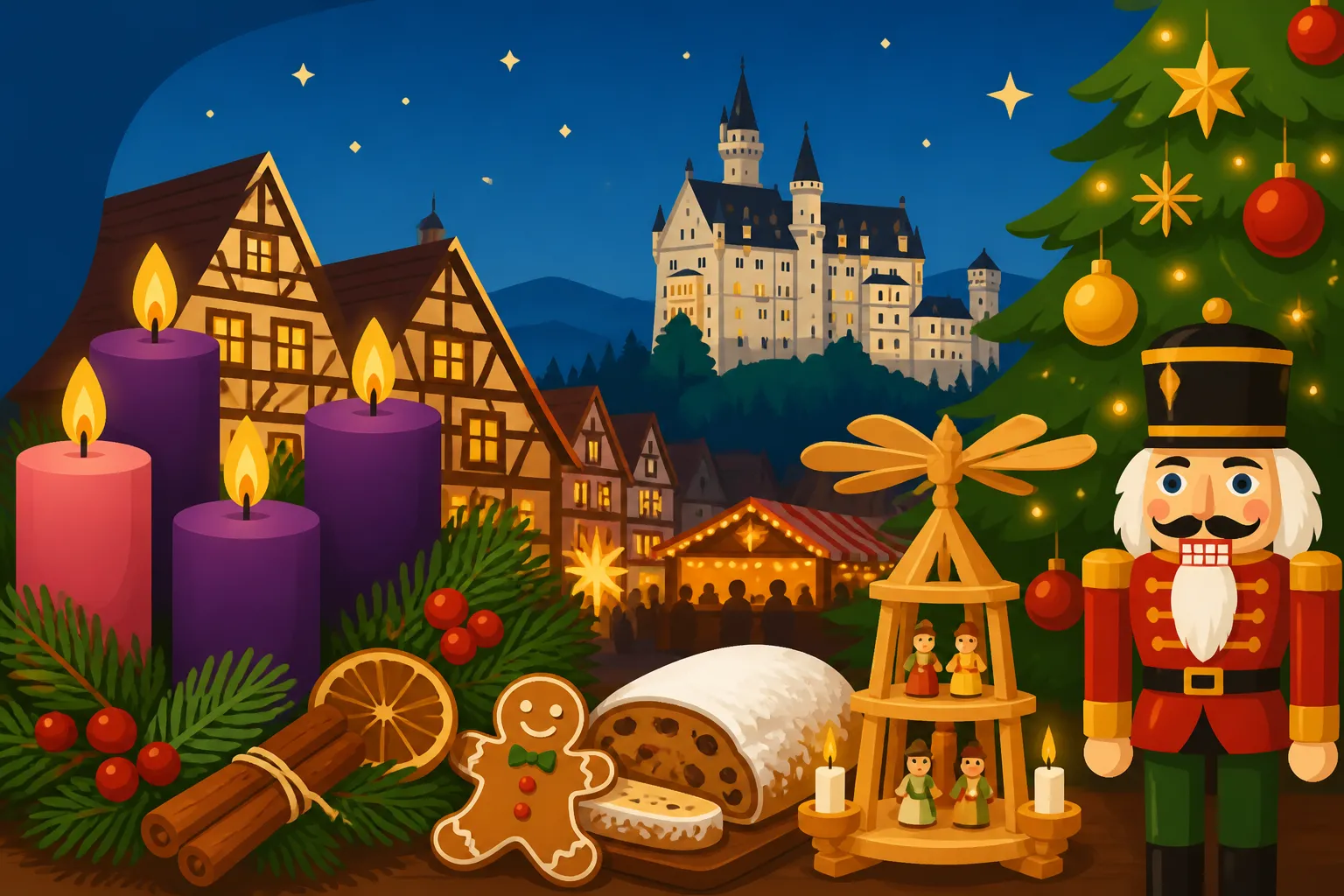
Advent and Christmas Traditions in Germany
Moving to Germany, especially around the colder months, can feel a bit like stepping into a storybook – but also a bit like learning a whole new language of holidays. The festive season here isn't just about Christmas Day; it's a profound, weeks-long journey called Advent, steeped in unique traditions that often start much earlier than what many expats are used to. This guide will walk you through the magical, sometimes perplexing, world of German Advent and Christmas customs, helping you understand and embrace the heartwarming rituals that define this special time of year.
Disclosure: This post may contain affiliate links. We may earn a commission at no extra cost to you if you make a purchase through these links. Read full disclosure.
The Magic of Advent: A Season of Anticipation
The Advent period in Germany isn't just a countdown; it's a deeply cherished season of anticipation, quiet reflection, and joyful preparation that kicks off the entire Christmas celebration. It’s distinct from the "Christmas season" many might know from back home, often starting four Sundays before Christmas and building steadily towards Heiligabend (Christmas Eve). This slow, deliberate build-up creates a truly special atmosphere, making the eventual arrival of Christmas feel even more significant.
The Advent Wreath (Adventskranz)
One of the most iconic and beloved symbols of the German Advent season is the Adventskranz. You'll spot these everywhere: in homes, churches, public squares, and even offices. Typically, it's a circular wreath made of evergreen branches, often decorated with pinecones, berries, and ribbons, holding four candles. Each Sunday leading up to Christmas, one more candle is lit.
The tradition of the Advent wreath dates back to the mid-19th century in Hamburg. Johann Hinrich Wichern, a theologian and educator, ran a children's home where kids would constantly ask when Christmas would finally arrive. To help them visualize the countdown, he fashioned a large wooden ring with 20 small red candles and four large white candles. Each day, a small candle was lit, and on Sundays, a large one. This practical countdown soon evolved into the more stylized four-candle wreath we know today, becoming a widespread symbol of hope and expectation. Families often gather around the Adventskranz on Sunday afternoons, enjoying Kaffee und Kuchen (coffee and cake), singing carols, and sharing stories as the glow of the candles deepens with each passing week. It’s a wonderful way to mark the progression of the season, a gentle reminder to slow down and savor the moment.
Advent Calendars (Adventskalender)
Another essential part of the German Advent tradition, particularly for children, is the Adventskalender. These calendars aren't just a novelty; they're a daily dose of excitement that makes the wait for Christmas almost as fun as the day itself. The concept originated in Germany in the 19th century, with early versions being simple chalk marks on doors or pictures glued onto cardboard. Today, they come in countless varieties.
While chocolate calendars are perhaps the most ubiquitous, you'll find an astonishing array of Adventskalender in Germany. There are elaborate ones filled with small toys, beauty products, craft supplies, or even tiny bottles of spirits for adults. Many families also create their own handmade calendars, with 24 small, wrapped gifts or activities for each day. Imagine the joy of a child waking up each morning to open a little door or untie a small package, revealing a sweet treat, a tiny toy, or a note suggesting a festive activity like "bake cookies" or "listen to Christmas music." It’s not just about the gift; it's about the daily ritual, the building excitement, and the tangible countdown that helps bridge the gap between early December and Heiligabend. For expats, picking up an Adventskalender is one of the easiest ways to dive headfirst into the local festive spirit.
St. Nicholas Day (Nikolaustag) on December 6th
Before the main Christmas celebrations even begin, Germans celebrate Nikolaustag, or St. Nicholas Day, on December 6th. This day holds a special place in the hearts of children and is distinct from the gifts brought by the Weihnachtsmann (Father Christmas) or Christkind (Christ Child) later in the month. The tradition stems from Saint Nicholas of Myra, a 4th-century bishop known for his generosity towards children and the poor.
On the evening of December 5th, children meticulously clean and polish their boots or shoes and place them outside their bedroom doors or by a window. The next morning, if they've been good, St. Nicholas will have visited in the night, leaving small gifts and treats inside their boots. These typically include chocolates, oranges, nuts, small toys, or sometimes even a Weckmann or Stutenkerl, a sweet bread shaped like a little man. However, if a child has been naughty, legend has it that Knecht Ruprecht (or Krampus in some regions, particularly in Bavaria and Austria) might leave a lump of coal or a Rute (a small birch branch) instead – a tradition meant to encourage good behavior! It's a charming and slightly suspenseful morning for German kids, a precursor to the bigger festivities, and a wonderful way to introduce them to the history of generosity associated with St. Nicholas.
Germany's Enchanting Christmas Markets (Weihnachtsmärkte)
If there’s one tradition that encapsulates the spirit of Advent in Germany for many, it’s the Weihnachtsmärkte. These aren't just markets; they are vibrant, sensory experiences that transform town squares into glittering, aromatic winter wonderland villages. From late November until Christmas Eve, these markets pop up in almost every city and town, big or small, drawing millions of visitors with their unique charm.
The Heart of German Christmas
The Christmas markets are more than just places to shop; they are communal gathering spots, places where people meet friends and family, soak in the festive atmosphere, and escape the everyday hustle. Walking through a German Weihnachtsmarkt is an experience for all the senses. The air is thick with the scent of cinnamon, cloves, roasted almonds, and pine. Wooden stalls, often adorned with twinkling lights and evergreen boughs, offer handcrafted gifts, ornaments, wooden toys, and traditional crafts. You’ll hear carols playing softly, the murmur of conversations, and the occasional clang of a bell.
Historically, these markets date back to the Middle Ages, with Dresden's Striezelmarkt often cited as one of the oldest, first held in 1434. They originated as simple markets where citizens could stock up on supplies for the long winter, but over centuries, they evolved into the joyful, festive spectacles we see today. Each market has its own distinct character, from the grand, bustling ones in major cities to the smaller, more intimate markets in charming villages. Exploring these diverse markets is a highlight of the season for many, offering a glimpse into local customs and regional specialties. You can find detailed information on how these festive hubs operate in our guide on How German Christmas Markets Work: Food, Drinks, and Gifts.
Must-Try Treats and Drinks
No visit to a German Christmas market is complete without indulging in the incredible array of food and drink on offer. This is where the true magic of the market comes alive, tantalizing your taste buds and warming you from the inside out.
The undisputed king of Christmas market beverages is Glühwein, a fragrant, mulled red wine infused with spices like cinnamon, cloves, and star anise, often with a hint of orange. Served piping hot in charming, often collectible, mugs, it's the perfect antidote to the chilly winter air. Many markets also offer Kinderpunsch for the little ones (or non-drinkers), a warm, spiced non-alcoholic punch. For those feeling adventurous, try Eierpunsch, a creamy, eggnog-like concoction. You can delve deeper into these warming drinks in our article on Glühwein and Festive Drinks in Germany. To eat, you're spoiled for choice. A classic is the Bratwurst or Currywurst served in a crusty bread roll. For something sweet, try gebrannte Mandeln (candied almonds), Lebkuchen (gingerbread hearts), Schneeballen (shortcrust pastry balls from Rothenburg), or Reibekuchen (potato pancakes with apple sauce). Seriously, come hungry!
Finding the Best Markets
With so many Christmas markets across Germany, deciding which ones to visit can be a delightful dilemma. Each city, town, and even village prides itself on its unique market, offering something a little different.
Some of the most famous and largest markets include the Christkindlesmarkt in Nuremberg, known for its traditional wooden stalls and Nuremberg sausages; the Striezelmarkt in Dresden, one of the oldest in Germany; and the Cologne Christmas markets, especially the one in front of the stunning Cologne Cathedral. But don’t overlook smaller, more intimate markets, which often have a cozier and more local feel. These can be found in charming towns like Heidelberg, Rothenburg ob der Tauber, or even smaller local communities. To make the most of your festive journey, consider planning a Christmas Market Day Trips and Itineraries in Germany. When traveling between cities to experience various markets, transportation options are plentiful. Companies like Omio can help you find train or bus tickets, making it easy to hop from one festive city to another. For accommodation, especially if you plan to stay overnight, Booking.com offers a wide range of options, from cozy guesthouses to hotels, allowing you to stay close to the market action. For unique experiences like guided market tours or even a visit to a local bakery, platforms like GetYourGuide can add an extra layer of magic to your trip.
Pre-Christmas Traditions and Preparations
Beyond the markets and St. Nicholas Day, the weeks leading up to Christmas in Germany are filled with a myriad of preparations and cherished family traditions that truly set the festive mood. These activities are all about togetherness and creating a warm, inviting atmosphere for the upcoming holiday.
Baking Christmas Cookies (Weihnachtsplätzchen)
One of the most beloved and enduring pre-Christmas traditions in German households is the extensive baking of Weihnachtsplätzchen, or Christmas cookies. This isn't just about making a few batches; it's often an all-day (or even multi-day) affair, frequently involving children and multiple generations. The variety is astonishing, with families often making five, ten, or even more different types of cookies.
Common Plätzchen varieties include Vanillekipferl (vanilla crescent cookies), Zimtsterne (cinnamon stars), Spekulatius (spiced shortcrust biscuits), Engelsaugen (angel eyes with jam), and Butterplätzchen (simple butter cookies cut into festive shapes). The baking process itself is a cherished ritual: the scent of butter, vanilla, and cinnamon filling the home; children eagerly helping to roll dough, cut out shapes, and decorate with sprinkles; and then, the satisfying moment of tasting the first warm cookie right out of the oven. These cookies are then stored in festive tins, shared with neighbors and friends, and, of course, enjoyed throughout the Advent season with Kaffee und Kuchen. It’s a wonderful way to bond, create lasting memories, and stock up on delicious treats for the holidays.
Decorating the Home
As Christmas approaches, German homes undergo a transformation, adorned with decorations that are both classic and unique to the region. While Christmas trees are typically decorated on Christmas Eve (more on that later), other festive elements appear throughout Advent.
Candles, of course, play a significant role, not just on the Adventskranz, but throughout the home, casting a warm, inviting glow. You'll often see windows illuminated with electric Herrnhuter Sterne (Moravian Stars), beautiful geometric paper or plastic stars that originated from the Moravian Church community in Herrnhut, Saxony. These stars, with their many points, symbolize the Star of Bethlehem and are a truly iconic German Christmas sight, especially when viewed from outside a home on a dark winter evening. Another common sight is natural greenery, like fir branches, used to decorate mantels, doorways, and tables. These simple, elegant touches create a cozy and festive atmosphere, embodying the German concept of Gemütlichkeit (coziness and well-being) during the cold season.
Christmas Pyramid (Weihnachtspyramide) and Incense Smokers (Räuchermänner)
Among the most charming and traditional German Christmas decorations are the Weihnachtspyramide (Christmas pyramid) and Räuchermänner (incense smokers), both originating from the Erzgebirge (Ore Mountains) region in Saxony, an area famous for its folk art.
A Weihnachtspyramide is a tiered wooden carousel, often intricately carved with figures depicting nativity scenes, angels, or local miners. Small candles (or electric lights) placed on the lower tiers heat the air, causing a propeller at the top to spin, which in turn rotates the entire pyramid. The gentle whirring of the propeller and the soft glow of the candles create a mesmerizing and nostalgic focal point in any room. They come in all sizes, from small table-top versions to impressive multi-tiered designs that can be several feet tall. The Räuchermänner are equally delightful. These wooden figures, often shaped like pipe-smoking men – miners, Santa Claus, or other characters – have a hollow base where a small incense cone is placed. Once lit, the smoke wafts out through the figure’s mouth, creating a charming, smoky effect and filling the room with a pleasant scent. Both the Weihnachtspyramide and Räuchermänner are more than just decorations; they are pieces of art and tradition, often passed down through generations, embodying the craftsmanship and festive spirit of Germany.
Christmas Eve (Heiligabend) and Christmas Day (Weihnachtstag)
While many countries celebrate Christmas Day as the main event, in Germany, the focus largely shifts to Heiligabend (Christmas Eve). This is the heart of the German Christmas celebration, a private and intimate family affair filled with unique customs.
Christmas Eve Celebrations
Heiligabend, December 24th, is often a half-working day in Germany, but by early afternoon, families are preparing for the evening's festivities. A key tradition is the decorating of the Christmas tree. Unlike in many other countries where the tree might go up weeks in advance, in Germany, it's typically decorated on Heiligabend itself, often by the parents in secret, to be revealed to eager children later in the evening. The tree, usually a real fir or spruce, is adorned with candles (often real wax candles, though electric ones are common for safety), glass ornaments, tinsel, and often a star or angel at the top.
The evening usually begins with a traditional (and often simple) meal, such as potato salad with sausages (Würstchen mit Kartoffelsalat), or sometimes carp (Karpfen). After the meal, the family gathers around the beautifully lit Christmas tree for the Bescherung, or gift-giving. Often, Christmas carols are sung, or a Christmas story is read aloud before the presents are exchanged. The atmosphere is one of quiet reverence and joy, a stark contrast to the often commercialized frenzy of Christmas elsewhere. It’s a truly special, private moment shared among immediate family. For those considering staying in Germany during this period, finding accommodation might require early planning, and Booking.com is a good resource to secure your stay well in advance.
Christmas Day and Boxing Day (Zweiter Weihnachtsfeiertag)
Following the intimate Heiligabend, Christmas Day (December 25th, Erster Weihnachtsfeiertag) and Boxing Day (December 26th, Zweiter Weihnachtsfeiertag) are both public holidays in Germany. These days are usually spent in a more relaxed fashion, often involving larger family gatherings and elaborate meals.
Christmas Day is a time for visiting extended family, attending church services, and enjoying festive meals that are far more extensive than the simple supper on Christmas Eve. A traditional Christmas Day feast might include roast goose (Gänsebraten), duck, or venison, served with Knödel (dumplings), red cabbage, and rich gravy. The atmosphere is joyous and convivial, filled with laughter, good food, and shared moments. Zweiter Weihnachtsfeiertag continues this festive spirit, often involving more family visits, lingering over leftovers, or simply relaxing at home. Most shops are closed on both these days, reinforcing the focus on family and celebration. If you plan to travel within Germany during these days, keep in mind that public transport might operate on a holiday schedule. Omio can assist with checking schedules for trains and buses, but expect services to be reduced.
The Weihnachtsmann vs. Christkind
For expats, one common point of confusion is who exactly brings the gifts in Germany: the Weihnachtsmann or the Christkind? The answer is: it depends on the region! Germany, being historically a mix of Catholic and Protestant areas, developed different traditions.
The Weihnachtsmann (literally "Christmas Man") is Germany's version of Father Christmas or Santa Claus, a jolly, bearded man in a red suit. He is more prevalent in Protestant-influenced regions, particularly in the North and East of Germany. In these areas, children eagerly anticipate his arrival with presents. The Christkind (literally "Christ Child"), a childlike angel figure, often depicted with blonde hair and wings, is the traditional gift-bringer in predominantly Catholic regions, especially in Southern Germany (like Bavaria) and parts of Austria. This tradition originated with Martin Luther, who aimed to move the focus of gift-giving from Catholic saints' days to Christmas Eve, symbolizing Jesus as the bringer of gifts. Both figures embody the spirit of Christmas generosity, but their regional prevalence showcases the rich tapestry of German cultural history. It's a fascinating example of how local customs evolve and persist.
The Festive Season Beyond Christmas Day
While Christmas Eve and Christmas Day are the pinnacles of the German festive season, the celebrations don't abruptly end on December 26th. The festive spirit lingers, leading into New Year's and concluding with another important religious holiday in early January.
New Year's Eve (Silvester)
After the quiet, family-focused Christmas days, New Year's Eve, known as Silvester in Germany, brings a burst of lively celebration. Germans welcome the New Year with enthusiasm, often with friends at parties or public gatherings, creating a stark contrast to the preceding days.
A common tradition on Silvester is watching "Dinner for One," a British comedy sketch that has become a cult classic in Germany, despite being largely unknown in its country of origin. Fireworks are a massive part of the celebration, with private individuals permitted to buy and ignite fireworks, turning the night sky into a dazzling spectacle at midnight. Public displays are also common in major cities. Another quirky tradition is Bleigießen (lead pouring), where small pieces of lead (now often tin due to health concerns) are melted over a candle and then dropped into cold water. The resulting shapes are interpreted to predict fortunes for the coming year. Food for Silvester often includes raclette or fondue, allowing guests to cook their own meals together, fostering a communal and interactive dining experience. Of course, the countdown to midnight is accompanied by plenty of Sekt (German sparkling wine) and toasts to a happy and healthy New Year. You can learn more about these vibrant end-of-year celebrations in our article on New Year's Eve (Silvester) in Germany.
Epiphany (Heilige Drei Könige) on January 6th
The official end of the Christmas season in Germany is marked by Heilige Drei Könige (Three Kings' Day or Epiphany) on January 6th. This Christian holiday commemorates the visit of the Magi (the Three Wise Men) to the infant Jesus.
One of the most heartwarming traditions associated with Epiphany is the Sternsinger (star singers). Children, often dressed as the Three Wise Men, go from house to house, singing carols and collecting donations for charity, particularly for children in developing countries. They carry a star on a pole, symbolizing the Star of Bethlehem. After singing, they inscribe a chalk blessing above the doorway – "C+M+B" along with the year (e.g., "20C+M+B26"). This inscription traditionally stands for Christus Mansionem Benedicat (Christ bless this house), although it's also commonly interpreted as the initials of the Wise Men: Caspar, Melchior, and Balthazar. It's a beautiful tradition that combines religious observance with a strong sense of community and charitable giving, often supported by the Catholic Church.
Removing Decorations
After Epiphany on January 6th, it's typically time to bid farewell to the Christmas decorations for another year. While some families might take down their Adventskranz and indoor festive elements sooner, the Christmas tree usually stays up until after Heilige Drei Könige.
The process of taking down the tree is often another small family ritual, a gentle winding down of the festive period. Needles are swept up, ornaments carefully packed away, and lights untangled. In many municipalities, special collection points or dates are organized for residents to dispose of their natural Christmas trees. This orderly approach to dismantling the festive decor mirrors the organized start of Advent, providing a clear beginning and end to Germany's extensive and deeply traditional Christmas season. It allows for a fresh start to the New Year, leaving behind the warmth and magic of the holidays until they return again.
Key Dates and Traditions Summary
To help you keep track of the key moments and customs during Germany's festive season, here's a handy overview:
| Date/Period | Tradition | Description |
|---|---|---|
| Four Sundays before Christmas | Advent Season Begins | Period of anticipation, marked by lighting candles on the Adventskranz each Sunday. |
| Late November – Dec 24th | Weihnachtsmärkte (Christmas Markets) | Open in towns and cities, offering food, drinks (Glühwein!), crafts, and festive atmosphere. |
| December 1st – 24th | Adventskalender (Advent Calendar) | Daily opening of doors/gifts, typically with chocolate, small toys, or activities. |
| Evening of Dec 5th | Polishing Boots | Children clean shoes/boots and place them outside for St. Nicholas. |
| December 6th | Nikolaustag (St. Nicholas Day) | St. Nicholas leaves small gifts and treats in children's boots (or coal for naughty ones). |
| Throughout Advent | Baking Weihnachtsplätzchen | Families bake various traditional Christmas cookies together. |
| December 24th | Heiligabend (Christmas Eve) | Main celebration day. Tree decorated in secret, simple family meal, Bescherung (gift-giving), carols, quiet family time. |
| December 25th | Erster Weihnachtsfeiertag (Christmas Day) | Public holiday. Larger family gatherings, traditional elaborate meals (e.g., roast goose), church services. |
| December 26th | Zweiter Weihnachtsfeiertag (Boxing Day) | Public holiday. Continued family visits, relaxation, enjoying festive food. |
| December 31st | Silvester (New Year's Eve) | Lively celebrations with friends, fireworks, Bleigießen, Sekt, and parties. |
| January 6th | Heilige Drei Könige (Epiphany) | Children as Sternsinger collect donations for charity, leaving a chalk blessing (C+M+B) on doorways. Official end of Christmas season. |
Disclaimer
Please remember that while this guide provides general information about Advent and Christmas traditions in Germany, customs can vary significantly by region, city, and even individual family. Always approach local traditions with respect and an open mind. This information is for general guidance and informational purposes only, and does not constitute professional advice.