What Time Do Germans Eat Lunch and Dinner?
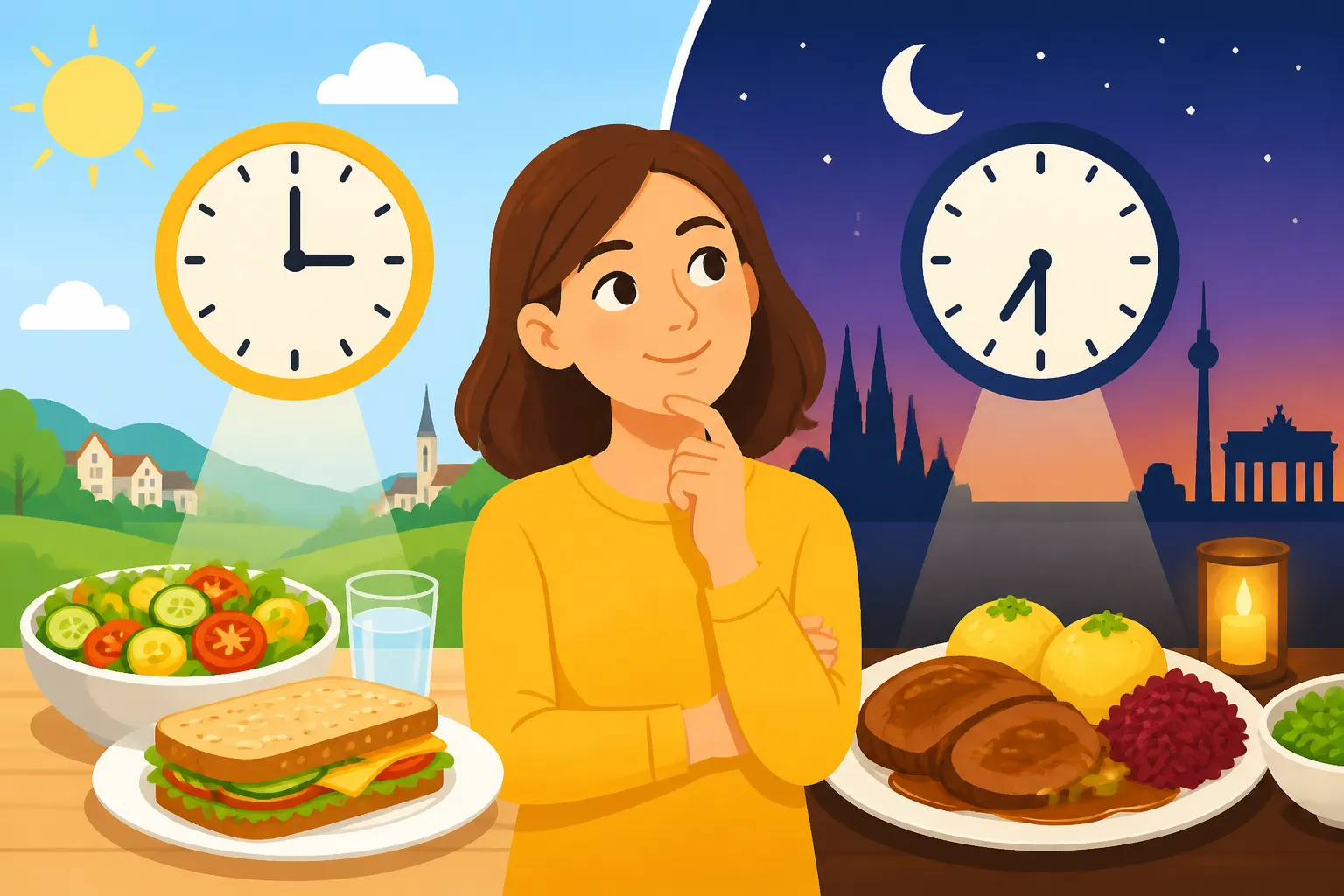
Arriving in Germany only to find restaurant doors locked or kitchens closed at 3:00 PM is a rite of passage for almost every newcomer. You might be starving after a long train ride, but the local culinary clock runs on a very specific, traditional rhythm. This guide explains exactly when Germans eat their main meals, helping you navigate the culture of "warme Küche" and avoid the frustration of an empty stomach.
Disclosure: This post may contain affiliate links. We may earn a commission at no extra cost to you if you make a purchase through these links. Read full disclosure.
The Sacred Hour of Mittagsessen
In Germany, lunch isn’t just a quick break; it is historically the most important meal of the day. Traditionally, this is the time for a warm, hearty meal, while breakfast and dinner are often cold. If you are traveling between cities using Omio, you will notice that train stations become incredibly crowded around noon as everyone rushes to grab their primary sustenance for the day.
The Standard Window: 12:00 to 14:00
The typical window for lunch in Germany is quite narrow, usually spanning from 12:00 PM to 2:00 PM. In smaller towns and rural areas, this schedule is strictly enforced by restaurant owners. If you walk into a traditional Gasthaus at 2:15 PM, you might be told that the kitchen has just closed, even if the doors remain open for drinks. This is often referred to as the end of "warme Küche" (warm kitchen), a term you will see on many menus.
I remember my first month in a small village in Baden-Württemberg. I strolled into a local eatery at 2:30 PM, expecting a standard lunch service. The owner looked at me with genuine pity and explained that the chef had already gone home for his afternoon break. This rigid adherence to the clock is one of the many Common Cultural Surprises for First-Time Visitors to Germany that you should prepare for. It is not meant to be rude; it is simply the way the labor and social structure are organized to allow staff a rest before the evening rush.
For tourists, it is vital to plan your sightseeing around these hours. If you are using GetYourGuide to book a walking tour or a museum visit, try to schedule your activities so that you are finished by 1:00 PM. This gives you enough time to find a seat and order before the kitchen shuts down for the afternoon. Waiting until 1:45 PM to find a restaurant is a high-stakes gamble that often ends with a trip to the nearest bakery for a cold sandwich.
The Work Culture and the Mensa Mentality
In the professional world, the Mittagspause (lunch break) is a foundational element of the workday. Most offices have a designated Kantine (canteen), and universities have the Mensa. In these environments, lunch starts promptly at 12:00 PM. You will see waves of employees leaving their desks at 11:55 AM to ensure they are first in line for the Tagesgericht (daily special). This meal is usually the cheapest and most substantial option, often consisting of meat, potatoes, and a side of vegetables.
If you are an expat working in a German office, joining your colleagues for lunch is one of the best ways to integrate. However, don’t expect to eat at 1:30 PM just because you are busy with a project. The social expectation is that everyone eats together early. This is part of the broader German Food Culture: Eating and Drinking as a Visitor that emphasizes communal dining during daylight hours. Missing the group lunch can sometimes be seen as a missed opportunity for team bonding, as Germans tend to keep work and social life separate, making the lunch table the primary neutral ground for conversation.
The Mensa experience is also worth noting for students or budget travelers. These university cafeterias offer incredibly cheap, warm meals, but they almost always stop serving hot food by 2:00 PM. If you arrive late, you’ll be left with leftover salads or pre-packaged wraps. Understanding this German Meal Times and Restaurant Basics for Visitors is key to keeping your budget intact while still enjoying a hot meal.
Sunday Lunch: The Family Ritual
Sunday lunch is the crown jewel of the German culinary week. While Saturday is often reserved for errands and light meals, Sunday at 12:30 PM or 1:00 PM is when families gather for the Sonntagsbraten (Sunday roast). This tradition is still very much alive, even in urban centers. Many families will book a table at a local restaurant weeks in advance to enjoy a slow meal of Schweinebraten (roast pork) or Rinderbraten (roast beef).
If you are staying in a hotel booked through Booking.com, check if their on-site restaurant offers a Sunday lunch special. These are often high-quality, multi-course meals that provide a deep dive into regional flavors. However, be aware that many other shops and services are closed on Sundays, so the restaurant becomes the social hub of the community.
During these family lunches, the pace is much slower than on a weekday. No one is rushing back to the office. You might find that the service takes a bit longer, as the staff is focused on providing a relaxed experience. It’s the perfect time to practice Dining Etiquette in Germany for Visitors, such as waiting for everyone to be served and saying "Guten Appetit" before starting.
| Meal Name | Typical Time | Temperature | Common Foods |
|---|---|---|---|
| Frühstück | 07:00 – 09:00 | Cold/Warm | Bread rolls, cold cuts, cheese, soft-boiled eggs |
| Mittagsessen | 12:00 – 14:00 | Warm | Schnitzel, potatoes, sausages, stews, pasta |
| Kaffee & Kuchen | 15:00 – 16:30 | Warm/Cold | Fruit torte, cheesecake, coffee, tea |
| Abendbrot | 18:00 – 19:30 | Cold | Sourdough bread, pickles, ham, cheese |
| Restaurant Dinner | 18:30 – 21:00 | Warm | Steaks, regional specialties, salads |
Abendbrot vs. Dining Out: The Evening Routine
As the sun sets, the German approach to eating splits into two distinct paths: the traditional, domestic "Abendbrot" and the more modern, social practice of dining out. Understanding which one you are engaging in will dictate what time you should be looking for food and what you should expect to find on your plate.
What is Abendbrot? The 18:00 Tradition
The word "Abendbrot" literally translates to "evening bread." This is the cornerstone of German domestic life. Typically served between 6:00 PM and 7:00 PM, it is a cold meal consisting of high-quality sourdough bread, an array of cold cuts (Aufschnitt), various cheeses, and pickles. Because the warm meal was consumed at lunch, Abendbrot is meant to be simple, quick, and easy to clean up, allowing the family to relax for the rest of the evening.
For expats living with roommates or host families, don't be surprised if your "dinner invitation" involves a wooden board covered in meats and cheeses rather than a steaming lasagna. It is a highly functional meal that celebrates the incredible variety of German bread. If you are learning the language, you might find that Ordering Food and Drinks in German: A Practical Phrasebook focuses heavily on these bakery items because they are such a frequent part of daily life.
The early timing of Abendbrot also reflects the German value of an early start to the workday. By eating at 6:00 PM, the body has plenty of time to digest before sleep. If you are invited to a local's home for a casual evening, aim to arrive precisely at the time stated. Germans take German Social Etiquette for Visitors: Greetings and Punctuality very seriously, and arriving at 6:30 PM for a 6:00 PM Abendbrot might mean you find the bread basket half-empty.
Going Out for Dinner: When Restaurants Actually Open
If you are planning to eat at a restaurant, the rules change significantly. While Abendbrot is an early affair, restaurant culture in Germany usually begins around 6:30 PM or 7:00 PM. In larger cities like Berlin, Munich, or Hamburg, it is quite common for people to meet for dinner as late as 8:00 PM. However, the kitchen closure remains a factor. Many restaurants will take their "last orders" for food between 9:00 PM and 10:00 PM.
When you use GetYourGuide to find dinner cruises or evening food tours, you’ll see they are usually timed for this 7:00 PM sweet spot. If you try to go out for a formal dinner at 5:30 PM, you might find yourself sitting in an empty dining room with a staff that is still setting the tables. Conversely, arriving after 9:30 PM often limits you to a "small menu" of cold snacks or simple soups.
One thing to keep in mind is that "dinner" in a restaurant is almost always a warm meal, deviating from the Abendbrot tradition. You can explore Sausages and Street Food in Germany (Currywurst and More) if you want a warm snack earlier in the evening, but for a sit-down experience, wait for the standard evening window. It is also the time when you should be prepared to handle the bill and remember the rules for Tipping in Germany: When, Where, and How Much, which is usually around 5-10% for good service.
The Concept of Gemütlichkeit and Long Evenings
In Germany, once you have secured a table at a restaurant, it is yours for the evening. There is no culture of "turning tables" to maximize profit. This is where the concept of "Gemütlichkeit" (coziness/friendliness) comes into play. Since Germans often eat dinner a bit later when socialising, they expect to stay for several hours, enjoying multiple rounds of drinks after the food is finished.
Because people linger, it is essential to make a reservation if you plan to eat between 7:00 PM and 8:30 PM on a Friday or Saturday night. If you are staying at a central location found on Booking.com, the concierge can usually help with this. Without a reservation, you might find yourself wandering from place to place, as the "early" diners are still occupying their seats and the "late" diners have already booked theirs.
The evening meal is also the primary time for consuming alcohol, whether it's a crisp Pilsner or a glass of Riesling. Because the meal is leisurely, the alcohol is consumed slowly alongside the food. This relaxed pace is one of the most enjoyable aspects of living in Germany, but it requires you to be proactive about your timing. If you are hungry at 6:00 PM, you might be the first person in the restaurant; if you wait until 8:00 PM, you might not find a seat at all.
Bridging the Gaps: Coffee, Cake, and Late-Night Cravings
Since there is a large gap between a 12:00 PM lunch and a 7:00 PM dinner, the German culinary clock includes a few "bridge" meals. These are culturally significant and can save you if you find yourself hungry during the "kitchen closed" hours of the mid-afternoon.
Kaffee und Kuchen: The Afternoon Bridge
Around 3:00 PM or 4:00 PM, Germany enters the "Kaffee und Kuchen" (coffee and cake) phase. This is a cherished tradition, especially on weekends. While the "warm kitchen" for lunch has closed, bakeries and cafés are in their peak hour. This is the time to indulge in Schwarzwälder Kirschtorte (Black Forest cake) or a simple Apfelkuchen (apple cake).
If you are traveling through the Black Forest after booking a regional trip on Omio, you absolutely must stop for this ritual. It isn't just a snack; it's a social event. You will see groups of friends and multi-generational families gathered in Konditoreien (pastry shops), nursing cups of coffee and enjoying massive slices of cake. It's the perfect solution for that 3:30 PM hunger pang. You can learn more about the specifics of this ritual in our guide on German Cafés and Kaffee und Kuchen Culture.
For the traveler, this is also a great time to rest your feet. Many cafés have beautiful outdoor seating areas (in summer) or cozy, historic interiors (in winter). If you missed the lunch window at a restaurant, a hearty piece of German cake is often substantial enough to tide you over until dinner. Just be aware that many independent cafés close by 6:00 PM, as they don't typically serve dinner.
Late-Night Dining and the Döner Rescue
If you have completely missed the restaurant dinner window—perhaps your train was delayed or you spent too much time at a museum—do not despair. Germany has a robust late-night food culture centered around the Döner Kebab. Introduced by Turkish immigrants, the Döner has become the unofficial national dish of Germany for the late-night crowd.
Imbiss (snack stand) culture is the exception to the rigid German timing rules. In any major city, you can find Döner shops, pizza windows, and Currywurst stands open until 2:00 AM or even later on weekends. They are reliable, delicious, and provide a warm meal when every other kitchen in town is dark.
While it's not a formal dining experience, grabbing a Döner at 11:00 PM is a quintessential German experience. It bridges the gap between the traditional lifestyle and the modern, fast-paced reality of urban living. Whether you are a student, a theater-goer, or an expat working late, the Imbiss is your safety net.
Practical Tips for Travelers and New Expats
To ensure you never go hungry, keep these practical tips in mind as you navigate the German clock.
- Watch the "Warme Küche" signs: Always look for the kitchen hours posted on the door or at the bottom of the menu. They are often different from the "Öffnungszeiten" (opening hours) of the establishment itself.
- Reservations are king: Use apps or call ahead, especially for dinner between 18:30 and 20:00. Even if a restaurant looks empty, the tables may be "Reserviert" for later.
- Carry snacks on the train: If you are using Omio for long-distance travel, don't rely solely on the onboard bistro. If the train is delayed, you might arrive in your destination city just as the kitchens are closing.
- Check your hotel's schedule: When booking on Booking.com, read the reviews regarding the hotel's breakfast and dinner hours. Some smaller hotels have very strict breakfast windows (e.g., 7:00 AM to 9:30 AM) that you don't want to miss.
- Use GetYourGuide for food tours: If you're feeling overwhelmed by the rules, booking a food tour is a great way to let a local handle the timing and reservations for you.
Disclaimer
This guide is intended for informational purposes only. Meal times and restaurant habits can vary significantly between urban centers and rural villages, as well as across different federal states in Germany. Always check local listings and specific restaurant websites for the most accurate and up-to-date opening and kitchen hours.