How to Ask for the Bill in a German Restaurant
You have just finished a fantastic meal of Schnitzel and Spargel, your glass of Riesling is empty, and you are ready to head to your next destination. However, the waiter seems to be purposefully avoiding your table, and you are left wondering if you have committed a social faux pas. This guide solves the mystery of German restaurant etiquette, providing the exact phrases and cultural nuances you need to pay your bill and leave with a smile.
Disclosure: This post may contain affiliate links. We may earn a commission at no extra cost to you if you make a purchase through these links. Read full disclosure.
The Cultural Etiquette of Dining and Paying in Germany
One of the first things I noticed when I moved here was that German service is fundamentally different from the "hovering" style common in North America or even parts of the UK. In Germany, when you sit down at a table, it is yours for the duration of the event. Waiters consider it a sign of high respect and good service to leave you alone once your food and drinks are served. They don't want to "interrupt" your conversation or make you feel like they are trying to flip the table for the next customer. This is a core part of German Etiquette and Social Life for Visitors that many newcomers mistake for neglect or even rudeness.
When you are ready to pay, you must be proactive. If you wait for the waiter to bring the bill voluntarily, you might be sitting there until the restaurant closes. This can be frustrating if you have a train to catch—perhaps one you booked via Omio to get to another city—but understanding that the "ball is in your court" changes the dynamic entirely. You aren't being annoying by asking for the bill; you are simply signaling that your experience at the table has reached its natural conclusion.
Why the Waiter Isn't Ignoring You
The concept of "Gemütlichkeit" is central to the German dining experience. It refers to a state of warmth, friendliness, and good cheer. To a German waiter, rushing a guest by placing a bill on the table before it is requested is the height of "Ungemütlich" behavior. They want you to linger over your coffee or that last bit of beer. I’ve personally spent three hours in a Munich Brauhaus with friends where the waiter only checked on us twice—not because he was lazy, but because he saw we were deep in discussion and didn't want to break the flow.
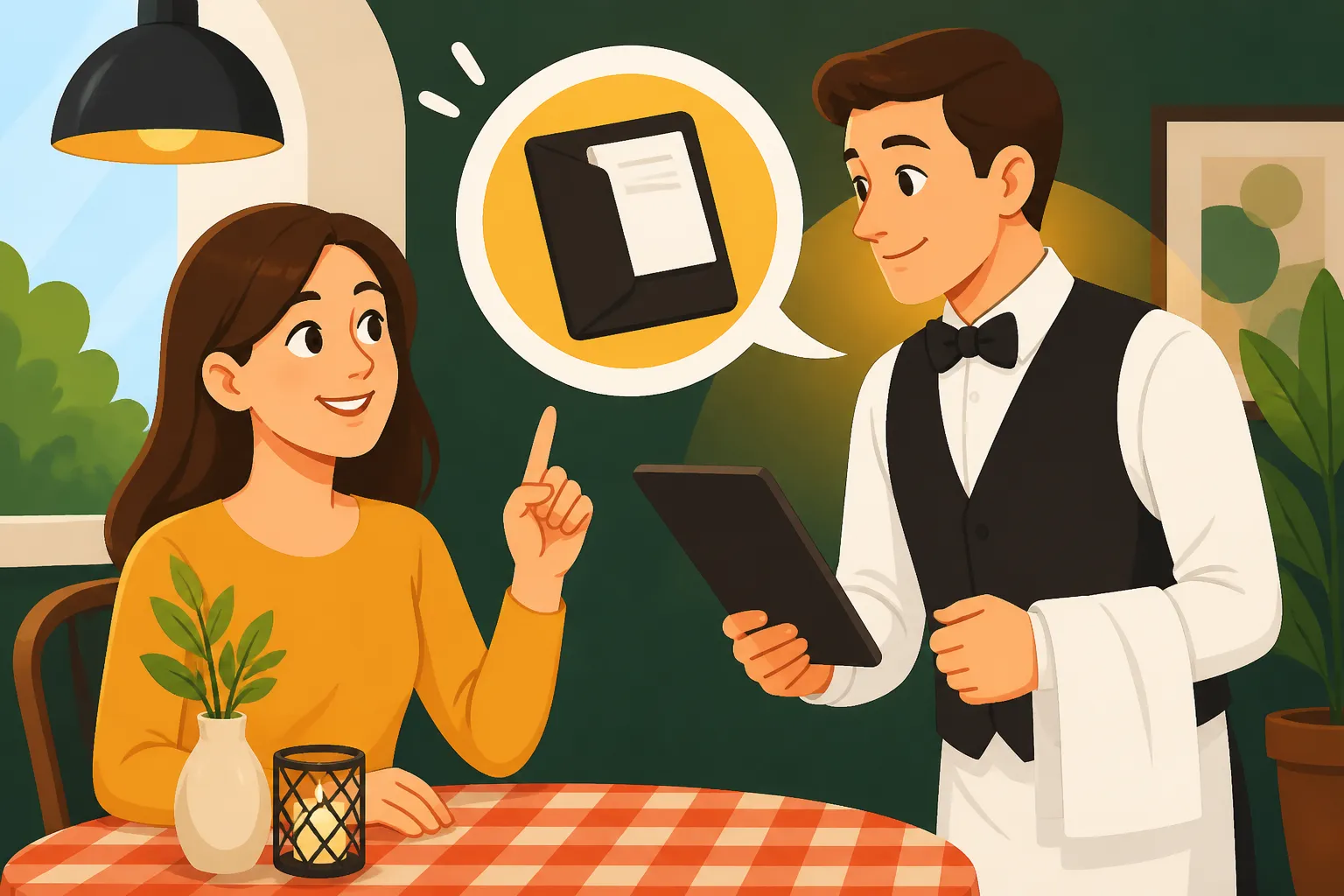
If you are used to a more aggressive service style, this can feel like you’ve become invisible. You might find yourself frantically waving your hand like you're trying to guide a plane onto a runway. Instead, try to catch the waiter's eye as they pass by. A simple, firm nod or a raised index finger is usually enough to signal that you need their attention. Once you understand that the pace is intentionally slow, the stress of "waiting to be noticed" begins to fade.
The Silent Language of the Table
Before you even speak a word, your body language and the setup of your table can communicate your readiness to leave. In many traditional establishments, placing your knife and fork parallel to each other on the right side of the plate (the "4 o'clock" position) is the universal sign that you are finished eating. If you leave them crossed or far apart, the waiter will assume you are just taking a break.
If the restaurant is particularly loud or large, like some of the massive halls you might visit on a food tour booked through GetYourGuide, you can use the "writing in the air" gesture. Catch the waiter's eye and mimic the motion of writing on a small notepad with your hand. It’s a bit old-school, but it works every time. It’s much more effective than shouting across a room, which is considered quite poor form in German Meal Times and Restaurant Basics for Visitors and general social settings.
Essential German Phrases for Requesting the Bill
When you finally catch the waiter’s attention, you’ll want to have the right words ready. The most common and direct way to ask is "Zahlen, bitte" (Paying, please). While it might sound short, it’s the standard way to handle the situation. However, if you want to be a bit more polite and demonstrate your effort to integrate, you can say, "Die Rechnung, bitte" (The bill, please). Both are perfectly acceptable, but "Die Rechnung, bitte" feels slightly more formal and is often preferred in upscale restaurants.
If you are staying at a hotel near the city center that you found on Booking.com, you might find that the staff in the hotel restaurant speaks excellent English. Even so, using these German phrases is a sign of respect that is always appreciated. It breaks the "tourist" barrier and often leads to a friendlier interaction during the payment process.
Formal vs Informal Situations
Germany has a linguistic divide between the formal "Sie" and the informal "du." In a restaurant, you should almost always use "Sie" unless you are in a very casual youth hostel bar or a place where the staff specifically addresses everyone as "du." When asking for the bill, you might say, "Könnten wir bitte zahlen?" (Could we please pay?). Using the polite “könnten” form of the verb “können” adds a layer of politeness that fits the professional relationship between guest and server.
This distinction is a key part of Polite German: Du vs Sie for Visitors and is something you'll encounter throughout your travels. In a traditional "Gasthaus," the service is professional and slightly detached. In a trendy Berlin "Kiez" cafe, things might be more relaxed, but starting with the formal "Sie" is a safe bet that won't offend anyone. I always recommend err-ing on the side of formality; no one was ever offended by being treated with too much respect.
Splitting the Bill (Zusammen oder getrennt?)
This is where things get interesting for foreigners. In many countries, the waiter brings one bill and you sort it out amongst yourselves. In Germany, the question "Zusammen oder getrennt?" (Together or separately?) is almost inevitable. It is perfectly normal—and even expected—for a group of six people to pay for their individual meals and drinks down to the cent. The waiter will often pull out a large leather wallet and a digital device to calculate each person's total right at the table.
If you want to pay together, simply say "Zusammen, bitte." If you are splitting it, say "Getrennt, bitte." Be prepared for the waiter to go around the table and ask each person what they had. "Ich hatte das Schnitzel und zwei Bier," you might say. It’s an efficient system that avoids the "who owes what" headache later, though it does take a few extra minutes at the end of the meal. This is a unique cultural quirk that reflects the broader German value of precision and individual responsibility.
Navigating the Payment Process: Cash, Cards, and Tipping
Once you’ve established how you’re paying, the actual transaction begins. This is where many tourists run into trouble. Despite being a global economic powerhouse, Germany still has a deep-seated love for physical cash. While the COVID-19 pandemic accelerated the adoption of card payments, "Nur Barzahlung" (Cash only) signs are still common in smaller cafes, bakeries, and rural restaurants. I always tell visitors that even if they are in a tech-forward city like Berlin, they should never leave their hotel—perhaps one booked through Booking.com—without at least 50 Euros in their pocket.
When you do use a card, make sure it is a "Girocard" (the local German debit system) or a major credit card like Visa or Mastercard. Some smaller shops still only accept the local Girocard. If you are unsure, it is always best to ask "Nehmen Sie Kreditkarten?" (Do you take credit cards?) before you even order your food. This prevents the awkward "walk of shame" to the nearest ATM while the waiter holds your friend hostage at the table. For more on this, check out Cash vs Card in Germany: What Visitors Should Know to avoid any financial hiccups.
The Tipping Culture (Trinkgeld)
Tipping in Germany is not the mandatory 20% "tax" that it is in the United States, but it is also not "included" in the way people often think. German waiters earn a living wage, but tips are still a significant and expected part of their income. The general rule is to round up to the nearest even Euro or add about 5-10%. For a bill of €27.40, a total of €30.00 is a very standard and generous tip.
The way you tip is also unique. You do not leave the money on the table and walk away. Instead, when the waiter tells you the total, you tell them how much you are paying including the tip. If the bill is €18.00 and you want to give a €2.00 tip, you hand over a €20.00 note and say "Zwanzig" (Twenty) or "Stimmt so" (It’s correct/keep the change). The waiter then knows not to give you any change back. This direct interaction is a core part of Tipping in Germany: When, Where, and How Much.
Understanding the Receipt and VAT
When you receive your "Rechnung," you might see several different totals or percentages listed at the bottom. This is the "Mehrwertsteuer" (MwSt) or Value Added Tax. In Germany, the price you see on the menu already includes this tax, so there are no surprises at the end. However, the receipt will show the breakdown—usually 19% for drinks and 7% or 19% for food, depending on current regulations.
If you are an expat working in Germany, understanding these receipts is vital for your tax returns. For tourists, it's just a bit of interesting data. If you are traveling for business, you might need a "Bewirtungsbeleg," which is a special, more detailed receipt used for tax deductions. You can ask for this by saying, "Ich brauche einen Bewirtungsbeleg, bitte." For those diving deeper into German finances, Understanding VAT (MwSt) in Germany: What Consumers Should Know is a great resource.
| Situation | Recommended Phrase | Cultural Note |
|---|---|---|
| Catching attention | "Entschuldigung?" | Keep it brief and wait for eye contact. |
| Asking to pay | "Zahlen, bitte." | The standard, efficient request. |
| More formal request | "Die Rechnung, bitte." | Great for business dinners or fine dining. |
| Paying for the group | "Zusammen, bitte." | One person pays the whole bill. |
| Paying individually | "Getrennt, bitte." | Waiter calculates each person's share. |
| Giving a tip | "Stimmt so." | Means "Keep the change" when you've given the total. |
Common Pitfalls and How to Avoid Them
Even with the right phrases, there are a few "traps" that can catch a traveler off guard. One is the issue of "Handing over the card." In Germany, the waiter will usually bring a mobile card terminal to your table. You should not hand your card to them to take away to a back room; this is rarely done and can be seen as a security risk. You will insert or tap the card yourself and enter your PIN or sign the screen right there.
Another pitfall is the Sunday situation. If you’re planning a big dinner on a Sunday, keep in mind that many smaller, family-run places might be closed. While tourist-heavy areas stay open, the "Ruhezeit" (quiet time) culture means that Sunday is a day of rest for many. Always check the opening hours on Google or a similar service before heading out. For more on this, see What Closes on Sundays in Germany?.
Tech and Tools for the Modern Traveler
If you’re feeling overwhelmed by the language, don't forget that technology is your friend. Translation apps can help you decode a complex menu, and many modern restaurants in cities like Frankfurt or Hamburg now have QR codes on the table where you can view the menu in English or even pay directly through your phone. If you are using Omio to plan a multi-city food tour, look for restaurants near major stations—they are often the most "English-friendly" and accustomed to international payment methods.
I also recommend keeping digital copies of your receipts if you’re using a service like GetYourGuide for "Dinner and a Show" type experiences. Often, the meal is included but the drinks are not, and having your booking confirmation handy can clear up any confusion when the "extra" bill arrives at the end of the night. It’s all about being prepared and knowing what to expect.
Overcoming the Language Barrier
Don't be afraid to make mistakes! Germans generally appreciate it when you try to speak their language, even if you only know three words. If you get stuck, simply asking "Sprechen Sie Englisch?" is perfectly fine. In most urban centers and tourist spots, the answer will be a resounding "Yes." However, leading with "Zahlen, bitte" shows that you’ve done your homework and respect the local culture.
If you find yourself in a situation where the waiter really doesn't speak English—perhaps in a small village in the Black Forest—just point to the bill or use the writing-in-the-air gesture. They will understand. The goal is communication, not perfection. For more tips on navigating these moments, read Seeing a Doctor Who Doesn’t Speak English: Tips for Overcoming Language Barriers, as the advice on body language and preparation applies to restaurants too!
Health and Medical Disclaimer
The information provided in this guide is for educational and informational purposes only and does not constitute professional medical, legal, or financial advice. Always seek the advice of a qualified professional regarding any specific administrative, health, or legal concerns you may have while traveling or living in Germany. Regulations and cultural norms can change, and it is advisable to verify current local laws and practices during your stay.