How to Experience Karneval in Cologne as a Visitor
Many visitors arrive in Cologne during Karneval expecting a simple street parade, only to find themselves standing in a sea of elaborate costumes, confused by the local dialect and completely shut out of the best parties because they didn't know the "Crazy Days" schedule. This guide solves the logistical and cultural mystery of Cologne's "Fifth Season," ensuring you experience the true Kölner spirit instead of just watching from the sidelines.
Disclosure: This post may contain affiliate links. We may earn a commission at no extra cost to you if you make a purchase through these links. Read full disclosure.
Understanding the Soul of the Fifth Season
Karneval in Cologne is not just a party; it is a fundamental pillar of the city's identity. While the official "session" begins every year on November 11th at 11:11 AM, the real madness—the street carnival—doesn't kick off until the Thursday before Ash Wednesday. For many locals, this week is more important than Christmas or Easter. It is a time when the strict, punctual German stereotype is set aside in favor of "Schunkeln" (swaying together) and singing songs in the local Kölsch dialect.
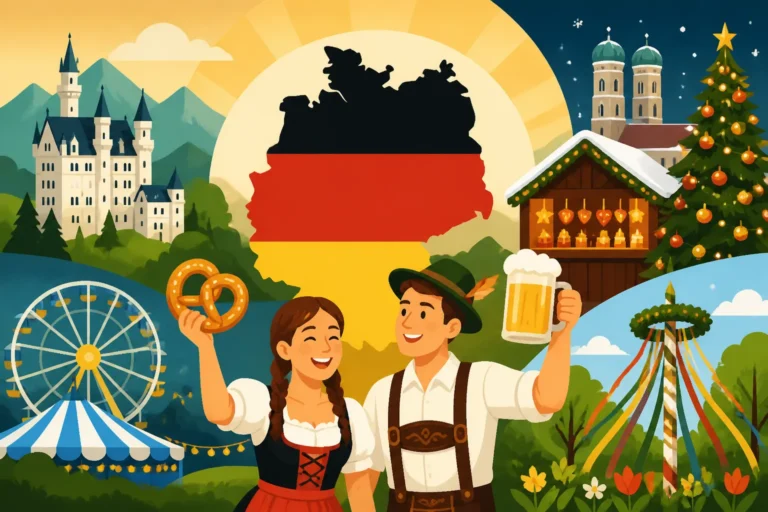
If you are coming from outside Germany, you might be familiar with the concept of Karneval and Fasching in Germany: Cologne and the Rhineland but let me tell you, Cologne is in a league of its own. It is earthy, loud, and incredibly inclusive. You will see grandmothers dressed as sunflowers and corporate lawyers dressed as pirates, all drinking from the same 0.2-liter glasses. The city essentially shuts down; shops close, schools are out, and the bureaucracy takes a back seat to the "Dreigestirn"—the Prince, the Peasant, and the Maiden who "rule" the city during this time.
To truly understand it, you have to accept that it is a release valve for the soul. After a long, gray German winter, people need to let loose. As a veteran who has spent many cold February nights in the Altstadt, I can tell you that the warmth comes from the crowd. You aren't just a spectator; the moment you put on a costume, you are part of the family.
Planning and Logistics for the Visitor
The biggest mistake you can make is trying to wing it. Cologne’s population nearly doubles during the peak days of Karneval, and if you haven't sorted your transport and housing months in advance, you’ll end up staying in a distant suburb like Leverkusen or Bonn. When I first moved here, I thought I could just hop on a train and find a spot. I was wrong. The regional trains are packed to the gills with clowns and Vikings, making the journey part of the experience but also a logistical hurdle.
For your travel into the city, using a platform like Omio is essential to compare train and bus prices, especially since prices skyrocket during the "Crazy Days." If you are flying into Frankfurt or Düsseldorf, book your connecting ICE train as early as possible. Once you are in the city, forget about taxis or U-Bahns in the center; most of the Altstadt and the Zülpicher Straße area are pedestrianized for the festivities.
When it comes to staying over, search on Booking.com for hotels in the Belgisches Viertel (Belgian Quarter) or Ehrenfeld if you want to be near the action but still have a chance at sleep. The Altstadt is the heart of the party, but it is also the loudest. If you want a more structured experience, you can find specific event tickets or guided pub crawls through GetYourGuide, which can be helpful if you’re traveling solo and want to find a group to celebrate with.
The Costume Code: Why Jeans are a Social Sin
If you walk into a bar in Cologne during Karneval wearing your regular winter coat and jeans, you will be the "Spielverderber" (party pooper). The costume is your ticket to social acceptance. It doesn't have to be expensive, but it must be a real effort. Locals often spend months sewing their "Kostüm," frequently incorporating layers because the weather in February is notoriously fickle. It might be snowing one minute and raining the next, so the pro tip is to buy a costume two sizes too big so you can wear your thermal underwear and a sweater underneath.
The style in Cologne is more whimsical and less "sexy" than what you might see at Halloween in the US or UK. Think puns, historical figures, or group costumes. I’ve seen entire groups of friends dressed as a box of crayons or a flock of seagulls. If you are stuck, head to a "Deiters" shop—they are the massive costume supermarkets in Germany where you can find everything from a full bear suit to a simple wig.
Remember, once the costume is on, you should be prepared for the German Social Etiquette for Visitors: Greetings and Punctuality to change slightly. People will be much more forward than usual. The "Bützje"—a little peck on the cheek—is a common greeting among strangers during Karneval. It’s not necessarily romantic; it’s a gesture of "Jeck" (jester) camaraderie.
The Day-by-Day Breakdown of the Crazy Days
Karneval isn't just one long blur; each day has its own specific vibe and traditions. Understanding this schedule is the difference between having a legendary time and feeling like you missed the boat.
| Day | Name | Vibe | Key Activity |
|---|---|---|---|
| Thursday | Weiberfastnacht | High Energy | Women "take over" the city; ties are cut off. |
| Friday | Carnival Friday | Relaxed / Local | Traditional "Sitzungen" and local pub parties. |
| Saturday | Ghost Parade | Spooky / Alternative | The "Geisterzug" (Ghost Parade) in the evening. |
| Sunday | School & Veedel Parades | Family Friendly | Local neighborhood parades (Veedelszüge). |
| Monday | Rosenmontag | Peak Intensity | The main, massive parade through the city. |
| Tuesday | Nubbelverbrennung | Ritualistic | Burning the "Nubbel" (straw man) to atone for sins. |
Weiberfastnacht (Fat Thursday)
The madness begins at 11:11 AM on the Alter Markt. Traditionally, this is the day women take over. Men, be warned: if you wear a tie to work or out in public, a woman will likely come up with a pair of scissors and snip it off. In exchange, you get a "Bützje." The bars are packed from noon onwards. It’s a marathon, not a sprint. If you start at 11 AM, make sure you’ve had a heavy breakfast of "Berliner" (jelly donuts).
Rosenmontag (Rose Monday)
This is the big one. The Rosenmontagzug is the largest parade in Germany. Millions of people line the streets to shout "Kamelle!" (sweets) and "Strüssjer!" (little bouquets of flowers). The floats are often highly political and satirical, poking fun at world leaders and local politicians. This is when you’ll want to have a sturdy bag to collect all the chocolate and candy being thrown from the floats. It is also a day where knowing the rules of German Dining Etiquette: Eating Out, Tipping, and Table Manners goes out the window, as most people eat "Currywurst" or "Reibekuchen" (potato pancakes) from street stalls.
Surviving the Pub Scene and the Kölsch Culture
Cologne’s beer culture is unique. They drink Kölsch, a light, top-fermented beer served in small 0.2L glasses called "Stangen." During Karneval, the "Köbes" (the notoriously grumpy but efficient waiters) don't even ask if you want another one; they just keep bringing them until you put a coaster on top of your glass. In the chaos of Karneval, many bars switch to plastic cups for safety, but the spirit remains.
Be prepared for crowds. The bars in the Altstadt and the Kwartier Latäng (the student quarter) will have lines around the block. My advice? Find a smaller "Veedel" (neighborhood) like Nippes or Südstadt. The atmosphere is just as electric but slightly more manageable. Also, keep in mind that most places will charge a small entrance fee during the peak days, and they fill up fast. If you aren't inside by 2:00 PM, you might be stuck in the cold.
Regarding payments, while Germany is slowly modernizing, Karneval is still a "cash is king" environment. Between the crowds and the temporary outdoor bars, your credit card is often useless. Check the guide on Cash vs Card in Germany: What Visitors Should Know to understand why you need to hit the ATM before the parades start. Once the crowds peak, ATMs in the center often run out of cash.
Etiquette, Safety, and Common Pitfalls
While Karneval is a time of "anything goes," there are still boundaries. The most important rule? Never, ever shout "Helau!" That is the carnival cry of Düsseldorf, Cologne’s arch-rival. In Cologne, it is strictly "Kölle Alaaf!" Shouting the wrong one in a crowded bar is a surefire way to get some very cold stares.
Safety is also a major factor. With so much alcohol involved, things can get messy. The "Ordnungsamt" (city office) is very strict about public urination; the fines are hefty, and they will find you. Use the "Toilettenwagen" (mobile toilet trailers) provided by the city. Also, keep an eye on your belongings. Pickpockets love the "Rosenmontag" crowds. For more general tips, see the advice on Staying Safe in Germany: Common-Sense Tips for Travelers.
Tipping is another area where visitors get confused. Even in the middle of a carnival riot, if you are sitting down for a meal or getting table service, the standard rules apply. You can find more on Tipping in Germany: When, Where, and How Much to ensure you aren't accidentally being rude to your overworked waiter.
The Ritual of the Nubbelverbrennung
To end your Karneval experience like a true Kölner, you must stay until Tuesday night for the "Nubbelverbrennung." The "Nubbel" is a life-sized straw man hanging over many pubs during the carnival week. He is the scapegoat for all the "sins" committed during the festivities—the overdrinking, the cheating on diets, the spending of too much money.
At midnight on Tuesday, the straw man is taken down, a mock trial is held, and he is burned in a bonfire. It is a surprisingly emotional and theatrical event, with people dressed as priests and mourners. Once the Nubbel is reduced to ash, the sins are forgiven, and the city prepares for the quiet reflection of Ash Wednesday. It is a beautiful, haunting end to a week of madness.
If you are planning to travel during this time, remember that these are not Unity Day and German Public Holidays where everything is officially closed by law, but effectively, the city is on a break. You should check German Public Holidays: How They Affect Life and Work to see how this might impact your other travel plans in Germany, as the Rhineland operates on its own clock during February.
Final Practical Tips for Your Trip
To make the most of your Cologne Karneval experience, keep these final tips in mind:
- Book your "Sitzung" tickets early: If you want to see the traditional stage shows (Sitzungen) with comedy and music, check GetYourGuide or local club websites months in advance.
- Learn the songs: You don't need to be fluent in German, but learning the chorus to a few songs by bands like "BAP," "Brings," or "Kasalla" will make you a hero in any pub.
- Stay Hydrated: Between the Kölsch and the cold air, it’s easy to get run down. Drink plenty of water between rounds.
- Carry Small Change: You’ll need it for the toilets and the small street snacks. See Money for Travel in Germany: Cash, Cards, and ATMs for a breakdown of the best way to handle your finances while traveling.
- Check the Weather: If a storm is predicted, parades can be canceled or delayed. Stay updated via local apps or the "WDR" news.
- Respect the "Ruhezeit": Even during Karneval, if you are in a residential area, try to keep the shouting to a minimum when walking home. Dining Etiquette in Germany for Visitors and general social norms still exist in the background.
Experiencing Karneval in Cologne is a bucket-list item for any culture enthusiast. It is a raw, vibrant, and deeply human celebration that welcomes anyone willing to put on a silly hat and sing along. Just remember: Kölle Alaaf, dress warmly, and always keep your glass full! For more on the culinary side of things, don't miss our guide on German Beer Culture: Styles, Beer Gardens, and Breweries.
Disclaimer
The information provided in this guide is for informational purposes only. Local regulations and parade routes can change annually. Always check the official City of Cologne (Stadt Köln) website and local news outlets for the most up-to-date schedules and safety advisories. The author is an expat sharing personal experiences and does not represent the official tourism board of Cologne.