How to Order at a Restaurant in German Without Stress
Walking into a German restaurant for the first time can feel like stepping onto a stage without having read the script. Between the stern-faced waitstaff and the confusing seating rules, many foreigners end up feeling stressed before they even see a menu. This guide breaks down exactly how to order, from your first greeting to the final tip, so you can dine like a local.
Disclosure: This post may contain affiliate links. We may earn a commission at no extra cost to you if you make a purchase through these links. Read full disclosure.
Mastering the Arrival and Seating Etiquette
One of the first hurdles you will encounter is the seating process. In many countries, you wait by a sign that says "Please wait to be seated." In Germany, this is rarely the case unless you are at a very high-end establishment or a trendy spot in Berlin. For the average Gasthaus or café, the rule is often "Freie Platzwahl," meaning you choose your own table. Walking into a crowded room and standing awkwardly at the entrance is a common expat mistake that leads to unnecessary stress. If you see a table you like, walk over and take it. However, if the restaurant looks busy or slightly more formal, a quick "Hallo, ein Tisch für zwei, bitte?" (Hello, a table for two, please?) to a passing waiter is the safest way to navigate the situation.
If you are planning a trip through several cities, perhaps using Omio to book your train travel, you might find that restaurant norms shift slightly between the North and the South. In Bavaria, for example, communal seating is quite common in beer halls. If a long wooden table has two empty spots but four people are already sitting there, it is perfectly acceptable to ask, "Ist hier noch frei?" (Is this spot free?). They will usually nod or say "Ja, bitte," and you’ve just successfully navigated a major cultural hurdle. Understanding German Social Etiquette for Visitors: Greetings and Punctuality will help you feel more comfortable with these initial interactions.
Once you are seated, do not expect the waiter to rush over with a glass of tap water. In fact, expecting free tap water is one of the fastest ways to feel the legendary German "Servicewüste" (service desert). Service in Germany is efficient but often lacks the performative friendliness found in North America. The waiter is there to take your order and bring your food, not to be your best friend. This isn't rudeness; it’s a different professional standard. While you wait for the menu, or "Speisekarte," take a moment to look around. If you’ve used Booking.com to find a hotel in a historic district, the nearby restaurants often have menus posted outside in a glass case. Checking this before you enter can save you the stress of translating a complex menu under the gaze of a busy waiter.
The Art of Ordering Drinks and Food
When the waiter returns, they will almost always ask for your drink order first. In Germany, drinks are the primary profit margin for many restaurants, and it is considered slightly unusual not to order one. If you want water, you must be specific. Simply asking for "Wasser" will result in the waiter asking "Mit oder ohne Gas?" (With or without gas?). This refers to "Kohlensäure" or carbonation. If you want still water, ask for "Stilles Wasser." If you want the standard bubbly German water, ask for "Sprudel" or "Mineralwasser."
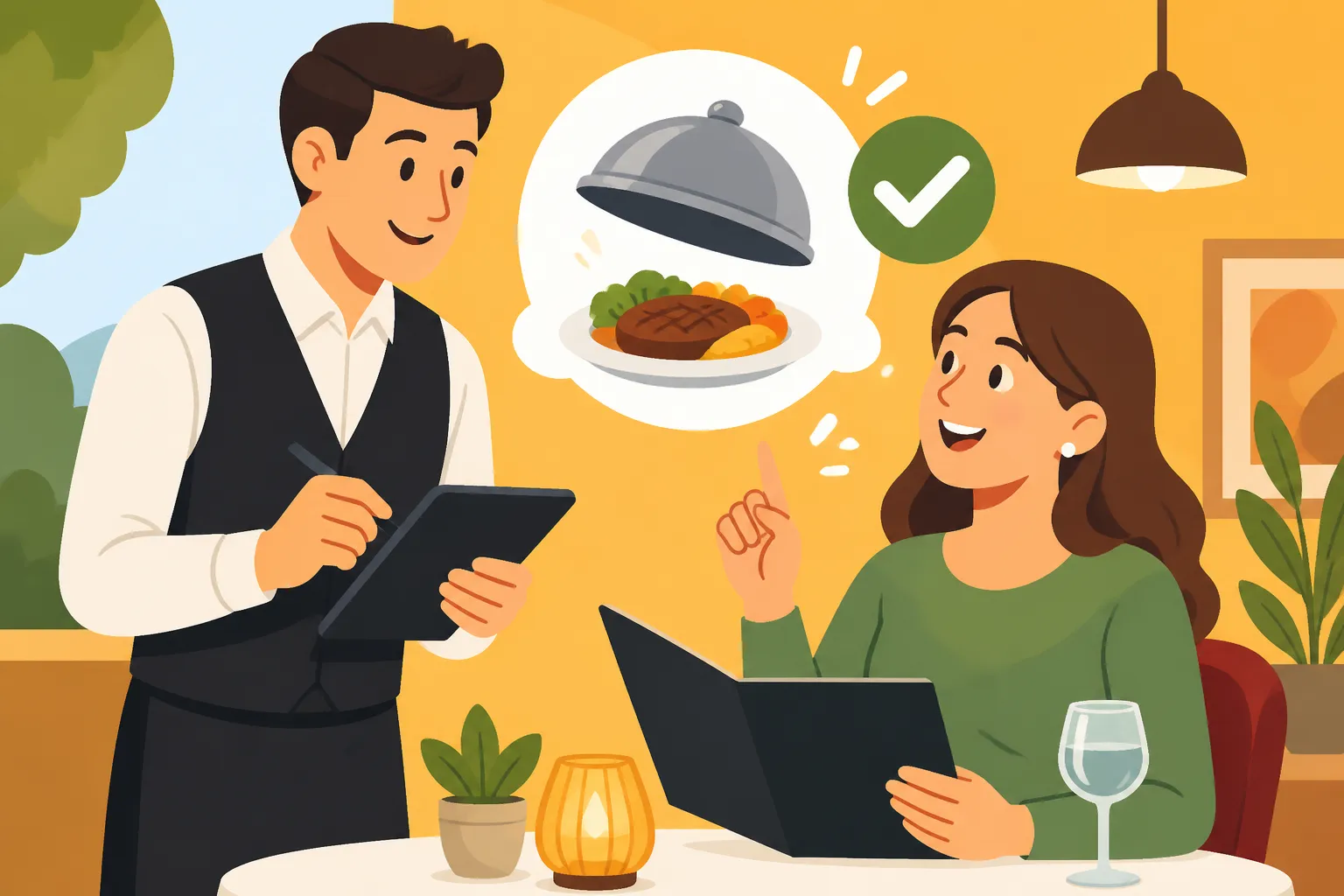
When you are ready to order your main course, avoid the literal translation of "I would like." Instead of saying "Ich will," which sounds demanding and aggressive, use the polite subjunctive: "Ich hätte gerne…" (I would like to have…). For example, "Ich hätte gerne das Schnitzel mit Pommes, bitte." This phrase is your golden ticket to a polite and stress-free interaction. If you are still deciding, simply say, "Wir brauchen noch einen Moment" (We still need a moment). The waiter will leave and won't return until they see you have closed your menus and placed them on the table—this is the universal German signal that you are ready to order.
For those interested in the deeper culinary history of the region, booking a food tour through GetYourGuide can provide a great introduction to local specialties, but for daily dining, you’ll need to master the basics of Ordering Food and Drinks in German: A Practical Phrasebook. Be aware of "Beilagen" (side dishes). Many German dishes are modular. If you want to swap your "Klöße" (dumplings) for "Salzkartoffeln" (boiled potatoes), most restaurants are accommodating, provided you ask politely: "Kann ich statt der Klöße bitte Kartoffeln haben?"
| English Phrase | German Translation | Context of Use |
|---|---|---|
| A table for two, please. | Einen Tisch für zwei, bitte. | Upon entering the restaurant. |
| Is this seat free? | Ist dieser Platz noch frei? | In communal seating or beer gardens. |
| I would like… | Ich hätte gerne… | The standard way to start an order. |
| The same again, please. | Das Gleiche noch mal, bitte. | For ordering a second round of drinks. |
| Without meat/vegan. | Ohne Fleisch/vegan. | For dietary restrictions. |
| Together or separate? | Zusammen oder getrennt? | The question the waiter asks before the bill. |
| The bill, please. | Die Rechnung, bitte. | To request the final check. |
Deciphering German Dining Etiquette
Eating in Germany is a social ritual that has its own set of unwritten rules. Once the food arrives, it is customary to wait until everyone has their plate before starting. The common phrase to initiate the meal is "Guten Appetit" or simply "Mahlzeit." In more formal settings, people might wait for the host to say it first, but in a casual Gasthaus, a collective "Guten Appetit" around the table is the norm. For more context on these habits, you might want to read about German Dining Etiquette: Eating Out, Tipping, and Table Manners.
The pace of the meal is often slower than what tourists from the UK or US are used to. Germans value "Gemütlichkeit," a sense of coziness and unhurried socialization. You will rarely find a waiter "checking in" on you every ten minutes to ask how the first few bites are. If you need something—another beer, a napkin, or the bill—you will likely need to catch the waiter's eye and give a small nod or a raised hand. Hovering waitstaff are seen as intrusive in Germany, not helpful. If you are staying in a city for a few days, perhaps in an apartment found via Booking.com, you’ll notice that locals can sit over a single drink for hours without being pressured to leave.
If you have allergies or specific dietary needs, it is vital to communicate this clearly. While Germany is becoming much more vegan-friendly, especially in cities like Berlin and Hamburg, traditional spots can still be meat-heavy. Asking "Ist das vegetarisch?" (Is this vegetarian?) is straightforward, but if you have a severe allergy, say "Ich habe eine Allergie gegen…" (I have an allergy to…). Understanding German Food Culture: Eating and Drinking as a Visitor can give you a head start on which traditional dishes are naturally safe for your diet.
The Final Act: Paying and Tipping Gracefully
The most stressful part of the meal for many foreigners is the payment process. In Germany, the waiter does not typically bring the bill to the table unless you ask for it. You could sit there for three hours after finishing your coffee, and they still wouldn't bring it, as they don't want to make you feel rushed. When you are ready, catch the waiter's eye and say, "Die Rechnung, bitte" or "Zahlen, bitte" (The bill, please / I’d like to pay).
Then comes the inevitable question: "Zusammen oder getrennt?" (Together or separate?). Germans love splitting the bill down to the cent. If you are dining with friends and want to pay for only your own items, say "Getrennt, bitte." The waiter will then go around the table, and each person will tell the waiter what they had. This is perfectly normal and expected, even for large groups. If you want to pay for everyone, say "Zusammen."
Now, let's talk about the money itself. Even in the 2020s, the phrase "Nur Bares ist Wahres" (Only cash is true) holds some weight in Germany. While credit cards are increasingly accepted in urban centers, many smaller restaurants, especially in rural areas or traditional neighborhoods, are "Nur Barzahlung" (Cash only). This is why you should always ask "Kann ich mit Karte zahlen?" (Can I pay with card?) before you sit down if you aren't carrying euros. For a deeper dive into this phenomenon, see Why Do So Many Places in Germany Prefer Cash?.
Tipping in Germany is not the 20-25% expected in the US, but it is also not non-existent. The standard practice is to "round up" the bill. If your total is €17.20, you might give the waiter €19.00 or €20.00. Crucially, you do not leave the money on the table and walk away. Instead, when the waiter tells you the total, you tell them the amount you want to pay including the tip. For example, if the bill is €18.00 and you want to tip €2.00, you hand them a €20 note and say "Stimmt so" (Keep the change) or simply say "Zwanzig" (Twenty). You can find more specific rules in our guide on Tipping in Germany: When, Where, and How Much.
Strategies for a Successful Dining Experience
To ensure your night out is as smooth as possible, consider the following veteran tips. First, if you are looking for a truly local experience, avoid restaurants with pictures of food on the windows or menus translated into six different languages. These are often tourist traps. Instead, look for places where the menu is only in German or perhaps German and English, and the interior looks like it hasn't changed since 1985. You can use How to Find Authentic Restaurants in Germany (Not Tourist Traps) to help you identify these gems.
If you find yourself in a situation where the menu is completely incomprehensible, don't panic. Most waiters in major cities speak at least some English, though they appreciate it if you try a few German words first. A simple "Sprechen Sie Englisch?" goes a long way. If you are on a culinary adventure booked through GetYourGuide, your guide will likely handle the translations, but for solo trips, having a translation app ready is a good backup.
Finally, remember that the "stress" usually comes from a fear of doing something wrong. But as an expat or tourist, you are allowed to make mistakes. The waiter has seen it all before. By using the basic phrases in this guide and following the local lead on seating and paying, you’ll find that dining in Germany is actually a very relaxed and enjoyable experience. Whether you’ve arrived in town via an Omio bus or are staying in a luxury suite booked on Booking.com, the local "Wirtshaus" is where you’ll truly experience the heart of German culture. For more general advice, don't miss our German Etiquette and Social Life for Visitors pillar.
Practical Vocabulary Recap
To help you feel fully prepared, here is a quick list of terms you might see on a menu or hear from a waiter:
- Vorspeise: Appetizer
- Hauptspeise / Hauptgericht: Main course
- Nachtisch / Dessert: Dessert
- Tagesgericht: Daily special
- Empfehlung: Recommendation
- Leitungswasser: Tap water (Rarely served, often charged for if it is)
- Rechnung: Bill/Invoice
- Bedienung: Service/Waiter
Navigating the German restaurant scene gets easier every time you do it. The first time you say "Stimmt so" and the waiter gives you a genuine (if brief) smile, you’ll know you’ve made it. If you need more specific help with the bill, you can check out How to Ask for the Bill in a German Restaurant for a more granular breakdown of the payment process.
Disclaimer
The information provided in this guide is for informational purposes only. While we strive to provide the most up-to-date and accurate advice based on personal expat experience and current cultural trends in Germany, local practices can vary by region and individual establishment. We are not responsible for any misunderstandings or disputes that may arise while using these suggestions. Always carry a small amount of cash as a backup.