How to See Cologne Cathedral and the Old Town
Most travelers step off the train at Cologne Central Station and are immediately hit by the sheer scale of the Cathedral. However, many fall into the trap of doing a quick loop, taking a selfie, and leaving, completely missing the Roman history and the unique Brauhaus culture tucked away in the Old Town. This guide solves that by offering a local's perspective on exploring these icons deeply and authentically.
Disclosure: This post may contain affiliate links. We may earn a commission at no extra cost to you if you make a purchase through these links. Read full disclosure.
Navigating the Majestic Kölner Dom: More Than Just a Photo Op
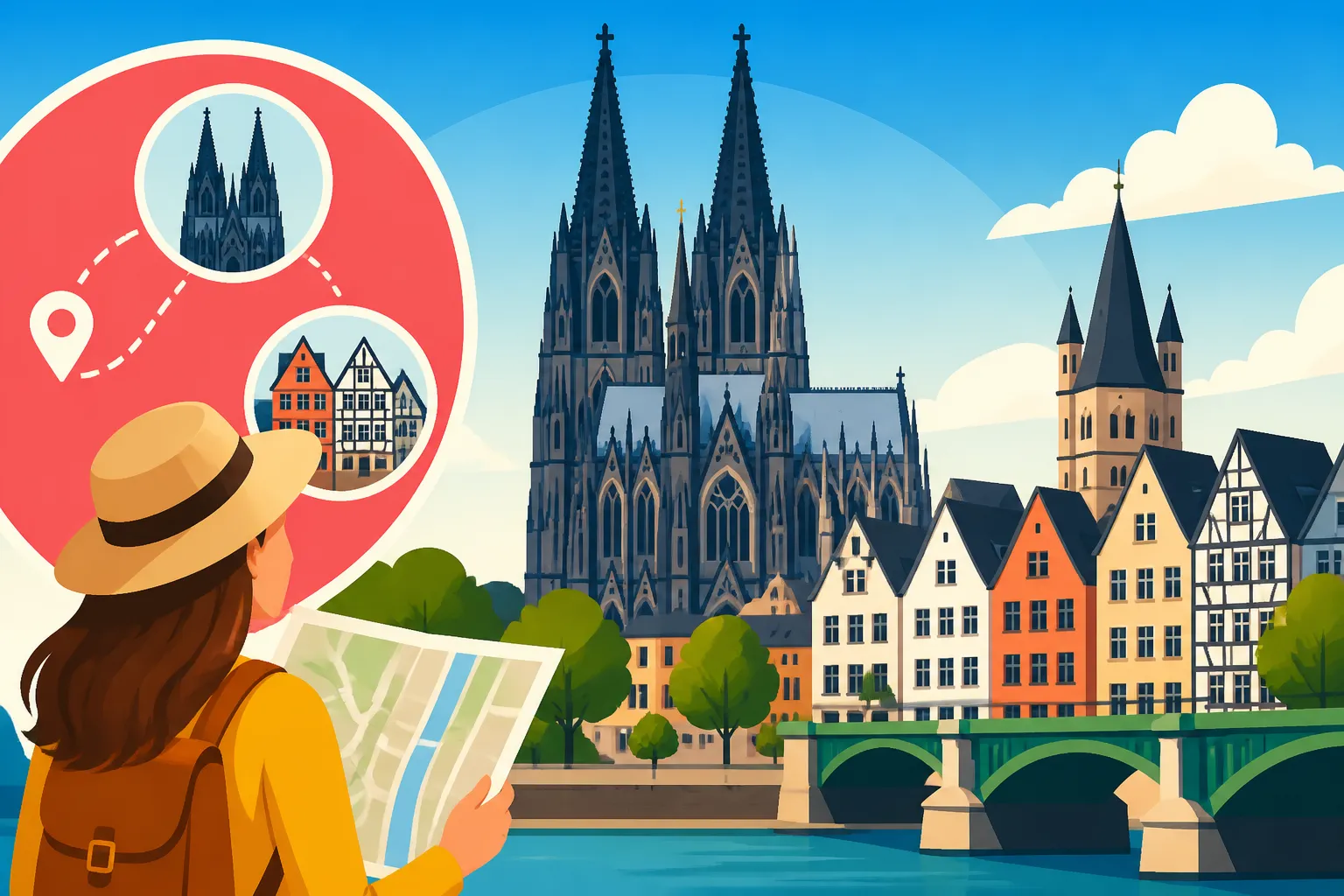
The Cologne Cathedral, or Kölner Dom, is not just a church; it is the heartbeat of the city and a massive Gothic masterpiece that took over 600 years to complete. When you first exit the station, the proximity of the cathedral can be disorienting. Most tourists hover around the main entrance on the Domplatte, but the true magic happens when you understand the rhythm of the building. As someone who has walked through those heavy doors dozens of times, I can tell you that timing is everything. If you arrive during a service, you won't be allowed to wander around as a tourist. To get the most out of your visit, aim for the gaps between masses, usually in the mid-morning or early afternoon.
Inside, the atmosphere is heavy with the scent of beeswax and centuries of incense. Your eyes will naturally be drawn to the Shrine of the Three Kings behind the high altar. This golden sarcophagus is said to hold the remains of the Magi, and it was the primary reason this massive cathedral was built in the first place—to house these relics and accommodate the thousands of pilgrims who came to see them. While the gold is impressive, do not forget to look at the floor. The mosaic floors of the choir are incredibly detailed, depicting the hierarchy of the church and the cosmos.
One of the most debated features of the interior is the Gerhard Richter window. Installed in 2007 to replace a window destroyed in World War II, it consists of 11,500 squares of glass in 72 colors arranged by a computer to look like a pixelated rainbow. Traditionalists hated it initially, but when the afternoon sun hits those panes, the colors dance across the gray stone pillars in a way that feels both ancient and futuristic. If you want to dive deeper into the architectural history, you can often find specialty tours on GetYourGuide that take you into the hidden triforium or the rooftop, though these require booking well in advance.
Climbing the South Tower: A Realistic Expectation
If you are planning to climb the South Tower, let’s be honest: it is a brutal 533-step ascent. There is no elevator. The staircase is a narrow, stone spiral where you will constantly be brushing shoulders with people coming down. It is claustrophobic, and by step 300, your calves will likely be screaming. However, the payoff is spectacular. Halfway up, you pass the bell chamber, home to the St. Petersglocke (Fat Peter), one of the largest free-swinging bells in the world. When it rings, you can feel the vibration in your teeth.
Once you reach the top, the view of the Rhine and the city is unparalleled. You can see the Hohenzollern Bridge stretching across the river, covered in thousands of "love locks." Looking down, you realize just how much the city was shaped by this single building. If the weather is clear, you can even see the silhouettes of the Siebengebirge mountains to the south. Just remember to bring water and leave your heavy backpack in a locker at the train station; you do not want the extra weight on that climb. For those arriving from other cities like Frankfurt or Berlin, checking Omio for early train arrivals is a smart move to ensure you get to the tower before the mid-day heat and the largest crowds.
The Cathedral Treasury and Underground Ruins
Most people skip the Domschatzkammer (Cathedral Treasury), thinking it is just a room full of old cups. That is a mistake. Located on the north side of the cathedral, it houses some of the most significant medieval artifacts in Europe. You will see 4th-century bishop staffs and incredibly delicate textiles that have survived for over a millennium. It is a quiet, climate-controlled escape from the chaos of the plaza outside.
Furthermore, the area beneath the cathedral is a massive archaeological zone. Cologne was a major Roman provincial capital (Colonia Claudia Ara Agrippinensium), and the layers of history are literally stacked on top of each other. You can see the remains of the Roman city walls and the foundations of the earlier 9th-century cathedral that stood here before the Gothic one was started. Understanding these layers is key to appreciating the Cologne and the Cathedral City Guide experience, as it grounds the massive stone structure in a timeline that spans nearly two thousand years.
The Soul of the Altstadt: Walking the Cobblestones of the Old Town
Walking from the Cathedral into the Altstadt (Old Town) feels like stepping back in time, even though much of it had to be painstakingly reconstructed after the devastation of World War II. The transition is seamless; you leave the towering gray stone of the Dom and enter a maze of narrow alleys and colorful facades. This is the area where the "Köllsch" lifestyle is most vibrant. The heart of the Old Town is centered around the Alter Markt and the Heumarkt, two large squares that host everything from Christmas markets to Carnival celebrations.
As you wander, look for the Great St. Martin Church. Its massive trefoil tower is a landmark of the Cologne skyline and is often mistaken for part of the cathedral by first-time visitors. The area surrounding this church is perhaps the most photographed spot in the city, thanks to the row of narrow, brightly painted houses that line the fish market (Fischmarkt). These houses, with their pointed gables and vibrant hues, represent the merchant history of the city. While it feels like a movie set, people still live and work in these buildings, adding a layer of authenticity to the charm.
Tünnes and Schäl: Local Legends
In the heart of the Old Town, near the church of St. Maria im Kapitol, you will find two bronze statues of men known as Tünnes and Schäl. These are legendary characters from the local puppet theater, representing the two sides of the Colognian personality. Tünnes is the simple-minded, good-natured farmer, while Schäl is the tall, slender, and slightly devious city dweller.
There is a local superstition that if you rub Tünnes' very large nose while standing on his toes, you will have good luck. You will notice his nose is polished bright gold from the thousands of hands that touch it daily. It’s a small, quirky detail, but interacting with these legends is a great way to feel like a local rather than just another tourist. This sense of humor and lightheartedness is a cornerstone of the culture, which you can learn more about in the German Culture & Etiquette: A Guide to Social Life and Customs resources.
Exploring the Roman Praetorium
Hidden beneath the modern streets of the Old Town is the Praetorium, the ruins of the Roman governor’s palace. It is one of the most significant Roman sites in Germany. You enter through a nondescript modern building and descend into the foundations of the ancient city. You can walk along the massive stone walls and see the sophisticated sewage system the Romans built. It is a stark reminder that while the cathedral is the face of Cologne, the Roman Empire is its skeleton.
For history buffs, this is an essential stop. It provides context for the rest of the city and explains why the streets are laid out the way they are. If you are staying in the city for a few days, I recommend using Booking.com to find a hotel in the Altstadt or the nearby Belgian Quarter, which allows you to visit these sites early in the morning before the tour groups arrive.
| Feature | Kölner Dom (Cathedral) | Altstadt (Old Town) |
|---|---|---|
| Vibe | Majestic, Gothic, Solemn | Lively, Colorful, Social |
| Main Attraction | Shrine of the Three Kings | Alter Markt & Brauhäuser |
| Best Time to Visit | Early morning (8:00 AM) | Late afternoon / Evening |
| Physical Effort | High (533 steps for the tower) | Low (Easy walking) |
| Cost | Free (Cathedral), € (Tower/Treasury) | Free to wander, €€ (Food/Beer) |
Brauhaus Etiquette: Drinking Kölsch Like a Local
You cannot truly experience the Cologne Old Town without spending an evening in a Brauhaus. This is the city’s living room. However, for the uninitiated, the German Brauhaus can be an intimidating place. Unlike a standard pub, there are very specific, unwritten rules you must follow if you want to avoid a "polite" scolding from the waiter. The waiter, known as a Köbes, is a character in his own right. Traditionally dressed in a blue knitted vest and a leather apron, the Köbes is known for being direct, slightly gruff, and very efficient. Don't expect "service with a smile" in the American sense; it’s a culture of tough love.
The most important rule: do not ask for a large beer. In Cologne, you drink Kölsch, a light, top-fermented beer served in a small, 0.2-liter cylindrical glass called a Stange. The reason for the small glass is to ensure the beer stays fresh and cold until the last sip. The Köbes will keep bringing you new glasses without you even asking. Each time they place a new beer down, they will mark a tick on your cardboard coaster (Bierdeckel). This is how they keep track of your tab.
The Secret Language of the Coaster
If you have had enough to drink and don't want another beer, you must place your coaster on top of your glass. If you leave your glass empty on the table without the coaster on top, the Köbes will simply swap it for a full one and add another tick to your bill. It is a highly efficient system that has led many a traveler to drink far more than they originally intended. When you are ready to leave, just call out "Zahlen, bitte!" and the Köbes will count the ticks on your coaster and tell you the total.
The food in these establishments is also a highlight. You should try the German Regional Dishes Every Visitor Should Try like "Himmel un Ääd" (Heaven and Earth), which consists of mashed potatoes and apple sauce served with fried blood sausage. If you want something simpler, ask for a "Halve Hahn." Newcomers often think this is a half-chicken, but it is actually a thick slice of Gouda cheese served on a rye roll with onions and mustard. It’s the perfect accompaniment to a cold Kölsch. For more on the culinary landscape, see our guide on How to Find Authentic Restaurants in Germany (Not Tourist Traps).
Choosing Your Brauhaus
There are several major breweries in the Old Town, each with its own loyal following.
- Früh am Dom: Located right next to the cathedral, it is the most famous and can get very crowded. The vaulted cellars are beautiful and offer a great atmosphere.
- Peters Brauhaus: Known for its stunning stained-glass ceiling and a slightly more relaxed vibe. It is a great place to try traditional Rhine-Westphalian cuisine.
- Gaffel am Dom: Situated in the historic "Deichmannhaus," this spot is massive and usually very lively, making it a good choice for groups.
For those who prefer a more local, less touristy experience, head deeper into the alleys to find smaller spots like Brauhaus Sion or Päffgen. No matter which one you choose, remember that the German Dining Etiquette: Eating Out, Tipping, and Table Manners rules apply. While many places in the tourist areas accept cards, smaller traditional houses might still prefer cash. Always check Cash vs Card in Germany: What Visitors Should Know to ensure you aren't caught off guard when the bill comes.
Practical Planning for Your Cologne Adventure
Getting to Cologne is incredibly easy thanks to its position as a major European rail hub. If you are coming from abroad, you will likely arrive at Cologne-Bonn Airport, but many travelers arrive via the high-speed ICE trains from cities like Amsterdam, Brussels, or Paris. Using the Deutsche Bahn Guide: Using Trains for City and Long-Distance Travel can help you navigate the often-confusing ticket machines and platforms.
When planning your route through the city, the cathedral and Old Town are best explored on foot. The two areas are directly adjacent to each other. However, if you are staying further out, the KVB (local transport) system of trams and subways is excellent. You can find more details in our guide on Getting Around German Cities: U-Bahn, S-Bahn, Trams, and Buses.
Safety and Crowds
Cologne is generally a very safe city, but like any major tourist destination, you should be mindful of pickpockets, especially on the crowded Domplatte and inside the train station. The area around the cathedral can become very congested on weekends and during the summer months. If you feel overwhelmed, head toward the Rhine promenade. It’s a wide, open space where you can breathe, watch the river boats, and grab a quick snack like Sausages and Street Food in Germany (Currywurst and More) from a riverside kiosk.
For those traveling solo or for the first time, reviewing Staying Safe in Germany: Common-Sense Tips for Travelers is a good way to build confidence. Cologne residents (Kölner) are famously friendly and are often happy to help if you look lost, though they will appreciate it if you try a few words of German first.
Best Times to Visit
While summer offers the best weather for sitting in beer gardens, the "Fifth Season"—Carnival—in February is when the city truly comes alive. However, be warned: during Carnival, the city is a sea of costumes and chaos, and seeing the cathedral or Old Town in a traditional way becomes nearly impossible. If you want a peaceful visit, late spring (May) or early autumn (September) offer the best balance of good weather and manageable crowds. December is also magical due to the multiple Christmas markets, though the cold wind off the Rhine can be biting.
Regardless of when you visit, the combination of the Kölner Dom's spiritual weight and the Altstadt's joyful energy creates an experience that stays with you. It is a city that doesn't take itself too seriously, yet guards its history with fierce pride. By taking the time to look beyond the surface, you’ll find that Cologne is not just a stop on a train line, but a destination with a soul as deep as the Roman ruins beneath its streets.
Disclaimer
The information provided in this guide is for informational purposes only. While every effort has been made to ensure the accuracy of the details regarding opening times, prices, and regulations, these are subject to change by local authorities and establishments. Always check official websites before planning your trip. We are not responsible for any personal injury, loss, or inconvenience sustained during your travels. This guide contains affiliate links to travel platforms like Omio, GetYourGuide, and Booking.com, which help support our content at no extra cost to you.