What to Do If You Lose Your Passport in Germany
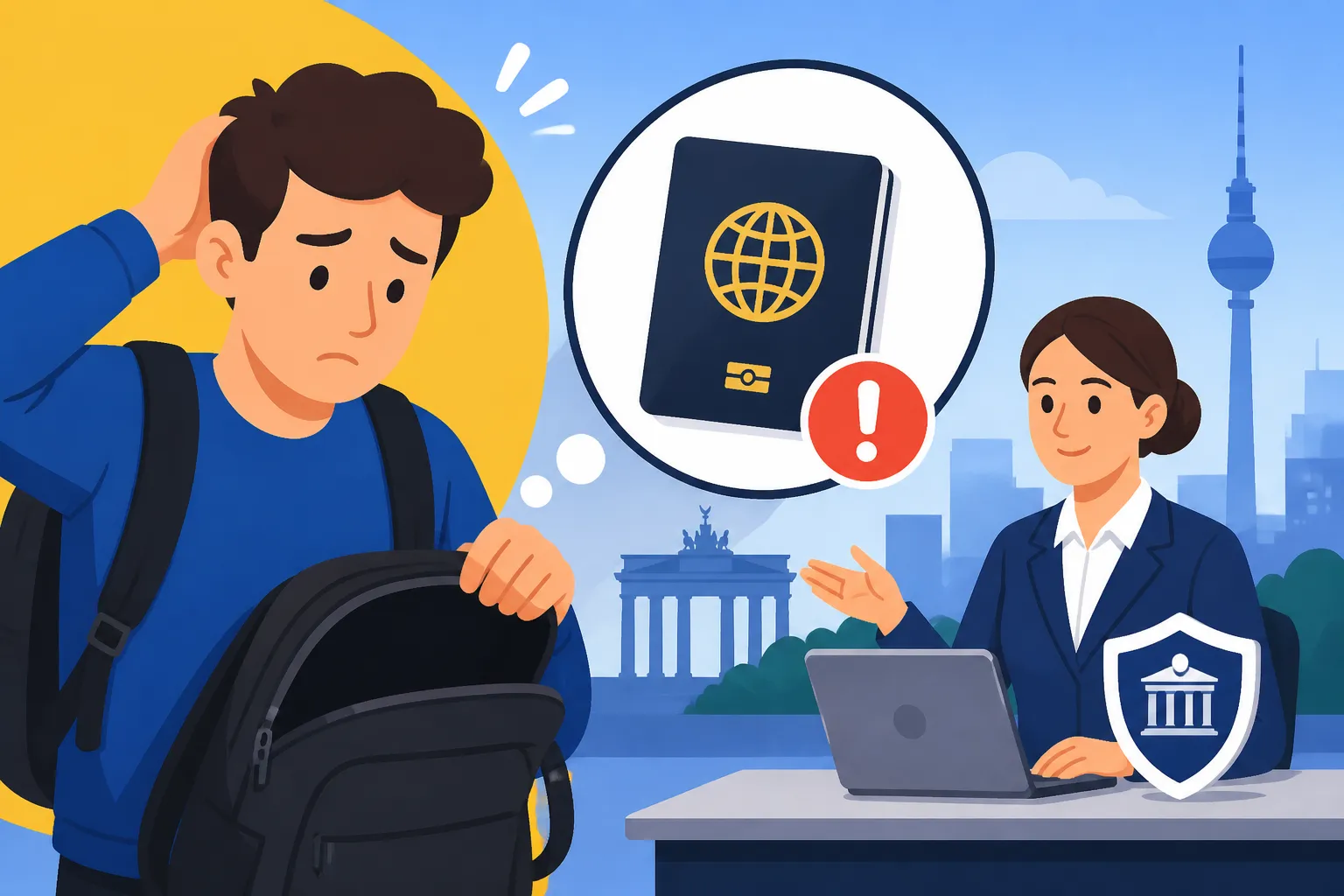
That heart-stopping moment when you reach for your passport and it's just… gone. The pit in your stomach, the rush of anxiety – it's a feeling no one wants to experience, especially when you're far from home in a foreign country like Germany. Whether you're a tourist enjoying the stunning castles and vibrant cities or an expat navigating daily life, losing your passport here can feel like a bureaucratic nightmare. But don't despair! This comprehensive guide will walk you through every step, from the immediate panic to finally getting a replacement and continuing your journey.
Disclosure: This post may contain affiliate links. We may earn a commission at no extra cost to you if you make a purchase through these links. Read full disclosure.
The Immediate Aftermath: Panic, Police, and Preliminary Steps
Okay, take a deep breath. I know it's easier said than done, but panicking won't help. The first few hours after realizing your passport is missing are crucial. You need to switch into problem-solving mode, and I'm here to tell you exactly how to do that, drawing from years of navigating German administrative quirks.
Retracing Your Steps and Initial Search
Before you jump into official channels, give yourself a moment to retrace your steps. Seriously, think back to your last known interaction with your passport. Did you use it to check into your hotel, make a purchase, or pass through an airport?
- Think Logically: Where was the last place you saw it? Did you put it in a different pocket, a random drawer, or perhaps it slipped under a seat? Many "lost" passports turn out to be simply misplaced. Check your luggage thoroughly, inside every zipper and compartment. Look under beds, behind curtains, and inside any bags you were carrying.
- Contact Recent Locations: If you dined out, visited a museum, or took a taxi, call them immediately. German establishments, particularly hotels and reputable shops, are often very good about holding onto lost property. Describe your passport, including its color and any distinguishing features. If you used public transport, check with the local lost and found (Fundbüro) for the transport authority. For example, if you were on a Deutsche Bahn train, check their Fundbüro online. If you booked your accommodation through platforms like Booking.com, they often have excellent local support that might help you contact the hotel.
- Ask Around: If you were with friends or family, ask them to check their belongings and memory. Sometimes a travel companion might have inadvertently picked it up or remembered where you last set it down.
Remember, every minute spent searching thoroughly at this stage can save you days of administrative headaches.
Reporting the Loss to the Police (Polizei)
Once you're reasonably certain your passport is truly lost or, worse, stolen, your very next step is to report it to the local police. This isn't just a formality; it's absolutely essential.
- Where to Go: Head to the nearest police station (Polizeidienststelle). If you're in a major city, there will be several. If you're in a smaller town or rural area, look for the local Gemeindeamt or Bürgeramt, which might have a police presence or direct you to the right place. In an emergency, or if you suspect theft and feel unsafe, you can call the German emergency number 112, but for a lost or stolen passport report, an in-person visit is usually required. For non-emergencies, you can use the non-emergency police number or visit the station directly.
- What to Bring: Even without your passport, try to bring any other form of identification you might have – a driver's license, a photocopy of your passport (this is where those backups come in handy!), or even a picture of it on your phone. The more information you can provide, the smoother the process. You’ll also need your address in Germany (hotel, Airbnb, friend’s place) and your contact information.
- The Police Report (Verlustanzeige/Diebstahlsanzeige): The police will take your statement and issue you an official report. This document, often called a Verlustanzeige (loss report) or Diebstahlsanzeige (theft report), is your golden ticket for the next steps. Without it, your embassy or consulate won't be able to issue you a replacement travel document. Make sure you get multiple copies if possible, or at least a digital photo of it. While many police officers in larger German cities speak some English, it’s always helpful to have some basic German phrases or even a translation app ready. For more on communication, check out our guide on German Language and Everyday Communication for Visitors.
This police report not only serves as proof for your embassy but also helps protect you from identity theft. If your passport falls into the wrong hands, the report proves that you were not in possession of it after the reported date.
Embassy & Consulate: Your Lifeline to a New Travel Document
With the police report in hand, your next critical move is to contact your country's embassy or consulate in Germany. They are the only ones who can replace your travel documents.
Finding Your Country's Representation in Germany
Germany is a big country, and most nations have their main embassy in Berlin. However, many also maintain consulates in major cities like Munich, Frankfurt, Hamburg, or Düsseldorf to serve their citizens in different regions.
- Online Search is Key: A quick online search for "[Your Country] embassy Germany" or "[Your Country] consulate [Nearest German City]" should give you their contact details, opening hours, and often, specific instructions for lost/stolen passports.
- Appointment is Usually Required: It's rare to just walk into an embassy or consulate and get immediate service. Most require you to book an appointment, sometimes days or even weeks in advance, especially for non-emergency services. Check their website carefully for "emergency travel documents" or "lost passport replacement" procedures.
- Emergency Contact: If it's outside business hours and your situation is genuinely urgent (e.g., you're flying out tomorrow and have no other ID), many embassies have an emergency contact number for citizens in distress. Use it wisely, as it's for true emergencies only.
Remember, the embassy is there to help their citizens. Be polite, clear, and have all your documents ready when you contact them.
Applying for an Emergency Travel Document or New Passport
Depending on your nationality, the urgency of your travel, and your embassy's policies, you'll typically apply for one of two things:
- Emergency Travel Document (Provisional Passport/Emergency Passport): This is usually a temporary document, valid for a limited period (e.g., 30 days) and for a specific journey (e.g., direct return to your home country). It's designed to get you out of Germany and back home or to a place where you can apply for a full replacement. It may not be accepted for onward travel to other countries or for complex itineraries.
- Full Passport Replacement: If you have more time, or if your embassy offers expedited services, you might be able to apply for a full replacement passport directly. This will take longer, usually several weeks, as it needs to be processed and printed, often back in your home country.
Here's a table outlining the typical requirements for both:
| Requirement | Emergency Travel Document (ETD) | Full Passport Replacement |
|---|---|---|
| Police Report | Absolutely essential | Absolutely essential |
| Proof of Citizenship | Birth certificate, old passport copy, national ID card | Birth certificate, old passport copy, national ID card, previous passport (if available) |
| Proof of Identity | Driver's license, national ID card (even if expired), student ID | Driver's license, national ID card |
| Passport Photos | Usually 2, specific size and background (check embassy website) | Usually 2, specific size and background (check embassy website) |
| Proof of Travel | Flight itinerary, tickets (if you have them) | Not always required, but helpful for urgent cases |
| Application Form | Completed form, available online or at the embassy | Completed form, available online or at the embassy |
| Fees | Varies by country, typically paid in EUR (cash or card) | Varies by country, typically higher than ETD |
| Appointment | Required | Required |
| Processing Time | Same day to a few business days | Several weeks (can be expedited for higher fee) |
Always check your specific embassy's website for their exact requirements and current fees. Having copies of your passport and other ID stored digitally or with a trusted person at home will drastically speed up this process. When considering which documents to keep copies of, our guide on Documents Required for German Visa Applications: Complete Guide might offer broader insights into what official bodies often look for.
What to Expect at the Embassy/Consulate Appointment
Attending your appointment can be a bit nerve-wracking, but knowing what to expect can help ease the stress.
- Security Checks: Embassies and consulates are secure facilities. Expect airport-style security checks, including bag screenings and metal detectors. Arrive a bit early to account for this.
- The Interview: An official will review your police report, your identity documents, and your application. They might ask questions about how you lost your passport, your travel plans, and your general situation. Be honest and straightforward. They are trying to verify your identity and ensure you are a legitimate citizen.
- Fees: Be prepared to pay the fee for your new document. Most embassies accept credit cards, but some might prefer cash in Euros, so it's a good idea to have some on hand. For more on managing your money, check out Money for Travel in Germany: Cash, Cards, and ATMs.
- Collection: If you're getting an emergency travel document, you might receive it the same day or within a couple of business days. For a full passport, they'll usually inform you of the expected collection date or shipping details.
This whole process can be frustrating, especially when you're under pressure. But remember, the staff are there to help, and being prepared and patient will make a big difference.
Getting Home: Travel with Temporary Documents and Border Realities
Once you have your emergency travel document or new passport, the journey isn't quite over. You still need to use it to get where you're going.
Temporary Travel Documents: What They Are and How to Use Them
An emergency travel document (ETD) is a very specific piece of paper. It's often not a full-fledged passport book, but rather a single sheet or a simplified booklet.
- Limited Validity: ETDs are usually only valid for a direct return to your home country or, in some cases, a limited number of specified transit countries. Do not assume you can hop on a flight to another Schengen country or continue your grand European tour with an ETD without explicit confirmation from your embassy.
- Airline Acceptance: While legally binding, airlines can sometimes be hesitant with ETDs because they're unfamiliar with them. It's highly recommended to contact your airline before going to the airport to confirm they will accept your specific emergency travel document for your flight. Have the document number and validity details ready. Explain your situation clearly.
- Proof of Identity: An ETD serves as your proof of identity and nationality for border control. Keep it safe, just like you would a regular passport.
It's a lifeline, but a restricted one. Treat it as such.
Border Control and Airline Requirements
Navigating airports and borders with a temporary document can be a bit different from usual.
- German Exit Controls: When departing Germany, you'll go through standard passport control. Present your ETD along with your police report (it’s good to have both) and your boarding pass. The German border police (Bundespolizei) are generally familiar with ETDs but might ask a few questions. Be prepared to explain your situation calmly.
- Airline Check-in: This is often where you might encounter the most questions. Some airline staff, especially at check-in counters, might not be fully aware of all types of emergency travel documents. Having your police report and any confirmation from your embassy or the airline's customer service (that they accept the document) can be incredibly helpful. Be patient and polite.
- Transit Countries: If your journey involves a transit stop in another country, research its entry requirements carefully. Some countries might require a full passport or a specific type of visa even for transit. An ETD might not suffice. This is where a direct flight home often becomes the safest option.
Always allow extra time at the airport for check-in and security, as you might need to explain your situation to multiple officials.
Planning Your Journey Home or to Your Next Destination
Once you have your document, it’s time to book your tickets and finalize your travel plans.
- Booking Travel: If you need to book new flights or rearrange existing ones, consider using platforms like Omio, which can compare various transportation options (trains, buses, flights) to help you find the most direct and convenient route back to your home country.
- Accommodating Delays: Losing a passport always causes delays. Be prepared for potentially longer stays in Germany than planned. Ensure you have accommodation sorted while you wait. Websites like Booking.com are excellent for finding last-minute stays. If your trip was insured, check your policy – some travel insurance plans, like those mentioned in Travel Insurance for Trips to and Within Germany, might cover additional accommodation and rebooking costs due to passport loss.
- Financial Preparedness: Replacing documents and potentially rebooking travel can be expensive. Ensure you have access to funds. This is where having multiple payment methods (different credit cards, some cash) can really save the day, as discussed in our Money for Travel in Germany: Cash, Cards, and ATMs guide.
The goal is to get you safely home. Once there, you can apply for a full, long-term replacement passport with less stress.
Prevention is Key: Safeguarding Your Documents in Germany
As an expat who's been here a while, I can tell you that prevention is always, always better than cure. Losing your passport is a headache you'd rather avoid entirely.
Essential Documents to Always Have Copies Of
This is my golden rule for anyone living or traveling abroad. Make copies, then make more copies!
- Photocopies: Before you even leave home, make several clear photocopies of your passport's main data page, your visa (if applicable), and any German residence permits (Aufenthaltstitel). Keep one copy separate from your actual passport, perhaps in a different bag or with a trusted travel companion. Leave another copy at home with family or a friend.
- ID Card: If your home country issues a national ID card that's separate from your passport, bring it! It's an invaluable secondary form of identification.
- Flight/Accommodation Details: Keep copies of your flight reservations and hotel bookings. These can help establish your travel itinerary and why you're in Germany.
- German Registration Documents: For expats, copies of your Anmeldung (address registration) and any German driving license or health insurance card can serve as important secondary IDs. These help establish your legal presence in Germany, which is helpful when dealing with the Navigating the Ausländerbehörde: Tips for Dealing with German Immigration Offices or police.
Think of these copies as your safety net. They significantly speed up the reporting and replacement process.
Digital Backups and Cloud Storage
In our modern world, digital backups are just as important, if not more so, than physical copies.
- Scan and Upload: Scan your passport, visa, and any other crucial documents (like your birth certificate, driver's license, health insurance card) and upload them to a secure cloud storage service (e.g., Google Drive, Dropbox, iCloud).
- Email Yourself: Send copies of these scanned documents to your own email address. This ensures you can access them from any internet-connected device, even if your phone is lost or stolen.
- Share with a Trusted Contact: Inform a trusted family member or friend back home where these digital copies are stored or email them copies directly. In a crisis, they can send them to you.
- Keep Photos on Your Phone: While not official, having clear photos of your documents on your phone can sometimes help in initial conversations with police or embassy staff.
Just make sure these digital copies are protected with strong passwords.
Safeguarding Your Passport While Traveling
German cities are generally safe, but petty crime like pickpocketing can happen, especially in crowded tourist areas or on public transport. My advice for Staying Safe in Germany: Common-Sense Tips for Travelers always includes smart document protection.
- Don't Carry it Unnecessarily: If you're just popping out for groceries or a walk around your local neighborhood in your German city, do you really need your passport? Often, a national ID card or even a German driver's license (if you have one) is sufficient for everyday identification. Leave your passport in a secure location at your accommodation – ideally a hotel safe or a locked bag.
- Secure Storage: When you do need to carry it, keep your passport in a secure, inner pocket of your clothing or a money belt that is worn underneath your clothes. Avoid keeping it in easily accessible back pockets, external backpack pockets, or open handbags.
- Be Aware in Crowds: Pay extra attention in busy markets, at train stations, on crowded trams or subways, and during festivals. These are common spots for pickpockets.
- Minimal Exposure: When showing your passport for identification, try to do so discreetly. Don't flash it around, and put it away immediately after use.
- Consider a RFID-Blocking Wallet: While not strictly for lost passports, these can protect your electronic data from being skimmed.
By taking these proactive steps, you significantly reduce the risk of ever having to go through the stress of a lost or stolen passport in Germany. It’s a small effort for a huge peace of mind!
Disclaimer
Please remember that I am an expat blogger sharing my experiences and general advice, not a legal or government official. The information provided in this guide is for informational purposes only and may not be entirely exhaustive or up-to-date with every nuance of German law or individual embassy procedures. Always verify the latest requirements and procedures directly with your country's embassy or consulate and the relevant German authorities. Travel regulations and bureaucratic processes can change, so staying informed with official sources is crucial.