What Are the Best Cities in Germany for Traveling With Kids?
Navigating Germany with children can feel like a daunting task, especially when you're trying to figure out which cities offer the perfect blend of adult enjoyment and kid-friendly fun. You want the history, the culture, the famous sights, but you also need playgrounds, engaging museums, and food that picky eaters will actually touch. This guide is designed to ease that particular travel headache, shining a light on Germany's top cities that are not just welcoming but truly set up for memorable family adventures.
Disclosure: This post may contain affiliate links. We may earn a commission at no extra cost to you if you make a purchase through these links. Read full disclosure.
Why Germany Shines for Family Travel
Germany, from an expat's perspective, is surprisingly fantastic for families, even if its reputation often leans towards efficiency and historical gravitas rather than child-centric tourism. Forget the stereotypes; this country truly understands the needs of parents and kids. The infrastructure is top-notch, public spaces are generally clean and safe, and there's a deep-seated appreciation for nature and outdoor activities. What might seem like small details, like abundant playgrounds (Spielplätze) in nearly every park and town square, or dedicated family compartments on trains, make a world of difference when you're traveling with little ones.
One of the biggest advantages is the reliability of public transport. Trains run on time (mostly!), and city networks are extensive, making it easy to get around without the stress of navigating traffic or finding parking. Plus, many attractions offer discounted or free entry for children, which is always a welcome relief for the family budget. You'll find that Germans themselves are very family-oriented, often going out of their way to accommodate children in restaurants or shops, which can be a pleasant surprise compared to some other countries where children are merely tolerated.
Safety and Accessibility for Little Explorers
When you're traveling with kids, safety is always paramount, and Germany consistently ranks as one of the safest countries in the world. Major cities are well-lit, crime rates are low, and emergency services are efficient, reachable via the universal European emergency number 112. This peace of mind allows you to focus on enjoying your trip rather than constantly worrying.
Beyond safety, accessibility is another huge plus. Pavements are generally well-maintained for strollers, and public transportation often has ramps or designated spaces for wheelchairs and pushchairs. While historic sites might present some challenges (cobblestones, stairs in old castles), modern museums and family attractions are usually designed with ease of access in mind. Many public toilets, even in smaller towns, also include changing facilities for babies, which is a godsend when you're out and about for the entire day. Navigating Medical Care in Germany: Doctors, Hospitals, and Pharmacies is also straightforward, with a robust healthcare system in place, should any unexpected sniffles or scrapes occur.
A Paradise of Playgrounds and Green Spaces
It’s truly remarkable how many excellent playgrounds you’ll stumble upon in Germany, no matter which city you visit. From simple swings and slides in neighborhood parks to elaborate, imaginative adventure playgrounds (Abenteuerspielplätze) that could keep kids entertained for hours, they are everywhere. These aren't just token gestures; they are often beautifully designed, well-maintained, and cater to a wide range of ages.
Green spaces are also integral to German city planning. Large city parks like Berlin's Tiergarten or Munich's English Garden aren't just pretty backdrops; they're living, breathing spaces for families to relax, play, and connect with nature. You’ll find vast lawns for running around, designated barbecue areas, and often small lakes or ponds where you can rent paddle boats in summer. These green oases provide a crucial break from sightseeing, allowing kids to burn off energy and parents to recharge with a coffee or a picnic. This commitment to outdoor spaces makes even the busiest cities feel manageable and enjoyable for families.
Top Cities for Unforgettable Family Adventures
Choosing the "best" city is always subjective, but when it comes to traveling with kids, some German cities genuinely stand out for their sheer volume of child-friendly activities, ease of navigation, and overall family atmosphere. These aren't just places with one or two token attractions; they're cities where you could easily spend a week and still not run out of things to do that will make both kids and adults smile.
Berlin: A Playground of History and Innovation
Ah, Berlin. The capital city truly surprised me with how incredibly kid-friendly it is, despite its heavy historical connotations. You might think of the Brandenburg Gate, the Reichstag, or the remnants of the Wall, but Berlin also boasts an incredible array of activities that will captivate young minds. It's sprawling, yes, but the public transport system is so efficient that getting around with little ones is remarkably easy. Just hop on the U-Bahn or S-Bahn, and you’re off to your next adventure. If you're planning intercity travel with children, booking through services like Omio can make the journey smoother by comparing train, bus, and even flight options.
The Berlin Zoo, one of the oldest and most diverse zoos in the world, is a must-see, complete with a wonderful petting zoo area for younger kids. For science enthusiasts, the Deutsches Technikmuseum (German Museum of Technology) is an absolute marvel, packed with interactive exhibits on planes, trains, and all sorts of machinery. My kids loved climbing through old airplanes and seeing the massive steam engines! For a unique experience, the MACHmit! Museum for Children in Prenzlauer Berg offers hands-on exhibits, often housed in a former church, where kids can explore, create, and discover. And don't forget the Tierpark Berlin, the largest landscape animal park in Europe, offering vast spaces for animals and plenty of playgrounds. For pure fun, the SEA LIFE Berlin aquarium, centrally located, is always a hit with its underwater tunnels and diverse marine life. The sheer number of parks, like the vast Tiergarten itself or Tempelhofer Feld (a former airport now a huge public park perfect for cycling and kite-flying), means endless space for running and playing. You can easily spend half a day just letting them loose in a playground. For unique experiences, checking out what's available on GetYourGuide for family tours, like a kid-friendly boat trip on the Spree, can add a special touch to your visit.
Munich: Bavarian Charm and Alpine Adventures
Munich, with its stunning architecture and proximity to the Bavarian Alps, offers a distinctly different, yet equally enchanting, family experience. It feels a bit more traditional, a touch more relaxed than Berlin, and utterly charming. The city center is very walkable, and public transport is reliable.
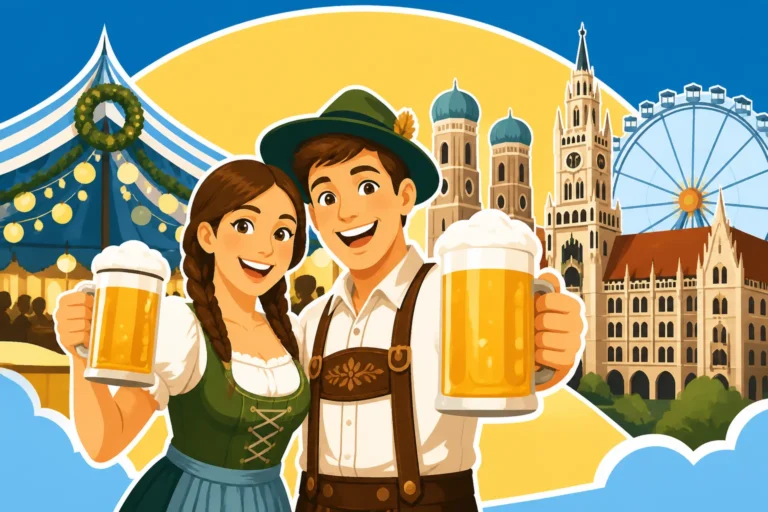
The crown jewel for families here is undoubtedly the Deutsches Museum, one of the world’s largest and oldest science and technology museums. It has an entire section dedicated to children (Kinderreich) where they can conduct experiments, play with giant Lego, and even climb into a real helicopter. It’s absolutely fantastic for all ages. Outside, the sprawling Englischer Garten (English Garden) is larger than New York’s Central Park and offers so much: vast lawns, winding streams, playgrounds, a Japanese Teahouse, and even a standing wave for river surfing (watch out for that!). Don’t miss the Chinese Tower beer garden, which often has a carousel and play area for kids while parents enjoy a traditional Bavarian brew. For an exciting outing, a visit to the Hellabrunn Zoo is highly recommended, as it’s one of the few geo-zoos in the world, meaning animals are grouped by continent. A trip to Munich also often means easy access to the Alps. While the famous Neuschwanstein Castle might be a bit of a trek for tiny legs, smaller castles and charming villages are within easy reach for a day trip. Finding a great family hotel in Munich is also quite simple using platforms like Booking.com, ensuring you have a comfortable base for your adventures.
Hamburg: Maritime Wonders and Miniature Worlds
Hamburg, Germany's second-largest city and a vibrant port metropolis, brings a unique maritime flavor to family travel. It’s a city of water, bridges, and fascinating contrasts, offering plenty to keep children intrigued and entertained.
The absolute undisputed highlight for any family visiting Hamburg is Miniatur Wunderland. Seriously, this place is legendary. It’s the world's largest model railway exhibition, but that description doesn't do it justice. It's an entire miniature world, meticulously crafted with stunning detail, featuring airports with planes taking off, bustling cities, snowy mountains, and even a fully functioning miniature concert. Kids (and adults!) will be utterly mesmerized for hours, watching the trains, cars, and tiny people go about their miniature lives. It's a truly magical experience. Beyond the miniature, the real port offers exciting adventures. Take a Harbor Cruise (Hafenrundfahrt) to see the massive container ships, the historic warehouse district (Speicherstadt), and enjoy the fresh sea air. The International Maritime Museum is great for older kids interested in ships and seafaring history. For some outdoor fun, the vast Planten un Blomen park has a huge water playground, a roller-skating rink, and often hosts free concerts and light shows in the summer. Don't forget to take a walk through the Elbphilharmonie Plaza for stunning views over the harbor – it's free to visit (though you need a ticket) and impressive.
Cologne: Roman History and Chocolate Dreams
Cologne, dominated by its majestic Cathedral (Kölner Dom), offers a lovely mix of ancient history, vibrant culture, and some genuinely fun attractions for kids, all within a relatively compact city center.
Of course, you can't visit Cologne without seeing the Cologne Cathedral. While probably not the most exciting for very young children, older kids might be fascinated by its sheer size and the chance to climb its south tower for panoramic views (prepare for many, many stairs!). What really makes Cologne shine for families, however, is the Imhoff-Schokoladenmuseum (Chocolate Museum). Located right on the Rhine, it's a delightful journey through the history and production of chocolate, culminating in a walk past a real chocolate fountain where you can taste samples. It’s every child’s dream come true, and even adults will find it fascinating. For animal lovers, the Cologne Zoo is one of the oldest in Germany and home to a wide variety of species. Just a short train ride away, the Phantasialand theme park offers thrilling rides and immersive themed areas that are perfect for a full day of family fun. It’s easily accessible from Cologne and well worth the trip. You can also explore the Roman heritage of the city at the Römisch-Germanisches Museum (Roman-Germanic Museum), which has intriguing artifacts that might spark curiosity in budding archaeologists.
Practical Tips for Stress-Free Family Travel
Traveling with kids, no matter how well-planned, always has its moments. But with a few insider tips, you can significantly reduce stress and maximize enjoyment. Germany's excellent infrastructure and family-friendly approach make it easier than you might expect.
Navigating Public Transport with Kids
Public transport in Germany is generally fantastic and often the best way to get around cities and between them. The Deutsche Bahn (DB) trains are comfortable, efficient, and offer specific amenities for families. Many long-distance ICE trains have a dedicated "Kleinkindabteil" (toddler compartment) or "Familienbereich" (family area) where you have more space, sometimes even a small play area, and often other families, so nobody bats an eye if your little one gets a bit restless. Booking these specific seats in advance is highly recommended. For city travel, the U-Bahn (subway), S-Bahn (city train), and trams are incredibly reliable. Consider purchasing a day pass or a weekly pass for the entire family, which can be more economical. For getting around German cities: U-Bahn, S-Bahn, Trams, and Buses are usually very accessible, and often include space for strollers without much hassle. Remember that in many regions, the Deutschland-Ticket Explained is a fantastic option for unlimited regional travel, potentially saving you a lot.
A quick tip: Always validate your ticket (stamping it in a machine) if it's not a digital ticket, to avoid hefty fines from ticket inspectors. And remember, Germans appreciate order, so try to keep your kids from running wild on crowded trains, especially during peak hours.
Eating Out and Snack Strategies
German cuisine might not immediately spring to mind as "kid-friendly," but don't despair! Most restaurants, even traditional ones, are welcoming to families. You'll often find a "Kinderteller" (children's plate) option, usually a smaller portion of popular dishes like Schnitzel with fries, or pasta. And of course, the ever-present Wurst (sausage) in its many forms is usually a hit.
However, the real secret to successful family eating in Germany is embracing the bakery (Bäckerei) culture. These are everywhere and offer delicious, affordable options for breakfast, lunch, or just a snack. Fresh pretzels, rolls with cheese or sausage, and sweet pastries are perfect for on-the-go meals. Supermarkets are also your best friend for stocking up on snacks, drinks, and picnic supplies. Germany has excellent quality fresh produce, yogurts, and prepared foods. Don’t forget to pack a refillable water bottle; tap water is safe and delicious. For a deeper dive into local cuisine, explore German Food Culture: Eating and Drinking as a Visitor.
Accommodation: Finding Your Family's Home Away From Home
Finding suitable accommodation is crucial for a smooth family trip. While hotels are abundant, an apartment or an aparthotel can often offer more space, separate bedrooms, and crucially, a kitchenette. Having the ability to prepare simple meals, store snacks, and have a bit more room for the kids to spread out can make a world of difference. Platforms like Booking.com are excellent for finding family-friendly apartments or hotels with good facilities. Look for places close to public transport, parks, or specific attractions you plan to visit, to minimize travel time and fuss.
When browsing options, keep an eye out for amenities like laundry facilities (a lifesaver with kids!), high chairs, or even small play areas. Many German hotels are now very attuned to family needs, but checking reviews from other families is always a good idea. Consider looking into "Familienhotels" – hotels specifically geared towards families, often found in more resort-like areas outside the big cities, but some exist within urban centers too.
Beyond the Big Cities: Adding Depth to Your Family Trip
While the major cities offer incredible experiences, don't shy away from venturing slightly further afield or incorporating cultural elements to enrich your family's understanding of Germany. These additions can turn a great trip into an unforgettable journey.
Integrating Cultural Experiences and Language Fun
German culture is rich, and you can easily weave cultural lessons into your trip in ways that are enjoyable for kids. Beyond the famous landmarks, look for local markets (Wochenmärkte) where kids can see and taste local produce. Engaging with local traditions, even small ones like the "Pfand" system for bottle recycling, can be a fun activity. Learning a few basic German phrases like "Bitte" (please), "Danke" (thank you), and "Entschuldigung" (excuse me) can also be a game for kids and will be hugely appreciated by locals.
Many museums offer audio guides or interactive exhibits specifically designed for children. For example, some castles or historical sites have special tours or workshops that make history come alive for younger visitors. Don't underestimate the power of simply observing daily life: watching street performers, visiting a local playground, or enjoying a scoop of ice cream from an Eisdiele (ice cream parlor) are all cultural experiences in themselves. If you're interested in blending in more, understanding German Etiquette and Social Life for Visitors can help you navigate common interactions with ease.
Day Trips to Castles, Theme Parks, and Nature
Germany is famous for its fairytale castles, and while some might be a long drive, many are accessible as day trips from major cities. Neuschwanstein, while beautiful, is far from Munich and can be a logistical challenge with kids; however, castles like Burg Eltz (from Cologne/Koblenz region) or Heidelberg Castle (from Frankfurt/Stuttgart) offer stunning views and a sense of history that can captivate older children without being overwhelming.
Beyond castles, Germany boasts fantastic theme parks like Europa-Park (near Freiburg), Phantasialand (near Cologne), or Playmobil FunPark (near Nuremberg), which can be an excellent way to break up city sightseeing with pure, unadulterated fun. These parks are usually meticulously clean, well-organized, and offer rides and attractions for all age groups. For nature lovers, many cities have national parks or beautiful hiking trails within an hour's reach. For instance, from Munich, you can easily access parts of the Bavarian Alps for some gentle hiking and stunning scenery, or from Hamburg, explore the nearby Lüneburg Heath. These excursions offer a refreshing change of pace and a chance for kids to run free amidst beautiful landscapes.
Disclaimer
This article is for general informational purposes only and does not constitute professional advice. Laws, prices and regulations vary by location and change over time. Consult a qualified professional for guidance on your specific situation.